

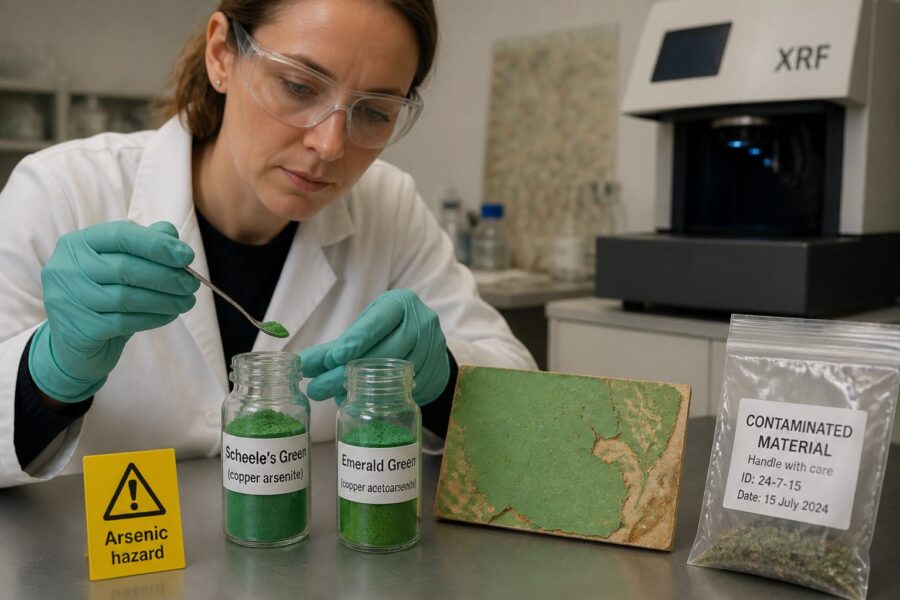
The Victorian Era is renowned for its fascination with vibrant colors and innovative materials, particularly the brilliant greens that adorned wallpapers, textiles, and artworks throughout both private residences and public institutions. However, this obsession came with a hidden danger: the widespread use of arsenic-based pigments like Scheele’s green and emerald green, which were celebrated for their aesthetic appeal but masked a toxic legacy that would haunt many unsuspecting individuals for generations.
These striking colors, derived from copper arsenite, captivated the public and artists alike, creating a surge of popularity that saw them being incorporated into everything from decorative arts to fashion. Yet, while these vivid greens enchanted the eye, they also concealed a perilous truth that would only be revealed as cases of poisoning began to emerge, prompting a deeper understanding of the chemical composition and historical context of these pigments to fully appreciate their allure while also recognizing their hazardous nature.
In this article, we will explore the chemical properties, historical incidents of poisoning, and modern conservation practices related to these infamous green pigments that have come to symbolize both the beauty and danger of the Victorian era. By diving into the world of Victorian toxicology, we can better understand how it impacts the preservation of heritage collections today and the lessons that can be learned from this dark chapter in art history.
The Victorian Era Obsession With Brilliant Green and Its Deadly Cost
During the Victorian era, brilliant green pigments became a fashionable choice for interior design and art, making them a staple in homes, theaters, and public buildings alike. The vibrant hues of these arsenic green pigments captivated the imagination of many, leading to widespread use that spanned various artistic applications and domestic environments, creating a cultural phenomenon that celebrated color and innovation.
However, the beauty of these colors came at a deadly cost, as the toxic properties of arsenic started to reveal themselves in alarming ways that were initially overlooked or dismissed. As people decorated their homes with dazzling green wallpaper, which was lauded for its vividness and freshness, they unknowingly exposed themselves and their families to harmful effects that would manifest in a variety of distressing health issues over time.
Reports of illness and death began to emerge, prompting a re-evaluation of these alluring pigments that had once been hailed as groundbreaking. The public’s love affair with brilliant green was soon overshadowed by alarming tales of arsenic poisoning that spread through communities and raised awareness about the hidden dangers lurking behind such seemingly innocuous beauty.
The Victorian green wallpaper toxic legacy serves as a cautionary tale about the intersection of aesthetics and safety, reminding us that what is visually appealing can sometimes be dangerously deceiving. This period teaches us about the unforeseen consequences of chemical innovation in art and design, as well as the importance of rigorous safety measures in the creative processes we engage in today.
As we reflect on this history, it’s essential to consider how such practices continue to influence modern conservation efforts in our museums and galleries. Today, we strive to balance beauty with safety in preserving our cultural heritage, taking lessons from the past to ensure that we do not repeat the mistakes that led to the suffering of countless individuals during the Victorian era.
Chemical Composition of Scheele’s Green and Emerald Green
Scheele’s green and emerald green are both composed of copper arsenite, a compound that combines copper with arsenic to create pigments that are not only stunning but also perilous. This chemical structure is responsible for the pigments’ vivid color and their associated toxicity, making them a subject of great interest and concern among chemists, artists, and conservators alike.
Scheele’s green, developed by Swedish chemist Carl Wilhelm Scheele in the 1770s, was one of the first synthetic pigments to gain widespread popularity, marking a significant advancement in the field of chemistry and art. In contrast, emerald green, a more vibrant variant that would soon capture the imagination of the artistic community, was introduced in the early 19th century and quickly became a favored choice among painters and decorators, leading to its extensive use in artworks and interior designs.
Both pigments are known for their brilliant green shades, which can evoke feelings of freshness and vitality, but their toxicity poses significant health risks that were not fully understood at the time of their widespread use. The arsenic green pigment hazard is a critical factor that has led to increased scrutiny in historical objects containing these compounds, as conservators seek to identify and mitigate potential dangers associated with these colorful but toxic materials.
Understanding the chemical makeup of these pigments allows conservators to identify and manage risks effectively, ensuring that the integrity of the artwork is preserved without compromising the health of those who interact with it. Accurate knowledge of their properties is vital for the safe preservation of artworks and artifacts featuring these toxic colors, as it informs the methods and materials used in their conservation and display.
In examining the chemical history of these pigments, we gain insights into both their artistic significance and the dangers they present, which serves as a valuable reminder of the importance of safety in the arts. Such understanding is essential for informed conservators and historians working with heritage collections, allowing them to approach their work with both reverence for the past and a commitment to the safety of future generations.
Historical Incidents of Arsenic Poisoning From Green Pigments
Numerous historical accounts detail the tragic consequences of arsenic poisoning linked to green pigments, revealing a dark side to the otherwise vibrant history of Victorian art and design. One of the most notorious incidents involved the use of Scheele’s green in wallpaper, which led to sickness in several households, as families unwittingly lived in spaces where toxic fumes were released from their walls.
In some cases, individuals experienced chronic health issues attributed to prolonged exposure to arsenic-laden materials, which manifested in various ailments that often went misdiagnosed for years. The dangers of these pigments were not fully understood until alarming levels of poisoning emerged, prompting public health concerns that would lead to greater awareness and regulation of toxic materials in households.
| Incident | Date | Location |
|---|---|---|
| Household Poisoning | 1860s | England |
| Factory Workers | 1880s | France |
| Artist Health Issues | 1870s | Germany |
| Public Health Crisis | 1900s | USA |
These incidents highlight the urgent need for awareness regarding arsenic green pigment hazard during the Victorian era, underscoring the importance of understanding the potential risks associated with the materials we use in art and design. The dangers posed by these pigments ultimately led to the decline in their popularity and the search for safer alternatives, as artists and manufacturers alike began to recognize the importance of health and safety over aesthetic appeal.
Biological Mechanisms of Arsenic Toxicity at the Cellular Level
Arsenic toxicity operates at a cellular level, disrupting normal biological functions and leading to various health complications that can have devastating effects on the body. The primary mechanism involves the interference with cellular respiration and the generation of reactive oxygen species, which can overwhelm the body’s natural defenses and result in cellular damage.
This disruption can result in cellular damage, apoptosis, and even cancer in severe cases, illustrating the profound dangers associated with exposure to arsenic-based pigments. Understanding these biological mechanisms is crucial for assessing the risks associated with exposure to these toxic materials, as it allows for a more informed approach to health and safety in conservation practices.
Additionally, arsenic affects the body’s ability to regulate essential processes, further compounding its toxic effects and leading to a multitude of long-term health issues. Long-term exposure can lead to cumulative damage, affecting multiple organ systems and resulting in chronic conditions that may be difficult to trace back to their source.
Research into the cellular impacts of arsenic has provided valuable insights into its dangers, shedding light on why it is essential to approach the preservation of artworks containing these pigments with caution. This knowledge has informed both historical and contemporary approaches to managing arsenic exposure, allowing conservators to develop safer practices when working with potentially hazardous materials.
Consequently, understanding how arsenic affects biological systems is essential for effective conservation practices, as it helps conservators develop strategies to mitigate risks associated with historical objects containing these pigments. This information is crucial not only for the safety of conservators but also for the protection of the public and future generations who may come into contact with these artifacts.
Chronic vs. Acute Exposure: Different Symptoms and Timelines
Chronic and acute exposure to arsenic presents distinctly different symptoms and timelines for those affected, emphasizing the need for careful monitoring and diagnosis. Acute exposure often results in sudden and severe symptoms, such as vomiting, abdominal pain, and neurological issues that can manifest quickly and require immediate medical attention.
In contrast, chronic exposure typically leads to a gradual onset of symptoms, including skin lesions, respiratory issues, and long-term cognitive decline that may go unnoticed for years. Recognizing the differences between these types of exposure is crucial for diagnosis and treatment, as early intervention can significantly improve outcomes for individuals exposed to these toxic pigments.
Healthcare professionals must be vigilant in identifying the signs of arsenic poisoning, as timely diagnosis can be the difference between recovery and long-term health consequences. Early intervention can significantly improve outcomes for individuals exposed to these toxic pigments, allowing them to seek the necessary treatment before more severe symptoms develop.
Furthermore, understanding these variations aids in educating the public about the risks associated with arsenic green pigments, enabling individuals to make informed choices about their environment and health. This knowledge is vital for preventing future exposure and protecting public health, as awareness is a powerful tool in the fight against toxic materials.
By learning from historical cases of poisoning, we can better address the challenges posed by arsenic exposure today, ensuring that we take proactive measures to safeguard our communities. This knowledge is essential for both public awareness and effective conservation efforts, allowing us to create a safer future while still appreciating the beauty of our artistic heritage.
Detection of Arsenic-Bearing Green Pigments in Heritage Collections
The detection of arsenic-bearing green pigments is a critical aspect of preserving heritage collections, as it allows conservators to identify potential hazards in historical artifacts. Conservators employ various techniques to identify the presence of these toxic pigments in artworks, documents, and decorative items, ensuring that safety is prioritized in every aspect of conservation.
Common methods include X-ray fluorescence (XRF), Raman spectroscopy, and infrared spectroscopy, each of which offers unique advantages for accurately detecting and analyzing the chemical composition of these pigments. These advanced detection methods allow conservators to obtain precise information about the materials used in historical objects, enabling them to take appropriate action when hazards are identified.
- X-ray fluorescence (XRF)
- Raman spectroscopy
- Infrared spectroscopy
- Scanning electron microscopy (SEM)
- Energy dispersive X-ray spectroscopy (EDX)
Proper detection is essential for ensuring the safety of conservators and the public, as it prevents accidental exposure to harmful substances that may be present in historical collections. It also informs appropriate treatment strategies for affected objects, promoting responsible conservation practices that prioritize human health alongside the preservation of cultural heritage.
By leveraging advanced detection methods, conservators can effectively manage arsenic-bearing materials in their collections, ensuring that the legacy of Victorian artistry does not come at a harmful price. This proactive approach allows us to honor the beauty and innovation of the past while safeguarding against the risks associated with exposure to toxic materials.
Safe Handling of 19th Century Objects Containing These Pigments
Safe handling practices are essential when working with 19th-century objects that contain arsenic-based pigments, as these materials can pose serious health risks if not managed correctly. Conservators must implement strict protocols to minimize the risk of exposure during restoration and exhibition, ensuring that both staff and the public are protected from potential harm.
Protective equipment, such as gloves and masks, should be worn to prevent direct contact with these hazardous materials, and proper hygiene practices should be followed to avoid contamination. Additionally, working in well-ventilated areas is crucial to reduce inhalation risks when handling these toxic artifacts, allowing conservators to carry out their work safely and effectively.
Regular training on the risks associated with arsenic green pigments is vital for all staff involved in conservation, as it ensures that everyone is aware of the potential dangers and knows how to protect themselves. Awareness and education play key roles in ensuring safety during the handling of these historic objects, fostering a culture of responsibility and vigilance in the conservation field.
Moreover, clear labeling and documentation of arsenic-bearing materials help safeguard both conservators and the public, providing vital information that can inform decision-making processes. This practice promotes informed decision-making when dealing with heritage collections, ensuring that everyone involved understands the risks and the necessary precautions to take.
By prioritizing safety, conservators can effectively preserve the beauty of 19th-century artifacts while mitigating health risks associated with toxic materials. This balance is crucial for responsible conservation in modern settings, allowing us to appreciate the artistry of the past without compromising the safety of those who engage with it.
Decontamination Protocols for Museum Storage and Exhibition Areas
Establishing decontamination protocols is critical for museum storage and exhibition areas housing arsenic-bearing items, as these protocols aim to minimize the risk of contamination and ensure a safe environment for both staff and visitors. By implementing thorough cleaning routines and monitoring practices, museums can effectively manage the presence of hazardous materials, creating a secure setting for the display and preservation of historical artifacts.
Regular cleaning and monitoring of exhibition spaces are essential to prevent the accumulation of harmful dust that may contain arsenic particles. Specialized cleaning techniques and materials should be used to safely handle artifacts containing toxic pigments, ensuring that any contact with potentially contaminated surfaces is minimized and that thorough decontamination occurs regularly.
Moreover, proper disposal procedures for any waste generated during decontamination must be strictly followed, as this ensures that hazardous materials are not released into the environment, further protecting both staff and the public. Maintaining a clean and safe museum environment is paramount for the longevity of the collection and the health of those who work with these important cultural items.
Additionally, conducting routine risk assessments helps identify potential hazards associated with arsenic-bearing artifacts, enabling institutions to stay ahead of any emerging threats. Implementing these assessments is vital for ongoing safety and effective conservation practices, as they provide insights that can shape policies and protocols for managing historical collections.
In conclusion, comprehensive decontamination protocols support the safe management of historical items containing arsenic-based pigments, ensuring that the risks associated with these materials are appropriately addressed. This proactive approach is essential for preserving our cultural heritage while ensuring public safety, allowing future generations to appreciate the artistry of the past without the shadow of toxicity.
Regulatory Controls on Arsenic-Based Pigments in Professional Settings
Regulatory controls surrounding arsenic-based pigments are crucial for protecting public health in professional settings, particularly in museums, galleries, and conservation laboratories where these materials may be present. Various organizations and governments have established guidelines and regulations designed to mitigate the risks associated with these toxic materials, ensuring that those who work with them are well-informed and protected.
Compliance with these regulations is essential for professionals in the field of conservation, as regular audits and inspections ensure adherence to safety standards and proper handling practices. By fostering a culture of compliance and awareness, institutions can create a safer environment for both conservators and the public, promoting responsible stewardship of our shared cultural heritage.
Furthermore, these regulations provide a framework for training and educating staff about the dangers of arsenic exposure, ensuring that everyone involved in the handling of historical collections understands the importance of safety protocols. This knowledge is vital for promoting a culture of safety within institutions that manage historical collections, empowering staff to take proactive measures to protect themselves and others.
By implementing strict regulatory controls, we can safeguard both conservators and the public from the hazards of arsenic green pigments, creating a safer environment for all those who engage with historical artifacts. This approach fosters responsible stewardship of our shared cultural heritage, ensuring that future generations can appreciate the beauty of historical artifacts without the looming threat of toxicity that once plagued the Victorian era.
Ultimately, adherence to these regulations not only protects individuals but also enhances the integrity of conservation practices, promoting a culture of safety and responsibility that benefits everyone involved in the preservation of our artistic legacy. This ensures that future generations can appreciate the beauty of historical artifacts without the looming threat of toxicity, allowing us to enjoy our shared cultural heritage in all its splendor while maintaining a commitment to safety and health.
Lessons From Victorian Toxicology for Modern Conservation Practice
The lessons learned from Victorian toxicology remain relevant in today’s conservation practices, offering valuable insights into the complexities of working with hazardous materials in heritage collections. By examining past mistakes, we can better navigate the challenges posed by toxic materials, ensuring that we prioritize safety and health in our conservation efforts.
Understanding the historical context of arsenic green pigments informs modern conservators about potential risks and safety protocols, allowing them to approach their work with a heightened awareness of the dangers associated with toxic materials. This knowledge is essential for balancing the preservation of art with the health of those who interact with it, creating a safer environment for both conservators and the public.
Moreover, fostering a culture of safety and awareness is critical in contemporary conservation efforts, as it promotes responsible practices that protect both individuals and collections. By prioritizing education and training, we can mitigate the risks associated with arsenic exposure in our institutions, ensuring that staff members are equipped to handle hazardous materials safely.
Incorporating lessons from the past into current practices empowers conservators to make informed decisions that prioritize health and safety while preserving cultural heritage. This approach not only protects individuals but also ensures the longevity of our cultural heritage, allowing future generations to continue appreciating the beauty and significance of historical artifacts.
As we look to the future, let us remember the deadly cost of beauty in the Victorian era, recognizing the importance of safety and health in our pursuit of artistic excellence. By learning from history, we can create a safer and healthier environment for the preservation of our artistic heritage, ensuring that the mistakes of the past are not repeated and that the legacy of Victorian artistry can be appreciated for generations to come.


