
Ukiyo-e, or “pictures of the floating world,” are a treasured art form. These Japanese woodblock prints, popular from the 17th through 19th centuries, offer a glimpse into the lives, landscapes, and stories of Edo-period Japan.
Understanding the materials and techniques used to create these prints is essential for their preservation and appreciation. Pigment analysis of Japanese woodblock prints is a fascinating field that combines art history, chemistry, and conservation science.
By identifying the specific pigments used, we can learn more about the artists’ choices, the trade routes that supplied these materials, and the ways in which these colors have changed over time. This article will explore the world of Ukiyo-e pigments, from their historical context to modern analytical methods.
Historical Overview of Japanese Woodblock Printing
Woodblock printing in Japan has a long history, dating back to the 8th century. Early examples were primarily Buddhist texts and images, commissioned by temples and religious institutions.
During the Edo period (1603-1868), woodblock printing flourished as a popular art form accessible to a wider audience. The rise of a merchant class and urban culture fueled the demand for Ukiyo-e prints, which depicted scenes of daily life, famous actors, beautiful women, and scenic views.
The production of Ukiyo-e prints was a collaborative process, involving several skilled artisans. An artist would create the original design, which was then carved into wooden blocks by a block cutter.
A printer would then apply pigments to the blocks and carefully press them onto paper, creating the final image. The publisher oversaw the entire process, ensuring quality and distributing the prints to the public.
The earliest forms of woodblock printing, known as “mokuhanga,” were primarily used for reproducing Buddhist scriptures and images. These early prints were often monochromatic, using only black ink.
As the technique evolved, color printing became more common, requiring multiple blocks to be carved, one for each color. This process, known as “nishiki-e” (brocade pictures), allowed for much more complex and vibrant images.
The Edo period saw the emergence of distinct Ukiyo-e schools and styles, each with its own unique characteristics. Artists like Hokusai and Hiroshige became renowned for their innovative compositions and masterful use of color.
The popularity of Ukiyo-e extended beyond Japan, influencing Western artists and movements such as Impressionism and Art Nouveau. The bold lines, flat planes of color, and asymmetrical compositions of Ukiyo-e prints had a profound impact on the development of modern art.
The subject matter of Ukiyo-e prints also reflected the changing social and cultural landscape of Edo-period Japan. Prints depicting kabuki actors, geishas, and sumo wrestlers were particularly popular, capturing the vibrant energy of urban life.
Landscapes, such as those by Hokusai and Hiroshige, offered idealized views of the Japanese countryside, appealing to a growing interest in travel and nature. These prints provided a window into a world that was both familiar and exotic to their viewers.
Traditional Pigments Used in Ukiyo-e
The colors of Ukiyo-e prints are one of their most striking features. Traditional Japanese pigments were derived from a variety of natural sources, including plants, minerals, and insects.
These pigments were carefully selected for their color, stability, and availability. Understanding these traditional pigments helps conservators make informed decisions about treatment and preservation.
| Pigment Name | Color | Source |
|---|---|---|
| Sumi | Black | Pine soot or vegetable oil soot |
| Beni | Red | Safflower petals |
| Shu | Vermilion | Cinnabar mineral (mercury sulfide) |
| Gunjo | Ultramarine Blue | Azurite mineral |
| Rokusho | Green | Malachite mineral |
| Odo | Yellow | Yellow earth (iron oxide) |
Sumi ink, made from pine soot or vegetable oil soot, was used for black lines and details. Beni, a red pigment derived from safflower petals, was a popular choice for depicting lips, flowers, and other vibrant accents.
The process of creating these pigments was often laborious and time-consuming. Safflower petals, for example, had to be carefully harvested, dried, and processed to extract the red dye used for beni.
Similarly, cinnabar, the mineral source of vermilion, had to be mined and refined to produce a vibrant red pigment. The availability and cost of these pigments influenced their use in Ukiyo-e prints.
Indigo, derived from the indigo plant, was another important blue pigment used in Ukiyo-e. The fermentation process used to extract indigo dye was a closely guarded secret, passed down through generations of artisans.
Yellow ochre, a naturally occurring earth pigment, provided a range of warm yellow tones. This pigment was relatively inexpensive and readily available, making it a common choice for depicting landscapes and everyday scenes.
The use of these traditional pigments contributed to the unique aesthetic of Ukiyo-e prints. The subtle variations in color and tone created a sense of depth and atmosphere, capturing the beauty and transience of the floating world.
Furthermore, the limited palette of available pigments often encouraged artists to be creative and resourceful in their use of color. They would often mix pigments to create new shades and tones, or use techniques such as overprinting to achieve desired effects.
Case Study: Analyzing Pigments in a Hokusai Print
Katsushika Hokusai (1760-1849) is one of the most famous Ukiyo-e artists, best known for his series “Thirty-six Views of Mount Fuji.” One of the most iconic prints from this series is “The Great Wave off Kanagawa,” which depicts a massive wave towering over boats near Mount Fuji.
Pigment analysis of this print reveals the use of several key pigments. Prussian blue, a synthetic pigment introduced to Japan in the 19th century, is prominently featured in the wave itself.
The sky and distant Mount Fuji are rendered with a combination of Prussian blue and other pigments, such as indigo. The boats are colored with a variety of pigments, including yellow ochre and red lead.
Analyzing the pigments in “The Great Wave” provides insight into Hokusai’s artistic choices and the materials available to him. It also demonstrates the impact of new synthetic pigments on traditional Japanese art.
The introduction of Prussian blue revolutionized the color palette available to Ukiyo-e artists. Its intense blue hue and relative affordability made it a popular choice for depicting water, sky, and other natural elements.
Hokusai’s masterful use of Prussian blue in “The Great Wave” is a testament to his artistic skill and his willingness to embrace new technologies. The pigment allowed him to create a sense of depth and movement in the wave, capturing its overwhelming power.
The combination of Prussian blue with other pigments, such as indigo, also allowed Hokusai to create a range of subtle variations in color and tone. This added complexity to the print, enhancing its visual appeal.
The use of yellow ochre and red lead in the boats provides a contrasting element to the blue of the wave and sky. These warm colors draw the viewer’s eye to the boats, emphasizing their vulnerability in the face of the powerful wave.
Pigment analysis can also reveal information about the dating and authenticity of Ukiyo-e prints. The presence of certain pigments, such as Prussian blue, can indicate that a print was created after a certain date.
This information can be valuable for art historians and collectors who are trying to determine the provenance of a particular print. It helps to establish a timeline for the evolution of Ukiyo-e art.
Case Study: Analyzing Pigments in a Hiroshige Print
Utagawa Hiroshige (1797-1858) was another master of Ukiyo-e, renowned for his landscape prints. His series “One Hundred Famous Views of Edo” captures the beauty and atmosphere of Edo (present-day Tokyo) in different seasons and times of day.
One notable print from this series is “Sudden Shower over Shin-Ōhashi bridge and Atake,” which depicts a group of people caught in a rainstorm. Pigment analysis of this print reveals a sophisticated use of color to create a sense of depth and atmosphere.
Hiroshige used Prussian blue to depict the rain and the dark sky, creating a dramatic contrast with the lighter areas of the print. He also employed a range of other pigments, including indigo, yellow ochre, and red lead, to depict the people, the bridge, and the surrounding buildings.
The subtle variations in color and tone contribute to the overall sense of realism and emotion in the print. By studying the pigments used in Hiroshige’s prints, we can gain a deeper appreciation for his artistic skill and his ability to capture the essence of Edo.
In “Sudden Shower,” the use of Prussian blue is particularly effective in conveying the intensity of the rainstorm. The dark, saturated blue creates a sense of foreboding and emphasizes the vulnerability of the people caught in the downpour.
The contrast between the dark blue of the rain and the lighter colors of the bridge and buildings creates a sense of depth and perspective. This technique draws the viewer’s eye into the scene, making them feel as if they are witnessing the rainstorm firsthand.
The use of indigo, a more traditional blue pigment, in combination with Prussian blue, adds complexity to the color palette. This allows Hiroshige to create a range of subtle variations in tone, enhancing the realism of the print.
The warm colors of yellow ochre and red lead are used to depict the people, the bridge, and the surrounding buildings. These colors provide a sense of warmth and humanity, contrasting with the cold, impersonal force of the rainstorm.
Hiroshige’s skillful use of color and composition in “Sudden Shower” is a testament to his artistic genius. The print captures the beauty and drama of everyday life in Edo, offering a glimpse into the world of the past.
Through pigment analysis, we can gain a deeper understanding of Hiroshige’s artistic process and the materials he used to create his masterpieces. This knowledge allows us to appreciate the prints on a deeper level, recognizing the skill and artistry that went into their creation.
Challenges in Conserving Japanese Woodblock Prints
Conserving Ukiyo-e prints presents a number of challenges. The delicate nature of the paper and pigments makes them susceptible to damage from light, humidity, and handling.
Many traditional pigments are also prone to fading or discoloration over time. Understanding these degradation processes is crucial for developing effective conservation strategies.
- Light exposure
- Humidity fluctuations
- Acidic paper degradation
- Foxing stains
- Insect damage
Light exposure can cause pigments to fade, particularly those derived from organic sources. Humidity fluctuations can lead to warping, cracking, and mold growth on the paper.
Acidic paper degradation is a common problem in older prints. The acidity in the paper can cause it to become brittle and discolored over time.
Foxing stains, which are small brown spots, can also appear on the paper due to the presence of iron or other metals. These stains can be difficult to remove without damaging the print.
Insect damage is another threat to Ukiyo-e prints. Insects can feed on the paper and pigments, causing significant damage.
Conservation treatments for Ukiyo-e prints must be carefully chosen to minimize any further damage. The goal is to stabilize the print and prevent further deterioration, while preserving its original appearance.
Conservators often use specialized techniques such as paper repair, pigment consolidation, and stain removal to treat Ukiyo-e prints. These treatments require a high level of skill and expertise.
Preventive conservation measures, such as controlling light and humidity levels, are also essential for preserving Ukiyo-e prints. Proper storage and handling can help to prolong the life of these delicate works of art.
Digitization of Ukiyo-e prints is another important conservation strategy. Creating high-resolution digital images allows us to study and appreciate the prints without having to handle the originals.
The Impact of Western Pigments on Ukiyo-e
The introduction of Western synthetic pigments in the 19th century had a significant impact on Ukiyo-e. Pigments like Prussian blue, aniline dyes, and chrome yellow offered new colors and greater color intensity compared to traditional pigments.
These new pigments allowed artists to create brighter and more vibrant prints, but they also presented new challenges for conservation. Some synthetic pigments are less stable than traditional pigments and are more prone to fading or discoloration.
The use of Western pigments also changed the aesthetic of Ukiyo-e, as artists experimented with new color combinations and effects. Some purists lamented the loss of traditional colors and techniques, while others embraced the new possibilities offered by synthetic pigments.
Today, pigment analysis can help us understand the extent to which Western pigments were used in Ukiyo-e and the impact they had on the prints’ appearance and condition. This information is essential for making informed decisions about conservation and treatment.
Aniline dyes, for example, offered a wide range of vibrant colors that were not previously available to Ukiyo-e artists. However, these dyes are also known to be particularly susceptible to fading when exposed to light.
Chrome yellow, another Western pigment, provided a strong, bright yellow hue. But it can also be unstable and prone to discoloration over time.
The introduction of these new pigments led to a period of experimentation and innovation in Ukiyo-e. Artists explored new color combinations and techniques, pushing the boundaries of the art form.
However, the use of Western pigments also raised concerns about the long-term stability of Ukiyo-e prints. Conservators have had to develop new strategies for preserving prints that contain these unstable pigments.
Pigment analysis plays a crucial role in identifying Western pigments in Ukiyo-e prints. This information is essential for understanding the history of the prints and for developing appropriate conservation treatments.
By studying the use of Western pigments in Ukiyo-e, we can gain a deeper appreciation for the complex interplay between tradition and innovation in Japanese art. It showcases the dynamic nature of artistic expression.
Modern Techniques for Pigment Analysis of Japanese Woodblock Prints
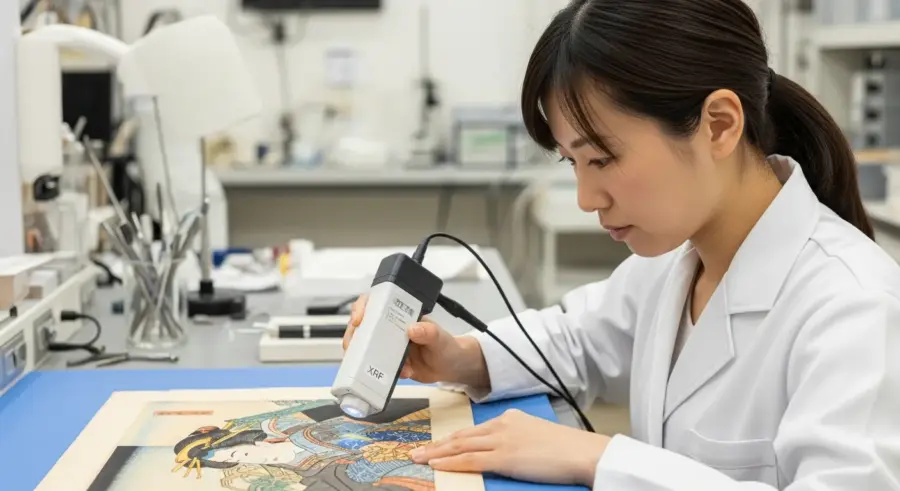
Modern analytical techniques play a crucial role in the study and conservation of Ukiyo-e prints. Non-destructive methods, such as X-ray fluorescence (XRF) spectroscopy and Raman spectroscopy, allow us to identify pigments without taking samples from the prints.
XRF spectroscopy analyzes the elemental composition of the pigments, while Raman spectroscopy provides information about their molecular structure. These techniques can help us distinguish between different pigments and identify any degradation products that may be present.
Other techniques, such as microscopy and spectrophotometry, can be used to study the surface characteristics and color properties of the prints. By combining these different analytical methods, we can gain a comprehensive understanding of the materials and techniques used to create Ukiyo-e prints.
This knowledge is essential for developing effective conservation strategies and for preserving these important cultural artifacts for future generations. Pigment analysis of Japanese woodblock prints continues to evolve with new advancements in analytical technology.
XRF spectroscopy is particularly useful for identifying pigments that contain heavy metals, such as lead, mercury, and copper. The technique is relatively quick and easy to use, and it can provide valuable information about the composition of the pigments.
Raman spectroscopy is a more sensitive technique that can provide information about the molecular structure of the pigments. This can be helpful for distinguishing between different pigments that have similar elemental compositions.
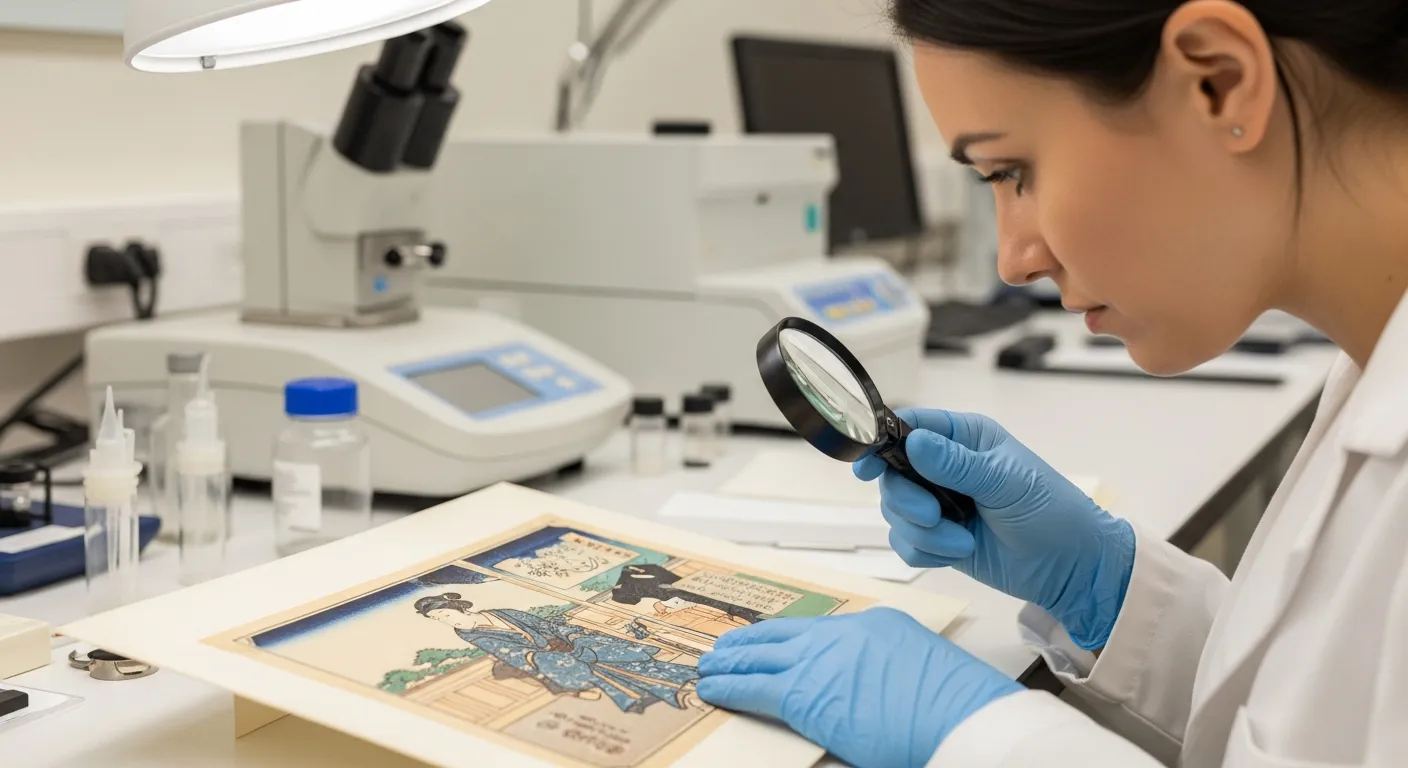
Microscopy allows conservators to examine the surface of the prints in detail, revealing information about the printing techniques and the condition of the pigments. Different types of microscopy, such as optical microscopy and scanning electron microscopy, can be used to study the prints at different magnifications.
Spectrophotometry is used to measure the color properties of the prints. This information can be helpful for tracking changes in color over time and for evaluating the effectiveness of conservation treatments.
These modern analytical techniques are essential tools for conservators and art historians who are working to preserve and understand Ukiyo-e prints. They provide valuable information about the materials and techniques used to create these beautiful and important works of art.
The data gathered through these analyses informs decisions about appropriate storage, handling, and treatment of the prints. It contributes to the long-term preservation of this cultural heritage.
Ethical Considerations in Pigment Analysis
While pigment analysis provides valuable information, it’s important to consider the ethical implications of these techniques. Destructive sampling, even on a microscopic scale, can cause irreversible damage to the prints.
Therefore, it is crucial to use non-destructive methods whenever possible and to minimize the amount of sampling required. It’s also important to respect the cultural significance of Ukiyo-e prints and to ensure that any analysis is conducted in a responsible and ethical manner.
Collaboration between scientists, conservators, and art historians is essential for ensuring that pigment analysis is used to enhance our understanding and appreciation of Ukiyo-e, without compromising their long-term preservation. A balance must be struck between scientific inquiry and cultural sensitivity.
Transparency in research methods and data sharing promotes trust and collaboration within the field. Open communication with stakeholders ensures that ethical considerations are addressed throughout the research process.
Prior to any analysis, a thorough assessment of the print’s condition is necessary. This helps determine the suitability of different analytical methods and minimizes potential risks.
In cases where sampling is unavoidable, the smallest possible sample should be taken from an inconspicuous area of the print. The sampling location should be carefully documented to ensure that it can be easily located in the future.
The results of pigment analysis should be interpreted in the context of the print’s history and cultural significance. It’s important to avoid making generalizations or drawing conclusions that are not supported by the evidence.
The knowledge gained from pigment analysis should be used to inform conservation decisions and to promote the long-term preservation of Ukiyo-e prints. It should also be used to educate the public about the art and culture of Japan.
Ethical guidelines should be established and followed to ensure that pigment analysis is conducted in a responsible and sustainable manner. These guidelines should be reviewed and updated regularly to reflect new developments in the field.
The Future of Ukiyo-e Research and Conservation
The field of Ukiyo-e research and conservation is constantly evolving. New analytical techniques and conservation methods are being developed all the time.
As our understanding of these prints grows, so too does our ability to preserve them for future generations. Digital imaging and analysis are becoming increasingly important tools for studying and documenting Ukiyo-e prints.
These technologies allow us to create high-resolution images of the prints, which can be used for research, education, and conservation purposes. Digital databases and online resources are also making Ukiyo-e prints more accessible to scholars and the public.
By combining traditional knowledge with modern technology, we can ensure that these beautiful and important works of art continue to inspire and educate for centuries to come. Continued research into the materials and techniques used in Ukiyo-e production will further inform conservation practices.
Artificial intelligence and machine learning are also beginning to play a role in Ukiyo-e research. These technologies can be used to analyze large datasets of images and to identify patterns and trends that would be difficult to detect manually.
For example, AI can be used to identify different artists based on their style and technique. It can also be used to track the provenance of prints and to detect forgeries.
The development of new conservation materials and techniques is also crucial for the long-term preservation of Ukiyo-e prints. Researchers are working to develop new adhesives, consolidants, and coatings that are more stable and less harmful to the prints.
Collaboration between researchers, conservators, and art historians is essential for advancing the field of Ukiyo-e research and conservation. By working together, we can share our knowledge and expertise and develop new strategies for preserving these important cultural artifacts.
The future of Ukiyo-e research and conservation is bright. With continued innovation and collaboration, we can ensure that these beautiful and important works of art continue to inspire and educate for generations to come. Public awareness and education are vital to fostering appreciation and support for Ukiyo-e preservation efforts.
Conclusion
Pigment analysis of Japanese woodblock prints is a fascinating and important field that sheds light on the materials, techniques, and artistic choices of Ukiyo-e artists. By understanding the pigments used in these prints, we can gain a deeper appreciation for their beauty, their history, and their cultural significance.
This knowledge is also essential for developing effective conservation strategies and for preserving these important cultural artifacts for future generations. The study of Ukiyo-e pigments connects art, science, and history in meaningful ways.
As analytical techniques continue to advance, we can expect to learn even more about the secrets of Ukiyo-e. Further research will undoubtedly uncover new insights into the world of Japanese woodblock prints and the artists who created them.
Ultimately, the goal is to ensure that these vibrant “pictures of the floating world” continue to captivate and inspire for centuries to come. Continued collaboration between experts is key to unlocking the mysteries held within these delicate works of art.
The legacy of Ukiyo-e extends far beyond the Edo period, influencing art and design across the globe. By preserving these prints, we preserve a vital part of our shared cultural heritage.
The ongoing research and conservation efforts ensure that future generations will have the opportunity to experience the beauty and wonder of Ukiyo-e. It is a testament to the enduring power of art.
Let us continue to support and encourage the study and preservation of these remarkable works of art. Their stories deserve to be told and their beauty deserves to be shared.