
The discovery of synthetic ultramarine in 1828 by French chemist Jean-Baptiste Guimet revolutionized the world of art and pigment manufacturing in a profound way. This groundbreaking innovation not only democratized access to the vibrant blue pigment, making it available to a broader range of artists, but also changed the dynamics of artistic expression throughout the entirety of the 19th century, influencing various forms of art and creative endeavors.
Before Guimet’s discovery, ultramarine was derived from the precious stone lapis lazuli, which was not only rare but also prohibitively expensive for many artists to use regularly. The synthetic version allowed for a more affordable and consistent blue pigment, paving the way for its widespread use in various artistic mediums, thereby transforming the palette of countless painters and artisans.
The chemical process behind synthetic ultramarine production is not only fascinating but also complex, reflecting the ingenuity of early 19th-century chemistry. This innovative method involved heating a mixture of kaolin, sodium carbonate, and sulfur at high temperatures, resulting in a vivid blue compound that beautifully mimicked the natural stone’s hue, enabling artists to access vibrant colors that were previously out of reach.
The production of synthetic ultramarine involves a series of intricate chemical reactions that create the pigment’s unique properties, which are essential for its application in art. Initially, kaolin, sodium carbonate, and sulfur are heated together, forming a precursor compound that undergoes further processing to yield the final blue pigment, which artists would come to cherish for its brilliance.
This chemical transformation is critical, as it not only dictates the purity of the pigment but also significantly influences its color stability and luminosity, making it ideal for a variety of artistic applications. The resulting synthetic ultramarine exhibits a brilliant hue that is both vibrant and long-lasting, which ultimately made it a favorite among artists seeking to push the boundaries of their color palettes.
Moreover, the production process can be adjusted to create various variants of synthetic ultramarine, each with different shades and properties that can cater to specific artistic needs. This adaptability contributes to its popularity and widespread application in numerous forms of art, ranging from traditional academic painting to the more adventurous decorative arts that characterized the period.
The introduction of synthetic ultramarine significantly differed from the traditional use of natural lapis lazuli, which held cultural weight and historical significance in various civilizations. While lapis lazuli was often associated with luxury and exclusivity, synthetic ultramarine offered artists a reliable and economical alternative that changed the way they approached color in their works.
Natural lapis lazuli is a complex rock composed of several minerals, including lazurite, calcite, and pyrite, which contributes to its unique appearance and rich history in art. In contrast, synthetic ultramarine is a single compound, offering a more uniform color and texture that artists could rely on for consistent results across different mediums and applications.
The differences in composition lead to notable variations in the pigment’s behavior when applied in artworks, with each type offering unique qualities to the artist. For instance, natural lapis lazuli can display a range of hues and textures that reflect its mineral composition, while synthetic ultramarine maintains consistent coloration throughout its use, allowing for predictable artistic outcomes.
Furthermore, the color stability of synthetic ultramarine is generally superior to that of natural lapis lazuli, which can fade over time due to environmental factors such as light exposure and humidity. This stability made synthetic ultramarine a preferred choice among artists who were looking to preserve their work and ensure that their creations would stand the test of time.
The rapid adoption of synthetic ultramarine in the 19th century marked a significant shift in artistic practices across various movements. Artists began to incorporate this new pigment into their works with enthusiasm, leading to a transformation in the color palettes utilized in both academic and salon paintings, and contributing to the evolution of style during this vibrant period.
As artists embraced synthetic ultramarine, it found its place in a variety of artistic styles, including impressionism and realism, where color played a pivotal role in conveying emotion and depth. The vibrant blue hue allowed for more expressive and dynamic compositions, enabling artists to explore new techniques and ideas that challenged the conventions of their time.
Moreover, the ease of access to synthetic ultramarine contributed to its popularity among aspiring artists who previously lacked the financial means to work with more expensive pigments. This democratization of pigment meant that more creators could experiment with color, which ultimately enriched the diversity of artistic expression during this period and broadened the scope of what was deemed possible in art.
The presence of synthetic ultramarine in salon exhibitions further emphasized its significance in the evolving art world. Its vibrant tones often captured the attention of critics and audiences alike, reinforcing the notion of color as a critical element of artistic success and influencing the direction of future artistic movements.
As a result, synthetic ultramarine became a staple in the palettes of many renowned artists, influencing the visual language of 19th-century painting in ways that had not been previously possible. This shift not only reflected changing artistic practices but also underscored the relationship between technological advancements and artistic innovation, highlighting how new materials can inspire different forms of creative expression.
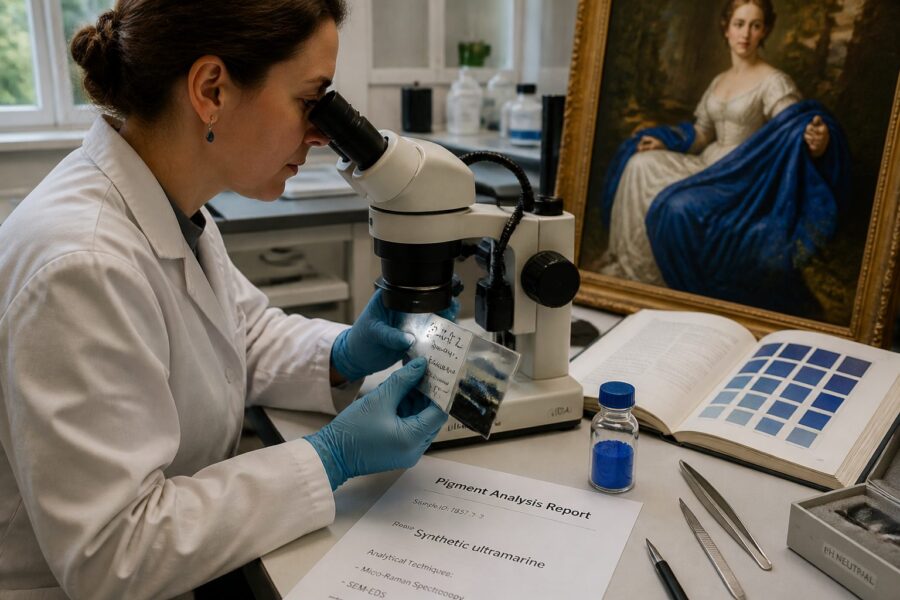
Identifying the differences between synthetic and natural ultramarine is crucial for art conservation and analysis, especially as the authenticity of historical artworks becomes increasingly important. Various analytical methods have been developed to distinguish between these two types of pigments, ensuring the integrity of historical artworks and providing valuable insights into their composition and history.
Among the most common techniques employed are spectroscopy, chromatography, and microscopy, each of which offers unique advantages in pigment analysis. These methods allow conservators to analyze the chemical composition and structural properties of the pigments, revealing whether they are synthetic or natural while also providing a deeper understanding of their behavior over time.
- Fourier-transform infrared spectroscopy (FTIR)
- Raman spectroscopy
- Scanning electron microscopy (SEM)
- Energy dispersive X-ray spectroscopy (EDX)
- Thin-layer chromatography (TLC)
By employing these advanced techniques, conservators can not only identify the pigment type with accuracy but also assess its condition and stability in a comprehensive manner. This knowledge is vital for making informed decisions regarding the conservation and restoration of artworks, ensuring that the preservation efforts align with the artist’s original intent and the artwork’s historical significance.
The manufacturing process of synthetic ultramarine has evolved over the years, leading to various variants that exhibit distinct chemical signatures and properties. These differences arise from variations in production methods and the raw materials used in their synthesis, which can result in subtle yet important changes in the final pigment’s characteristics.
For instance, some synthetic ultramarine pigments may include additives that enhance specific properties, such as color saturation, opacity, or stability, depending on the intended use. Understanding these manufacturing variants is essential for art historians and conservators as they provide insights into the context of the artworks and the technological advancements of the time.
Each variant can exhibit unique qualities, which may influence an artist’s choice in color application and technique, adding depth to the narrative of their creative process. This complexity adds another layer to the already rich narrative of 19th-century painting pigments, illustrating how advancements in chemistry and material science shaped artistic practices.
Moreover, the chemical signatures of these variants can inform conservation practices, helping conservators select appropriate methods for treatment based on the specific characteristics of the pigment in question. The ability to pinpoint the specific type of synthetic ultramarine present in a piece can significantly impact conservation outcomes, ensuring that treatments are both effective and respectful of the original artwork.
As the production methods continue to evolve, it becomes increasingly important to document and analyze these changes and their implications for art. This ongoing research not only sheds light on the material culture of the 19th century but also enhances our understanding of artistic practices and the evolution of pigments in the art world.
Long-term stability of synthetic ultramarine in museum collections has been a topic of significant interest and research for conservators dedicated to preserving art. Observations have indicated that synthetic ultramarine generally exhibits excellent longevity compared to many traditional pigments, maintaining its vibrant hue over extended periods under controlled conditions.
However, factors such as light exposure, humidity, and temperature can still affect its appearance over time, leading to potential degradation that must be carefully monitored. It is essential for museums to establish and maintain optimal environmental conditions to ensure the preservation of artworks that utilize this significant 19th-century blue pigment.
Case studies have shown that while synthetic ultramarine maintains its color well in many instances, some variants may experience issues such as bronzing, which alters the appearance of the pigment and the artwork it is part of. Understanding these long-term effects is crucial for developing effective conservation strategies that can mitigate potential damage caused by environmental factors and pigment instability.
In many cases, conservators have noted that the blue pigment can develop a metallic sheen that significantly alters the visual perception of artworks, especially in pieces where synthetic ultramarine was applied generously. This bronzing effect can obscure the original intentions of the artist, necessitating careful analysis and treatment to restore the artwork to its intended appearance.
Continued research on synthetic ultramarine’s stability and behavior over time will aid conservators in making informed decisions regarding display and storage practices for artworks. The insights gained from these observations contribute to the broader understanding of material degradation in art historical contexts, offering invaluable knowledge for future preservation efforts.
As synthetic ultramarine ages, it can develop a phenomenon known as bronzing, which alters the appearance of artworks in subtle yet significant ways. This effect is characterized by a change in surface texture and color saturation, often resulting in a metallic sheen that can be visually striking but may detract from the original artistic intent.
The bronzing effect can obscure the original hues intended by the artist, leading to a misinterpretation of the artwork and its significance within the broader context of art history. Understanding the underlying causes of this phenomenon is essential for conservators working to maintain the integrity of historical pieces and ensure that they can be appreciated as the artist envisioned.
Factors contributing to bronzing may include environmental conditions, such as prolonged exposure to light and fluctuations in humidity. Additionally, the specific formulation and application techniques used by artists can influence the likelihood of bronzing occurring, making it vital for conservators to consider these variables when evaluating artworks that utilize synthetic ultramarine.
Conservators must carefully examine these aspects when assessing artworks with synthetic ultramarine, employing a thorough understanding of both the materials and the methods used in their creation. Developing appropriate treatment strategies to mitigate bronzing effects is crucial for preserving the original artistic intent while maintaining the artwork’s aesthetic value.
Ongoing research into the causes and solutions for bronzing will help refine conservation practices and enhance the knowledge base surrounding synthetic pigments. This knowledge is vital for ensuring that the artistic legacy of the 19th century continues to be appreciated in its true form, allowing future generations to experience the vibrancy and creativity of the time.
Numerous conservation case studies involving 19th-century European collections highlight the challenges associated with synthetic ultramarine, illuminating both its benefits and drawbacks. These studies provide invaluable insights into the longevity and stability of this popular 19th-century painting pigment, allowing for a deeper understanding of its role in art history.
In one notable case, a painting by a renowned artist was found to exhibit significant bronzing, leading to concerns over its preservation and the potential loss of its visual integrity. The analysis revealed that the synthetic ultramarine used had been improperly applied, which exacerbated the effects of aging and prompted a careful reevaluation of conservation techniques.
Another case study focused on a series of academic paintings that demonstrated varying degrees of color stability, revealing the complexities of using synthetic ultramarine in different artistic contexts. The findings indicated that while some artworks retained their vibrant hues remarkably well, others suffered from fading and bronzing due to environmental factors, underlining the importance of monitoring and maintaining optimal conditions for art preservation.
These case studies underscore the importance of understanding the materials used in 19th-century artworks, as they can significantly impact the long-term preservation and appreciation of these cultural artifacts. They also highlight the necessity for ongoing research and monitoring to ensure the preservation of significant works that utilize synthetic ultramarine and other modern pigments.
By learning from these conservation experiences, art historians and conservators can develop improved strategies for safeguarding the integrity of historical pieces, ensuring that they remain accessible and appreciated for years to come. This ongoing dialogue between science and art conservation will ultimately enrich our appreciation of 19th-century artistic endeavors, shedding light on both the materials used and the intentions of the artists behind them.
The choices artists made regarding pigments in the 19th century reflect broader economic trends and societal changes that shaped the art world. The introduction of synthetic ultramarine exemplifies how technological advancements can democratize access to materials, allowing a wider range of artists to create and express their unique visions.
As synthetic pigments became more affordable, they shifted the traditional hierarchies of artistic materials and the dynamics of the art market. Artists were no longer constrained by the high costs of natural pigments, which enabled them to explore new styles and techniques that transformed the landscape of art during this transformative time.
This shift also had implications for the art market, as the increased availability of vibrant colors attracted new buyers and collectors eager to support a diverse array of artistic expressions. The economic accessibility of synthetic ultramarine, in particular, paved the way for its widespread adoption across various artistic movements, leading to innovative practices that would define the era.
In essence, the evolution of pigment choices during this period illustrates a complex interplay between art, technology, and economics that shaped the trajectory of 19th-century art. Understanding these dynamics enriches our appreciation of the artistic legacy of the 19th century and its lasting impact on modern art, fostering a greater awareness of how materials influence creativity and expression.