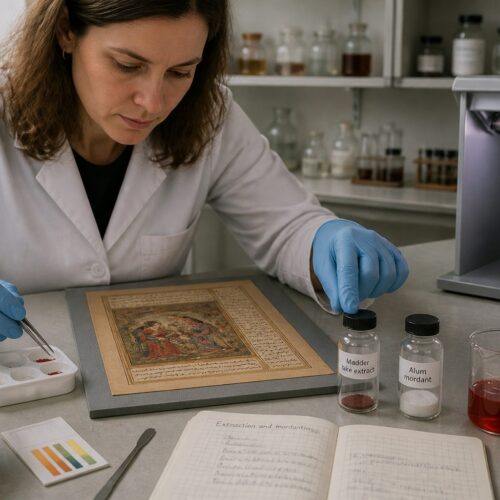

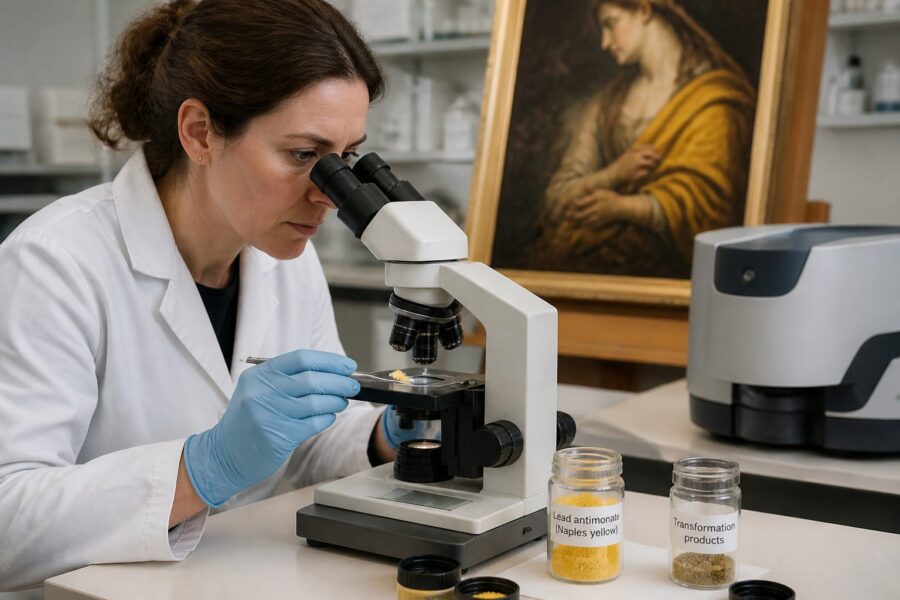
The legacy of Naples yellow pigment continues to captivate art historians and conservators alike, particularly in relation to Baroque painting analysis, owing to its rich historical context and aesthetic appeal. Its vibrant hue and historical significance make it a vital component in understanding the color palette of the era, revealing much about the artistic practices and preferences of the time.
As a lead antimonate pigment, Naples yellow was favored for its opacity and warmth, becoming the dominant yellow pigment during the Baroque period, which was characterized by dramatic contrasts and vibrant colors. Artists such as Velázquez and Tiepolo utilized this pigment extensively, contributing to the depth and richness of their masterpieces, and elevating the overall visual experience of their works.
Understanding the chemical composition and production methods of Naples yellow is crucial for conservation efforts today, as it allows for more informed restoration practices. Analyzing its degradation pathways and interactions with other pigments helps to preserve the integrity of historical artworks, ensuring that future generations can appreciate them in their original form.
During the Baroque era, Naples yellow emerged as the primary yellow pigment used by artists, setting a standard for color vibrancy and stability that influenced many subsequent artists and styles. Its unique properties made it particularly appealing for both glass and oil painting mediums, where clarity and intensity of color were paramount for achieving the desired artistic effects.
The warm, earthy tone of Naples yellow complemented the dramatic chiaroscuro techniques typical of Baroque painting, which aimed to create a striking interplay of light and shadow. As artists sought to create a sense of depth and three-dimensionality in their works, this pigment became a staple in their palettes, allowing them to achieve lifelike representations and emotional resonance.
Moreover, Naples yellow offered a greater opacity compared to earlier yellow pigments, enhancing its value in artistic applications where coverage and vibrancy were essential. Its ability to maintain brightness over time contributed to its widespread use in this influential period, making it a reliable choice for artists who sought longevity in their color choices.
Artists of the Baroque era relied heavily on Naples yellow for its compatibility with other pigments, facilitating a wide range of color mixing and layering techniques. This versatility allowed for intricate layering techniques that enhanced the overall composition of their works, providing depth and a nuanced color palette that captivated viewers.
As the Baroque style evolved, so did the application techniques for Naples yellow, further embedding it in the art historical narrative and allowing for innovative approaches to color use. Its prominence during this time laid the groundwork for future explorations in pigment chemistry, influencing how artists approached color selection and mixing in subsequent periods.
Naples yellow is primarily composed of lead antimonate, a compound that results from the reaction of lead and antimony oxides, forming a stable and vibrant pigment. This chemical structure contributes to its unique characteristics, including its distinctive color and opacity, which are highly valued by artists and conservators alike.
The lead antimonate pigment can be synthesized through various recipes, often involving the roasting of lead oxide with antimony trioxide under precise conditions. Adjusting the ratios of these components can yield different shades and qualities of Naples yellow, making it a versatile option for artists seeking specific tonal variations.
| Component | Ratio | Notes |
|---|---|---|
| Lead Oxide | 2:1 | Base material for synthesis, providing the primary color |
| Antimony Trioxide | 1:1 | Enhances opacity and color vibrancy, crucial for artistic applications |
| Firing Temperature | 800-900°C | Critical for achieving pigment stability and desired hue |
| Cooling Rate | Rapid | Affects final hue and overall quality of the pigment |
These variations not only influence the final appearance of the pigment but also its durability and interaction with other materials, which is essential for artists and conservators alike. Understanding the chemical composition is essential for both historical research and modern conservation practices, ensuring that the legacy of this important pigment continues to be appreciated.
Historically, Naples yellow was produced in specialized workshops that focused on glass and ceramics, where artisans mastered the art of pigment creation over many generations. These workshops utilized traditional methods passed down through generations, ensuring a consistent quality of the pigment that met the high standards of artists during the Baroque period.
The process of making Naples yellow involved careful measurement and mixing of the raw materials, followed by controlled firing in kilns to achieve the desired color and properties. This meticulous approach was crucial for achieving the desired hue and properties of the pigment, reflecting the skill and expertise of the artisans involved in its production.
Artisans closely monitored the firing conditions, adjusting temperatures and durations to perfect the final product, which required not only technical knowledge but also an instinctive understanding of the materials. The knowledge gained from these practices has informed modern techniques in pigment reproduction and conservation, bridging the gap between historical and contemporary practices.
Today, analysis of historical recipes and methods offers insights into the materials and techniques used in the production of Naples yellow, enhancing our understanding of the art production process. This knowledge not only enhances our understanding of art production but also aids in contemporary conservation efforts, allowing for more accurate restoration of artworks.
By studying these historical practices, conservators can better address the challenges posed by aging pigments and enhance restoration techniques, ensuring that artworks retain their historical authenticity. The legacy of Naples yellow continues to inspire new research in the field of pigment science, with ongoing investigations shedding light on its significance in art history.
Analytical techniques like X-ray fluorescence (XRF) and Raman spectroscopy are instrumental in the characterization of Naples yellow in artworks, providing invaluable data to conservators and researchers. These methods allow conservators to obtain detailed compositional information without damaging the original materials, ensuring the preservation of the artworks’ integrity during analysis.
XRF provides elemental analysis, revealing the presence of lead and antimony in the pigment, while Raman spectroscopy offers insights into the molecular structure and composition of Naples yellow. Together, these techniques create a comprehensive fingerprint of Naples yellow, aiding in its identification and ensuring that conservation treatments are based on accurate information.
Through these non-invasive methods, conservators can determine the extent of degradation in Naples yellow layers and assess their condition in historical paintings, which is paramount for making informed decisions during the conservation process. This data is essential for understanding how environmental factors have impacted the pigment over time and for planning appropriate conservation strategies.
Moreover, these analytical tools help in distinguishing Naples yellow from similar pigments, such as orpiment and lead-tin yellow, which can often be confused with it due to their color similarities. Accurate identification is vital for the successful conservation of artworks that feature this historically significant pigment, allowing conservators to tailor their approaches accordingly.
As research progresses, the application of advanced analytical techniques will continue to enhance our understanding of Naples yellow and its role in art history, shedding light on its significance in various artistic contexts. This ongoing investigation is crucial for the preservation of cultural heritage, ensuring that the stories behind these masterpieces are not lost to time.
Despite its popularity, Naples yellow is not immune to degradation, which can lead to darkening and alteration of its original hue over the years. Factors such as environmental conditions, light exposure, and chemical interactions with other materials contribute to these changes, necessitating careful monitoring and intervention by conservators.
Over time, the presence of moisture and pollutants can lead to the formation of lead sulfide, which darkens the once vibrant yellow and alters the appearance of the artworks. Understanding these processes is essential for effective Naples yellow conservation strategies, allowing conservators to mitigate further degradation and restore the pigment’s original brilliance.
- Environmental exposure, including humidity and temperature fluctuations
- Light-induced changes that can accelerate deterioration
- Chemical interactions with other pigments and materials
- Moisture accumulation that fosters degradation
- Pollutant effects that can exacerbate color change
Conservation efforts often focus on stabilizing Naples yellow layers to prevent further degradation and to preserve the integrity of the artwork for future generations. By addressing the root causes of color change, conservators can help preserve the integrity of historical artworks, ensuring that they remain as vibrant as they were when first created.
Interactions between Naples yellow and sulfur-bearing pigments, such as orpiment, can lead to significant alterations in color and appearance, complicating conservation efforts. These reactions often result in the formation of lead sulfide, which can darken the yellow pigment and disrupt the color harmony of the artwork.
Such interactions have been documented in various historical artworks, illustrating the complexities of pigment chemistry and the challenges faced by conservators. Understanding these relationships is crucial for the proper conservation of paintings that include Naples yellow, as it helps inform treatment decisions and strategies to mitigate potential damage.
Conservators must be aware of the potential for color change when dealing with mixed pigments in artworks, particularly those that include both Naples yellow and sulfur-bearing pigments. This knowledge informs treatment decisions and helps to mitigate the risk of further degradation during restoration, ensuring that the original intent of the artist is preserved.
Additionally, the interplay between different pigments can also affect the overall aesthetic of the artwork, influencing the viewer’s perception and emotional response. Thorough investigation of these interactions is essential to maintain the original intent of the artist, as even minor alterations can significantly impact the artwork’s visual narrative.
As research continues, the understanding of pigment interactions will enhance conservation practices and contribute to more effective preservation methods for historical artworks. The legacy of Naples yellow serves as a reminder of the intricate relationships within the world of historical pigments and their lasting impact on art history.
Examining the use of Naples yellow in the works of Velázquez and Tiepolo provides valuable insights into its application during the Baroque era, showcasing the pigment’s versatility and richness. These artists highlighted Naples yellow’s ability to create vibrant light effects and enhance the emotional impact of their paintings, further establishing its importance in the color palette of the time.
Case studies reveal how Naples yellow was employed to create light effects and enhance the emotional impact of their paintings, allowing viewers to connect with the art on a deeper level. Through careful analysis, conservators can glean lessons about the pigment’s behavior and degradation over time, which can inform future conservation practices.
In Velázquez’s “Las Meninas,” Naples yellow contributes to the lively atmosphere and dynamic composition, helping to create a sense of movement and interaction among the figures. The interaction with other pigments and the aging process has raised questions about the original appearance, subsequent alterations, and the overall aesthetic experience of the artwork.
Tiepolo’s frescoes also demonstrate the use of Naples yellow to achieve luminous skies and radiant figures, showcasing the artist’s mastery of color and light. Assessing these works allows conservators to understand the challenges associated with maintaining such vibrant colors over time, as well as the techniques employed by Tiepolo to achieve these effects.
By studying these masterpieces, art historians and conservators can appreciate the technical prowess of Baroque artists and develop better strategies for Naples yellow conservation. The ongoing exploration of these case studies continues to enrich the field of art conservation, providing insights that can be applied to other historical artworks and pigments.
Identifying Naples yellow in historical artworks requires distinguishing it from similar pigments like orpiment and lead-tin yellow, which can often be confused due to their color similarities. Each pigment has distinct properties that can help conservators make accurate identifications and ensure that appropriate conservation measures are taken.
While orpiment is known for its brilliant yellow hue, it is less stable and more prone to deterioration compared to Naples yellow, which is more resilient and has been favored by artists for its durability. Understanding these differences is essential for effective conservation practices, as it allows conservators to anticipate potential issues associated with each pigment.
Lead-tin yellow, on the other hand, offers a different tonal quality and chemical composition, which can also aid in distinguishing it from Naples yellow during analysis. Its unique characteristics allow conservators to differentiate it from Naples yellow in artworks, ensuring that accurate assessments are made regarding the condition and treatment of the pigments.
By employing analytical techniques, conservators can accurately identify these pigments and assess their condition, which is vital for making informed decisions about conservation treatments. This knowledge enables conservators to tailor their approaches and ensure that the integrity of the artwork is preserved through appropriate interventions.
In conclusion, the ability to distinguish between these pigments contributes to a deeper understanding of historical artworks and their preservation needs, reinforcing the importance of thorough examination in the conservation process. Such analyses not only enhance our comprehension of pigment use in art history but also underscore the significance of careful conservation practices in preserving cultural heritage.
Conservation treatments for Naples yellow often focus on addressing issues related to degradation and color alteration, ensuring that the vibrant qualities of the pigment are retained. Techniques may include the use of reversible materials to stabilize the pigment without compromising the artwork, allowing for the integrity of the original piece to be maintained.
Cleaning methods may also be employed to remove surface contaminants that contribute to darkening, which can mar the original vibrancy of the yellow pigment. Careful consideration is required to avoid further damage during these processes, as the goal is to restore the artwork to its former glory without compromising its historical value.
Additionally, integrating modern materials with historical techniques can enhance the effectiveness of conservation treatments, providing a bridge between past and present practices. Collaborating with chemists and material scientists can lead to innovative solutions for preserving Naples yellow, ensuring that it remains a vibrant part of our artistic heritage.
Ultimately, the goal of conservation is to restore the visual integrity of the artwork while maintaining its historical significance, allowing future generations to experience the beauty of these works. Thoughtful approaches to Naples yellow conservation can ensure the longevity of these invaluable cultural artifacts, preserving their stories and artistic legacies for years to come.
The legacy of Naples yellow extends beyond its historical applications, influencing modern pigment science research in various ways. Ongoing studies continue to explore its properties and potential applications in contemporary art materials, revealing the pigment’s relevance in today’s artistic practices.
As researchers delve into the chemistry of Naples yellow, new insights emerge that can inform both conservation practices and the creation of modern pigments, reflecting a growing interest in sustainable and durable materials. This dialogue between the past and present fosters a deeper appreciation for the artistry of historical pigments and their ongoing impact on contemporary art.
In addition, understanding the degradation processes of Naples yellow aids in developing better materials for artists today, ensuring that the colors they choose will retain their vibrancy over time. By learning from historical practices, modern scientists can create sustainable and durable alternatives in pigment production that honor the legacy of traditional materials.
Thus, the study of Naples yellow not only preserves art history but also paves the way for innovations in the field of materials science, allowing for a richer understanding of color and its applications. The enduring impact of this pigment will continue to resonate in both conservation and artistic endeavors for years to come, bridging the gap between past and future artistic expressions.