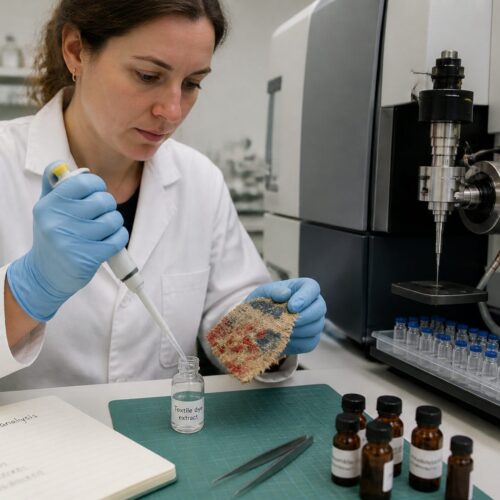

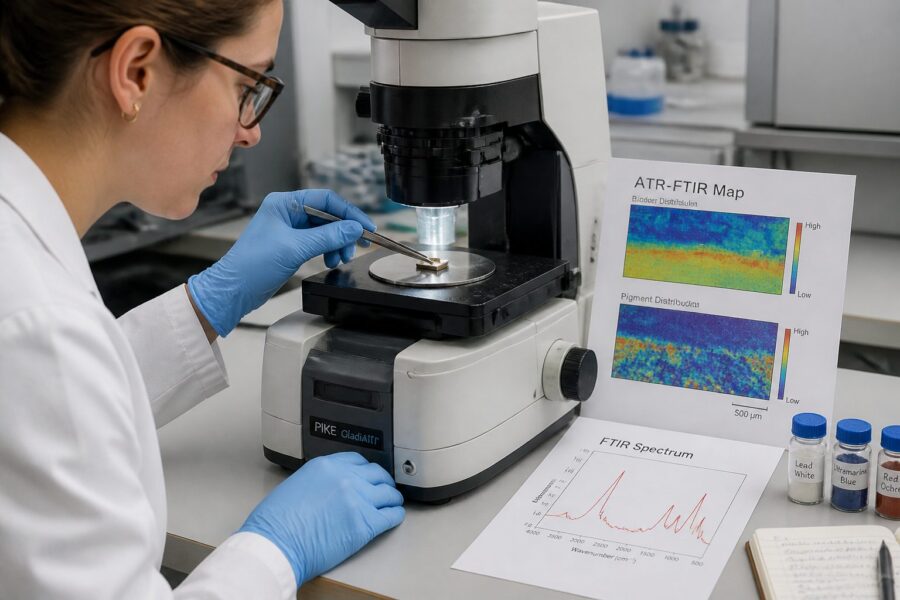
By examining the infrared spectra of various layers, conservators can identify differences in binding media and pigment composition. This analysis is vital for understanding the history of the artwork and assessing the impact of restoration efforts.
Furthermore, the ability to map the distribution of original materials alongside restoration materials allows for a comprehensive assessment of the painting’s integrity. This knowledge informs conservation strategies that respect the original intent of the artist.
In some cases, the identification of synthetic resins or modern pigments can indicate areas of intervention. By recognizing these alterations, conservators can make informed decisions regarding future restoration efforts.
Ultimately, the combination of ATR-FTIR mapping and careful analysis allows for a deeper understanding of an artwork’s condition. This understanding is crucial for ensuring that conservation efforts honor the original materials and techniques used by the artist.
Future Directions: Synchrotron-Based ATR-FTIR for Higher Resolution
The future of ATR-FTIR mapping in art conservation looks promising, particularly with the advent of synchrotron-based techniques. These advanced systems offer significantly higher spatial resolution, opening new possibilities for detailed analysis of artworks.
Synchrotron-based ATR-FTIR can achieve resolutions that may surpass traditional methods, allowing conservators to analyze even finer details of paint layers. This capability holds great potential for enhancing our understanding of historical pigments and binding media.
Moreover, the ability to analyze a broader range of materials with higher sensitivity can lead to new discoveries in art history and material science. As technology continues to evolve, so too will the methodologies employed in art conservation.
These advancements will facilitate more accurate and efficient analyses, ultimately benefiting the field of conservation. By embracing innovative techniques, conservators can ensure that the legacies of historical artworks are preserved for future generations.
In conclusion, the integration of ATR-FTIR mapping into conservation practices is transforming the way we analyze and preserve artworks. With ongoing advancements, this technique will continue to play a pivotal role in understanding the complexities of historical pigments and binders.
To reduce the risk of sample damage, it is essential to optimize the contact pressure and scanning parameters of the ATR accessory. This careful calibration ensures that the contact between the crystal and the paint surface does not compromise the integrity of the material.
Additionally, utilizing the appropriate size and shape of the ATR crystal can help minimize the area of contact with the sample. This selective approach reduces the likelihood of altering or damaging the paint layers during analysis.
Furthermore, conducting preliminary tests on less significant areas of the artwork can provide valuable insights into the appropriate settings for the ATR-FTIR system. This practice allows conservators to refine their techniques before analyzing critical areas of the artwork.
Implementing these strategies ensures that the analysis process remains as non-invasive as possible. By prioritizing the preservation of artwork integrity, conservators can confidently utilize ATR-FTIR techniques for effective analysis.
Distinguishing Original Layers From Later Restoration Materials
Distinguishing original layers from later restoration materials is a fundamental aspect of art conservation. ATR-FTIR mapping provides the tools necessary to analyze the composition of different layers within a painting.
By examining the infrared spectra of various layers, conservators can identify differences in binding media and pigment composition. This analysis is vital for understanding the history of the artwork and assessing the impact of restoration efforts.
Furthermore, the ability to map the distribution of original materials alongside restoration materials allows for a comprehensive assessment of the painting’s integrity. This knowledge informs conservation strategies that respect the original intent of the artist.
In some cases, the identification of synthetic resins or modern pigments can indicate areas of intervention. By recognizing these alterations, conservators can make informed decisions regarding future restoration efforts.
Ultimately, the combination of ATR-FTIR mapping and careful analysis allows for a deeper understanding of an artwork’s condition. This understanding is crucial for ensuring that conservation efforts honor the original materials and techniques used by the artist.
Future Directions: Synchrotron-Based ATR-FTIR for Higher Resolution
The future of ATR-FTIR mapping in art conservation looks promising, particularly with the advent of synchrotron-based techniques. These advanced systems offer significantly higher spatial resolution, opening new possibilities for detailed analysis of artworks.
Synchrotron-based ATR-FTIR can achieve resolutions that may surpass traditional methods, allowing conservators to analyze even finer details of paint layers. This capability holds great potential for enhancing our understanding of historical pigments and binding media.
Moreover, the ability to analyze a broader range of materials with higher sensitivity can lead to new discoveries in art history and material science. As technology continues to evolve, so too will the methodologies employed in art conservation.
These advancements will facilitate more accurate and efficient analyses, ultimately benefiting the field of conservation. By embracing innovative techniques, conservators can ensure that the legacies of historical artworks are preserved for future generations.
In conclusion, the integration of ATR-FTIR mapping into conservation practices is transforming the way we analyze and preserve artworks. With ongoing advancements, this technique will continue to play a pivotal role in understanding the complexities of historical pigments and binders.
PCA reduces the complexity of the data by transforming it into a more manageable form, highlighting the most significant variables. This allows for a clearer understanding of the interactions between binder pigment distribution and other components in the paint layers.
Cluster mapping further enhances the analysis by grouping similar spectral features, making it easier to identify distinct materials within the sample. This method is particularly useful for distinguishing original paint layers from later restorations.
By employing these analytical techniques, conservators can make informed decisions regarding restoration methods. The insights gained from data analysis contribute to a more nuanced understanding of an artwork’s condition and history.
Ultimately, effective data analysis is essential for achieving accurate pigment identification and binder analysis in paintings. This knowledge empowers conservators to preserve the integrity of artworks while respecting their historical context.
Minimizing Sample Damage During ATR Contact Measurements
Minimizing sample damage during ATR contact measurements is a crucial consideration in conserving historical artworks. The non-destructive nature of ATR-FTIR is one of its most significant advantages, but care must still be taken during the analysis process.
To reduce the risk of sample damage, it is essential to optimize the contact pressure and scanning parameters of the ATR accessory. This careful calibration ensures that the contact between the crystal and the paint surface does not compromise the integrity of the material.
Additionally, utilizing the appropriate size and shape of the ATR crystal can help minimize the area of contact with the sample. This selective approach reduces the likelihood of altering or damaging the paint layers during analysis.
Furthermore, conducting preliminary tests on less significant areas of the artwork can provide valuable insights into the appropriate settings for the ATR-FTIR system. This practice allows conservators to refine their techniques before analyzing critical areas of the artwork.
Implementing these strategies ensures that the analysis process remains as non-invasive as possible. By prioritizing the preservation of artwork integrity, conservators can confidently utilize ATR-FTIR techniques for effective analysis.
Distinguishing Original Layers From Later Restoration Materials
Distinguishing original layers from later restoration materials is a fundamental aspect of art conservation. ATR-FTIR mapping provides the tools necessary to analyze the composition of different layers within a painting.
By examining the infrared spectra of various layers, conservators can identify differences in binding media and pigment composition. This analysis is vital for understanding the history of the artwork and assessing the impact of restoration efforts.
Furthermore, the ability to map the distribution of original materials alongside restoration materials allows for a comprehensive assessment of the painting’s integrity. This knowledge informs conservation strategies that respect the original intent of the artist.
In some cases, the identification of synthetic resins or modern pigments can indicate areas of intervention. By recognizing these alterations, conservators can make informed decisions regarding future restoration efforts.
Ultimately, the combination of ATR-FTIR mapping and careful analysis allows for a deeper understanding of an artwork’s condition. This understanding is crucial for ensuring that conservation efforts honor the original materials and techniques used by the artist.
Future Directions: Synchrotron-Based ATR-FTIR for Higher Resolution
The future of ATR-FTIR mapping in art conservation looks promising, particularly with the advent of synchrotron-based techniques. These advanced systems offer significantly higher spatial resolution, opening new possibilities for detailed analysis of artworks.
Synchrotron-based ATR-FTIR can achieve resolutions that may surpass traditional methods, allowing conservators to analyze even finer details of paint layers. This capability holds great potential for enhancing our understanding of historical pigments and binding media.
Moreover, the ability to analyze a broader range of materials with higher sensitivity can lead to new discoveries in art history and material science. As technology continues to evolve, so too will the methodologies employed in art conservation.
These advancements will facilitate more accurate and efficient analyses, ultimately benefiting the field of conservation. By embracing innovative techniques, conservators can ensure that the legacies of historical artworks are preserved for future generations.
In conclusion, the integration of ATR-FTIR mapping into conservation practices is transforming the way we analyze and preserve artworks. With ongoing advancements, this technique will continue to play a pivotal role in understanding the complexities of historical pigments and binders.
By comparing the spectral data obtained from ATR-FTIR analysis to these databases, conservators can accurately identify the materials present in a paint sample. This process is crucial for establishing the authenticity and historical significance of artworks.
Researchers continually update these databases to include new findings, ensuring that conservators have access to the most current information. This ongoing development is vital for enhancing the accuracy of pigment identification in conservation.
Moreover, the integration of advanced software tools allows for efficient data analysis and comparison. These tools facilitate the rapid identification of pigments, significantly streamlining the conservation process.
As the field of art conservation evolves, the reliance on spectral libraries will become increasingly important. These databases not only support scientific analysis but also contribute to the broader understanding of art materials and techniques.
Data Analysis: Principal Component Analysis and Cluster Mapping
Data analysis plays a pivotal role in interpreting the results obtained from ATR-FTIR mapping. Techniques such as Principal Component Analysis (PCA) and cluster mapping enable conservators to identify patterns and relationships within the spectral data.
PCA reduces the complexity of the data by transforming it into a more manageable form, highlighting the most significant variables. This allows for a clearer understanding of the interactions between binder pigment distribution and other components in the paint layers.
Cluster mapping further enhances the analysis by grouping similar spectral features, making it easier to identify distinct materials within the sample. This method is particularly useful for distinguishing original paint layers from later restorations.
By employing these analytical techniques, conservators can make informed decisions regarding restoration methods. The insights gained from data analysis contribute to a more nuanced understanding of an artwork’s condition and history.
Ultimately, effective data analysis is essential for achieving accurate pigment identification and binder analysis in paintings. This knowledge empowers conservators to preserve the integrity of artworks while respecting their historical context.
Minimizing Sample Damage During ATR Contact Measurements
Minimizing sample damage during ATR contact measurements is a crucial consideration in conserving historical artworks. The non-destructive nature of ATR-FTIR is one of its most significant advantages, but care must still be taken during the analysis process.
To reduce the risk of sample damage, it is essential to optimize the contact pressure and scanning parameters of the ATR accessory. This careful calibration ensures that the contact between the crystal and the paint surface does not compromise the integrity of the material.
Additionally, utilizing the appropriate size and shape of the ATR crystal can help minimize the area of contact with the sample. This selective approach reduces the likelihood of altering or damaging the paint layers during analysis.
Furthermore, conducting preliminary tests on less significant areas of the artwork can provide valuable insights into the appropriate settings for the ATR-FTIR system. This practice allows conservators to refine their techniques before analyzing critical areas of the artwork.
Implementing these strategies ensures that the analysis process remains as non-invasive as possible. By prioritizing the preservation of artwork integrity, conservators can confidently utilize ATR-FTIR techniques for effective analysis.
Distinguishing Original Layers From Later Restoration Materials
Distinguishing original layers from later restoration materials is a fundamental aspect of art conservation. ATR-FTIR mapping provides the tools necessary to analyze the composition of different layers within a painting.
By examining the infrared spectra of various layers, conservators can identify differences in binding media and pigment composition. This analysis is vital for understanding the history of the artwork and assessing the impact of restoration efforts.
Furthermore, the ability to map the distribution of original materials alongside restoration materials allows for a comprehensive assessment of the painting’s integrity. This knowledge informs conservation strategies that respect the original intent of the artist.
In some cases, the identification of synthetic resins or modern pigments can indicate areas of intervention. By recognizing these alterations, conservators can make informed decisions regarding future restoration efforts.
Ultimately, the combination of ATR-FTIR mapping and careful analysis allows for a deeper understanding of an artwork’s condition. This understanding is crucial for ensuring that conservation efforts honor the original materials and techniques used by the artist.
Future Directions: Synchrotron-Based ATR-FTIR for Higher Resolution
The future of ATR-FTIR mapping in art conservation looks promising, particularly with the advent of synchrotron-based techniques. These advanced systems offer significantly higher spatial resolution, opening new possibilities for detailed analysis of artworks.
Synchrotron-based ATR-FTIR can achieve resolutions that may surpass traditional methods, allowing conservators to analyze even finer details of paint layers. This capability holds great potential for enhancing our understanding of historical pigments and binding media.
Moreover, the ability to analyze a broader range of materials with higher sensitivity can lead to new discoveries in art history and material science. As technology continues to evolve, so too will the methodologies employed in art conservation.
These advancements will facilitate more accurate and efficient analyses, ultimately benefiting the field of conservation. By embracing innovative techniques, conservators can ensure that the legacies of historical artworks are preserved for future generations.
In conclusion, the integration of ATR-FTIR mapping into conservation practices is transforming the way we analyze and preserve artworks. With ongoing advancements, this technique will continue to play a pivotal role in understanding the complexities of historical pigments and binders.
By analyzing the spatial relationship between pigments and binders, conservators can better understand the painting techniques employed by the artist. This knowledge aids in making informed decisions about conservation and restoration practices.
- Understanding material interactions
- Assessing degradation patterns
- Identifying layering techniques
- Evaluating the condition of the artwork
- Informing restoration strategies
Furthermore, the ability to visualize pigment distribution enhances the understanding of an artwork’s color palette. It also assists in unraveling the history of modifications made over time, whether through restoration or alterations.
This comprehensive mapping approach ultimately leads to improved conservation outcomes and a greater appreciation for the artistry behind historical works. By integrating ATR-FTIR techniques, conservators can ensure that the integrity of the artwork is preserved for future generations.
Spectral Libraries and Reference Databases for Pigment Identification
The effectiveness of ATR-FTIR mapping in pigment identification is greatly enhanced by the availability of spectral libraries and reference databases. These resources provide a comprehensive collection of spectral signatures associated with various pigments and binding media.
By comparing the spectral data obtained from ATR-FTIR analysis to these databases, conservators can accurately identify the materials present in a paint sample. This process is crucial for establishing the authenticity and historical significance of artworks.
Researchers continually update these databases to include new findings, ensuring that conservators have access to the most current information. This ongoing development is vital for enhancing the accuracy of pigment identification in conservation.
Moreover, the integration of advanced software tools allows for efficient data analysis and comparison. These tools facilitate the rapid identification of pigments, significantly streamlining the conservation process.
As the field of art conservation evolves, the reliance on spectral libraries will become increasingly important. These databases not only support scientific analysis but also contribute to the broader understanding of art materials and techniques.
Data Analysis: Principal Component Analysis and Cluster Mapping
Data analysis plays a pivotal role in interpreting the results obtained from ATR-FTIR mapping. Techniques such as Principal Component Analysis (PCA) and cluster mapping enable conservators to identify patterns and relationships within the spectral data.
PCA reduces the complexity of the data by transforming it into a more manageable form, highlighting the most significant variables. This allows for a clearer understanding of the interactions between binder pigment distribution and other components in the paint layers.
Cluster mapping further enhances the analysis by grouping similar spectral features, making it easier to identify distinct materials within the sample. This method is particularly useful for distinguishing original paint layers from later restorations.
By employing these analytical techniques, conservators can make informed decisions regarding restoration methods. The insights gained from data analysis contribute to a more nuanced understanding of an artwork’s condition and history.
Ultimately, effective data analysis is essential for achieving accurate pigment identification and binder analysis in paintings. This knowledge empowers conservators to preserve the integrity of artworks while respecting their historical context.
Minimizing Sample Damage During ATR Contact Measurements
Minimizing sample damage during ATR contact measurements is a crucial consideration in conserving historical artworks. The non-destructive nature of ATR-FTIR is one of its most significant advantages, but care must still be taken during the analysis process.
To reduce the risk of sample damage, it is essential to optimize the contact pressure and scanning parameters of the ATR accessory. This careful calibration ensures that the contact between the crystal and the paint surface does not compromise the integrity of the material.
Additionally, utilizing the appropriate size and shape of the ATR crystal can help minimize the area of contact with the sample. This selective approach reduces the likelihood of altering or damaging the paint layers during analysis.
Furthermore, conducting preliminary tests on less significant areas of the artwork can provide valuable insights into the appropriate settings for the ATR-FTIR system. This practice allows conservators to refine their techniques before analyzing critical areas of the artwork.
Implementing these strategies ensures that the analysis process remains as non-invasive as possible. By prioritizing the preservation of artwork integrity, conservators can confidently utilize ATR-FTIR techniques for effective analysis.
Distinguishing Original Layers From Later Restoration Materials
Distinguishing original layers from later restoration materials is a fundamental aspect of art conservation. ATR-FTIR mapping provides the tools necessary to analyze the composition of different layers within a painting.
By examining the infrared spectra of various layers, conservators can identify differences in binding media and pigment composition. This analysis is vital for understanding the history of the artwork and assessing the impact of restoration efforts.
Furthermore, the ability to map the distribution of original materials alongside restoration materials allows for a comprehensive assessment of the painting’s integrity. This knowledge informs conservation strategies that respect the original intent of the artist.
In some cases, the identification of synthetic resins or modern pigments can indicate areas of intervention. By recognizing these alterations, conservators can make informed decisions regarding future restoration efforts.
Ultimately, the combination of ATR-FTIR mapping and careful analysis allows for a deeper understanding of an artwork’s condition. This understanding is crucial for ensuring that conservation efforts honor the original materials and techniques used by the artist.
Future Directions: Synchrotron-Based ATR-FTIR for Higher Resolution
The future of ATR-FTIR mapping in art conservation looks promising, particularly with the advent of synchrotron-based techniques. These advanced systems offer significantly higher spatial resolution, opening new possibilities for detailed analysis of artworks.
Synchrotron-based ATR-FTIR can achieve resolutions that may surpass traditional methods, allowing conservators to analyze even finer details of paint layers. This capability holds great potential for enhancing our understanding of historical pigments and binding media.
Moreover, the ability to analyze a broader range of materials with higher sensitivity can lead to new discoveries in art history and material science. As technology continues to evolve, so too will the methodologies employed in art conservation.
These advancements will facilitate more accurate and efficient analyses, ultimately benefiting the field of conservation. By embracing innovative techniques, conservators can ensure that the legacies of historical artworks are preserved for future generations.
In conclusion, the integration of ATR-FTIR mapping into conservation practices is transforming the way we analyze and preserve artworks. With ongoing advancements, this technique will continue to play a pivotal role in understanding the complexities of historical pigments and binders.
The spectral data obtained from ATR-FTIR can distinguish between different types of binders based on their unique infrared signatures. This capability enables conservators to ascertain the original materials used by the artist, informing conservation decisions.
For example, oils such as linseed or walnut oil can be identified by their characteristic peaks in the infrared spectrum. Similarly, protein-based binders like casein can be differentiated from synthetic resins through their distinct spectral features.
Understanding the type of binder is crucial, as it affects the aging process and conservation strategies. By accurately identifying binding media, conservators can tailor their methods to best preserve the integrity of the artwork.
Moreover, the identification of binding media contributes to a deeper understanding of the artist’s techniques and choice of materials. This knowledge can enhance the contextual appreciation of the artwork and its historical significance.
Mapping Inorganic Pigment Distribution Alongside Organic Binders
Mapping inorganic pigment distribution in relation to organic binders is a complex yet essential aspect of pigment analysis. ATR-FTIR mapping provides insights into how these two components interact within a paint layer.
By analyzing the spatial relationship between pigments and binders, conservators can better understand the painting techniques employed by the artist. This knowledge aids in making informed decisions about conservation and restoration practices.
- Understanding material interactions
- Assessing degradation patterns
- Identifying layering techniques
- Evaluating the condition of the artwork
- Informing restoration strategies
Furthermore, the ability to visualize pigment distribution enhances the understanding of an artwork’s color palette. It also assists in unraveling the history of modifications made over time, whether through restoration or alterations.
This comprehensive mapping approach ultimately leads to improved conservation outcomes and a greater appreciation for the artistry behind historical works. By integrating ATR-FTIR techniques, conservators can ensure that the integrity of the artwork is preserved for future generations.
Spectral Libraries and Reference Databases for Pigment Identification
The effectiveness of ATR-FTIR mapping in pigment identification is greatly enhanced by the availability of spectral libraries and reference databases. These resources provide a comprehensive collection of spectral signatures associated with various pigments and binding media.
By comparing the spectral data obtained from ATR-FTIR analysis to these databases, conservators can accurately identify the materials present in a paint sample. This process is crucial for establishing the authenticity and historical significance of artworks.
Researchers continually update these databases to include new findings, ensuring that conservators have access to the most current information. This ongoing development is vital for enhancing the accuracy of pigment identification in conservation.
Moreover, the integration of advanced software tools allows for efficient data analysis and comparison. These tools facilitate the rapid identification of pigments, significantly streamlining the conservation process.
As the field of art conservation evolves, the reliance on spectral libraries will become increasingly important. These databases not only support scientific analysis but also contribute to the broader understanding of art materials and techniques.
Data Analysis: Principal Component Analysis and Cluster Mapping
Data analysis plays a pivotal role in interpreting the results obtained from ATR-FTIR mapping. Techniques such as Principal Component Analysis (PCA) and cluster mapping enable conservators to identify patterns and relationships within the spectral data.
PCA reduces the complexity of the data by transforming it into a more manageable form, highlighting the most significant variables. This allows for a clearer understanding of the interactions between binder pigment distribution and other components in the paint layers.
Cluster mapping further enhances the analysis by grouping similar spectral features, making it easier to identify distinct materials within the sample. This method is particularly useful for distinguishing original paint layers from later restorations.
By employing these analytical techniques, conservators can make informed decisions regarding restoration methods. The insights gained from data analysis contribute to a more nuanced understanding of an artwork’s condition and history.
Ultimately, effective data analysis is essential for achieving accurate pigment identification and binder analysis in paintings. This knowledge empowers conservators to preserve the integrity of artworks while respecting their historical context.
Minimizing Sample Damage During ATR Contact Measurements
Minimizing sample damage during ATR contact measurements is a crucial consideration in conserving historical artworks. The non-destructive nature of ATR-FTIR is one of its most significant advantages, but care must still be taken during the analysis process.
To reduce the risk of sample damage, it is essential to optimize the contact pressure and scanning parameters of the ATR accessory. This careful calibration ensures that the contact between the crystal and the paint surface does not compromise the integrity of the material.
Additionally, utilizing the appropriate size and shape of the ATR crystal can help minimize the area of contact with the sample. This selective approach reduces the likelihood of altering or damaging the paint layers during analysis.
Furthermore, conducting preliminary tests on less significant areas of the artwork can provide valuable insights into the appropriate settings for the ATR-FTIR system. This practice allows conservators to refine their techniques before analyzing critical areas of the artwork.
Implementing these strategies ensures that the analysis process remains as non-invasive as possible. By prioritizing the preservation of artwork integrity, conservators can confidently utilize ATR-FTIR techniques for effective analysis.
Distinguishing Original Layers From Later Restoration Materials
Distinguishing original layers from later restoration materials is a fundamental aspect of art conservation. ATR-FTIR mapping provides the tools necessary to analyze the composition of different layers within a painting.
By examining the infrared spectra of various layers, conservators can identify differences in binding media and pigment composition. This analysis is vital for understanding the history of the artwork and assessing the impact of restoration efforts.
Furthermore, the ability to map the distribution of original materials alongside restoration materials allows for a comprehensive assessment of the painting’s integrity. This knowledge informs conservation strategies that respect the original intent of the artist.
In some cases, the identification of synthetic resins or modern pigments can indicate areas of intervention. By recognizing these alterations, conservators can make informed decisions regarding future restoration efforts.
Ultimately, the combination of ATR-FTIR mapping and careful analysis allows for a deeper understanding of an artwork’s condition. This understanding is crucial for ensuring that conservation efforts honor the original materials and techniques used by the artist.
Future Directions: Synchrotron-Based ATR-FTIR for Higher Resolution
The future of ATR-FTIR mapping in art conservation looks promising, particularly with the advent of synchrotron-based techniques. These advanced systems offer significantly higher spatial resolution, opening new possibilities for detailed analysis of artworks.
Synchrotron-based ATR-FTIR can achieve resolutions that may surpass traditional methods, allowing conservators to analyze even finer details of paint layers. This capability holds great potential for enhancing our understanding of historical pigments and binding media.
Moreover, the ability to analyze a broader range of materials with higher sensitivity can lead to new discoveries in art history and material science. As technology continues to evolve, so too will the methodologies employed in art conservation.
These advancements will facilitate more accurate and efficient analyses, ultimately benefiting the field of conservation. By embracing innovative techniques, conservators can ensure that the legacies of historical artworks are preserved for future generations.
In conclusion, the integration of ATR-FTIR mapping into conservation practices is transforming the way we analyze and preserve artworks. With ongoing advancements, this technique will continue to play a pivotal role in understanding the complexities of historical pigments and binders.
This high resolution enables conservators to distinguish between different layers within a painting, providing insights into the artist’s techniques and material choices. It also allows for the identification of restoration materials that may have been applied over the original layers.
| Resolution (μm) | Application | Material Type |
|---|---|---|
| 5 | Detailed Layer Analysis | Organic Binders |
| 10 | Inorganic Pigment Mapping | Inorganic Pigments |
| 20 | Overall Composition | Mixed Media |
| 50 | General Survey | Broad Paint Layers |
This capability is particularly important in conservation, where understanding the precise composition of paint layers can determine the best approach for restoration. By leveraging high spatial resolution, conservators gain a more nuanced view of the artwork’s materials and history.
Identifying Binding Media: Oils, Proteins, and Resins in Single Sections
Identifying the binding media within paint is essential for understanding its properties and behavior over time. ATR-FTIR mapping allows for the detection of various binding media, including oils, proteins, and resins, within single paint sections.
The spectral data obtained from ATR-FTIR can distinguish between different types of binders based on their unique infrared signatures. This capability enables conservators to ascertain the original materials used by the artist, informing conservation decisions.
For example, oils such as linseed or walnut oil can be identified by their characteristic peaks in the infrared spectrum. Similarly, protein-based binders like casein can be differentiated from synthetic resins through their distinct spectral features.
Understanding the type of binder is crucial, as it affects the aging process and conservation strategies. By accurately identifying binding media, conservators can tailor their methods to best preserve the integrity of the artwork.
Moreover, the identification of binding media contributes to a deeper understanding of the artist’s techniques and choice of materials. This knowledge can enhance the contextual appreciation of the artwork and its historical significance.
Mapping Inorganic Pigment Distribution Alongside Organic Binders
Mapping inorganic pigment distribution in relation to organic binders is a complex yet essential aspect of pigment analysis. ATR-FTIR mapping provides insights into how these two components interact within a paint layer.
By analyzing the spatial relationship between pigments and binders, conservators can better understand the painting techniques employed by the artist. This knowledge aids in making informed decisions about conservation and restoration practices.
- Understanding material interactions
- Assessing degradation patterns
- Identifying layering techniques
- Evaluating the condition of the artwork
- Informing restoration strategies
Furthermore, the ability to visualize pigment distribution enhances the understanding of an artwork’s color palette. It also assists in unraveling the history of modifications made over time, whether through restoration or alterations.
This comprehensive mapping approach ultimately leads to improved conservation outcomes and a greater appreciation for the artistry behind historical works. By integrating ATR-FTIR techniques, conservators can ensure that the integrity of the artwork is preserved for future generations.
Spectral Libraries and Reference Databases for Pigment Identification
The effectiveness of ATR-FTIR mapping in pigment identification is greatly enhanced by the availability of spectral libraries and reference databases. These resources provide a comprehensive collection of spectral signatures associated with various pigments and binding media.
By comparing the spectral data obtained from ATR-FTIR analysis to these databases, conservators can accurately identify the materials present in a paint sample. This process is crucial for establishing the authenticity and historical significance of artworks.
Researchers continually update these databases to include new findings, ensuring that conservators have access to the most current information. This ongoing development is vital for enhancing the accuracy of pigment identification in conservation.
Moreover, the integration of advanced software tools allows for efficient data analysis and comparison. These tools facilitate the rapid identification of pigments, significantly streamlining the conservation process.
As the field of art conservation evolves, the reliance on spectral libraries will become increasingly important. These databases not only support scientific analysis but also contribute to the broader understanding of art materials and techniques.
Data Analysis: Principal Component Analysis and Cluster Mapping
Data analysis plays a pivotal role in interpreting the results obtained from ATR-FTIR mapping. Techniques such as Principal Component Analysis (PCA) and cluster mapping enable conservators to identify patterns and relationships within the spectral data.
PCA reduces the complexity of the data by transforming it into a more manageable form, highlighting the most significant variables. This allows for a clearer understanding of the interactions between binder pigment distribution and other components in the paint layers.
Cluster mapping further enhances the analysis by grouping similar spectral features, making it easier to identify distinct materials within the sample. This method is particularly useful for distinguishing original paint layers from later restorations.
By employing these analytical techniques, conservators can make informed decisions regarding restoration methods. The insights gained from data analysis contribute to a more nuanced understanding of an artwork’s condition and history.
Ultimately, effective data analysis is essential for achieving accurate pigment identification and binder analysis in paintings. This knowledge empowers conservators to preserve the integrity of artworks while respecting their historical context.
Minimizing Sample Damage During ATR Contact Measurements
Minimizing sample damage during ATR contact measurements is a crucial consideration in conserving historical artworks. The non-destructive nature of ATR-FTIR is one of its most significant advantages, but care must still be taken during the analysis process.
To reduce the risk of sample damage, it is essential to optimize the contact pressure and scanning parameters of the ATR accessory. This careful calibration ensures that the contact between the crystal and the paint surface does not compromise the integrity of the material.
Additionally, utilizing the appropriate size and shape of the ATR crystal can help minimize the area of contact with the sample. This selective approach reduces the likelihood of altering or damaging the paint layers during analysis.
Furthermore, conducting preliminary tests on less significant areas of the artwork can provide valuable insights into the appropriate settings for the ATR-FTIR system. This practice allows conservators to refine their techniques before analyzing critical areas of the artwork.
Implementing these strategies ensures that the analysis process remains as non-invasive as possible. By prioritizing the preservation of artwork integrity, conservators can confidently utilize ATR-FTIR techniques for effective analysis.
Distinguishing Original Layers From Later Restoration Materials
Distinguishing original layers from later restoration materials is a fundamental aspect of art conservation. ATR-FTIR mapping provides the tools necessary to analyze the composition of different layers within a painting.
By examining the infrared spectra of various layers, conservators can identify differences in binding media and pigment composition. This analysis is vital for understanding the history of the artwork and assessing the impact of restoration efforts.
Furthermore, the ability to map the distribution of original materials alongside restoration materials allows for a comprehensive assessment of the painting’s integrity. This knowledge informs conservation strategies that respect the original intent of the artist.
In some cases, the identification of synthetic resins or modern pigments can indicate areas of intervention. By recognizing these alterations, conservators can make informed decisions regarding future restoration efforts.
Ultimately, the combination of ATR-FTIR mapping and careful analysis allows for a deeper understanding of an artwork’s condition. This understanding is crucial for ensuring that conservation efforts honor the original materials and techniques used by the artist.
Future Directions: Synchrotron-Based ATR-FTIR for Higher Resolution
The future of ATR-FTIR mapping in art conservation looks promising, particularly with the advent of synchrotron-based techniques. These advanced systems offer significantly higher spatial resolution, opening new possibilities for detailed analysis of artworks.
Synchrotron-based ATR-FTIR can achieve resolutions that may surpass traditional methods, allowing conservators to analyze even finer details of paint layers. This capability holds great potential for enhancing our understanding of historical pigments and binding media.
Moreover, the ability to analyze a broader range of materials with higher sensitivity can lead to new discoveries in art history and material science. As technology continues to evolve, so too will the methodologies employed in art conservation.
These advancements will facilitate more accurate and efficient analyses, ultimately benefiting the field of conservation. By embracing innovative techniques, conservators can ensure that the legacies of historical artworks are preserved for future generations.
In conclusion, the integration of ATR-FTIR mapping into conservation practices is transforming the way we analyze and preserve artworks. With ongoing advancements, this technique will continue to play a pivotal role in understanding the complexities of historical pigments and binders.
In the realm of art conservation, understanding the composition of historical pigments and their binding media is crucial. One of the most effective tools for this analysis is Attenuated Total Reflectance Fourier Transform Infrared Spectroscopy (ATR-FTIR), which provides valuable insights into the materials used in artworks.
When it comes to conservation techniques, choosing between ATR and traditional transmission FTIR can significantly impact the outcomes of pigment analysis. The surface contact mode of ATR-FTIR allows for detailed examination without the need for extensive sample preparation.
This article explores the nuances of ATR-FTIR mapping, its applications in analyzing paint cross-sections, and its role in identifying materials crucial for conservation efforts. By employing ATR-FTIR mapping, conservators can achieve a deeper understanding of binder and pigment distribution in artworks.
ATR vs. Transmission FTIR: Why Surface Contact Mode Matters for Conservation
ATR-FTIR and transmission FTIR are both powerful techniques for analyzing materials, yet they serve different purposes in conservation. The key difference lies in how each method interacts with the sample, especially in terms of surface contact and penetration depth.
In conservation, preserving the integrity of the artwork is paramount, and ATR-FTIR’s surface contact mode minimizes damage. This non-destructive approach allows for accurate analysis while maintaining the original structure of the paint layers.
Transmission FTIR, while effective, often requires more extensive sample preparation and can lead to alterations in the material being analyzed. By contrast, ATR-FTIR mapping can be performed directly on the surface of the paint without the need for extraction or dilution.
Moreover, ATR-FTIR is capable of detecting both organic and inorganic materials, making it a versatile option for conservators. This flexibility allows for a comprehensive analysis of the various components within a paint sample.
The ability to perform surface analysis with ATR-FTIR is particularly beneficial when examining multilayered paint structures. Each layer can reveal significant information about the techniques and materials used by the artist, providing insight into the artwork’s history.
Setting Up ATR-FTIR Mapping on Paint Cross-Sections
Setting up ATR-FTIR mapping on paint cross-sections requires meticulous preparation to ensure accurate results. The first step involves obtaining a well-polished cross-section of the paint layer, ideally preserving the stratigraphy of the artwork.
Once the sample is prepared, the ATR accessory is adjusted to ensure optimal contact with the surface of the paint. This contact is crucial for obtaining high-quality spectra and ensuring the integrity of the sample during analysis.
Calibration of the ATR-FTIR system is essential to achieve reliable mapping results. This involves testing the system with known standards to ensure that the spectral data collected will be accurate and representative of the original materials.
After calibration, the mapping parameters, including resolution and scan range, should be established based on the specific materials being analyzed. This tailored approach maximizes the effectiveness of the ATR-FTIR mapping process.
Finally, collecting the spectral data involves scanning the paint cross-section in a systematic manner. This mapping will provide a comprehensive overview of the binder pigment distribution within the sample.
Spatial Resolution Achievable With ATR Mapping Systems
The spatial resolution of ATR mapping systems is a critical factor in analyzing paint cross-sections. With advancements in ATR technology, resolutions as fine as 5-10 micrometers can be achieved, allowing for detailed mapping of binder and pigment distributions.
This high resolution enables conservators to distinguish between different layers within a painting, providing insights into the artist’s techniques and material choices. It also allows for the identification of restoration materials that may have been applied over the original layers.
| Resolution (μm) | Application | Material Type |
|---|---|---|
| 5 | Detailed Layer Analysis | Organic Binders |
| 10 | Inorganic Pigment Mapping | Inorganic Pigments |
| 20 | Overall Composition | Mixed Media |
| 50 | General Survey | Broad Paint Layers |
This capability is particularly important in conservation, where understanding the precise composition of paint layers can determine the best approach for restoration. By leveraging high spatial resolution, conservators gain a more nuanced view of the artwork’s materials and history.
Identifying Binding Media: Oils, Proteins, and Resins in Single Sections
Identifying the binding media within paint is essential for understanding its properties and behavior over time. ATR-FTIR mapping allows for the detection of various binding media, including oils, proteins, and resins, within single paint sections.
The spectral data obtained from ATR-FTIR can distinguish between different types of binders based on their unique infrared signatures. This capability enables conservators to ascertain the original materials used by the artist, informing conservation decisions.
For example, oils such as linseed or walnut oil can be identified by their characteristic peaks in the infrared spectrum. Similarly, protein-based binders like casein can be differentiated from synthetic resins through their distinct spectral features.
Understanding the type of binder is crucial, as it affects the aging process and conservation strategies. By accurately identifying binding media, conservators can tailor their methods to best preserve the integrity of the artwork.
Moreover, the identification of binding media contributes to a deeper understanding of the artist’s techniques and choice of materials. This knowledge can enhance the contextual appreciation of the artwork and its historical significance.
Mapping Inorganic Pigment Distribution Alongside Organic Binders
Mapping inorganic pigment distribution in relation to organic binders is a complex yet essential aspect of pigment analysis. ATR-FTIR mapping provides insights into how these two components interact within a paint layer.
By analyzing the spatial relationship between pigments and binders, conservators can better understand the painting techniques employed by the artist. This knowledge aids in making informed decisions about conservation and restoration practices.
- Understanding material interactions
- Assessing degradation patterns
- Identifying layering techniques
- Evaluating the condition of the artwork
- Informing restoration strategies
Furthermore, the ability to visualize pigment distribution enhances the understanding of an artwork’s color palette. It also assists in unraveling the history of modifications made over time, whether through restoration or alterations.
This comprehensive mapping approach ultimately leads to improved conservation outcomes and a greater appreciation for the artistry behind historical works. By integrating ATR-FTIR techniques, conservators can ensure that the integrity of the artwork is preserved for future generations.
Spectral Libraries and Reference Databases for Pigment Identification
The effectiveness of ATR-FTIR mapping in pigment identification is greatly enhanced by the availability of spectral libraries and reference databases. These resources provide a comprehensive collection of spectral signatures associated with various pigments and binding media.
By comparing the spectral data obtained from ATR-FTIR analysis to these databases, conservators can accurately identify the materials present in a paint sample. This process is crucial for establishing the authenticity and historical significance of artworks.
Researchers continually update these databases to include new findings, ensuring that conservators have access to the most current information. This ongoing development is vital for enhancing the accuracy of pigment identification in conservation.
Moreover, the integration of advanced software tools allows for efficient data analysis and comparison. These tools facilitate the rapid identification of pigments, significantly streamlining the conservation process.
As the field of art conservation evolves, the reliance on spectral libraries will become increasingly important. These databases not only support scientific analysis but also contribute to the broader understanding of art materials and techniques.
Data Analysis: Principal Component Analysis and Cluster Mapping
Data analysis plays a pivotal role in interpreting the results obtained from ATR-FTIR mapping. Techniques such as Principal Component Analysis (PCA) and cluster mapping enable conservators to identify patterns and relationships within the spectral data.
PCA reduces the complexity of the data by transforming it into a more manageable form, highlighting the most significant variables. This allows for a clearer understanding of the interactions between binder pigment distribution and other components in the paint layers.
Cluster mapping further enhances the analysis by grouping similar spectral features, making it easier to identify distinct materials within the sample. This method is particularly useful for distinguishing original paint layers from later restorations.
By employing these analytical techniques, conservators can make informed decisions regarding restoration methods. The insights gained from data analysis contribute to a more nuanced understanding of an artwork’s condition and history.
Ultimately, effective data analysis is essential for achieving accurate pigment identification and binder analysis in paintings. This knowledge empowers conservators to preserve the integrity of artworks while respecting their historical context.
Minimizing Sample Damage During ATR Contact Measurements
Minimizing sample damage during ATR contact measurements is a crucial consideration in conserving historical artworks. The non-destructive nature of ATR-FTIR is one of its most significant advantages, but care must still be taken during the analysis process.
To reduce the risk of sample damage, it is essential to optimize the contact pressure and scanning parameters of the ATR accessory. This careful calibration ensures that the contact between the crystal and the paint surface does not compromise the integrity of the material.
Additionally, utilizing the appropriate size and shape of the ATR crystal can help minimize the area of contact with the sample. This selective approach reduces the likelihood of altering or damaging the paint layers during analysis.
Furthermore, conducting preliminary tests on less significant areas of the artwork can provide valuable insights into the appropriate settings for the ATR-FTIR system. This practice allows conservators to refine their techniques before analyzing critical areas of the artwork.
Implementing these strategies ensures that the analysis process remains as non-invasive as possible. By prioritizing the preservation of artwork integrity, conservators can confidently utilize ATR-FTIR techniques for effective analysis.
Distinguishing Original Layers From Later Restoration Materials
Distinguishing original layers from later restoration materials is a fundamental aspect of art conservation. ATR-FTIR mapping provides the tools necessary to analyze the composition of different layers within a painting.
By examining the infrared spectra of various layers, conservators can identify differences in binding media and pigment composition. This analysis is vital for understanding the history of the artwork and assessing the impact of restoration efforts.
Furthermore, the ability to map the distribution of original materials alongside restoration materials allows for a comprehensive assessment of the painting’s integrity. This knowledge informs conservation strategies that respect the original intent of the artist.
In some cases, the identification of synthetic resins or modern pigments can indicate areas of intervention. By recognizing these alterations, conservators can make informed decisions regarding future restoration efforts.
Ultimately, the combination of ATR-FTIR mapping and careful analysis allows for a deeper understanding of an artwork’s condition. This understanding is crucial for ensuring that conservation efforts honor the original materials and techniques used by the artist.
Future Directions: Synchrotron-Based ATR-FTIR for Higher Resolution
The future of ATR-FTIR mapping in art conservation looks promising, particularly with the advent of synchrotron-based techniques. These advanced systems offer significantly higher spatial resolution, opening new possibilities for detailed analysis of artworks.
Synchrotron-based ATR-FTIR can achieve resolutions that may surpass traditional methods, allowing conservators to analyze even finer details of paint layers. This capability holds great potential for enhancing our understanding of historical pigments and binding media.
Moreover, the ability to analyze a broader range of materials with higher sensitivity can lead to new discoveries in art history and material science. As technology continues to evolve, so too will the methodologies employed in art conservation.
These advancements will facilitate more accurate and efficient analyses, ultimately benefiting the field of conservation. By embracing innovative techniques, conservators can ensure that the legacies of historical artworks are preserved for future generations.
In conclusion, the integration of ATR-FTIR mapping into conservation practices is transforming the way we analyze and preserve artworks. With ongoing advancements, this technique will continue to play a pivotal role in understanding the complexities of historical pigments and binders.