

Understanding the geographic origin of mineral pigments is vitally important for both art conservation and historical research. By employing stable isotope analysis, which is a powerful and sophisticated tool, researchers can gain significant insights into the provenance of these pigments, revealing their origins as well as the materials and processes that were employed in their creation.
In this blog, we will delve into how stable isotopes are capable of encoding geographic origin, with a specific focus on the application of isotope ratio pigment sourcing in mineral pigments. This type of analysis not only contributes to valuable historical studies but also plays a crucial role in the conservation of artworks and artifacts, ensuring that they are preserved for future generations.
The intricacies of stable isotope analysis in mineral pigment provenance can offer a wealth of detailed information and insights. By examining specific isotopic signatures, researchers can trace pigments back to their original sources, thereby enhancing our understanding of historical art practices and the cultural contexts in which they were created.
How Stable Isotopes Encode Geographic Origin in Mineral Pigments
Stable isotopes of elements such as lead, sulfur, and oxygen can reflect the geological conditions under which they were formed. This characteristic allows scientists to link specific isotopic signatures to distinct geographic locations, thus providing a reliable and scientifically grounded method for determining the origin of mineral pigments used in artistic endeavors.
Different regions possess unique geological histories that result in distinct isotopic signatures, which can be crucial for accurate identification. By analyzing these signatures, researchers can pinpoint where a particular pigment was sourced, which is essential for thorough provenance studies and for understanding the broader historical narrative.
For example, lead isotopes have been extensively used to establish the origin of lead-based pigments, which are common in many historical artworks. The variations in lead isotope ratios can effectively pinpoint specific mining regions, thereby enhancing the accuracy and reliability of mineral pigment origin analysis.
Moreover, sulfur and oxygen isotopes provide additional layers of information, particularly for mercury and iron-based pigments, which are also prevalent in historical art. These isotopes can help differentiate between geographically similar sources, making them invaluable in a comprehensive provenance investigation that seeks to uncover the true origins of materials used by artists.
Overall, the ability to encode geographic origin through stable isotopes significantly enhances our understanding of historical pigments and their varied applications in art. This methodology not only aids in conservation efforts but also enriches the narrative of art history, allowing us to appreciate the connections between geography, geology, and artistic expression.
Lead Isotope Ratios: The Most Established Provenance Tool
Lead isotope ratios have emerged as one of the most established and trusted tools for pigment provenance studies in the field of art conservation. This reliability stems from the unique isotopic signatures found in lead ores sourced from different mining districts across the globe, which allows researchers to make informed conclusions about the origins of pigments.
By meticulously measuring the ratios of lead isotopes, researchers can establish a clear and precise link between the pigment used in a painting and its geographical source. This method has been instrumental in numerous art historical investigations, providing critical evidence that supports or refutes hypotheses regarding the materials used by artists.
For instance, the isotopic composition of lead found in a specific artwork can be matched to known lead ore deposits, thereby confirming the geographical origins of the pigments. This matching process not only helps to confirm or deny the suspected origins of the pigments used in historical pieces but also contributes to a deeper understanding of trade routes and material availability in the past.
Furthermore, lead isotope analysis has been successfully applied to a wide variety of artwork types, including oil paintings, frescoes, and ancient artifacts, showcasing its versatility. The adaptability of this technique makes it a cornerstone of mineral pigment origin analysis, allowing for a comprehensive examination of artistic materials across different cultures and time periods.
As the field of isotope ratio pigment sourcing continues to evolve, new advancements and technologies are emerging that further enhance the accuracy and efficiency of lead isotope analysis. This progress opens up exciting possibilities for future research in art conservation, potentially leading to new discoveries about historical pigments and their uses.
Sulfur and Oxygen Isotopes for Mercury and Iron-Based Pigments
Sulfur and oxygen isotopes play a crucial and complementary role in the analysis of mercury and iron-based pigments, which are also significant in the study of historical artworks. These isotopes provide additional provenance information that can enhance and support the findings of lead isotope studies, offering a more holistic view of pigment sourcing.
For example, analyzing sulfur isotopes can help identify sources of cinnabar, a traditional mercury-based pigment that has been used for centuries in various cultures. Different geological environments yield distinct sulfur isotopic signatures, which aids researchers in tracing this pigment back to its origin and understanding its historical significance.
| Type of Pigment | Isotope | Geological Source |
|---|---|---|
| Cinnabar | Sulfur | Volcanic deposits |
| Hematite | Oxygen | Iron-rich sediment |
| Goethite | Oxygen | Weathered iron deposits |
| Mercury | Sulfur | Hydrothermal deposits |
Similarly, oxygen isotopes can provide valuable insights into iron-based pigments such as hematite and goethite, which have their own unique isotopic characteristics. By analyzing the ratios of oxygen isotopes, researchers can determine whether these pigments originated from specific geological formations, thereby enhancing the accuracy of historical pigment sourcing.
The integration of sulfur and oxygen isotopes into mineral pigment provenance studies adds depth and complexity to our understanding of historical materials and their uses. This comprehensive approach enables more accurate sourcing of pigments used by artists throughout history, contributing to a richer understanding of the artistic practices of various cultures.
Sample Preparation and Measurement by MC-ICP-MS
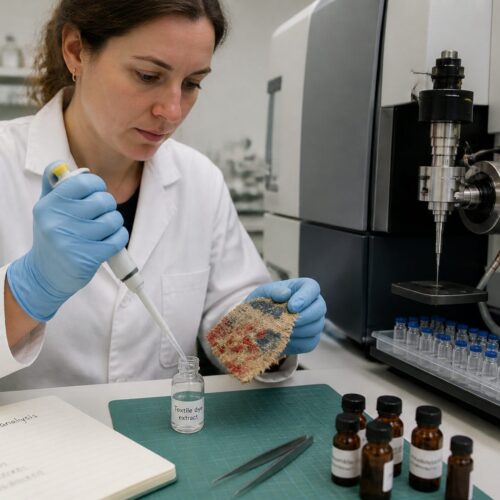
Sample preparation is a critical and essential step in the stable isotope analysis of mineral pigments, as it lays the groundwork for obtaining reliable results. The preparation process typically involves isolating the pigment from the substrate and ensuring that it is free from any contaminants that could skew the results of the analysis.
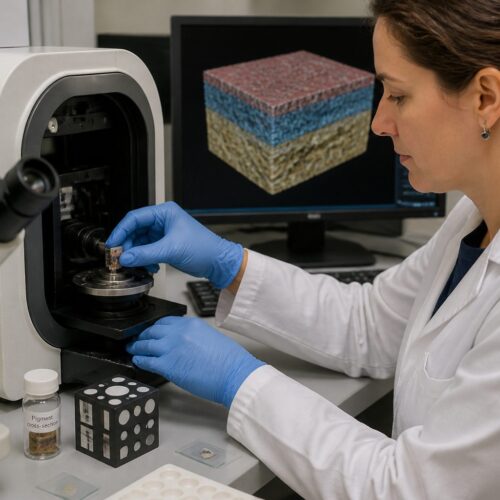
Once thoroughly prepared, the samples are analyzed using Multi-Collector Inductively Coupled Plasma Mass Spectrometry (MC-ICP-MS), which is an advanced and highly sensitive analytical technique. This method allows for precise measurements of isotope ratios, making it essential for accurate provenance studies that aim to uncover the origins of mineral pigments.
MC-ICP-MS stands out in the field due to its high sensitivity and its capability to measure multiple isotopes simultaneously, which is a significant advantage. This efficiency significantly enhances the throughput of isotope ratio analyses, allowing researchers to process more samples in a shorter amount of time compared to traditional methods.
Moreover, the calibration of instruments during the measurement process is crucial for obtaining reliable and reproducible results. Proper calibration ensures that the isotope ratios obtained during analysis are representative of the actual concentrations present in the samples, thus enhancing the overall quality of the data.
Overall, the use of MC-ICP-MS in mineral pigment origin analysis has revolutionized the field, allowing for more accurate and comprehensive studies that were not possible with earlier techniques. The precision and reliability of this method continue to drive advancements in our understanding of historical pigments and their significance in the context of art conservation.
Building Isotopic Reference Databases for Mining Districts
Creating isotopic reference databases is absolutely essential for conducting effective provenance studies in mineral pigments. These databases compile isotopic data from various mining districts around the world, providing a valuable and comprehensive resource for researchers who are investigating pigment origins.
Reference databases allow researchers to compare unknown samples against established isotopic signatures, which is a crucial step in accurately identifying the geographical origin of mineral pigments used in artworks. This comparison process helps to build a clearer picture of the sources of materials and the historical context in which they were used.
In building these databases, researchers typically collect samples from known sources and meticulously analyze their isotopic ratios. The resulting data serves as a benchmark for future studies aiming to trace pigments back to their origins, thus facilitating a deeper understanding of historical artistic practices.
Furthermore, ongoing updates to these databases are critical as new mining districts are discovered and analyzed, which can expand our knowledge base significantly. By maintaining current isotopic information, researchers can enhance the accuracy of mineral pigment origin analysis, ensuring that new findings are incorporated into existing frameworks.
Overall, the establishment and continual refinement of isotopic reference databases significantly strengthens the field of pigment provenance research and conservation. These resources facilitate the connection between historical artworks and their geographical sources, enriching our appreciation of the interplay between art and geography.
Interpreting Isotope Ratios in Multi-Source Pigment Mixtures
Interpreting isotope ratios in multi-source pigment mixtures presents unique and complex challenges that researchers must navigate. When pigments sourced from different origins are combined, their isotopic signatures can overlap, complicating the attribution process and making it difficult to discern their individual contributions.
To address this intricate issue, researchers must employ sophisticated analytical techniques and advanced statistical models that can account for these complexities. These tools help to discern the contributions of individual pigments within a mixture, allowing for a more accurate understanding of the materials used in historical artworks.
- Isotopic composition analysis
- Statistical modeling
- Deconvolution techniques
- Comparative reference data
- Multi-isotope integration
By leveraging these methodologies, researchers can achieve a more nuanced understanding of the sources contributing to a given pigment mixture, which is invaluable in the field of art conservation. This improved clarity is vital for accurate historical interpretations and for ensuring that conservation efforts are informed by solid evidence.
Ultimately, the ability to interpret isotopic signatures in complex mixtures enhances the depth of our knowledge regarding historical pigment use and sourcing. This understanding is crucial for preserving and appreciating our cultural heritage, ensuring that the stories of our past are not lost to time.
Case Studies: Tracing Cinnabar and Galena to Specific Ancient Mines
Case studies involving cinnabar and galena illustrate the practical and impactful applications of stable isotope analysis in understanding historical practices. Researchers have successfully traced these pigments back to specific ancient mines, providing invaluable insights into sourcing practices and the materials used in the creation of historical artworks.
For instance, studies on cinnabar have revealed distinct isotopic signatures that correlate with known mercury deposits from ancient mining sites. This correlation not only confirms the origins of the pigment but also highlights the trade routes utilized by ancient artists and the networks of commerce that facilitated the exchange of materials.
Similarly, lead isotope studies of galena have enabled researchers to pinpoint the exact mining districts from which this pigment was sourced, demonstrating the effectiveness of isotope analysis. The ability to link galena to specific mines adds another layer of depth to our understanding of historical art materials and the implications for trade and cultural exchange.
These case studies exemplify how stable isotope analysis can illuminate the historical context surrounding mineral pigments, shedding light on the choices made by artists in their materials. They serve as a testament to the significance of isotope ratio pigment sourcing in art conservation, reinforcing the importance of scientific inquiry in understanding our artistic heritage.
Moreover, the findings from these studies contribute to the broader field of archaeological research, enhancing our understanding of ancient societies and their connections to the natural world. By unraveling the connections between pigments and their sources, we gain a richer perspective on historical practices, cultural significance, and the evolution of artistic techniques.
Limitations and Overlapping Isotope Fields Between Regions
Despite the numerous strengths of stable isotope analysis, there are important limitations that researchers must carefully consider within their studies. Overlapping isotope fields between regions can complicate the attribution of pigments, leading to potential misinterpretations and uncertainty about the true origins of materials.
This overlap is particularly evident when dealing with geographically close mining districts, where the isotopic signatures may be so similar that distinguishing between them becomes a significant challenge. Consequently, this necessitates the use of additional analytical approaches and methodologies to ensure accurate conclusions are drawn.
Furthermore, variations in mineral processing and environmental factors can also influence isotopic ratios, introducing additional layers of complexity to the analysis. These factors must be accounted for when interpreting results, as they can introduce variability in data that may affect the reliability of provenance conclusions.
To mitigate these limitations effectively, researchers often complement isotope analysis with other methodologies, thus providing a more robust framework for drawing conclusions. By combining multiple lines of evidence, researchers can improve the reliability of their provenance conclusions, creating a more comprehensive understanding of the materials used.
Ultimately, while stable isotope analysis is a powerful tool with significant potential, it is essential to acknowledge its constraints and limitations. A balanced and thoughtful approach that incorporates various analytical techniques can enhance the accuracy and reliability of mineral pigment origin analysis, ensuring that our interpretations are well-founded.
Future Expansion: Strontium and Neodymium Isotopes in Pigment Research
The future of pigment provenance research holds exciting potential with the exploration of strontium and neodymium isotopes, which are emerging as valuable tools. These isotopes offer new avenues for understanding the geographic origins of mineral pigments and can enhance the existing methodologies currently employed.
Strontium isotopes, in particular, have shown great promise in distinguishing between different geological sources due to their unique isotopic signatures that can vary widely. On the other hand, neodymium isotopes can provide insights into the geological history of the pigments, further enriching our understanding of the sources and processes involved in their formation.
As researchers continue to develop and refine methodologies for strontium and neodymium isotope analysis, we can anticipate more accurate and comprehensive provenance studies emerging from this work. This advancement will undoubtedly enrich the field of mineral pigment origin analysis, broadening our understanding of historical materials and their significance in the art world.
Moreover, integrating these newer isotopes with established techniques enhances the robustness of provenance conclusions and provides a more nuanced understanding of historical materials. The interplay between various isotopic signatures can offer a more comprehensive view of pigment sourcing, shedding light on the intricate relationships between geography, geology, and artistic creation.
In conclusion, the future expansion of pigment research through the exploration of strontium and neodymium isotopes promises to unveil even more about the historical context of art materials and practices. This ongoing exploration will undoubtedly contribute to the preservation and appreciation of our artistic heritage, ensuring that the stories told through art continue to resonate throughout time.