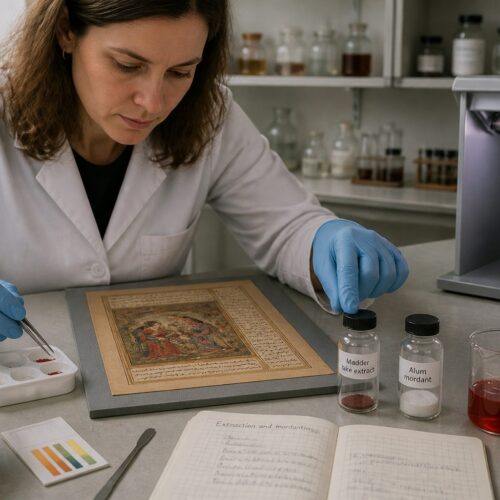

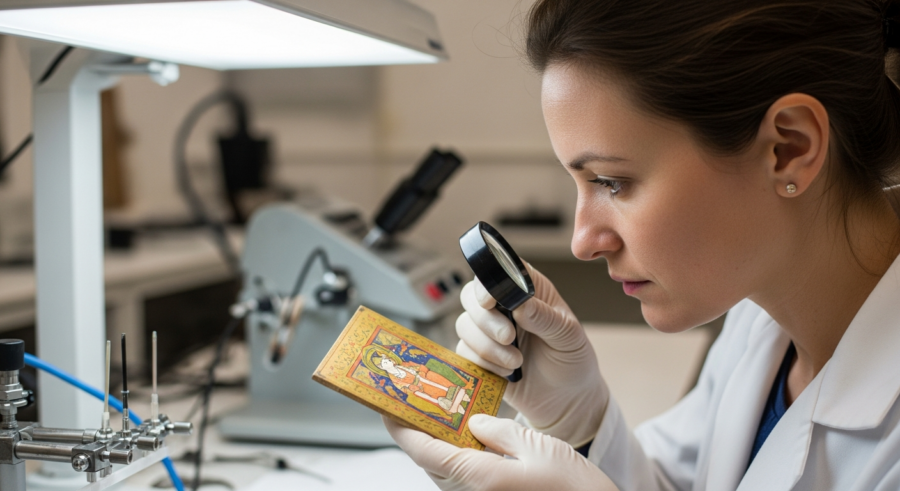
Mughal miniatures, celebrated for their exquisite detail and vibrant colors, offer a window into the artistic and cultural achievements of the Mughal Empire. Analyzing Pigments in Mughal Miniatures requires a blend of art history, chemical analysis, and conservation science to fully appreciate these historical treasures.
Understanding the materials and techniques used by Mughal artists provides insights into their creative processes and the historical context in which they worked. This article explores the methods used for analyzing pigments in Mughal miniatures, the identification of traditional pigments, the use of gold and silver leaf, conservation challenges, and the role of pigment analysis in authentication and dating.
By examining these aspects, we gain a deeper appreciation for the artistry and historical significance of these miniature worlds. The study of Analyzing Pigments in Mughal Miniatures is essential for preserving these precious artworks for future generations.
Historical Context of Mughal Miniatures and Artistic Techniques
Mughal miniatures emerged during the 16th century, blending Persian, Indian, and European artistic styles. These paintings were commissioned by Mughal emperors and nobles to illustrate manuscripts, chronicle historical events, and depict courtly life.
The Mughal emperors, such as Akbar, Jahangir, and Shah Jahan, were patrons of the arts, fostering an environment where artistic innovation could flourish. Their patronage led to the creation of some of the most refined and detailed miniature paintings in the world, showcasing the wealth and cultural sophistication of the Mughal court.
Mughal artists employed a range of techniques to achieve the characteristic detail and luminosity of their paintings. This included the use of fine brushes made from squirrel hair, meticulous layering of pigments, and burnishing to create a smooth, polished surface.
The artists also utilized a variety of materials, including handmade paper, natural pigments derived from minerals and plants, and precious metals like gold and silver. The combination of these techniques and materials resulted in artworks that are both visually stunning and historically significant, providing valuable insights into the cultural and artistic traditions of the Mughal era.
The paper used for Mughal miniatures, known as “wasli,” was specially prepared through a laborious process of layering, pasting, and burnishing to create a smooth and receptive surface for painting. This careful preparation ensured that the pigments would adhere well and that the fine details of the paintings could be executed with precision.
The artistic techniques were often passed down through generations of artists, with apprentices learning from master painters in workshops attached to the imperial court. This system of apprenticeship ensured the continuity of artistic traditions and the preservation of specialized knowledge and skills.
The themes depicted in Mughal miniatures ranged from portraits of emperors and nobles to scenes of courtly life, hunting expeditions, and battles. These paintings served not only as works of art but also as historical records, providing valuable insights into the social, political, and cultural life of the Mughal Empire.
The influence of Persian art is evident in the delicate lines, intricate patterns, and stylized figures that characterize Mughal miniatures. Indian artistic traditions contributed to the vibrant colors, narrative elements, and the depiction of local flora and fauna.
European artistic styles, introduced through trade and diplomatic missions, also had an impact on Mughal painting, particularly in the use of perspective and shading. The synthesis of these diverse artistic influences resulted in a unique and distinctive style that is characteristic of Mughal miniatures.
Methods for Analyzing Pigments in Mughal Miniatures
Analyzing pigments in Mughal miniatures requires a combination of non-destructive and micro-destructive techniques. Non-destructive methods are preferred to minimize damage to the artwork, allowing for the preservation of the painting’s integrity.
These methods include visual examination, microscopy, and various spectroscopic techniques. Visual examination involves using magnification to observe the surface characteristics of the pigments, such as particle size, color, and texture, offering initial clues about their composition.
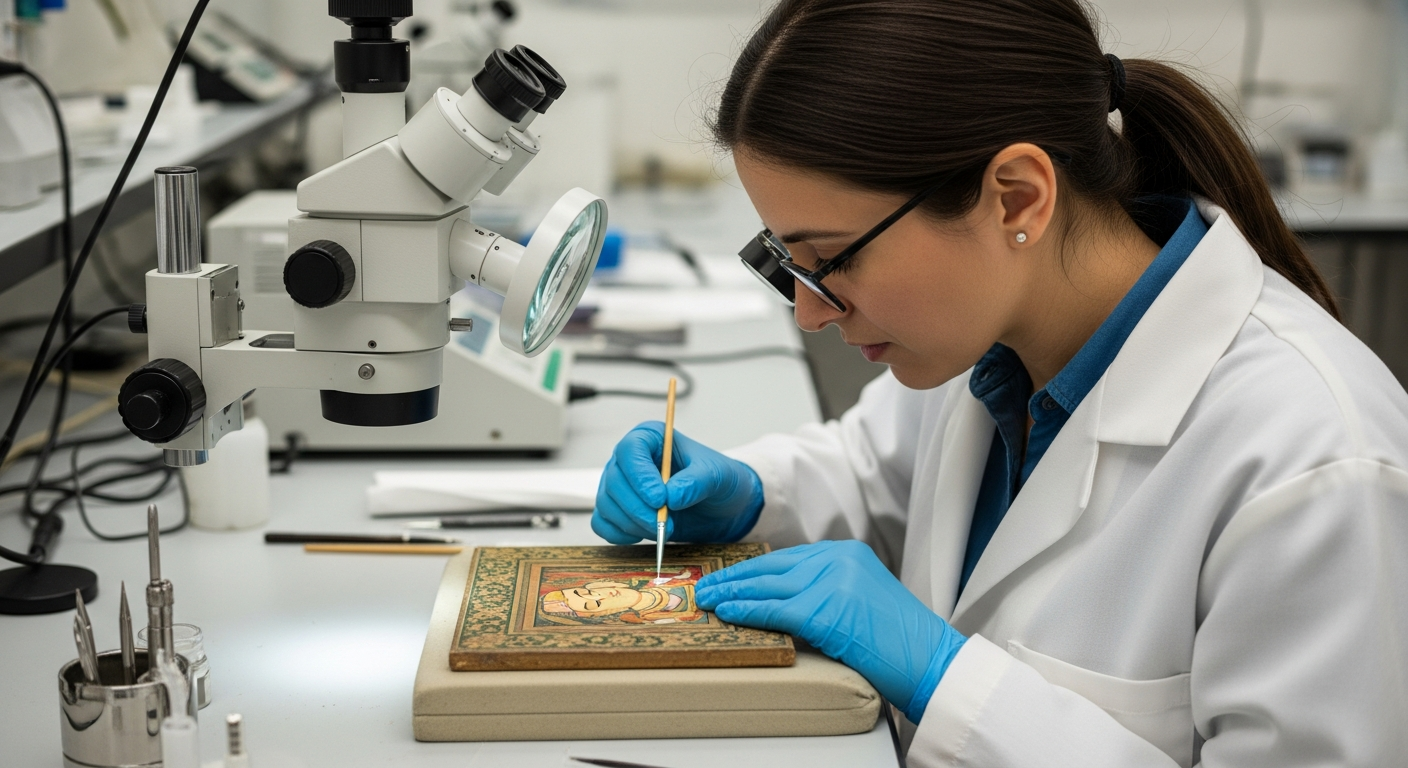
Microscopy, including optical microscopy and scanning electron microscopy (SEM), provides higher resolution images of the pigments, revealing their morphology and distribution. Spectroscopic techniques, such as X-ray fluorescence (XRF) and Raman spectroscopy, are used to identify the elemental composition and molecular structure of the pigments without requiring physical samples.
When necessary, micro-destructive techniques such as cross-sectional analysis and gas chromatography-mass spectrometry (GC-MS) may be employed. Cross-sectional analysis involves taking a tiny sample of the paint layer and examining it under a microscope to reveal the layering and composition of the pigments. GC-MS is used to identify organic components, such as binders and varnishes, providing further information about the materials and techniques used by the artists.
X-ray diffraction (XRD) is another valuable technique for identifying crystalline pigments, providing information about their crystal structure and composition. This method is particularly useful for distinguishing between different forms of the same pigment, such as different polymorphs of mercuric sulfide (vermilion).
Ultraviolet-visible (UV-Vis) spectroscopy can be used to analyze the absorption and reflection properties of pigments, providing information about their color and chemical composition. This technique is often used in conjunction with other methods to provide a more comprehensive analysis of the pigments.
Fourier transform infrared spectroscopy (FTIR) is used to identify the organic and inorganic components of the paint layers, including binders, varnishes, and pigments. This technique is particularly useful for identifying organic pigments and for characterizing the binding media used by the artists.
The selection of appropriate analytical techniques depends on the specific research question and the condition of the artwork. A combination of non-destructive and micro-destructive methods is often used to provide a comprehensive analysis of the pigments while minimizing damage to the painting.
The data obtained from pigment analysis is then compared to historical records and scientific databases to identify the pigments and to understand their provenance and use in Mughal painting. This information is essential for authenticating, dating, and conserving these valuable artworks.
Identifying Traditional Pigments Used in Mughal Painting
Mughal artists utilized a range of traditional pigments derived from natural sources. These pigments were carefully selected for their color, stability, and availability, contributing to the distinctive palette of Mughal miniatures.
Identifying these pigments is essential for understanding the materials used by the artists and for informing conservation strategies. The primary colors used in Mughal painting included red, yellow, blue, green, and white, each obtained from different sources.
| Pigment | Source | Chemical Composition |
|---|---|---|
| Red Vermilion | Mineral Cinnabar | Mercuric Sulfide (HgS) |
| Yellow Orpiment | Mineral Orpiment | Arsenic Trisulfide (As2S3) |
| Blue Lapis Lazuli | Mineral Lapis Lazuli | Sodium Aluminum Silicate with Sulfur |
| Green Malachite | Mineral Malachite | Copper Carbonate Hydroxide (Cu2CO3(OH)2) |
| White Lead White | Lead | Lead Carbonate (2PbCO3·Pb(OH)2) |
| Black Lamp Black | Soot | Carbon (C) |
Other important pigments used in Mughal painting included indigo (from the Indigofera plant), Indian yellow (derived from the urine of cows fed on mango leaves), and various earth pigments such as ochre and umber. These pigments were often mixed to create a wide range of hues and tones, allowing the artists to achieve the subtle gradations and realistic details that characterize Mughal miniatures.
The preparation of pigments was a laborious process, involving grinding, washing, and mixing the raw materials to achieve the desired consistency and color intensity. The artists often used mortars and pestles made of stone or ceramic to grind the pigments, ensuring that the particles were fine enough to be applied smoothly to the paper surface.
The quality of the pigments was also crucial, as the artists sought materials that were pure, stable, and resistant to fading or discoloration. The sourcing of pigments often involved trade networks that spanned vast distances, bringing materials from different regions of India and beyond.
The use of natural pigments in Mughal painting reflects the artists’ deep understanding of the natural world and their ability to transform raw materials into works of art. The identification and analysis of these pigments provide valuable insights into the materials and techniques used by the artists and the cultural and economic context in which they worked.
Understanding the Use of Gold and Silver Leaf
Gold and silver leaf were frequently used in Mughal miniatures to add richness, luminosity, and symbolic value. These precious metals were applied in various ways, including gilding backgrounds, highlighting details, and creating decorative patterns.
The use of gold and silver leaf not only enhanced the aesthetic appeal of the paintings but also conveyed the wealth and status of the patrons who commissioned them. Gold leaf was typically applied using a binder, such as gum arabic or egg white, and then burnished to create a smooth, reflective surface.
Silver leaf, which is more prone to tarnishing, was often protected with a layer of varnish to prevent oxidation. Analyzing the application techniques and the condition of the gold and silver leaf provides valuable information about the original appearance of the paintings and the conservation challenges they face.
The presence of these precious metals also offers insights into the trade routes and economic conditions of the Mughal era, as the availability and quality of gold and silver reflected the empire’s access to resources and its connections with other regions. The incorporation of gold and silver in Mughal miniatures serves as a reminder of the opulence and grandeur of the Mughal court.
The process of applying gold leaf, known as gilding, required specialized skills and tools. The gold was first hammered into thin sheets, then cut into small pieces and carefully applied to the prepared surface using a fine brush and a suitable adhesive.
Burnishing, the process of polishing the gold leaf, was done using a smooth stone or bone tool to create a lustrous, reflective surface. The burnishing process not only enhanced the appearance of the gold but also helped to adhere it firmly to the paper support.
Silver leaf was often used to create subtle highlights and to depict objects such as jewelry, armor, and architectural details. The use of silver leaf added a delicate shimmer to the paintings, enhancing their overall visual impact.
The tarnishing of silver leaf is a common problem in Mughal miniatures, as silver reacts with sulfur compounds in the air to form silver sulfide, a black or brown substance that obscures the metal’s reflective surface. Conservation treatments often involve carefully cleaning the silver leaf to remove the tarnish and restore its original appearance.
The study of gold and silver leaf in Mughal miniatures provides valuable insights into the artistic techniques, materials, and cultural values of the Mughal era. The presence of these precious metals underscores the importance of these artworks as symbols of wealth, power, and artistic achievement.
Conservation Challenges and Preservation Strategies
Mughal miniatures, like all historical artworks, face numerous conservation challenges that threaten their long-term survival. These challenges include pigment degradation, fading, flaking, and the deterioration of the paper support.
Environmental factors such as light, humidity, and temperature fluctuations can accelerate the deterioration process, leading to irreversible damage. Conservation strategies aim to mitigate these risks and preserve the paintings for future generations.
Preventive conservation measures, such as controlling environmental conditions and implementing proper storage and handling practices, are essential for minimizing deterioration. Active conservation treatments, such as cleaning, consolidation, and retouching, may be necessary to address existing damage and stabilize the artwork.
The selection of appropriate conservation materials and techniques is crucial to ensure the long-term stability and aesthetic integrity of the paintings. Conservation scientists and conservators work together to develop and implement conservation plans that are tailored to the specific needs of each artwork, taking into account its materials, condition, and historical context.
One of the primary challenges in conserving Mughal miniatures is the sensitivity of the pigments to light and moisture. Many of the traditional pigments used in these paintings are prone to fading or discoloration when exposed to ultraviolet radiation or high humidity levels.
The paper support is also vulnerable to deterioration, becoming brittle and discolored over time. Fluctuations in temperature and humidity can cause the paper to expand and contract, leading to cracks and tears in the paint layers.
Insect infestations and mold growth can also pose a threat to Mughal miniatures, damaging the paper and pigments. Proper storage and handling practices, such as using acid-free materials and controlling the environment, are essential for preventing these types of damage.
Conservation treatments often involve carefully cleaning the paintings to remove surface dirt and grime, consolidating flaking pigments to prevent further loss, and repairing tears and cracks in the paper support. Retouching may be necessary to address losses in the paint layers, but this is done with great care to avoid altering the original appearance of the artwork.
The long-term preservation of Mughal miniatures requires a collaborative effort between conservators, scientists, art historians, and museum professionals. By working together, these experts can ensure that these valuable artworks are protected and preserved for future generations to enjoy.
Specific Conservation Techniques
Conserving Mughal miniatures requires a delicate balance between preserving the original materials and addressing the damage caused by time and environmental factors. Several specific techniques are employed to ensure the longevity of these artworks.
Surface cleaning is often the first step, removing dust and grime that can obscure the pigments and accelerate deterioration. This is typically done using soft brushes, gentle solvents, and specialized cleaning solutions designed to lift dirt without damaging the paint layers.
Consolidation involves stabilizing flaking or lifting pigments by applying a suitable adhesive to reattach them to the paper support. The choice of adhesive is critical, as it must be compatible with the original materials and not cause further damage or discoloration over time.
Retouching is used to address losses or areas of damage, carefully filling in missing pigments with colors that match the original palette. This is done using reversible materials and techniques, allowing for future conservators to undo the retouching if necessary, ensuring the authenticity of the artwork is maintained.
Humidification is sometimes used to relax the paper support, allowing it to be flattened and reducing creases and distortions. This process involves carefully introducing moisture into the paper, making it more pliable and easier to work with.
Lining is a technique used to reinforce the paper support by attaching a new sheet of paper to the back of the miniature. This provides additional strength and stability, helping to prevent further damage and deterioration.
Varnishing is sometimes applied to protect the paint layers from environmental factors and to enhance the colors. However, the use of varnish is controversial, as it can alter the appearance of the painting and may become discolored or brittle over time.
Digital imaging and documentation play an important role in conservation, allowing conservators to record the condition of the painting before, during, and after treatment. This provides a valuable record of the conservation process and helps to monitor the long-term stability of the artwork.
Ethical considerations are paramount in conservation, ensuring that all treatments are carried out with the utmost respect for the original artwork and its historical and cultural significance. Conservators adhere to a strict code of ethics, prioritizing the preservation of the artwork over any other considerations.
The Role of Pigment Analysis in Authenticating and Dating Miniatures
Pigment analysis plays a crucial role in authenticating and dating Mughal miniatures. By identifying the pigments used in a painting, art historians and conservation scientists can determine whether the materials are consistent with the period and region in which the artwork was supposedly created.
The use of certain pigments, such as synthetic colors or materials not available during the Mughal era, can indicate that a painting is a later forgery or a modified artwork. Analyzing the pigments can also help to establish the provenance of a painting, tracing its history and ownership through the materials used.
For example, the presence of specific pigments associated with certain regions or trade routes can provide clues about the painting’s origin and its movement over time. Additionally, pigment analysis can be used to identify later additions or alterations to a painting, distinguishing between original and non-original elements.
This information is essential for understanding the painting’s historical context and for making informed decisions about its conservation and preservation. The combination of pigment analysis, stylistic analysis, and historical research provides a comprehensive approach to authenticating and dating Mughal miniatures, ensuring their accurate interpretation and appreciation.
The discovery of anachronistic pigments, those that were not available during the purported time of creation, is a strong indicator of forgery. For instance, the presence of a synthetic pigment developed in the 19th century in a painting claimed to be from the 17th century would immediately raise serious doubts about its authenticity.
Pigment analysis can also help to identify restorations or alterations made to a painting at a later date. By comparing the pigments used in different areas of the painting, conservators can determine whether certain sections have been retouched or repainted using materials that are not consistent with the original palette.
The analysis of binding media, the substances used to bind the pigments together, can also provide valuable information about the painting’s authenticity and dating. Different types of binding media, such as gum arabic, egg tempera, or oil-based varnishes, were used in different periods and regions, and their identification can help to narrow down the painting’s origin and date.
In addition to pigment analysis, other scientific techniques, such as radiocarbon dating of the paper support, can be used to further refine the dating of Mughal miniatures. The combination of scientific and art historical evidence provides a more robust and reliable basis for authenticating and dating these valuable artworks.
The authentication process is often complex and requires the expertise of a team of specialists, including art historians, conservation scientists, and curators. By working together, these experts can bring their knowledge and skills to bear on the task of authenticating and dating Mughal miniatures, ensuring that these artworks are properly understood and appreciated.
Key Steps in Authentication
Authenticating Mughal miniatures involves a multi-faceted approach, combining scientific analysis with art historical research. The process typically includes several key steps to ensure the accuracy and reliability of the authentication.
The initial step involves a thorough visual examination of the painting, assessing its style, technique, and condition. Art historians compare the painting to known examples of Mughal miniatures, looking for similarities in composition, brushwork, and subject matter.
- Historical research on provenance
- Stylistic analysis by experts
- Non-destructive pigment analysis
- Microscopic examination of brushstrokes
- Comparison with dated works
The historical research on provenance involves tracing the ownership history of the painting, looking for records of its previous owners, exhibitions, and publications. This can help to establish the painting’s authenticity and to identify any gaps or inconsistencies in its history.
Stylistic analysis is conducted by experts in Mughal art, who examine the painting’s style, composition, and iconography to determine whether it is consistent with the known characteristics of Mughal miniatures. This involves comparing the painting to other works by the same artist or from the same period, looking for similarities and differences in style and technique.
Non-destructive pigment analysis is used to identify the pigments used in the painting without taking physical samples. This can help to determine whether the pigments are consistent with the period and region in which the painting was supposedly created, and to identify any anachronistic or unusual materials.
Microscopic examination of brushstrokes and other details can reveal valuable information about the painting’s technique and condition. This can help to identify any later additions or alterations to the painting, and to assess the quality of the brushwork and the level of detail.
Comparison with dated works is an important step in the authentication process, as it allows art historians to compare the painting to other Mughal miniatures that have been reliably dated. This can help to establish the painting’s date of creation and to identify any inconsistencies or anomalies.
Case Studies: Pigment Analysis and Art Historical Discoveries
Several case studies illustrate the importance of pigment analysis in uncovering new insights about Mughal miniatures. These studies demonstrate how scientific analysis can complement art historical research, leading to a deeper understanding of the paintings and their creators.
One notable case involved the analysis of a miniature attributed to the workshop of Emperor Akbar. Pigment analysis revealed the presence of a rare blue pigment, previously unknown to be used in that period.
This discovery led to a re-evaluation of the painting’s dating and attribution, suggesting that it may have been created later than originally thought or that the artist had access to materials not typically available at the time. Another case involved the examination of a miniature depicting a royal procession.
Pigment analysis identified the use of a specific type of red pigment that was only produced in a particular region of India. This finding provided valuable evidence about the painting’s origin and its connection to that region, helping to trace its historical journey and its place within the broader context of Mughal art.
In another instance, pigment analysis of a miniature purported to be a portrait of a Mughal emperor revealed the use of a synthetic pigment that was not invented until the 19th century. This finding definitively proved that the painting was a later forgery, despite its stylistic similarities to authentic Mughal portraits.
A case study involving a series of miniatures from a dispersed manuscript revealed variations in the pigments used, suggesting that the manuscript was produced over a period of time by different artists. This discovery shed light on the collaborative nature of Mughal manuscript production and the different artistic styles that were employed.
Pigment analysis has also been used to identify the sources of the pigments used in Mughal miniatures, providing insights into the trade routes and economic networks that supplied the artists with their materials. The identification of pigments from specific regions or countries can help to trace the movement of goods and ideas across the Mughal Empire.
These case studies demonstrate the power of pigment analysis as a tool for art historical research, providing new insights into the materials, techniques, and historical context of Mughal miniatures. By combining scientific analysis with art historical expertise, researchers can uncover hidden stories and challenge existing assumptions about these valuable artworks.
Conclusion
The study of pigment analysis in Mughal miniatures offers a fascinating intersection of art, science, and history. By employing a range of analytical techniques, researchers can unlock valuable information about the materials, techniques, and historical context of these artworks.
This knowledge is essential for authenticating, dating, and conserving Mughal miniatures, ensuring their preservation for future generations. The insights gained from pigment analysis not only enhance our understanding of Mughal art but also shed light on the broader cultural and economic exchanges that shaped the Mughal Empire.
As technology advances, new and more sophisticated methods for pigment analysis are being developed, offering even greater potential for uncovering the secrets of Mughal miniatures. These advancements will enable researchers to gain a deeper understanding of the materials and techniques used by the artists, and to make more informed decisions about the conservation and preservation of these valuable artworks.
The ongoing study of pigment analysis in Mughal miniatures is a testament to the enduring fascination with these artworks and the importance of preserving them for future generations. By combining scientific rigor with art historical expertise, researchers can ensure that these treasures of Mughal art continue to inspire and inform for many years to come.