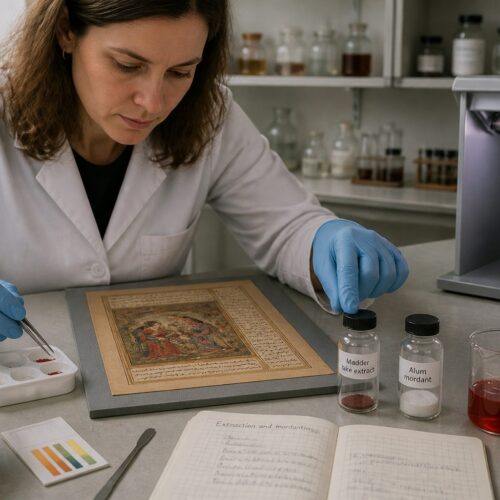


Renaissance tapestries are more than just decorative wall hangings. They are intricate works of art, rich in historical and cultural significance, offering a window into the world of the 15th and 16th centuries.
Understanding the materials and techniques used to create these tapestries is essential for their preservation and for gaining a deeper appreciation of the artistic skills involved. Pigment Identification in Renaissance Tapestries through chemical analysis plays a crucial role in art history research, providing insights into trade routes, artistic practices, and the evolution of color palettes during this period.
This article explores the methods used to identify pigments in Renaissance tapestries, shedding light on the dyeing processes, color palettes, and the broader context of textile production during the Renaissance. By examining specific case studies and comparing historical dye recipes with the pigments found in these textiles, we can gain a more nuanced understanding of the materials and techniques employed by Renaissance artisans.
Overview of Renaissance Tapestries and Their Artistic Significance
Renaissance tapestries served as status symbols, displaying wealth and power. These elaborate textiles adorned the walls of castles, palaces, and cathedrals, providing insulation, decoration, and a backdrop for important events.
The creation of these tapestries was a collaborative effort, involving skilled weavers, dyers, and designers. Renaissance Tapestry Pigments were carefully selected and applied to create a wide range of colors and hues, bringing scenes from mythology, history, and religion to life.
The artistic significance of Renaissance tapestries lies not only in their visual appeal but also in their historical and cultural context. They offer valuable insights into the social, economic, and artistic practices of the Renaissance period, reflecting the values, beliefs, and aspirations of the people who commissioned and created them.
The scale and complexity of these woven artworks made them highly prized possessions. They were often commissioned by royalty and wealthy patrons to celebrate victories, commemorate important events, or simply to showcase their refined tastes.
Tapestries were not merely decorations; they were integral parts of courtly life. They served as insulation against cold stone walls, and they also acted as portable displays of wealth and power during travels.
The subject matter depicted in Renaissance tapestries often reflected the interests and values of the patrons who commissioned them. Common themes included religious narratives, mythological stories, historical events, and scenes of courtly life.
The intricate designs and vibrant colors of Renaissance tapestries required a high level of skill and expertise. Weavers had to master complex weaving techniques to create the detailed imagery and textures that characterized these artworks.
Dyers played a crucial role in the creation of Renaissance tapestries, carefully selecting and preparing the dyes that would be used to color the yarns. They had to understand the properties of different dyes and mordants to achieve the desired shades and hues.
Case Study: A Specific Renaissance Tapestry and Its Provenance
Let’s consider the “Hunt of the Unicorn” tapestries, a series of seven tapestries created in the late 15th century. These tapestries depict a group of noblemen hunting a mythical unicorn, and they are renowned for their rich colors, detailed imagery, and allegorical symbolism.
The provenance of the “Hunt of the Unicorn” tapestries is well-documented, tracing their ownership from the Rochefoucauld family in France to their eventual acquisition by The Metropolitan Museum of Art in New York. Textile Analysis reveals that the tapestries were woven from wool and silk, with a variety of natural dyes used to create the vibrant colors.
Examination of the “Hunt of the Unicorn” tapestries reveals the use of woad for blue, weld for yellow, and madder for red. These dyes, derived from plants, were commonly used in Renaissance textile production, and their presence in the tapestries provides valuable information about the materials and techniques employed by the weavers.
The tapestries’ excellent condition allows for detailed pigment analysis and comparisons to other Renaissance textiles. The “Hunt of the Unicorn” series serves as a benchmark for understanding Renaissance weaving and dyeing practices.
The “Hunt of the Unicorn” tapestries are rich in symbolism, with the unicorn representing Christ and the hunt representing the Passion. The various plants and animals depicted in the tapestries also carry symbolic meanings, adding layers of interpretation to the artwork.
The tapestries were likely commissioned by a wealthy and powerful patron, possibly a member of the French nobility. The high quality of the materials and the intricate designs suggest that no expense was spared in their creation.
The “Hunt of the Unicorn” tapestries have been the subject of extensive scholarly research, with art historians and textile experts studying their history, symbolism, and artistic techniques. These studies have shed light on the cultural and historical context in which the tapestries were created.
The tapestries’ survival over centuries is a testament to the skill of the weavers and the quality of the materials used. Their ongoing preservation ensures that future generations can appreciate these masterpieces of Renaissance art.
Techniques for Extracting and Identifying Pigments from Tapestry Fibers
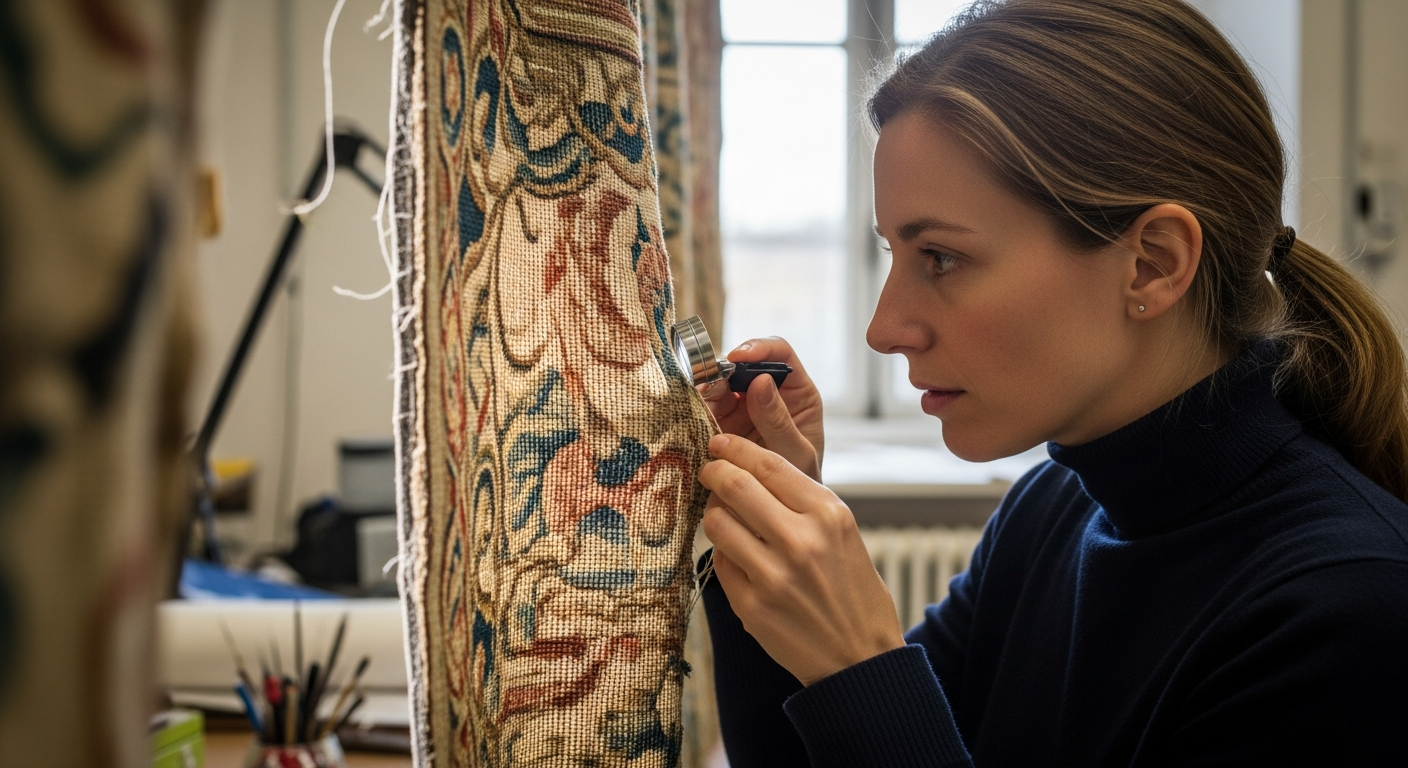
Extracting pigments from tapestry fibers requires careful and precise techniques to avoid damaging the delicate textiles. Micro-sampling is often employed, taking small samples of individual threads or fibers for analysis.
Once the samples are collected, various analytical methods can be used to identify the pigments present. These methods include non-destructive techniques like X-ray fluorescence (XRF) and fiber optics reflectance spectroscopy (FORS), as well as destructive techniques like high-performance liquid chromatography (HPLC) and mass spectrometry (MS).
| Technique | Description | Advantages | Limitations |
|---|---|---|---|
| X-ray Fluorescence (XRF) | Non-destructive analysis of elemental composition | Non-destructive, rapid analysis | Limited to surface analysis, may not detect all pigments |
| Fiber Optics Reflectance Spectroscopy (FORS) | Non-destructive analysis of color and reflectance | Non-destructive, portable | Limited to surface analysis, may not identify specific pigments |
| High-Performance Liquid Chromatography (HPLC) | Separation and identification of organic dyes | High sensitivity, can identify specific dyes | Destructive, requires sample preparation |
| Mass Spectrometry (MS) | Identification of molecules based on their mass-to-charge ratio | High sensitivity, can identify complex mixtures | Destructive, requires sample preparation |
XRF is useful for identifying inorganic pigments based on their elemental composition, while FORS provides information about the color and reflectance properties of the fibers. HPLC and MS are used to identify organic dyes, separating and identifying the individual dye molecules present in the sample.
Microscopy plays a crucial role in examining the fibers before and after pigment extraction. This helps to assess the condition of the fibers and to identify any signs of degradation or damage.
Gas chromatography-mass spectrometry (GC-MS) is another powerful technique used for identifying organic dyes. It is particularly useful for analyzing complex mixtures of dyes and for identifying degradation products.
Raman spectroscopy is a non-destructive technique that can provide information about the molecular structure of the pigments. It is particularly useful for identifying pigments that are difficult to analyze using other methods.
The choice of analytical technique depends on the specific research question and the characteristics of the tapestry being studied. A combination of different techniques is often used to obtain a comprehensive understanding of the pigments present.
Preparing Tapestry Fiber Samples for Analysis
Proper sample preparation is crucial for accurate and reliable pigment identification. The process typically involves carefully removing a small number of fibers from the tapestry using a scalpel or micro-scissors.
These fibers are then cleaned to remove any surface contamination, such as dust or dirt. The cleaning process may involve gentle washing with a mild solvent or the use of specialized cleaning agents designed for delicate textiles.
For techniques like HPLC and MS, the cleaned fibers must be further processed to extract the dyes. This may involve dissolving the fibers in a suitable solvent or using enzymatic digestion to break down the fiber structure and release the dyes.
The extracted dyes are then purified and concentrated before being analyzed. Careful documentation of the sampling location and procedure is essential for accurate interpretation of the results.
The selection of the sampling location is a critical step. Areas that are representative of the overall color palette and that show minimal signs of damage or fading are preferred.
The cleaning process must be carefully controlled to avoid removing or altering the pigments. Mild solvents and gentle techniques are used to minimize the risk of damage.
The extraction of dyes from the fibers can be a complex process, requiring careful optimization of the solvent, temperature, and extraction time. The goal is to extract the dyes efficiently without degrading them.
Purification and concentration of the extracted dyes are necessary to improve the sensitivity of the analytical techniques. This may involve techniques like solid-phase extraction or evaporation.
Analyzing the Dyeing Processes and Color Palette
The dyeing processes used in Renaissance textile production were complex and often involved multiple steps. Mordants, such as alum or iron salts, were used to fix the dyes to the fibers, enhancing their colorfastness and brilliance.
The color palette of Renaissance tapestries was influenced by the availability of natural dyes and the artistic preferences of the time. Common colors included blues from woad and indigo, yellows from weld and saffron, reds from madder and kermes, and greens from a combination of blue and yellow dyes.
The specific shades and hues achieved depended on the concentration of the dyes, the mordants used, and the dyeing techniques employed. Over-dyeing, where fibers were dyed with multiple colors, was used to create a wider range of shades and to achieve special effects.
Detailed analysis of the color palette can reveal information about the artistic choices made by the tapestry designers and weavers. The use of expensive or rare dyes may indicate the wealth and status of the patron who commissioned the tapestry.
The dyeing process was often a closely guarded secret, with dyers passing down their knowledge and techniques from generation to generation. The quality of the dyeing was crucial to the overall appearance and durability of the tapestry.
The use of mordants not only fixed the dyes to the fibers but also influenced the final color. Different mordants could produce different shades from the same dye, allowing dyers to create a wider range of colors.
The color palette of Renaissance tapestries was often symbolic, with different colors representing different virtues, emotions, or social statuses. The careful selection of colors was an important part of the tapestry’s overall message.
The analysis of the dyeing processes can also provide information about the trade routes and economic networks that supplied the dyes. The presence of dyes from distant lands indicates the existence of complex trade relationships.
Comparison with Historical Dye Recipes and Pigment Sources
Comparing the pigments identified in Renaissance tapestries with historical dye recipes and pigment sources provides valuable insights into the materials and techniques used by Renaissance artisans. Historical texts, such as dye manuals and recipe books, offer detailed instructions on how to prepare and use various dyes.
By comparing these recipes with the pigments found in tapestries, researchers can gain a better understanding of the dyeing processes employed and the sources of the dyes. For example, the presence of kermes, a red dye derived from insects, may indicate trade connections with regions where kermes was produced.
- Madder root for red hues
- Weld plant for yellow shades
- Woad leaves for blue colors
- Kermes insects for crimson dyes
- Indigo plant for deep blues
Analysis of the mordants used can also provide clues about the dyeing techniques employed. Alum, a common mordant, was used to create bright and vibrant colors, while iron salts were used to create darker and more muted shades.
Many historical dye recipes are complex and involve multiple steps, including the preparation of the dye bath, the mordanting of the fibers, and the dyeing process itself. Understanding these recipes is essential for interpreting the results of pigment analysis.
The sources of the dyes used in Renaissance tapestries varied depending on the region and the availability of materials. Some dyes were locally sourced, while others were imported from distant lands.
The comparison of pigment analysis results with historical dye recipes can also help to identify the use of adulterants or substitutes. Some dyers may have used cheaper or less desirable dyes to reduce costs.
The study of historical dye recipes and pigment sources provides valuable insights into the economic and social context of Renaissance textile production. It highlights the importance of trade, craftsmanship, and the availability of resources.
The Role of Pigment Identification in Renaissance Tapestries
Pigment identification plays a vital role in the conservation and restoration of Renaissance tapestries. Understanding the chemical composition of the dyes and pigments used allows conservators to develop appropriate cleaning and treatment methods.
Knowing the original pigments helps conservators to accurately restore faded or damaged areas. It ensures that the repairs are consistent with the original appearance of the tapestry, preserving its artistic and historical integrity.
Pigment identification also aids in authentication, helping to distinguish genuine Renaissance tapestries from later imitations. The presence of certain pigments or dyes that were not available during the Renaissance can indicate that a tapestry is a forgery or a later reproduction.
Additionally, it contributes to our understanding of the trade routes and economic networks that supported the textile industry. The sourcing of specific pigments can reveal connections between different regions and cultures during the Renaissance.
Conservators use pigment identification data to make informed decisions about the best way to clean and stabilize tapestries. Some cleaning methods can damage certain pigments, so it is important to choose methods that are compatible with the tapestry’s composition.
Pigment identification can also help to identify areas of a tapestry that have been previously restored or repaired. This information can be used to assess the effectiveness of past conservation treatments and to guide future interventions.
The use of pigment identification in authentication is particularly important in the art market. The value of a Renaissance tapestry can be significantly affected by its authenticity, so it is essential to have reliable methods for verifying its provenance.
Pigment identification contributes to a broader understanding of Renaissance art and culture. It provides valuable insights into the materials, techniques, and artistic practices of the period.
Implications for Understanding Renaissance Textile Production
The study of pigments in Renaissance tapestries has significant implications for understanding textile production during this period. It sheds light on the materials, techniques, and artistic practices employed by Renaissance artisans, providing a more nuanced and detailed picture of their craft.
By analyzing the pigments used in tapestries, researchers can gain insights into the trade routes and economic networks that supplied the raw materials for textile production. The presence of dyes from distant lands indicates the existence of complex trade relationships and the movement of goods across Europe and beyond.
The study of pigments also provides information about the social and economic status of the people who commissioned and created tapestries. The use of expensive or rare dyes may indicate the wealth and status of the patron, while the skills and knowledge required to create these intricate textiles reflect the expertise and craftsmanship of the weavers and dyers.
Furthermore, the analysis of Renaissance Tapestry Pigments helps us understand the evolution of color palettes and artistic styles during this period. It highlights the changing tastes and preferences of Renaissance society, as well as the influence of different artistic movements and cultural trends.
The study of Renaissance textile production also provides insights into the organization of labor and the division of tasks. The creation of a tapestry involved a complex network of artisans, including weavers, dyers, designers, and merchants.
The analysis of pigments can also help to identify the workshops or regions where specific tapestries were produced. The use of certain dyes or techniques may be characteristic of a particular workshop or region.
The study of Renaissance textile production contributes to a broader understanding of the economic and social history of the period. It highlights the importance of textiles as a source of wealth, employment, and artistic expression.
The knowledge gained from studying Renaissance textile production can also be applied to the preservation and conservation of other historical textiles. Understanding the materials and techniques used in the past can help conservators to develop more effective treatments for preserving these fragile objects.
Challenges and Future Directions in Pigment Analysis
Despite the advances in analytical techniques, pigment analysis of historical textiles still faces several challenges. The limited availability of samples, the degradation of dyes and pigments over time, and the complexity of the dyeing processes can all complicate the analysis.
Future research should focus on developing more sensitive and non-destructive analytical methods. These improvements would minimize the need for sampling and allow for the analysis of a wider range of textiles.
Improved data analysis techniques are also needed to better interpret the complex mixtures of dyes and pigments found in historical textiles. This includes developing better methods for distinguishing between different dye sources and for identifying the presence of degradation products.
Collaborative research projects involving scientists, conservators, and art historians are essential for advancing the field. These collaborations can bring together different perspectives and expertise, leading to a more comprehensive understanding of Renaissance textile production and the materials used.
The development of portable analytical instruments would allow for the analysis of tapestries in situ, without the need for sampling. This would be particularly valuable for studying large or fragile tapestries that cannot be easily moved.
The creation of comprehensive databases of pigment analysis results would facilitate the comparison of data from different studies and the identification of patterns and trends. This would require the standardization of analytical methods and the sharing of data among researchers.
The application of machine learning techniques to pigment analysis could help to automate the interpretation of complex data and to identify subtle differences between different dyes and pigments. This could lead to a more accurate and efficient analysis of historical textiles.
The integration of pigment analysis data with other sources of information, such as historical documents and archaeological findings, could provide a more complete picture of Renaissance textile production and the materials used. This interdisciplinary approach would lead to a deeper understanding of the cultural and economic context of the period.
Conclusion
The identification of pigments in Renaissance tapestries is a multifaceted endeavor. It combines scientific analysis, historical research, and artistic interpretation to reveal the secrets of these magnificent textiles.
By understanding the materials and techniques used to create these tapestries, we can gain a deeper appreciation of the artistry and craftsmanship of the Renaissance period. Pigment Identification in Renaissance Tapestries also helps to preserve these cultural treasures for future generations, ensuring that their beauty and historical significance are not lost.
Further research and collaboration will continue to enhance our knowledge of Renaissance textile production. The ongoing study of pigments promises to uncover new insights into the artistic, economic, and cultural landscape of the Renaissance.
The colors woven into these historical tapestries speak volumes. They tell stories of trade, artistry, and the enduring human fascination with beauty, making pigment analysis an invaluable tool for art historians and conservators alike.
The intricate details revealed through pigment analysis allow us to connect with the artisans of the past. Their knowledge, skill, and dedication are woven into the very fabric of these remarkable works of art, ensuring their legacy for centuries to come.