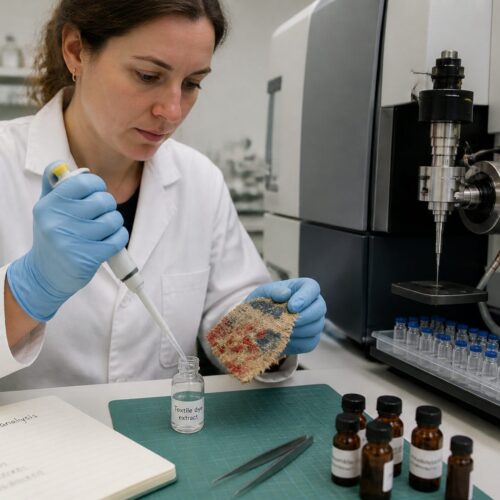

Historical pigments hold a wealth of information about the past. Analyzing these pigments can reveal details about trade routes, artistic techniques, and even the environmental conditions of the time.
However, pigments are often mixed with binding media and other materials, making direct analysis challenging. Solvent extraction pigments is a crucial technique for isolating individual pigments from complex mixtures, allowing for more accurate and detailed analysis.
This article will explore the principles, methods, and safety considerations involved in solvent extraction pigments. We’ll examine how this technique aids in the chemical analysis and conservation of historical artifacts.
Principles of Solvent Extraction
Solvent extraction is a separation technique that relies on the differential solubility of compounds in two immiscible solvents. In the context of pigment analysis, this means using a solvent to dissolve and isolate specific pigments from a sample.
The target pigment dissolves in the chosen solvent, while other components remain undissolved or dissolve to a lesser extent. This allows for the separation of the desired pigment from the rest of the sample matrix.
The process involves several key steps. First, the sample containing the pigments is mixed with the selected solvent.
Next, the mixture is agitated to facilitate the dissolution of the target pigment. The mixture is then allowed to settle, forming two distinct layers: the solvent layer containing the dissolved pigment and the remaining solid residue.
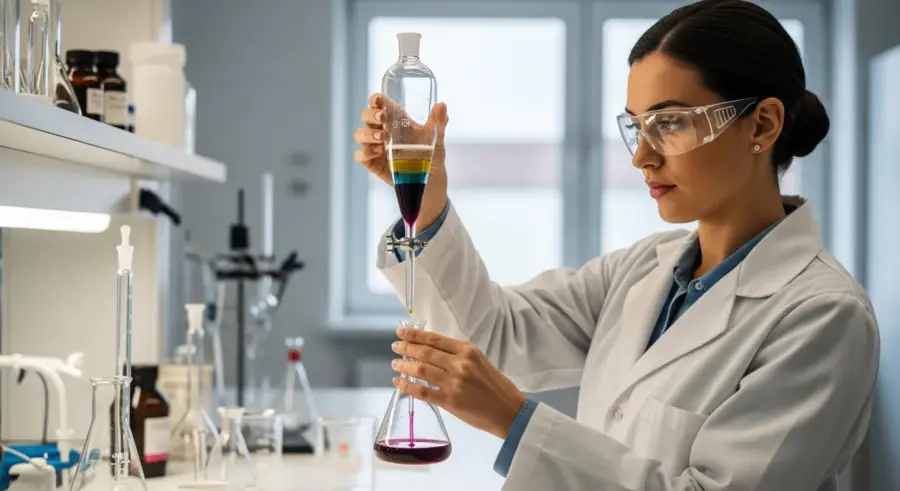
Finally, the solvent layer is carefully separated from the residue, effectively isolating the pigment. This separation can be achieved through decantation, filtration, or the use of a separatory funnel.
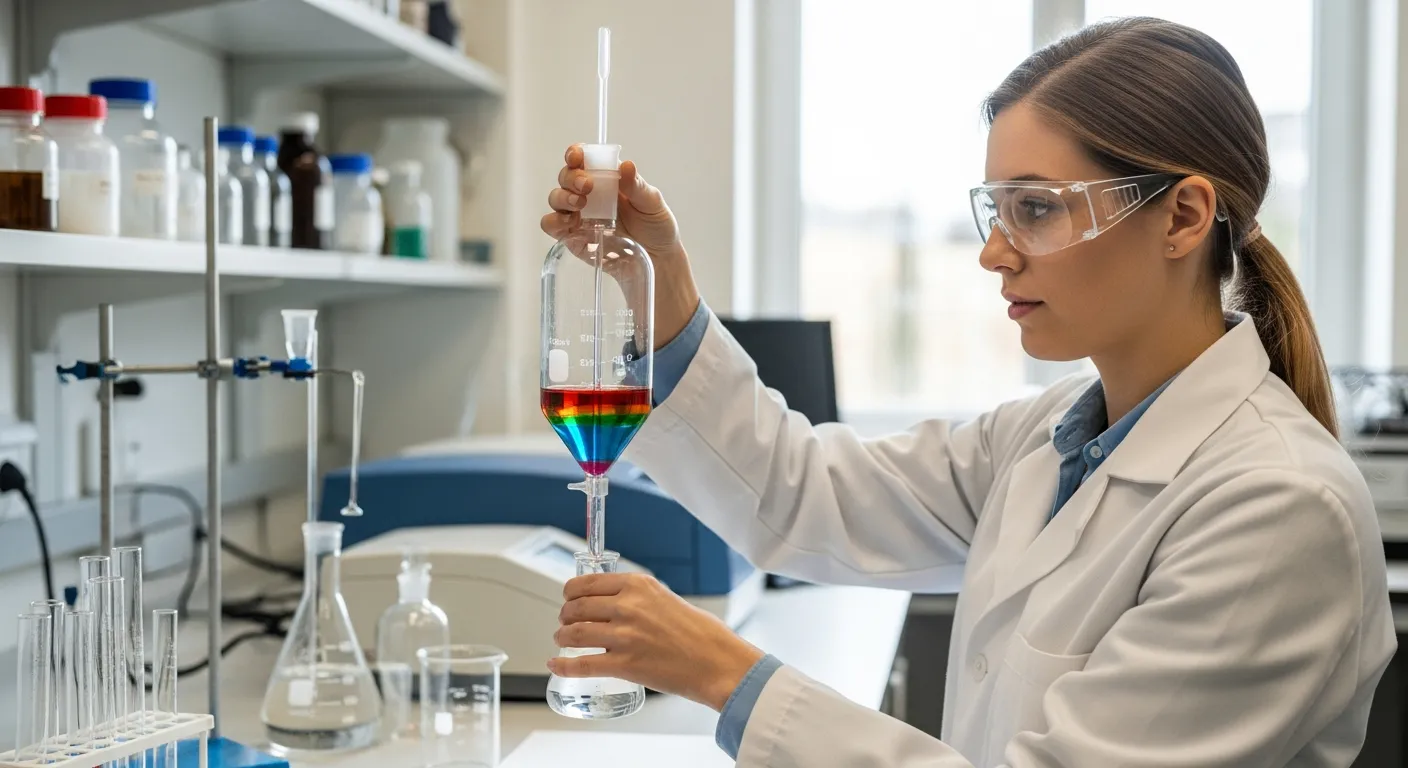
The choice of solvent is critical for successful solvent extraction. The ideal solvent should selectively dissolve the target pigment while leaving other components of the sample undissolved.
Understanding the underlying principles of solubility is paramount. Solubility is the ability of a substance (the solute) to dissolve in a solvent.
This process is governed by intermolecular forces between the solute and solvent molecules. When these forces are strong enough to overcome the forces holding the solute together, the solute dissolves.
In solvent extraction, we exploit the differences in these intermolecular forces to selectively dissolve the target pigment. The selection of the correct solvent is therefore driven by matching the intermolecular forces of the solvent to those of the pigment.
Temperature also plays a vital role in solvent extraction. Generally, increasing the temperature increases the solubility of most solids in liquids.
However, some pigments may degrade at higher temperatures, so careful consideration must be given to the thermal stability of the pigment when choosing the extraction temperature. In some cases, performing the extraction at lower temperatures can improve selectivity and prevent degradation.
The efficiency of solvent extraction can be further optimized by controlling the pH of the solution. Some pigments are more soluble under acidic or basic conditions.
Adjusting the pH can enhance the solubility of the target pigment while minimizing the solubility of unwanted components. This can lead to a cleaner and more efficient extraction process.
Selecting Appropriate Solvents for Pigment Extraction
Choosing the right solvent is paramount for effective pigment separation. The selection depends on the chemical properties of the target pigment and the nature of the materials it’s mixed with.
Organic solvents are commonly used in solvent extraction due to their ability to dissolve a wide range of organic compounds, including many historical pigments. These solvents can be broadly classified as polar or non-polar, each with different affinities for different types of pigments.
Polar solvents, such as water, ethanol, and acetone, are effective for extracting polar pigments like many organic dyes and some inorganic pigments that have been modified with organic coatings. Non-polar solvents, such as hexane, toluene, and diethyl ether, are better suited for extracting non-polar pigments like some natural resins and lipids that may be present in the sample.
The solubility of a pigment in a particular solvent is influenced by several factors. These include the polarity of the solvent, the temperature, and the presence of other compounds in the mixture.
A good starting point is to consider the “like dissolves like” principle, which suggests that polar solvents dissolve polar solutes, and non-polar solvents dissolve non-polar solutes. However, this is a simplification, and experimentation is often necessary to determine the optimal solvent for a specific pigment.
For example, if you’re trying to extract a pigment from a sample containing both organic and inorganic materials, you might need to use a combination of solvents or a sequential extraction process. This involves using one solvent to remove the organic components, followed by another solvent to extract the inorganic pigments.
Beyond polarity, other solvent properties like boiling point and viscosity should be considered. A lower boiling point allows for easier solvent removal after extraction.
Viscosity affects the solvent’s ability to penetrate the sample matrix. Lower viscosity solvents generally penetrate more easily.
The chemical stability of the solvent is also important. Solvents that readily decompose or react with the pigment should be avoided.
Consider the potential for solvent-induced alterations to the pigment. Some solvents can cause chemical changes in certain pigments, affecting the accuracy of subsequent analyses.
The extraction efficiency can be improved by using a solvent mixture. A mixture of solvents with different polarities can sometimes dissolve a wider range of pigments than a single solvent.
Always perform a solvent blank to ensure the solvent itself does not contain any contaminants that could interfere with the analysis. This involves analyzing the solvent using the same analytical techniques that will be used for the extracted pigments.
Performing Solvent Extraction Procedures
The solvent extraction process requires careful execution to ensure effective pigment separation and minimize contamination. The procedure typically involves several key steps, each requiring attention to detail.
First, the sample must be prepared by grinding or pulverizing it into a fine powder. This increases the surface area available for solvent interaction, improving the efficiency of the extraction process.
| Solvent | Pigment Type | Example Pigments |
|---|---|---|
| Acetone | Polar organic | Indigo, Alizarin |
| Ethanol | Polar organic | Safflower, Brazilwood |
| Toluene | Non-polar organic | Some Resin Varnishes, Lipids |
| Hexane | Non-polar organic | Waxes, Oils |
| Water | Inorganic/Organic (modified) | Some Iron Oxides, Cochineal |
Next, the powdered sample is mixed with the selected solvent in a suitable container, such as a test tube or Erlenmeyer flask. The ratio of solvent to sample should be optimized to ensure complete pigment dissolution without using excessive solvent.
The mixture is then agitated to promote the dissolution of the target pigment. This can be achieved through manual shaking, stirring with a magnetic stirrer, or using a sonicator.
The duration of agitation is a critical parameter to optimize. Insufficient agitation may result in incomplete pigment extraction.
Overly vigorous agitation can lead to the formation of emulsions, making separation difficult. Finding the right balance is key.
After agitation, the mixture is allowed to settle, allowing undissolved particles to settle to the bottom. This settling process can be accelerated by centrifugation.
Centrifugation uses centrifugal force to separate the solid and liquid phases more quickly and efficiently. The resulting supernatant (the liquid layer) is then carefully separated from the solid residue.
The separation of the solvent layer from the residue requires careful technique. Decantation involves carefully pouring off the solvent layer, leaving the solid residue behind.
Filtration involves passing the mixture through a filter paper to remove the solid particles. A separatory funnel is used for liquid-liquid extractions, allowing for the separation of two immiscible liquid phases.
Purifying Extracted Pigments
After solvent extraction, the resulting solution often contains not only the target pigment but also other dissolved compounds. These impurities can interfere with subsequent analysis, making purification a crucial step.
Several techniques can be employed to purify extracted pigments. One common method is filtration, which removes any undissolved particles or debris from the solution.
Another effective purification technique is liquid-liquid extraction. This involves adding a second solvent that is immiscible with the first solvent and has a different affinity for the target pigment and the impurities.
The two solvents are mixed, and the compounds partition themselves between the two phases based on their solubility. The desired pigment can then be selectively transferred to the appropriate solvent phase, leaving the impurities behind.
Chromatographic techniques, such as thin-layer chromatography (TLC) and column chromatography, are also widely used for pigment purification. TLC is a simple and rapid technique for separating compounds based on their different affinities for a stationary phase and a mobile phase.
Column chromatography is a more powerful technique that allows for the separation of larger quantities of pigments. It involves passing the sample through a column packed with a stationary phase, and the different compounds are eluted at different rates based on their interactions with the stationary phase.
Recrystallization is another purification method that can be used if the pigment is a solid. This involves dissolving the pigment in a hot solvent, then allowing the solution to cool slowly.
As the solution cools, the pigment will crystallize out, leaving the impurities behind in the solution. The crystals can then be filtered off and dried.
Solid-phase extraction (SPE) is a technique that uses a solid stationary phase to selectively bind the target pigment. The sample is passed through the SPE cartridge, and the pigment is retained on the stationary phase.
The impurities are washed away, and then the pigment is eluted from the cartridge using a suitable solvent. SPE is a versatile technique that can be used to purify a wide range of pigments.
The choice of purification method depends on the nature of the impurities and the properties of the target pigment. It is often necessary to use a combination of techniques to achieve optimal purification.
Always verify the purity of the extracted pigment after purification. This can be done using analytical techniques such as TLC, HPLC, or mass spectrometry.
Analyzing Extracted Pigments using various methods
Once the pigments have been extracted and purified, they can be analyzed using a variety of analytical techniques. These techniques provide information about the chemical composition, structure, and properties of the pigments.
Spectroscopic methods are particularly useful for pigment analysis. UV-Vis spectroscopy measures the absorption and transmission of ultraviolet and visible light by a sample, providing information about the electronic structure of the pigment molecules.
- Gas Chromatography-Mass Spectrometry (GC-MS)
- High-Performance Liquid Chromatography (HPLC)
- Raman Spectroscopy
- X-ray Diffraction (XRD)
- Fourier Transform Infrared Spectroscopy (FTIR)
Mass spectrometry provides information about the molecular weight and elemental composition of the pigment molecules. This technique is often coupled with gas chromatography (GC-MS) or liquid chromatography (LC-MS) to separate and identify the different components of a pigment mixture.
X-ray diffraction (XRD) is a powerful technique for identifying crystalline pigments. XRD measures the diffraction pattern of X-rays by a sample, providing information about the crystal structure of the pigment.
Microscopy techniques, such as optical microscopy and scanning electron microscopy (SEM), can provide information about the morphology and particle size of the pigments. SEM can also be coupled with energy-dispersive X-ray spectroscopy (EDS) to determine the elemental composition of individual pigment particles.
Fourier Transform Infrared Spectroscopy (FTIR) is used to identify the functional groups present in the pigment molecules. This technique measures the absorption of infrared light by a sample, providing information about the vibrational modes of the molecules.
Raman spectroscopy provides complementary information to FTIR spectroscopy. It measures the scattering of light by a sample, providing information about the vibrational modes of the molecules.
The choice of analytical technique depends on the specific research question and the nature of the pigment. Often, a combination of techniques is used to obtain a comprehensive understanding of the pigment’s properties.
Quantitative analysis can be performed to determine the concentration of the pigment in the sample. This can be done using techniques such as UV-Vis spectroscopy or HPLC with appropriate calibration standards.
Case Studies: Examples of Solvent Extraction in Pigment Analysis
Solvent extraction has been instrumental in numerous studies involving the analysis of historical pigments. These case studies demonstrate the versatility and effectiveness of the technique in addressing various research questions.
One example is the analysis of pigments from ancient Egyptian artifacts. Researchers used solvent extraction to isolate and identify the pigments used in tomb paintings and funerary objects.
By analyzing the extracted pigments with techniques like microscopy and Raman spectroscopy, they were able to determine the sources of the pigments and gain insights into the artistic practices of the ancient Egyptians. The extracted pigments revealed the use of materials like Egyptian blue, ochre, and malachite.
Another case study involves the analysis of pigments from Renaissance paintings. Solvent extraction was used to separate the different pigments present in the paint layers, allowing researchers to identify the materials used by the artists and to study the techniques they employed.
This analysis revealed the use of pigments like ultramarine, vermilion, and lead white, providing valuable information about the availability of materials and the artistic choices made during that period. The separation techniques also highlighted the layering approaches of Renaissance painters.
In the field of textile conservation, solvent extraction has been used to analyze the dyes used in historical textiles. This information can be used to determine the origin and age of the textiles, as well as to develop appropriate conservation strategies.
Solvent extraction was used to analyze the pigments found in medieval illuminated manuscripts. This helped identify the origin of the inks and paints used.
Analysis of Van Gogh’s paintings using solvent extraction revealed the presence of unstable pigments that were degrading over time. This information helped conservators develop strategies to preserve these iconic works.
The use of solvent extraction to study ancient Maya murals provided insights into their complex color symbolism and artistic techniques. The study helped determine the specific mineral sources of the pigments used.
In forensic science, solvent extraction can be used to analyze pigments in paint chips found at crime scenes. This can help link suspects to the scene of the crime.
Alternatives to Solvent Extraction
While solvent extraction is a widely used technique, there are alternative methods for separating and analyzing pigments. These alternatives may be preferred in certain situations, depending on the nature of the sample and the specific research goals.
One alternative is microchemical testing, which involves the use of specific chemical reagents to selectively react with and identify different pigments. This technique is particularly useful for analyzing small samples or when solvent extraction is not feasible.
Another alternative is laser-induced breakdown spectroscopy (LIBS). LIBS is a spectroscopic technique that uses a high-energy laser pulse to ablate a small amount of material from the sample surface.
The resulting plasma emits light at specific wavelengths that are characteristic of the elements present in the sample. LIBS can be used to identify the elemental composition of pigments without the need for sample preparation or solvent extraction.
Raman microscopy is also an alternative. This technique can identify pigments in situ without needing to extract them.
Each method has its advantages and disadvantages. Solvent extraction is often the most reliable method for isolating pigments for further study.
X-ray fluorescence (XRF) is another non-destructive technique that can be used to analyze the elemental composition of pigments. XRF involves irradiating the sample with X-rays and measuring the energy of the emitted fluorescent X-rays.
This technique can be used to identify the elements present in the pigment without the need for sample preparation or solvent extraction. However, XRF is less sensitive than some other techniques and may not be suitable for analyzing trace amounts of pigments.
Pyrolysis-gas chromatography-mass spectrometry (Py-GC-MS) is a technique that can be used to analyze the organic components of pigments. This technique involves heating the sample to a high temperature in the absence of oxygen, causing it to decompose into smaller molecules.
The resulting volatile compounds are then separated by gas chromatography and identified by mass spectrometry. Py-GC-MS can be used to identify the binding media and other organic additives present in the pigment.
Hyperspectral imaging is a technique that captures a complete spectrum of light at each pixel of an image. This technique can be used to identify and map the distribution of different pigments in a sample without the need for physical separation.
Safety Considerations when working with solvents
Working with organic solvents requires strict adherence to safety protocols. Many solvents are flammable, toxic, or both, so it’s essential to take precautions to protect yourself and others.
Always work in a well-ventilated area, preferably a fume hood, to minimize exposure to solvent vapors. Wear appropriate personal protective equipment (PPE), including gloves, safety glasses, and a lab coat, to prevent skin and eye contact.
Consult the safety data sheets (SDS) for each solvent before use to understand the specific hazards and precautions. Store solvents in tightly sealed containers in a cool, dry, and well-ventilated area, away from heat, sparks, and open flames.
Dispose of solvent waste properly according to local regulations. Never pour solvents down the drain or into the environment.
When handling flammable solvents, take extra precautions to avoid ignition sources. Do not use open flames or spark-producing equipment in the vicinity of flammable solvents.
In case of a spill, clean it up immediately using appropriate absorbent materials. Be aware of the symptoms of solvent exposure, such as dizziness, headache, nausea, and skin irritation, and seek medical attention if necessary.
Always use a chemical-resistant spill kit in case of a solvent spill. These kits contain absorbent materials and other tools to safely clean up spills.
Never work alone when using hazardous solvents. Having another person present can provide assistance in case of an emergency.
Ensure that all containers of solvents are properly labeled with the name of the solvent and any hazard warnings. This helps prevent accidental misuse or exposure.
Regularly inspect solvent storage areas for leaks or spills. Promptly address any issues to prevent further contamination or hazards.
Understand the proper procedures for handling and disposing of different types of solvent waste. Some solvents may require special treatment or disposal methods.
Conclusion
Solvent extraction pigments is a powerful and versatile technique for isolating and analyzing historical pigments. By carefully selecting appropriate solvents and following proper procedures, researchers can gain valuable insights into the materials and techniques used in the past.
The extracted pigments can then be subjected to a variety of analytical techniques, providing information about their chemical composition, structure, and properties. This information is essential for understanding the history of art and technology, as well as for developing effective conservation strategies for cultural heritage objects.
While there are alternative methods for pigment analysis, solvent extraction remains a cornerstone of the field. Its ability to isolate and purify pigments makes it an invaluable tool for researchers and conservators alike.
Remember to always prioritize safety when working with solvents. By following proper safety protocols, you can minimize the risks and ensure a safe and productive research environment.
The study of historical pigments is crucial for understanding past cultures. Solvent extraction is an essential tool for this endeavor.
Further research into new extraction techniques and solvents will continue to improve our ability to analyze these valuable materials. This will lead to a deeper understanding of art history and conservation.