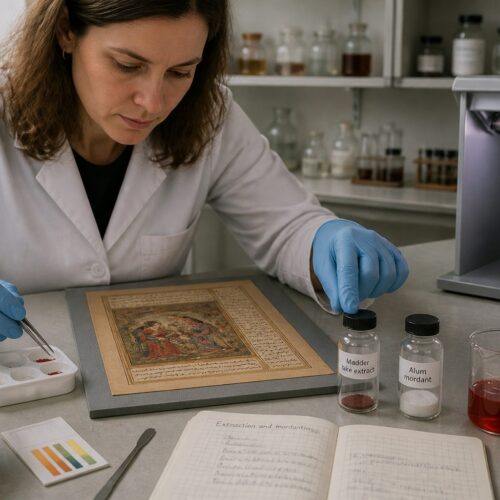

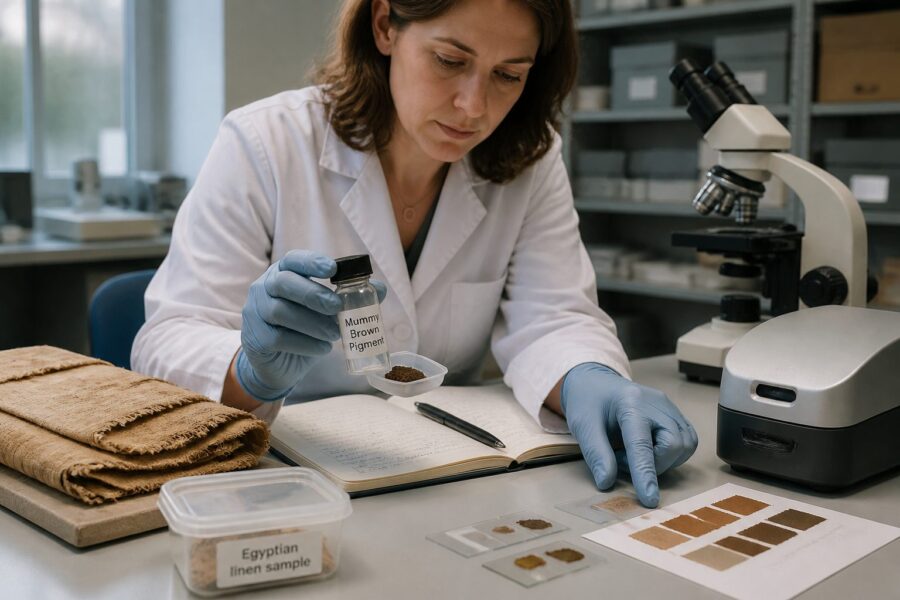
The history of art materials often uncovers bizarre and unexpected ingredients, but few pigments can rival the unsettling origins of mummy brown. This unique color, popular with European artists for centuries, literally incorporated the remains of ancient Egyptian mummies. Its story is a fascinating intersection of art, archaeology, and dubious ethics.
The demand for this unusual brown pigment grew from a fascination with exotic materials and a desire for specific tonal qualities. Understanding the full scope of mummy brown pigment’s history helps us appreciate the strange choices made in art production. It also brings into sharp focus the complex conservation challenges faced by artworks containing such a peculiar material.
Modern scientific analysis now allows us to identify this pigment in historical works, providing crucial insights into its composition and degradation. This knowledge is essential for conservators working to preserve paintings that incorporate human remains pigment art. The legacy of mummy brown serves as a stark reminder of how cultural beliefs and artistic practices can intertwine in truly unexpected ways.
What Mummy Brown Actually Contained and How It Was Produced
Mummy brown pigment was exactly what its name implied: a brown pigment made from ground-up human and animal mummies. The primary ingredient was often the embalmed remains of ancient Egyptians, sometimes even pharaohs. These mummies were typically dried and then pulverized into a fine powder.
The process involved mixing this powder with a binding agent, usually a resin or pitch, along with other inert materials. This created a rich, translucent brown paint that had a unique hue and working properties. The specific shade could vary depending on the mummy’s age, the embalming materials used, and the additional binders or fillers.
The practice likely originated from a misconception about the medicinal properties of bitumen, often present in embalming materials. Europeans believed ground mummies cured ailments, fostering a macabre trade. This medicinal use transitioned to art when its interesting color was noted.
Egyptians used various embalming substances, such as natural resins, bitumen, and oils. These materials, along with the desiccated remains, formed the pigment’s complex organic composition. The resulting pigment offered a deep, warm brown that artists found appealing for its unique visual qualities.
The production process for Egyptian brown pigment was not standardized, explaining the variability in its chemical makeup. Manufacturers often acquired mummies through illicit means, creating a shadowy supply chain. They would then process the remains, often adding components for desired consistency or shade.
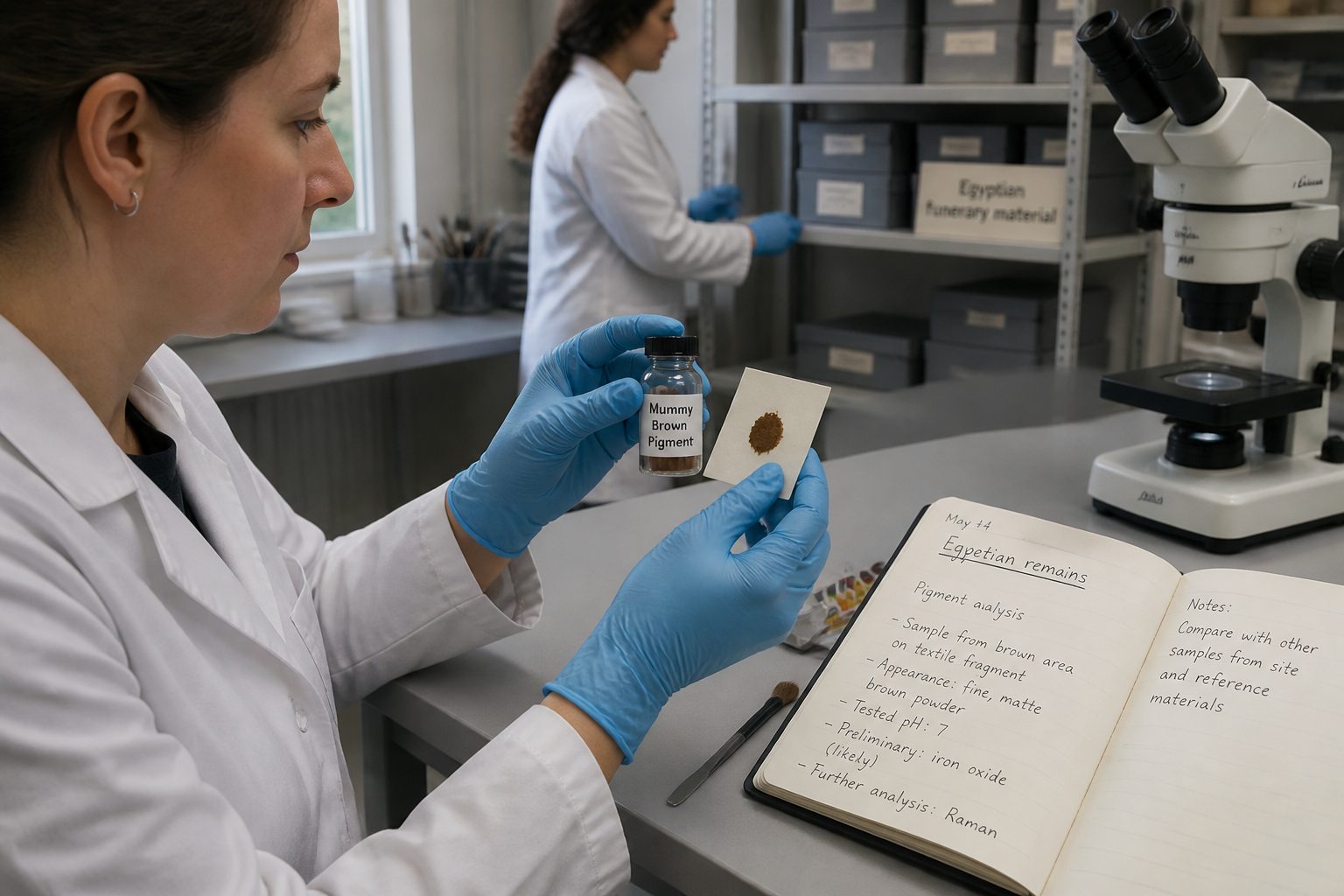
Mummy quality for pigment production declined over time, as intact, significant specimens became scarce. Later batches thus contained less mummified material and more inert fillers. The varied consistency of mummy brown pigment studied by Egyptian remains conservation experts reflects this history.
Early accounts describe the smell of fresh mummy brown paint as unpleasant, attributed to organic decomposition. Artists, however, overlooked this for the pigment’s unique qualities. This dedication to craft persisted despite grisly ingredients.
The pigment’s physical characteristics, such as its transparency and quick drying time, also played a role in its popularity. These properties made it suitable for glazing and creating subtle tonal variations. Painters valued its ability to produce rich shadows and warm mid-tones, making it a versatile addition to their palettes.
Why Artists Prized It and How Widely It Was Used
Artists in Europe, particularly from the 16th to the 19th centuries, valued mummy brown for its unique color and working properties. It offered a rich, warm, and somewhat translucent brown that was difficult to replicate with other pigments of the era. This made it a favorite for rendering flesh tones, shadows, and subtle glazes.
The pigment’s translucent quality made it ideal for creating depth and luminosity in paintings. Artists could layer it to build up complex shadows or use thin washes for delicate effects. This versatility contributed significantly to its widespread adoption among various schools of painting.
Many prominent artists reportedly used mummy brown, including members of the Pre-Raphaelite Brotherhood and Eugène Delacroix. Found in portraits, landscapes, and genre scenes, it appealed across artistic subjects. It offered an earthy richness other browns, like umber or sepia, lacked.
The pigment was particularly popular for creating realistic skin tones, as its reddish-brown hue could mimic the undertones of human flesh. This made it a go-to choice for portrait painters seeking a naturalistic effect. It also worked well for painting hair and fabric, adding a subtle warmth to otherwise drab areas.
Beyond its color, the drying properties of mummy brown were also a draw for artists. It often dried quickly, allowing for faster layering and reducing the overall working time on a painting. This practical advantage made it a convenient option in a busy artist’s studio.
The exotic origin of the Egyptian brown pigment also contributed to its allure, appealing to a romantic fascination with ancient Egypt. Artists may not have known its gruesome details, but the name carried mystique. This cultural context enhanced its market desirability.
Its use extended across different media, though it was most commonly found in oil paints. Some evidence suggests its inclusion in watercolors and even printing inks, demonstrating its adaptability. The pigment’s unique qualities made it a staple for artists for well over two centuries.
The past prevalence of mummy brown pigment is highlighted by the challenges Egyptian remains conservationists now face. Identifying its presence helps conservators understand original artistic intentions and informs optimal preservation of these unique, often fragile artworks.
The pigment’s ability to create deep, velvety shadows was another reason for its favor. It could give a painting a sense of age and gravitas, which appealed to the aesthetic sensibilities of the time. This particular characteristic set it apart from other brown pigments available to artists.
The Ethical Controversy That Led to Its Discontinuation
The ethical implications of using human remains as an art material eventually led to the decline and discontinuation of mummy brown pigment. As scientific understanding and public sensibilities evolved, the practice became increasingly abhorrent. People began to question the morality of desecrating ancient graves for artistic purposes.
The realization that the pigment was made from actual human remains, often stolen from tombs, sparked outrage. This growing awareness shifted public opinion, marking mummy brown paint history as a dark chapter. The gruesome truth behind the name could no longer be ignored.
| Period | Ethical Awareness Level | Availability of Pigment |
|---|---|---|
| 16th-17th Century | Low; medicinal use common | High, often through illicit trade |
| 18th Century | Growing curiosity, less moral concern | Consistent, commercial production |
| 19th Century (Early) | Increasing discomfort, some artists aware | Still high, but questions arose |
| 19th Century (Late) | Significant public outcry, moral rejection | Declining, eventual discontinuation |
| 20th Century Onward | Universally condemned | Extremely rare, only in historical works |
Chemical Composition Revealed Through Modern Analysis
Modern analytical techniques have shed considerable light on the complex chemical composition of mummy brown pigment. Scientists use methods like Gas Chromatography-Mass Spectrometry (GC-MS) and Fourier-Transform Infrared Spectroscopy (FTIR) to identify its organic and inorganic components. These analyses confirm the presence of human remains pigment art materials.
The pigment typically contains fatty acids, resins, and various organic compounds originating from the mummified tissue and embalming agents. Bitumen, a tar-like substance often used in ancient Egyptian embalming, is a common finding. Its presence contributes to the pigment’s characteristic brown color and working properties.
Inorganic components like calcium carbonate (from bone) and various mineral pigments also appear in analyses. These additions could be deliberate fillers or naturally occurring elements within the mummy remains. The exact composition varies significantly between samples, reflecting the inconsistent manufacturing process and diverse source materials.
Researchers have detected specific long-chain fatty acids that are indicative of human or animal decomposition, further confirming the pigment’s gruesome origins. These organic markers provide definitive proof of the use of mummified tissue. The identification of these compounds is crucial for authenticating the pigment in historical artworks.
The binding media used to create the paint also influences the overall chemical profile of mummy brown. Artists often mixed the ground mummy powder with oil binders, such as linseed oil or walnut oil. This combination creates a complex matrix that conservators must understand for effective preservation.
The presence of various resins, sometimes from the embalming process itself and sometimes added by the pigment maker, adds to the pigment’s unique optical qualities. These resins can contribute to the pigment’s translucency and depth. Understanding their interaction with other components is vital for conservation planning.
Spectroscopic analysis can pinpoint the specific molecular structures characteristic of bitumen and other organic polymers. This provides a detailed fingerprint essential for mummy brown pigment Egyptian remains conservation efforts. Such detailed chemical knowledge helps differentiate it from other brown pigments.
The variable nature of the pigment’s composition makes its study particularly challenging yet rewarding for art historians and conservators. Each sample tells a slightly different story about its origin and production. This variability underscores the importance of individual analysis for every artwork suspected of containing mummy brown.
The breakdown products of these organic materials over time also inform pigment degradation understanding. Identifying these products helps predict paint aging and necessary long-term stability measures. This chemical insight directly impacts preservation strategies.
Advanced techniques such as Pyrolysis-GC/MS offer detailed information about the organic polymeric components, distinguishing natural resins from modern synthetic binders. This level of detail is indispensable for accurate identification and conservation. It allows us to build a comprehensive picture of this unusual material.
Identifying Mummy Brown in Existing Works: Analytical Methods
Identifying mummy brown pigment in historical artworks requires a suite of sophisticated analytical methods due to its complex and variable composition. Conservators and scientists employ non-invasive and micro-destructive techniques to confirm its presence without harming the artwork. This ensures the integrity of the painting while gathering crucial data.
Initial visual examination can sometimes offer clues, as mummy brown often exhibits a distinct warm, reddish-brown hue and a certain translucency. However, definitive identification relies on chemical analysis to distinguish it from other brown pigments. This is especially true when dealing with layers of paint or mixed pigments.
- Micro-Raman Spectroscopy: Identifies molecular vibrations, revealing organic components like bitumen.
- FTIR Spectroscopy: Detects functional groups, confirming presence of resins, fats, and proteins.
- GC-MS: Separates and identifies volatile organic compounds from micro-samples, pinpointing specific fatty acids and embalming residues.
- X-ray Fluorescence (XRF): Identifies elemental composition, useful for detecting inorganic fillers or mineral pigments.
- Scanning Electron Microscopy (SEM) with EDX: Provides high-resolution imaging and elemental analysis of pigment particles.
- Polarized Light Microscopy (PLM): Observes particle morphology and optical properties in cross-sections.
- UV-Vis Spectroscopy: Measures light absorption, aiding in characterization of organic chromophores.
Degradation Behavior Compared to Other Brown Pigments
Mummy brown pigment exhibits unique degradation behaviors that set it apart from most other brown pigments, due to its organic, heterogeneous nature. Unlike stable mineral earth pigments like umber or sienna, mummy brown is susceptible to chemical and physical changes. Its organic constituents increase vulnerability to environmental factors.
The presence of fatty acids and organic residues from mummified remains means it can undergo oxidation and polymerization. This process can lead to darkening, embrittlement, or changes in solubility. These shifts alter its original appearance and handling characteristics.
Bitumen, a common component in mummy brown, is known for its tendency to crack and shrink as it ages. This can cause severe craquelure in the paint layer, affecting both the aesthetics and structural integrity of the artwork. Such cracking is less common in paints made with stable inorganic pigments.
Compared to pigments like burnt umber or Vandyke brown, which are relatively inert, mummy brown is more reactive to light and humidity. Prolonged exposure to UV light can accelerate the degradation of its organic components, leading to fading or discoloration. High humidity can also promote microbial growth or chemical reactions within the paint layer.
Interaction between mummy brown pigment’s organic components and the oil binder also causes issues for Egyptian remains conservation efforts. Over time, mummy fatty acids can react with the oil, contributing to paint film aging. This complex interaction makes its long-term stability unpredictable.
Some historical accounts suggest that mummy brown could also develop a “blooming” effect, where a hazy layer appears on the surface of the paint. This phenomenon is often attributed to the migration of components within the paint film or interaction with environmental pollutants. It is a challenge not typically seen with simpler, inorganic brown pigments.
The inherent variability in the pigment’s initial composition also contributes to its diverse degradation pathways. A batch with more bitumen might crack more, while one with more proteinaceous material might be more susceptible to biological attack. This makes a generalized approach to its conservation difficult.
In contrast, most other historical brown pigments, such as earth pigments like raw and burnt sienna, are chemically stable iron oxides. They generally resist fading, cracking, and chemical alteration, making them far more predictable in their aging behavior. This stark difference highlights the unique challenges of preserving artworks containing human remains pigment art.
Understanding these specific degradation patterns is crucial for developing appropriate conservation treatments. Conservators must consider the pigment’s instability when choosing cleaning solvents, consolidating agents, or environmental controls. This tailored approach is essential for the longevity of these unique artworks.
The potential for biological degradation, although rare in well-preserved museum environments, is also a consideration given the organic nature of the material. While modern conservation practices mitigate this risk, it remains a theoretical vulnerability. This further distinguishes mummy brown from its more stable counterparts.
Handling and Documentation Protocols for Works Containing This Pigment
Handling and documenting artworks containing mummy brown pigment demand specialized protocols to ensure their preservation and ethical consideration. Conservators must approach these pieces with heightened awareness, recognizing both their material fragility and their unique historical and ethical weight. Proper documentation forms the backbone of responsible care.
Detailed condition reports are essential, noting any signs of degradation specific to mummy brown, such as cracking, discoloration, or bloom. These reports should include photographic evidence and precise descriptions of affected areas. Comprehensive documentation allows for tracking changes over time and informs future treatment decisions.
Environmental controls play a critical role in mitigating the degradation of this organic pigment. Maintaining stable temperature and relative humidity levels helps slow down chemical reactions and prevents the physical stresses that can lead to cracking. Limiting exposure to UV and visible light is also crucial to prevent fading and discoloration.
When handling such artworks, conservators must use appropriate personal protective equipment, even if the health risks from aged mummy brown are generally low. This practice aligns with standard museum safety protocols and acknowledges the pigment’s biological origin. Minimizing direct contact with the painted surface is always a priority.
Any conservation treatment plans for works with mummy brown pigment must be thoroughly researched and discussed by Egyptian remains conservation experts. Because of the pigment’s unique composition and degradation behavior, standard treatments for other brown pigments might not be suitable. A cautious, minimally invasive approach is always preferred.
Ethical considerations extend beyond physical preservation to how these objects are presented and interpreted. Museums and galleries must consider transparency about the pigment’s origins when displaying such artworks. Educational materials can help inform the public about the mummy brown paint history and its complex narrative.
Cross-disciplinary collaboration between conservators, art historians, and scientists is particularly valuable for these challenging materials. Sharing expertise ensures a holistic understanding of the artwork’s material culture, its degradation, and its ethical context. This collaborative approach leads to more informed and responsible conservation practices.
Storage conditions for artworks containing human remains pigment art must also be carefully managed. They should be stored in stable, dark environments, protected from pests and pollutants, which could further degrade the organic components. Proper housing, such as archival boxes or climate-controlled vitrines, provides an additional layer of protection.
Re-treatment of areas containing mummy brown requires specific material knowledge to avoid adverse reactions with new conservation materials. Testing on inconspicuous areas or mock-ups is often necessary to ensure compatibility and prevent further damage. This careful approach safeguards the artwork’s long-term stability.
Digital documentation, including high-resolution imaging and 3D scanning, can capture the artwork’s current state with incredible detail. This creates a permanent record that serves as a baseline for future condition assessments. It also allows for virtual study without direct physical handling.
The historical context of the pigment’s use, from its initial popularity to its ethical condemnation, should be integrated into its documentation. This narrative adds depth to the material analysis, informing both scholarly research and public engagement. It frames the conservation challenges within a broader cultural understanding.
Regular monitoring of environmental conditions and the artwork’s state is essential. Any subtle changes in the mummy brown pigment layer can indicate ongoing degradation and prompt timely intervention. Proactive monitoring helps prevent minor issues from escalating into major conservation problems.
Conclusion
Mummy brown pigment stands as one of art history’s most peculiar and ethically fraught materials, a true testament to human ingenuity and, at times, questionable judgment. From its origins in ancient Egyptian burial practices to its presence on European canvases, its story is a compelling blend of cultural fascination and artistic pursuit. The journey of this pigment reveals much about changing societal values and scientific progress.
The unique properties artists once prized, such as its rich color and translucency, are now understood through modern chemical analysis. This scientific insight not only confirms its gruesome composition but also informs the complex degradation behaviors that challenge conservators today. The ongoing work of identifying and preserving artworks containing mummy brown pigment is deeply engaging for Egyptian remains conservation specialists.
Ultimately, the story of mummy brown is a powerful reminder of the hidden histories embedded within artworks. It underscores the importance of interdisciplinary collaboration in conservation, combining art historical knowledge with scientific rigor and ethical sensitivity. The legacy of human remains pigment art serves as a perpetual point of discussion, pushing us to consider the full implications of our artistic choices and our responsibility to the past.