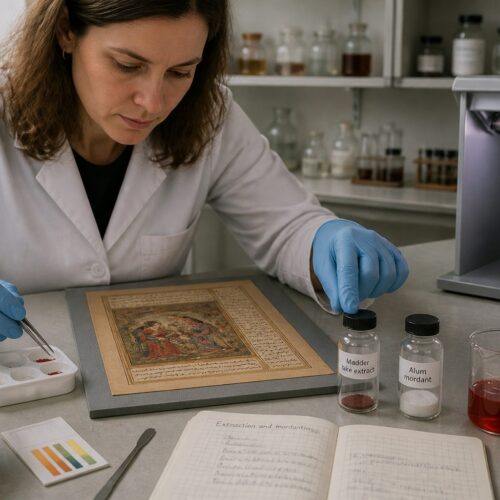

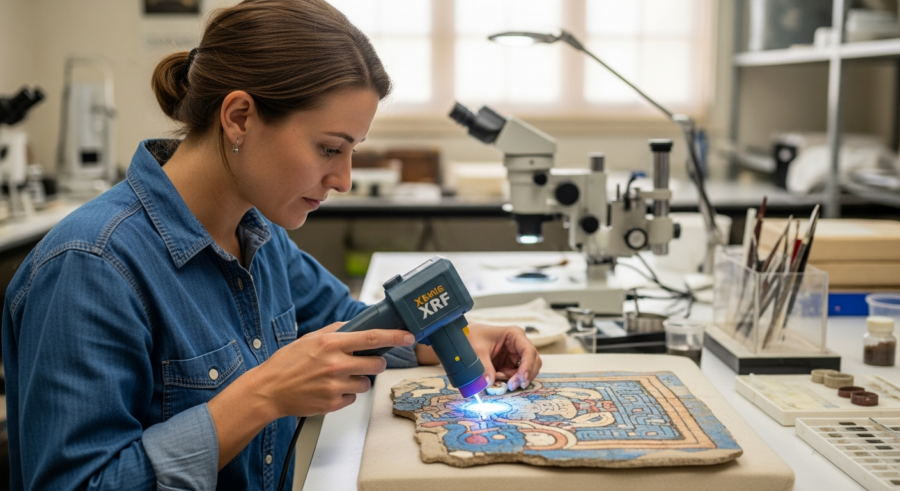
The vibrant colors adorning ancient Maya murals offer a captivating glimpse into the civilization’s rich artistic and cultural heritage. Analyzing Pigments in Maya Murals allows researchers to piece together a comprehensive understanding of Maya society, trade networks, and technological expertise. This exploration begins with the historical context of Maya murals and extends to the sophisticated methods used to analyze their pigments.
Unlocking the secrets held within these ancient artworks requires a multidisciplinary approach, combining archaeological excavation, chemical analysis, and art historical interpretation. By scrutinizing the materials and techniques employed by Maya artists, we can uncover valuable insights into their world.
This article will explore the fascinating realm of Maya mural pigments, delving into their composition, sources, and significance. It also touches on the challenges of preserving these delicate masterpieces for future generations.
Historical Context of Maya Murals and Their Cultural Significance
Maya murals served as powerful visual narratives, conveying religious beliefs, historical events, and social hierarchies. These elaborate paintings adorned the walls of temples, palaces, and tombs, transforming these spaces into vibrant centers of cultural expression.
The murals were not merely decorative; they were integral to Maya ritual and political life. They often depicted scenes of deities, rulers, and important ceremonies, reinforcing the power and authority of the elite.
Notable examples of Maya murals can be found at sites like Bonampak, San Bartolo, and Calakmul. The Bonampak murals, discovered in 1946, are particularly famous for their vivid depictions of warfare, royal court life, and human sacrifice.
These murals offer invaluable insights into Maya social structure and cultural practices. The San Bartolo murals, dating back to the Preclassic period, provide evidence of early Maya writing and religious beliefs.
The Maya civilization flourished in Mesoamerica for centuries, leaving behind an impressive legacy of art, architecture, and intellectual achievements. Their murals stand as testaments to their artistic prowess and cultural sophistication.
The creation of murals was a complex and time-consuming process, requiring skilled artists and access to a variety of materials. The murals were often commissioned by powerful rulers or religious leaders to commemorate important events or to glorify their reign.
The subject matter of Maya murals varied widely, reflecting the diverse aspects of Maya life and beliefs. Some murals depicted scenes of warfare and conquest, while others portrayed religious ceremonies and mythological narratives.
Still other murals showcased the daily lives of the Maya people, providing glimpses into their agricultural practices, social customs, and artistic traditions. These visual narratives offer a rich tapestry of Maya culture, allowing us to better understand their worldview and values.
The murals also served as a form of propaganda, reinforcing the power and authority of the ruling elite. By depicting themselves in positions of power and associating themselves with deities, rulers sought to legitimize their rule and maintain social order.
The murals were not intended to be viewed as static images, but rather as dynamic and engaging narratives that would captivate and inspire viewers. The use of vibrant colors, intricate details, and dramatic compositions created a powerful visual experience that would have resonated deeply with the Maya people.
Methods for Sampling and Analyzing Pigments in Maya Murals
Analyzing Pigments in Maya Murals requires careful and non-destructive sampling techniques to preserve the integrity of the artwork. Micro-samples, often smaller than a grain of sand, are extracted from the mural using specialized tools.
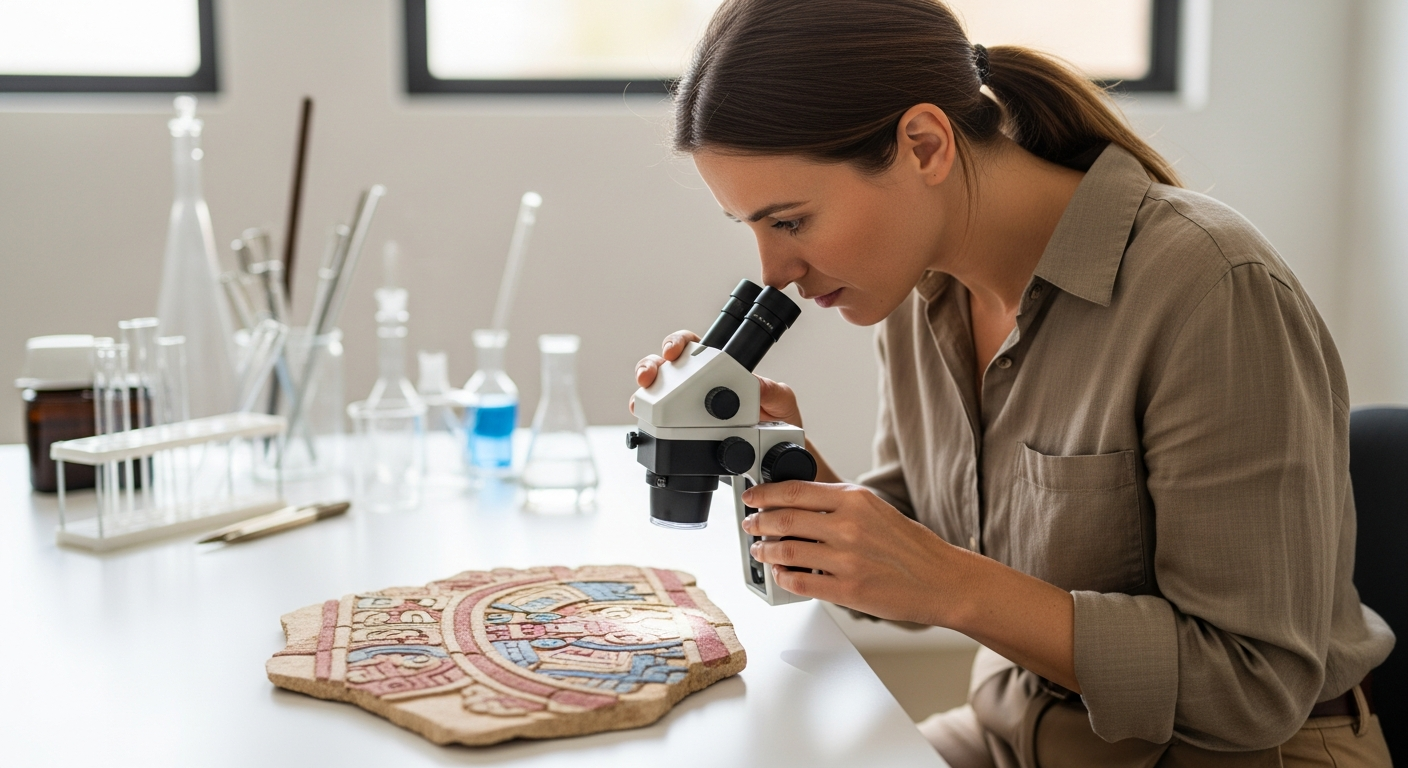
These samples are then subjected to a battery of analytical methods to determine their chemical composition. Polarized light microscopy (PLM) is used to identify the crystalline structure of pigments, while X-ray diffraction (XRD) provides information about their mineralogical composition.
Raman spectroscopy is another powerful technique that reveals the molecular vibrations of pigments, allowing for their identification. Scanning electron microscopy with energy-dispersive X-ray spectroscopy (SEM-EDS) is used to analyze the elemental composition of pigments at a microscopic level.
These techniques provide complementary information, enabling researchers to identify the pigments used in Maya murals with a high degree of accuracy. Each method offers a unique perspective on the pigment’s properties.
The process of sampling is often carried out by trained conservators and archaeologists who have experience working with fragile materials. They use specialized tools, such as scalpels and micro-drills, to carefully extract small samples from the mural without causing significant damage.
The location of the samples is carefully documented, and the samples are stored in sealed containers to prevent contamination. The samples are then transported to a laboratory where they can be analyzed using a variety of techniques.
Polarized light microscopy (PLM) is a technique that uses polarized light to examine the optical properties of pigments. This technique can be used to identify the crystalline structure of pigments and to distinguish between different types of pigments.
X-ray diffraction (XRD) is a technique that uses X-rays to determine the mineralogical composition of pigments. This technique can be used to identify the minerals that are present in a pigment and to determine their relative abundance.
Raman spectroscopy is a technique that uses laser light to excite the molecules in a pigment. The excited molecules vibrate at specific frequencies, which can be used to identify the pigment. This technique is particularly useful for identifying organic pigments, which can be difficult to identify using other methods.
Scanning electron microscopy with energy-dispersive X-ray spectroscopy (SEM-EDS) is a technique that uses a beam of electrons to scan the surface of a pigment. This technique can be used to create high-resolution images of the pigment and to determine its elemental composition. SEM-EDS is particularly useful for identifying the trace elements that are present in a pigment, which can provide clues about its origin.
Identifying Key Pigments Used in Maya Art
Maya Mural Pigments included a range of mineral, plant, and animal-derived materials, each contributing unique hues to the artwork. One of the most iconic Maya pigments is Maya blue, a remarkably stable and vibrant blue color.
Maya blue is a complex composite material consisting of indigo dye adsorbed onto palygorskite clay. The unique chemical structure of Maya blue makes it resistant to fading and degradation, even after centuries of exposure to the elements.
| Pigment | Chemical Composition | Source |
|---|---|---|
| Maya Blue | Indigo adsorbed on palygorskite | Indigo plant and palygorskite clay |
| Red | Hematite (iron oxide) | Mineral deposits |
| Yellow | Goethite (iron oxyhydroxide) | Mineral deposits |
| Black | Charcoal or manganese oxide | Burnt wood or mineral deposits |
| White | Calcite or gypsum | Limestone or gypsum deposits |
| Green | Mixture of Maya blue and yellow pigments | Combination of plant and mineral sources |
Red pigments were typically derived from hematite, an iron oxide mineral, while yellow pigments were often made from goethite, an iron oxyhydroxide. Black pigments could be produced from charcoal or manganese oxide, and white pigments from calcite or gypsum.
The identification of these pigments has been crucial in understanding the Maya artistic palette and their knowledge of materials. The Maya artists were skilled at sourcing and processing these materials to create a wide range of colors.
The red pigment hematite was readily available in many regions of the Maya world. It was often ground into a fine powder and mixed with a binder to create a paint.
Similarly, the yellow pigment goethite was also relatively common. It was often used to create shades of yellow and brown.
Black pigments were typically derived from charcoal, which was produced by burning wood. Manganese oxide was another source of black pigment, although it was less common.
White pigments were often made from calcite or gypsum, which are both forms of calcium carbonate. These minerals were ground into a fine powder and mixed with a binder to create a white paint.
The green pigment was typically created by mixing Maya blue with a yellow pigment. This allowed the Maya artists to create a range of green hues.
The use of these pigments in Maya art reflects their understanding of the natural world and their ability to transform raw materials into beautiful and durable works of art. The colors they created brought life and meaning to their murals and other artistic creations.
Understanding the Sources and Trade of Pigments in the Maya Civilization
The availability of pigments played a significant role in shaping Maya artistic expression. Some pigments, like hematite and calcite, were readily available locally, while others, like indigo and palygorskite, had to be obtained through trade networks.
The trade of pigments highlights the interconnectedness of Maya city-states and their access to diverse resources. Analyzing Pigments in Maya Murals reveals valuable information about these trade routes and the economic relationships between different regions.
For example, the presence of cinnabar, a mercury sulfide mineral, in some Maya murals suggests trade connections with distant regions, as cinnabar deposits are not found in the Maya heartland. The Maya obtained cinnabar from areas like present-day Honduras and Guatemala.
The control of pigment sources and trade routes may have been a source of power and prestige for certain Maya rulers. Access to rare and valuable pigments would have allowed them to commission more elaborate and visually stunning artwork, further solidifying their authority.
The sources of pigments varied depending on the specific material. Mineral pigments, such as hematite and goethite, were typically obtained from local mineral deposits. These deposits were often located in mountainous regions or near rivers and streams.
Plant-derived pigments, such as indigo, were obtained from specific plants that grew in certain regions. The indigo plant, for example, was cultivated in the Maya lowlands.
The palygorskite clay used to create Maya blue was also obtained from specific deposits. These deposits were often located in areas with volcanic activity.
The trade of pigments involved complex networks of merchants and traders who transported these materials from their sources to the Maya city-states. These trade routes often spanned long distances and involved multiple intermediaries.
The trade of pigments not only provided the Maya with access to a wider range of colors, but also facilitated the exchange of other goods and ideas. This trade played a crucial role in the economic and cultural development of the Maya civilization.
The study of pigment sources and trade routes provides valuable insights into the economic and political relationships between different Maya city-states. It also sheds light on the Maya’s knowledge of the natural world and their ability to exploit its resources.
The Significance of Maya Blue
Maya blue deserves special attention due to its unique composition and widespread use. This pigment is not simply a mixture of indigo and palygorskite, but rather a complex chemical compound in which the indigo molecules are trapped within the channels of the palygorskite clay.
This interaction between indigo and palygorskite gives Maya blue its exceptional stability and resistance to degradation. The process of creating Maya blue likely involved heating the indigo and palygorskite mixture, which further enhanced the adsorption of indigo onto the clay.
The Maya used Maya blue in a variety of contexts, including murals, ceramics, and even human sacrifice. The color blue was associated with deities, royalty, and water, making Maya blue a particularly important pigment in Maya religious and political life.
The enduring vibrancy of Maya blue in ancient murals is a testament to the advanced chemical knowledge of the Maya civilization. Their ability to create such a stable and long-lasting pigment is a remarkable achievement.
The synthesis of Maya blue was a sophisticated process that required a deep understanding of the properties of indigo and palygorskite. The Maya artists were able to control the reaction conditions to create a pigment that was both vibrant and durable.
The use of Maya blue in religious ceremonies suggests that it held special symbolic significance. The color blue was associated with the sky, water, and the gods, making it a powerful symbol of life and renewal.
The presence of Maya blue in human sacrifices indicates that it was also associated with death and the afterlife. The Maya believed that the color blue could help to guide the deceased to the underworld.
The widespread use of Maya blue in Maya art and culture highlights its importance to the Maya civilization. This pigment was not only a beautiful color, but also a powerful symbol of religious and political authority.
The study of Maya blue continues to fascinate researchers today. Scientists are still trying to fully understand the chemical processes involved in its synthesis and the reasons for its exceptional stability. Further research will undoubtedly reveal even more about this remarkable pigment and its significance to the Maya civilization.
The discovery and analysis of Maya blue have provided invaluable insights into the technological and artistic achievements of the Maya people. It stands as a testament to their ingenuity and their deep understanding of the natural world.
Dating the Murals Based on Pigment Composition
Pigment analysis can also contribute to dating Maya murals, providing valuable insights into the chronology of Maya art. By identifying the pigments used in a mural and comparing them to those found in other dated contexts, researchers can estimate the age of the artwork.
For example, the presence of certain pigments that were introduced at a specific time can provide a terminus post quem (the earliest possible date) for the mural. The absence of certain pigments can also be informative, suggesting that the mural was created before those pigments became available.
- Radiocarbon dating of organic materials associated with the murals
- Thermoluminescence dating of ceramic fragments found nearby
- Stratigraphic analysis of the mural’s location within the archaeological site
- Comparison of the mural’s style and iconography to other dated examples of Maya art
- Analysis of the mural’s construction techniques and materials
Combining pigment analysis with other dating methods, such as radiocarbon dating and stratigraphic analysis, allows for a more precise determination of the mural’s age. This multi-faceted approach enhances the accuracy of dating efforts.
The principle behind dating murals using pigment composition relies on the historical record of pigment usage. If a particular pigment was only used during a specific period, its presence in a mural can help to narrow down the possible date of creation.
However, it is important to note that pigment analysis alone cannot provide a definitive date. It is always necessary to consider other factors, such as the style of the mural and its archaeological context.
Radiocarbon dating is a technique that can be used to date organic materials, such as charcoal and plant fibers. This technique measures the amount of carbon-14 in a sample, which decays at a known rate.
Thermoluminescence dating is a technique that can be used to date ceramic fragments. This technique measures the amount of light emitted by a sample when it is heated, which is proportional to the amount of time that has passed since it was last heated.
Stratigraphic analysis involves studying the layers of soil and sediment in which the mural was found. This can help to determine the relative age of the mural in relation to other artifacts and features found at the site.
By combining these different dating methods, researchers can obtain a more accurate and reliable estimate of the mural’s age. This information is essential for understanding the chronology of Maya art and culture.
The dating of Maya murals is a complex and challenging process, but it is also a crucial one. By accurately dating these artworks, we can gain a better understanding of the history and development of the Maya civilization.
Conservation Challenges and Preservation Strategies
Maya murals are extremely vulnerable to environmental factors, including humidity, temperature fluctuations, and exposure to light. These factors can cause the pigments to fade, crack, or detach from the wall.
Conservation efforts aim to stabilize the murals and prevent further deterioration. This often involves consolidating the plaster support, cleaning the surface, and applying protective coatings.
Protective shelters can be built over the murals to shield them from the elements. These structures help to maintain a stable microclimate around the artwork, reducing the rate of degradation.
Creating detailed documentation of the murals, including high-resolution photographs and 3D models, is also crucial for preservation. This documentation serves as a record of the murals’ condition and can be used to monitor changes over time.
The conservation of Maya murals is a delicate and complex process that requires specialized knowledge and skills. Conservators must carefully assess the condition of the murals and develop a treatment plan that is appropriate for their specific needs.
One of the biggest challenges in conserving Maya murals is the fact that they are often located in remote and difficult-to-access areas. This makes it difficult to transport materials and equipment to the site and to provide adequate protection for the murals.
Another challenge is the fact that the murals are often painted on fragile plaster supports. This plaster can be easily damaged by humidity, temperature fluctuations, and physical contact.
Conservators use a variety of techniques to stabilize the plaster support, including consolidating it with adhesives and applying protective coatings. They also clean the surface of the murals to remove dirt, dust, and other contaminants.
Protective shelters are often built over the murals to shield them from the elements. These shelters can be made from a variety of materials, including wood, metal, and plastic.
Detailed documentation of the murals is essential for monitoring their condition and for developing effective conservation strategies. This documentation includes high-resolution photographs, 3D models, and detailed written reports.
The Future of Maya Mural Research
Advancements in analytical techniques are opening up new avenues for Maya mural research. Non-destructive methods, such as hyperspectral imaging, allow researchers to analyze the pigments without taking physical samples.
These techniques can reveal hidden details and provide a more comprehensive understanding of the murals’ composition and construction. Virtual reality (VR) technology is also being used to create immersive experiences that allow viewers to explore the murals in a virtual environment.
This technology makes Maya Mural Pigments accessible to a wider audience and promotes a greater appreciation for Maya art. Ongoing research into Maya mural pigments promises to reveal even more about this fascinating civilization.
Collaborative efforts between archaeologists, chemists, and art historians are essential for advancing our understanding of Maya murals. By combining expertise from different fields, we can unlock the full potential of these ancient artworks.
Hyperspectral imaging is a powerful technique that captures images of an object across a wide range of wavelengths. This allows researchers to identify the different pigments used in a mural without taking physical samples.
Virtual reality (VR) technology is being used to create immersive experiences that allow viewers to explore the murals in a virtual environment. This technology can be used to recreate the original appearance of the murals and to provide viewers with a sense of being there in person.
The use of these new technologies is revolutionizing the field of Maya mural research. They are allowing researchers to study the murals in greater detail than ever before and to share their findings with a wider audience.
The future of Maya mural research is bright. With continued advancements in analytical techniques and the development of new technologies, we can expect to learn even more about these fascinating artworks in the years to come.
The ongoing research into Maya murals will not only enhance our understanding of Maya art and culture, but also contribute to the preservation of these valuable cultural resources for future generations. This research is crucial for ensuring that these ancient artworks continue to inspire and educate us for many years to come.
Ethical Considerations in Pigment Analysis
When Analyzing Pigments in Maya Murals, ethical considerations are paramount. Researchers must prioritize the preservation of the murals and minimize any potential damage during sampling and analysis.
Collaboration with local communities and stakeholders is also essential. Indigenous communities often have deep cultural connections to the murals and their perspectives should be respected and incorporated into the research process.
It is also important to ensure that the benefits of research are shared with the local communities. This can include providing training and employment opportunities, as well as supporting cultural preservation efforts.
Responsible research practices are crucial for ensuring the long-term preservation of Maya murals and the respect for Maya cultural heritage. Ethical considerations should guide every aspect of the research process.
Minimizing damage during sampling involves using the smallest possible sample size and employing non-destructive analytical techniques whenever possible. The impact of the research on the physical integrity of the murals must be carefully considered.
Respecting indigenous knowledge and perspectives requires engaging with local communities in a meaningful way. This includes seeking their input on research questions, methods, and interpretation of results.
Sharing the benefits of research can involve providing educational resources, supporting local museums and cultural centers, and promoting sustainable tourism. The research should contribute to the well-being of the local communities.
Transparency and accountability are essential components of ethical research practices. Researchers should be open about their methods and findings and be accountable to the local communities and stakeholders.
Ethical considerations should be integrated into every stage of the research process, from planning and data collection to analysis and dissemination. This ensures that the research is conducted in a responsible and respectful manner.
Conclusion
The study of Maya Mural Pigments offers a unique window into the artistic, cultural, and technological achievements of the Maya civilization. Through careful sampling and advanced analytical techniques, researchers can identify the pigments used in Maya murals and trace their sources and trade routes.
This information provides valuable insights into Maya society, economy, and religious beliefs. Conservation efforts are essential for preserving these delicate masterpieces for future generations, ensuring that their vibrant colors and captivating stories continue to inspire and educate.
The analysis of Maya mural pigments is an ongoing process that continues to reveal new information about this fascinating civilization. As analytical techniques improve and new murals are discovered, our understanding of Maya art and culture will continue to grow.
The preservation of Maya murals is a shared responsibility that requires the collaboration of researchers, conservators, local communities, and governments. By working together, we can ensure that these valuable cultural resources are protected for future generations.
The legacy of the Maya civilization lives on through their art, architecture, and intellectual achievements. The study and preservation of Maya murals is a testament to our commitment to understanding and appreciating this rich cultural heritage.