
Pre-Columbian textiles are more than just ancient fabrics; they are rich historical documents that reveal insights into the lives, beliefs, and technological capabilities of the societies that created them. The vibrant colors and intricate designs found in these textiles speak volumes about the cultures that produced them.
Pigment Analysis of Pre-Columbian Textiles is a crucial tool for archaeologists and conservators. By identifying the materials used to create these colors, we can learn about trade routes, resource management, and the artistic techniques employed by ancient civilizations.
This article explores the fascinating world of Pre-Columbian pigments. It will show how chemical analysis helps us understand the stories woven into these ancient threads.
Overview of Pre-Columbian Textiles and Their Cultural Importance
Pre-Columbian textiles, originating from the Americas before European contact, showcase a remarkable diversity in materials, techniques, and cultural expression. These textiles were not merely functional items. They were integral to social, religious, and political life.
In many Pre-Columbian societies, textiles held significant economic value, serving as a form of currency and a symbol of status. The quality and complexity of a textile could indicate an individual’s rank or role within the community.
Textiles played a vital role in religious ceremonies, adorning sacred spaces and the bodies of priests and rulers. The iconography woven into these fabrics often depicted deities, mythological narratives, and cosmological concepts.
The preservation of these textiles in archaeological contexts provides invaluable insights into Pre-Columbian worldviews. Textile Analysis offers a unique window into the minds of ancient artisans and their societies.
The sheer variety of fibers used, ranging from cotton and wool to more exotic materials like feathers and bark, reflects the diverse environments and resources available across the Americas. The skills required to spin, weave, and dye these fibers were highly valued and often passed down through generations.
Beyond their practical and symbolic functions, textiles also served as a means of communication. The patterns and colors woven into a garment could convey information about the wearer’s identity, affiliations, and beliefs.
For example, specific motifs might be associated with particular clans or lineages, while certain color combinations could signify membership in a religious order or political faction. This intricate system of visual communication allowed Pre-Columbian societies to express complex ideas and maintain social cohesion.
The study of Pre-Columbian textiles is therefore essential for understanding the rich and diverse cultural heritage of the Americas. By analyzing the materials, techniques, and iconography of these ancient fabrics, we can gain valuable insights into the lives, beliefs, and social structures of the people who created them.
The legacy of Pre-Columbian textiles continues to inspire artists and designers today. Their innovative techniques and vibrant colors are a testament to the ingenuity and creativity of ancient American cultures.
Case Study: A Specific Pre-Columbian Textile Artifact
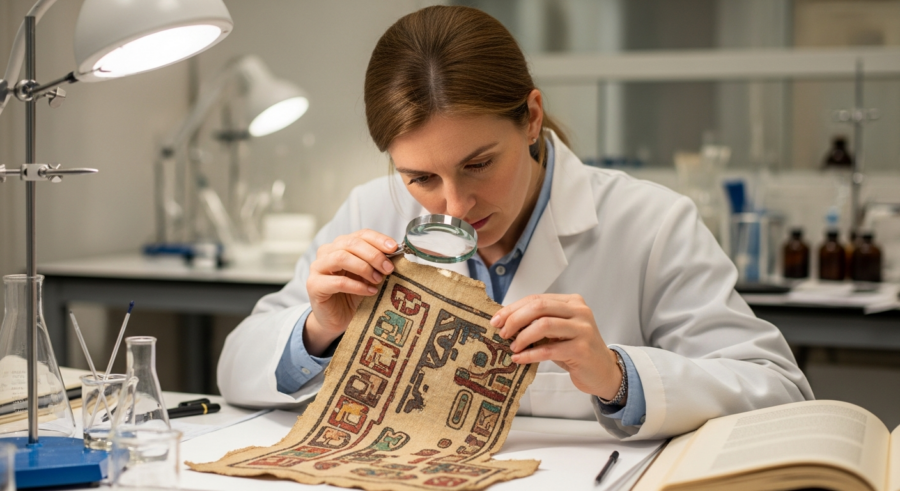
Let’s examine the Paracas textiles of ancient Peru, renowned for their exceptional artistry and preservation. These textiles, dating from around 800 BCE to 200 BCE, were discovered in burial sites in the Paracas Peninsula.
The Paracas people were masters of textile production, creating elaborate mantles, tunics, and other garments adorned with intricate designs and vibrant colors. These textiles were often used as funerary wrappings, enveloping the deceased in layers of richly decorated cloth.
The Paracas textiles are particularly notable for their complex iconography, which includes depictions of human figures, animals, and supernatural beings. The symbolism woven into these textiles provides clues about Paracas religious beliefs and social structures.
Pigment Analysis of Pre-Columbian Textiles, specifically the Paracas textiles, has revealed a wide range of dyes and pigments derived from both plant and mineral sources. These findings shed light on the resources available to the Paracas people and their expertise in textile dyeing techniques.
The arid climate of the Paracas Peninsula played a crucial role in the exceptional preservation of these textiles. The dry conditions prevented the decomposition of the organic materials, allowing the colors and designs to remain remarkably intact for centuries.
The intricate embroidery and needlework found on the Paracas textiles demonstrate the incredible skill and artistry of the Paracas weavers. These textiles were not simply functional items; they were works of art that reflected the cultural values and beliefs of the Paracas people.
The iconography of the Paracas textiles is rich and complex, featuring a variety of motifs that are believed to represent deities, ancestors, and other supernatural beings. These images provide valuable insights into the religious beliefs and cosmological worldview of the Paracas culture.
The vibrant colors of the Paracas textiles were achieved through the use of a wide range of natural dyes, derived from plants, animals, and minerals. The Paracas people were skilled at extracting and processing these dyes to create a palette of colors that is both vibrant and durable.
The Paracas textiles are a testament to the ingenuity and creativity of the Paracas people. They offer a unique window into the past, allowing us to learn about the lives, beliefs, and artistic traditions of this fascinating culture.
Extraction and Identification of Pigments from Textile Fibers
Extracting pigments from ancient textile fibers is a delicate process that requires careful consideration of the artifact’s fragility. Conservators often employ non-destructive or micro-destructive techniques to minimize damage to the textile.
One common method involves gently swabbing the textile surface with a solvent-soaked cotton swab to collect pigment particles. Another approach is to use a micro-vacuum to extract pigment samples from specific areas of the textile.
| Extraction Method | Description | Advantages | Disadvantages |
|---|---|---|---|
| Solvent Swabbing | Gently wiping the textile with a solvent-soaked swab | Simple, minimally invasive | May not extract all pigment |
| Micro-Vacuuming | Using a small vacuum to collect pigment particles | Effective for localized sampling | Risk of fiber damage |
| Micro-Sampling | Carefully removing a small fiber sample | Provides concentrated sample | Destructive to the textile |
| Non-Destructive Spectroscopy | Analyzing pigment without physical extraction | Completely non-invasive | Limited chemical information |
Once the pigment sample has been extracted, it can be analyzed using various analytical techniques to identify its chemical composition. These techniques provide valuable information about the origin and nature of the pigments used in Pre-Columbian textiles.
The choice of extraction method depends on several factors, including the type of textile, the condition of the pigments, and the analytical techniques that will be used. Conservators must carefully weigh the advantages and disadvantages of each method to minimize the risk of damage to the artifact.
In some cases, it may be necessary to use a combination of extraction methods to obtain a representative sample of the pigments present in the textile. For example, solvent swabbing may be used to collect surface pigments, while micro-vacuuming may be used to extract pigments from deeper within the fibers.
The extracted pigment samples are typically very small, often only a few micrograms in weight. Therefore, it is essential to use highly sensitive analytical techniques to identify the chemical composition of the pigments.
The identification of pigments can provide valuable information about the trade routes, cultural exchange, and technological knowledge of ancient societies. By analyzing the pigments used in Pre-Columbian textiles, researchers can gain a deeper understanding of the lives and beliefs of the people who created them.
Analysis Techniques: HPLC, Mass Spectrometry, and Microscopy
High-Performance Liquid Chromatography (HPLC) is a powerful analytical technique used to separate and identify different components within a pigment sample. HPLC works by passing the sample through a column that separates molecules based on their chemical properties.
The separated components are then detected using a spectrophotometer, which measures their absorbance of light at different wavelengths. This information can be used to identify the specific dyes and pigments present in the sample.
Mass Spectrometry (MS) is another valuable technique for pigment analysis. MS identifies compounds based on their mass-to-charge ratio. It provides detailed information about the molecular structure of the pigments.
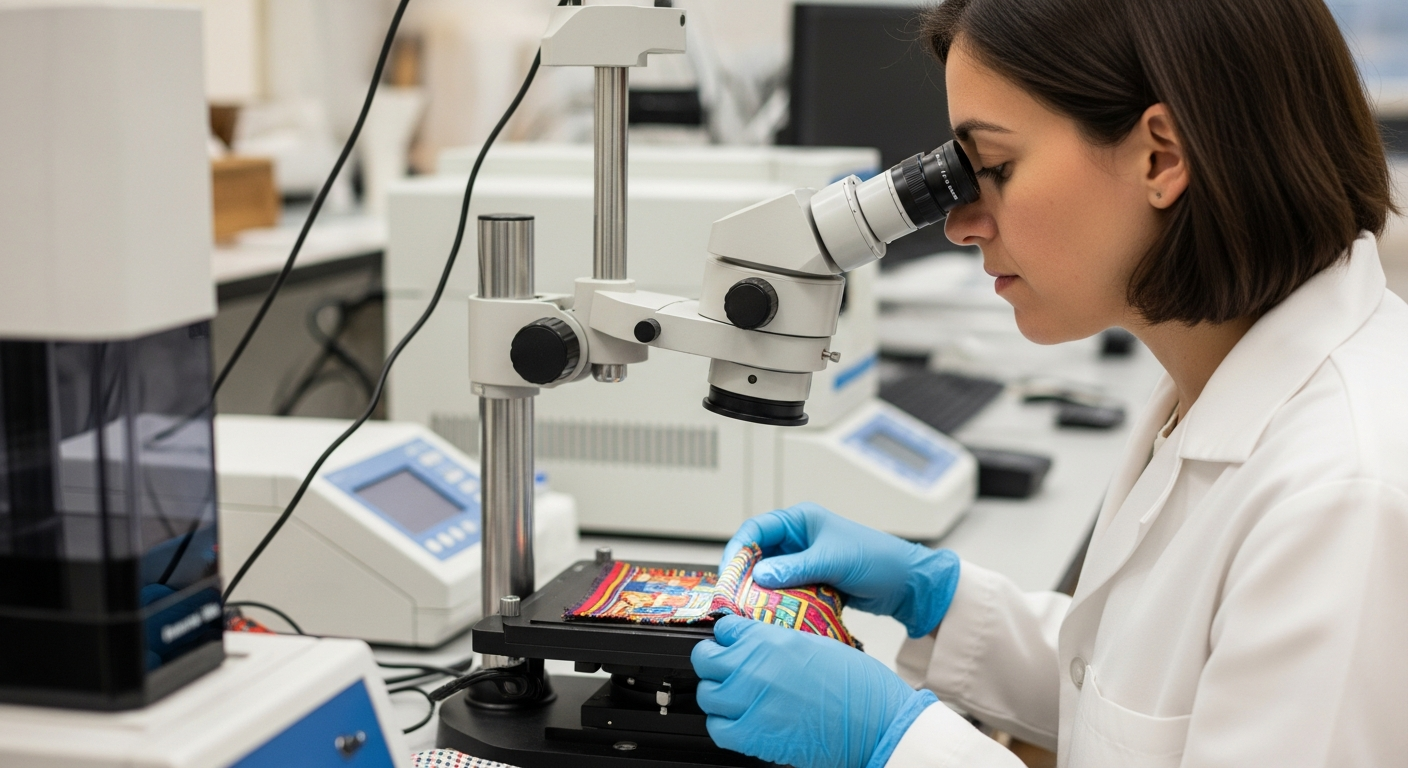
Microscopy techniques, such as optical microscopy and scanning electron microscopy (SEM), are used to examine the physical characteristics of pigment particles. These techniques can reveal information about the particle size, shape, and distribution of pigments within the textile fibers.
By combining the data obtained from HPLC, MS, and microscopy, researchers can gain a comprehensive understanding of the pigments used in Pre-Columbian textiles. This approach offers a powerful way to reconstruct the artistic and technological practices of ancient civilizations.
HPLC is particularly useful for analyzing complex mixtures of organic dyes. It can separate and identify individual dyes even when they are present in very small amounts. This is crucial for understanding the dyeing techniques used by ancient artisans.
Mass spectrometry provides complementary information to HPLC by identifying the molecular weight and structure of the pigments. This can help to distinguish between different dyes that have similar chemical properties. It can also identify degradation products, providing insights into the aging process of the textile.
Microscopy techniques are essential for visualizing the pigments and their interaction with the textile fibers. Optical microscopy can reveal the color and distribution of the pigments, while scanning electron microscopy can provide high-resolution images of the pigment particles and their surface morphology.
The combined use of these analytical techniques provides a powerful approach for studying Pre-Columbian pigments. By integrating chemical and physical information, researchers can gain a deeper understanding of the materials, techniques, and cultural significance of these ancient textiles.
Identifying Natural Dyes and Mineral Pigments Used
Pre-Columbian artisans utilized a wide range of natural dyes and mineral pigments to create the vibrant colors found in their textiles. These materials were sourced from plants, animals, and minerals found in their local environments.
Plant-based dyes were commonly extracted from roots, bark, leaves, flowers, and fruits. For example, indigo, a blue dye, was derived from the Indigofera plant, while red dyes were often obtained from the cochineal insect or the Relbunium plant.
- Indigo (blue): Indigofera plant
- Cochineal (red): Cochineal insect
- Relbunium (red): Relbunium plant
- Annatto (orange): Annatto seeds
- Logwood (purple): Logwood tree
Mineral pigments, such as ochre, hematite, and malachite, provided a range of earth tones and vibrant hues. These pigments were often ground into fine powders and mixed with a binder to create paints or dyes.
Identifying these natural dyes and mineral pigments provides insights into the resources available to Pre-Columbian societies and their knowledge of the natural world. Pigment Analysis of Pre-Columbian Textiles helps to connect ancient artisans with their environment.
The specific plants and minerals used varied depending on the geographical location and the availability of resources. Coastal communities had access to different materials than those living in the highlands or the rainforest.
The process of extracting and preparing dyes and pigments was often labor-intensive and required specialized knowledge. Artisans developed sophisticated techniques for extracting the desired colors and ensuring their durability.
The use of natural dyes and mineral pigments also had a significant impact on the environment. The harvesting of plants and minerals could deplete natural resources, and the disposal of waste products could pollute water sources. Understanding these environmental impacts is important for appreciating the full context of Pre-Columbian textile production.
By studying the natural dyes and mineral pigments used in Pre-Columbian textiles, we can gain a deeper understanding of the relationship between ancient societies and their environment. This knowledge can also inform contemporary efforts to promote sustainable textile production.
Understanding the Dyeing Processes and Color Symbolism
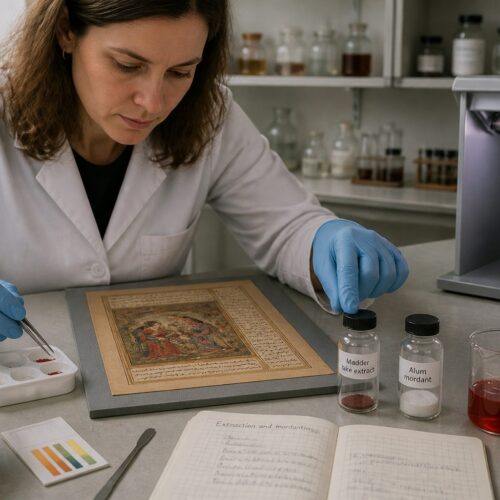
The dyeing processes used by Pre-Columbian artisans were often complex and involved multiple steps. Mordants, such as alum or metallic salts, were used to fix the dyes to the textile fibers and enhance their colorfastness.
Different dyeing techniques, such as resist dyeing and tie-dyeing, were employed to create intricate patterns and designs. These techniques required a high level of skill and precision.
Color symbolism played a significant role in Pre-Columbian cultures. Colors were often associated with specific deities, social classes, or cosmological concepts. For example, blue was often associated with water and the sky, while red symbolized blood and power.
By understanding the dyeing processes and color symbolism used in Pre-Columbian textiles, we can gain a deeper appreciation for the cultural significance of these artifacts. Textile Analysis provides a window into the symbolic world of ancient civilizations.
The use of mordants was crucial for achieving vibrant and long-lasting colors. Different mordants could alter the hue of a dye, allowing artisans to create a wider range of colors from the same source.
Resist dyeing techniques, such as batik and ikat, involved applying a resist material, such as wax or clay, to certain areas of the textile to prevent them from absorbing the dye. This allowed artisans to create intricate patterns and designs with multiple colors.
The symbolism of colors varied across different Pre-Columbian cultures. However, certain colors were often associated with similar concepts. For example, green was often associated with fertility and growth, while yellow symbolized the sun and gold.
The study of dyeing processes and color symbolism can provide valuable insights into the cultural beliefs and practices of ancient societies. By understanding the meanings and techniques associated with different colors, we can gain a deeper appreciation for the artistry and ingenuity of Pre-Columbian artisans.
The Role of Pigment Analysis in Archaeological Research
Pigment analysis plays a crucial role in archaeological research by providing valuable insights into the technological and cultural practices of past societies. By identifying the pigments used in artifacts, archaeologists can learn about trade networks, resource management, and artistic traditions.
Pigment analysis can also help to determine the authenticity and provenance of artifacts. This is especially important for objects that have been looted or illegally traded.
For example, if a pigment is found to be inconsistent with the region or time period in which the artifact is said to have originated, it may be an indication that the object is a forgery. Similarly, if the pigments used in an artifact can be traced to a specific source, it can help to establish its provenance and cultural context.
In the case of Pre-Columbian textiles, pigment analysis has been used to identify the sources of dyes and pigments used by ancient artisans. This information has shed light on the trade routes and cultural exchange that took place between different regions of the Americas.
Furthermore, pigment analysis can contribute to our understanding of ancient technologies. The identification of specific pigments and mordants can reveal the level of technical expertise possessed by ancient artisans. It can also provide clues about the processes used to extract and prepare these materials.
The study of pigments can also shed light on the social and economic organization of ancient societies. The availability and distribution of pigments can reflect patterns of trade and exchange, as well as the social status and economic power of different groups.
In addition to its role in archaeological research, pigment analysis is also important for the conservation and preservation of cultural heritage. Understanding the composition of pigments can help conservators to develop appropriate strategies for protecting and restoring artifacts.
By combining pigment analysis with other archaeological and historical data, researchers can gain a more comprehensive understanding of the past. This interdisciplinary approach is essential for unraveling the complex stories embedded in ancient artifacts.
Challenges and Future Directions in Textile Analysis
Despite the advances in analytical techniques, the study of ancient pigments still presents several challenges. One of the main challenges is the limited availability of sample material. Ancient textiles are often fragile and degraded, making it difficult to extract sufficient pigment for analysis without causing further damage.
Another challenge is the complexity of the pigment mixtures used by ancient artisans. It can be difficult to separate and identify all of the different components in a pigment sample, especially when the pigments have undergone chemical changes over time.
In the future, new and improved analytical techniques will be needed to overcome these challenges. These techniques should be non-destructive or micro-destructive, highly sensitive, and capable of analyzing complex pigment mixtures.
One promising area of research is the development of portable analytical instruments that can be used in situ, without the need to remove samples from the artifact. This would greatly reduce the risk of damage and allow for the analysis of a larger number of artifacts.
The development of more sophisticated data analysis methods is also crucial. These methods should be able to account for the effects of aging and degradation on pigments, as well as the complex interactions between different pigments in a mixture.
Another important area of research is the development of more comprehensive databases of pigment reference materials. These databases should include information on the chemical composition, spectral properties, and aging characteristics of a wide range of pigments.
Collaboration between archaeologists, conservators, and analytical chemists is essential for advancing the field of textile analysis. By working together, these experts can combine their knowledge and skills to overcome the challenges and unlock the secrets of ancient pigments.
The future of textile analysis is bright. With the development of new and improved analytical techniques, we can expect to gain even deeper insights into the artistic, technological, and cultural practices of ancient societies.
Preservation and Conservation Implications
Understanding the composition of pigments used in Pre-Columbian textiles is essential for their long-term preservation and conservation. Different pigments react differently to environmental factors such as light, humidity, and temperature.
By identifying the pigments present in a textile, conservators can develop appropriate storage and display conditions to minimize their degradation. For example, textiles containing light-sensitive pigments should be stored in dark or low-light environments to prevent fading.
Pigment analysis can also inform the selection of appropriate cleaning and treatment methods. Some cleaning agents can damage certain pigments, so it is important to choose methods that are compatible with the materials used in the textile.
In some cases, it may be necessary to consolidate or stabilize fragile pigments to prevent them from flaking or detaching from the textile fibers. Pigment Analysis of Pre-Columbian Textiles is, therefore, a critical tool for preserving these valuable cultural artifacts for future generations.
Preventive conservation measures are crucial for minimizing the degradation of Pre-Columbian textiles. These measures include controlling the environment, handling artifacts carefully, and using appropriate storage materials.
When intervention is necessary, conservators must carefully consider the potential risks and benefits of different treatment options. The goal is to stabilize the artifact and prevent further damage, while preserving its original appearance and integrity.
Ethical considerations are also important in the conservation of Pre-Columbian textiles. Conservators must respect the cultural significance of these artifacts and avoid treatments that could alter their meaning or context.
By combining scientific analysis with ethical conservation practices, we can ensure that Pre-Columbian textiles are preserved for future generations to appreciate and learn from. The preservation of these artifacts is a testament to the enduring legacy of ancient American cultures.
Conclusion
The study of Pre-Columbian pigments offers a fascinating glimpse into the artistic, technological, and cultural achievements of ancient civilizations. Pigment Analysis of Pre-Columbian Textiles is a powerful tool for unraveling the stories woven into these ancient threads.
By combining scientific analysis with archaeological and historical research, we can gain a deeper understanding of the people who created these remarkable textiles and the world in which they lived. The future of textile analysis holds great promise for further enriching our knowledge of Pre-Columbian societies.
The interdisciplinary nature of this research highlights the importance of collaboration between scientists, archaeologists, historians, and conservators. By working together, these experts can bring their unique perspectives and skills to bear on the study of Pre-Columbian textiles.
The preservation of these ancient textiles is a responsibility that we owe to future generations. By understanding the materials and techniques used to create them, we can develop effective strategies for their long-term conservation.
The study of Pre-Columbian pigments is not only a scientific endeavor, but also a cultural one. It allows us to connect with the past and appreciate the ingenuity and creativity of ancient American cultures. The vibrant colors and intricate designs of these textiles are a testament to the enduring power of human expression.