
Mural art breathes life into urban spaces, offering visual narratives and cultural reflections for public enjoyment. However, the exposure of these artworks to the elements presents significant challenges to their long-term preservation. Conserving pigments in outdoor murals requires a nuanced understanding of material science, environmental factors, and appropriate conservation techniques.
This article will explore the various aspects of outdoor mural conservation, focusing on the chemical analysis of pigments and the strategies employed to protect these vulnerable artworks. We will also examine a case study, delving into the practical application of these principles in a real-world setting.
From assessing pigment degradation to implementing protective coatings, this discussion aims to provide insights into the multifaceted approach required for effective mural pigment conservation. The goal is to ensure these artistic expressions continue to enrich our communities for generations to come.
The Challenges of Conserving Pigments in Outdoor Environments
Outdoor murals face a relentless barrage of environmental stressors that contribute to pigment degradation. Ultraviolet (UV) radiation from sunlight is a primary culprit, causing chemical bonds in pigments to break down over time. This leads to fading, discoloration, and a loss of the original artwork’s aesthetic impact.
Temperature fluctuations also play a significant role, as cycles of heating and cooling can cause the mural surface to expand and contract. This constant movement can lead to cracking and flaking of the paint layer, further exposing the pigments to the elements.
Moisture is another major concern. Rain, humidity, and condensation can penetrate the mural surface, leading to the growth of mold, mildew, and algae, all of which can stain and degrade the pigments. In urban environments, air pollution adds another layer of complexity, as pollutants like sulfur dioxide and nitrogen oxides can react with pigments, causing chemical alterations and discoloration.
Vandalism, including graffiti and physical damage, poses a direct threat to the integrity of outdoor murals. Accidental damage from impact, abrasion, and general wear and tear also contribute to the overall degradation of these artworks.
The very location of a mural can impact its longevity. Murals situated near busy roadways are exposed to higher concentrations of pollutants. Similarly, murals in shaded areas may experience prolonged periods of dampness, fostering biological growth.
The orientation of the mural also matters. South-facing murals receive the most intense sunlight, accelerating UV degradation. North-facing murals, while avoiding direct sunlight, may be more susceptible to moisture accumulation.
Choosing the right materials from the outset is critical. Artists must consider the long-term durability of pigments and binding agents when creating outdoor murals. Selecting high-quality, lightfast pigments can significantly extend the lifespan of the artwork.
The substrate on which the mural is painted also plays a crucial role. A stable, well-prepared surface will help to prevent cracking and flaking. Proper sealing and priming can protect the mural from moisture penetration.
Case Study: A Specific Outdoor Mural Project
The “Community Roots” mural, located in the heart of downtown Springfield, serves as an excellent example of the challenges and strategies involved in mural pigment conservation. Painted in 2010 by local artists, the mural depicts scenes of the city’s history and cultural diversity.
Over the years, the mural has suffered from significant fading, cracking, and graffiti damage. The project aimed to address these issues through a comprehensive conservation plan, focusing on cleaning, consolidation, and protective coatings.
The initial assessment revealed that the blue and green pigments were particularly susceptible to fading, likely due to their chemical composition and exposure to UV radiation. Graffiti removal required careful consideration to avoid further damage to the underlying paint layers.
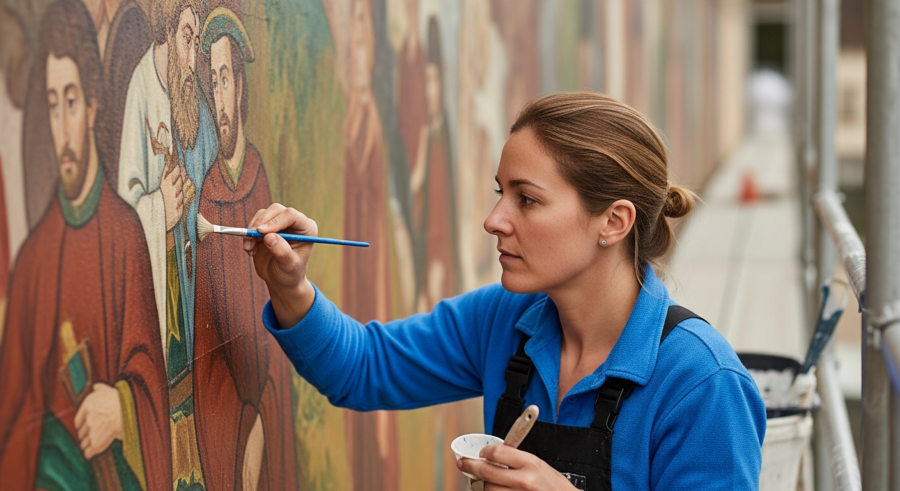
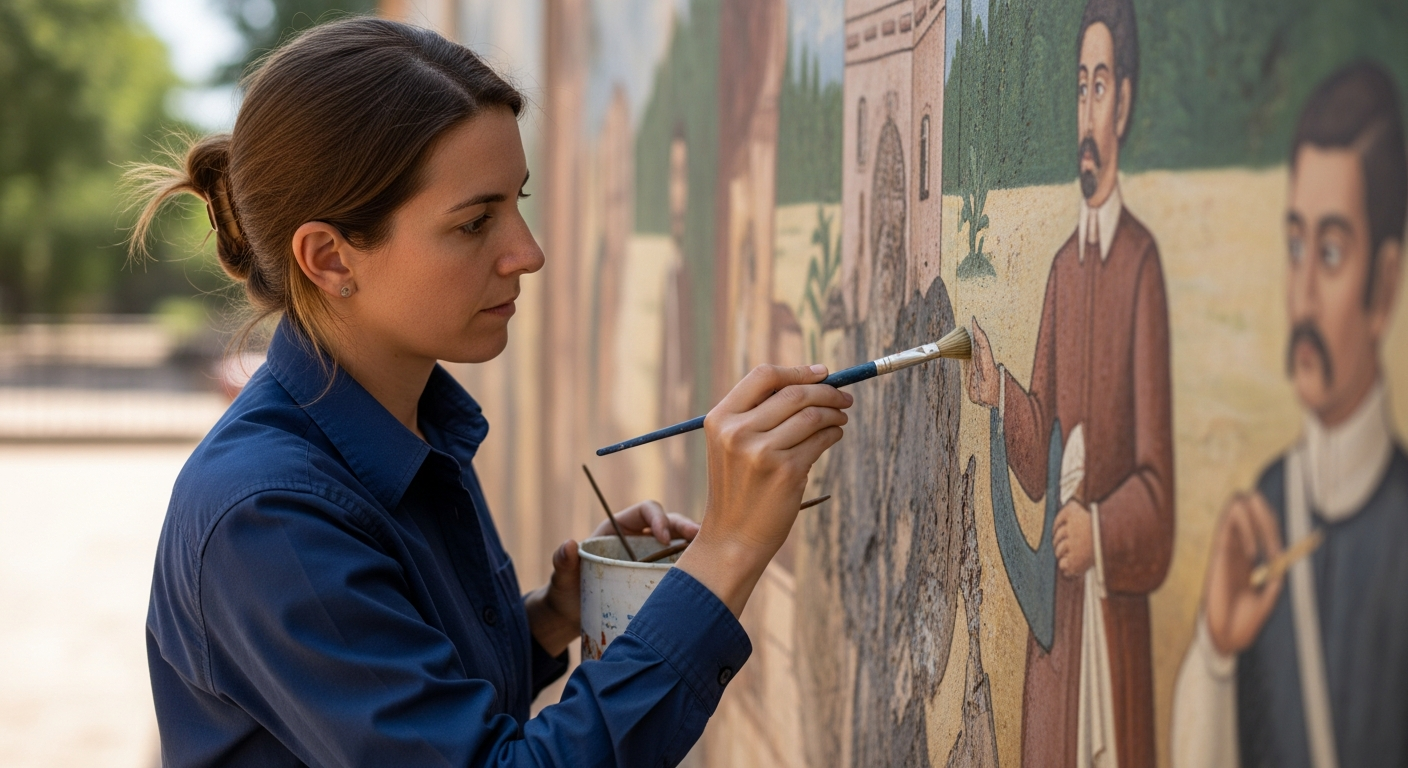
The conservation team implemented a multi-step approach, starting with gentle cleaning to remove surface dirt and pollutants. Consolidation techniques were then used to stabilize the cracked and flaking paint.
The project involved extensive collaboration with the original artists. Their input was invaluable in understanding the original intent and materials used. This collaboration ensured that the conservation efforts respected the artistic integrity of the mural.
The conservation team also conducted community workshops to educate local residents about the project. These workshops helped to build support for the conservation efforts and foster a sense of ownership over the mural. The workshops also provided information about how to report graffiti and other forms of vandalism.
The project faced several challenges, including limited funding and the need to work around inclement weather. Despite these challenges, the conservation team successfully completed the project on time and within budget. The project serves as a model for other mural conservation efforts in the region.
The long-term success of the project will depend on ongoing maintenance and monitoring. Regular cleaning and the application of protective coatings will be necessary to prevent future degradation. The community’s continued support will also be essential for ensuring the mural’s preservation.
Assessing Pigment Degradation and Environmental Factors
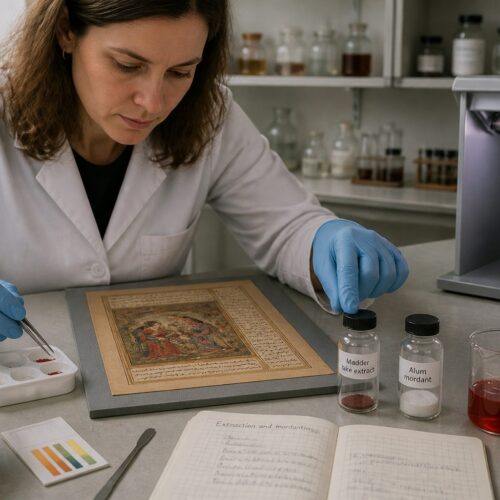
A thorough assessment of pigment degradation is crucial before implementing any conservation treatment. This involves visual examination, microscopic analysis, and, in some cases, chemical analysis to identify the specific pigments used and the nature of their deterioration.
Understanding the environmental factors affecting the mural is equally important. This includes monitoring temperature and humidity levels, assessing UV exposure, and analyzing air pollution data.
| Environmental Factor | Impact on Pigments | Assessment Method |
|---|---|---|
| UV Radiation | Fading, discoloration, chemical breakdown | UV light meters, spectral analysis |
| Temperature Fluctuations | Cracking, flaking, expansion/contraction | Temperature sensors, thermal imaging |
| Moisture | Mold growth, staining, delamination | Humidity sensors, moisture meters |
| Air Pollution | Chemical reactions, discoloration, surface deposits | Air quality monitoring, chemical analysis of surface samples |
| Physical Damage | Abrasion, impact, vandalism | Visual inspection, photographic documentation |
Visual examination is often the first step in assessing pigment degradation. This involves carefully inspecting the mural for signs of fading, discoloration, cracking, and flaking. High-resolution photographs can be used to document the condition of the mural over time.
Microscopic analysis can provide a more detailed view of pigment degradation. This involves taking small samples of paint and examining them under a microscope. Microscopic analysis can reveal the presence of microscopic cracks, delamination, and other forms of deterioration.
Chemical analysis can be used to identify the specific pigments used in the mural. This information is crucial for understanding the potential for pigment degradation. Chemical analysis can also reveal the presence of pollutants and other contaminants.
Monitoring environmental factors is essential for understanding the causes of pigment degradation. Temperature and humidity levels can be monitored using sensors. UV exposure can be assessed using UV light meters. Air pollution data can be obtained from local environmental agencies.
Cleaning and Consolidation Techniques for Mural Surfaces
Cleaning mural surfaces requires a delicate balance between removing dirt and pollutants and avoiding damage to the underlying paint layers. Gentle methods, such as soft brushes and mild detergents, are typically preferred.
Solvent-based cleaners may be necessary for removing stubborn stains or graffiti, but these must be used with caution and tested on a small, inconspicuous area first. Consolidation techniques aim to stabilize cracked and flaking paint by reattaching it to the substrate.
This often involves the use of adhesives or consolidants that penetrate the paint layer and strengthen its bond to the wall. The choice of consolidant depends on the type of paint used in the mural and the nature of the degradation.
Acrylic-based consolidants are commonly used for acrylic murals, while lime-based consolidants are suitable for fresco paintings. Proper application is essential to avoid creating a glossy or uneven surface.
Before any cleaning or consolidation, a thorough assessment of the mural’s condition is essential. This assessment helps determine the appropriate cleaning agents and consolidation techniques. It also helps to identify any areas that are particularly fragile or damaged.
The cleaning process typically begins with dry cleaning methods, such as brushing or vacuuming. These methods remove loose dirt and debris without the use of water or solvents. Wet cleaning methods, such as washing with mild detergents, may be necessary for removing stubborn stains or pollutants.
Consolidation techniques involve injecting a consolidant into the cracks and voids in the paint layer. The consolidant then hardens, reattaching the paint to the substrate. The choice of consolidant depends on the type of paint used in the mural and the nature of the degradation.
Proper application of the consolidant is essential to avoid creating a glossy or uneven surface. The consolidant should be applied in thin layers and allowed to dry completely between applications. Any excess consolidant should be removed carefully to avoid staining the mural.
Protective Coatings and Preventative Measures
Protective coatings play a vital role in shielding mural pigments from environmental damage. These coatings act as a barrier against UV radiation, moisture, and air pollution, slowing down the degradation process.
Acrylic polymers with UV absorbers are frequently used as protective coatings for outdoor murals. These coatings are transparent, flexible, and resistant to yellowing, providing long-term protection without significantly altering the appearance of the artwork.
- Apply UV-resistant coatings
- Regular cleaning to remove pollutants
- Install physical barriers to prevent vandalism
- Monitor environmental conditions
- Implement a maintenance schedule
The selection of a protective coating should be based on a thorough assessment of the mural’s condition and the environmental factors to which it is exposed. The coating should be compatible with the paint used in the mural and should not alter its appearance.
Before applying a protective coating, the mural surface should be thoroughly cleaned and consolidated. Any cracks or voids in the paint layer should be filled with a suitable filler. The coating should be applied in thin, even layers, following the manufacturer’s instructions.
Regular cleaning is essential for removing pollutants and preventing the buildup of dirt and debris. The mural should be cleaned using gentle methods, such as soft brushes and mild detergents. Harsh chemicals and abrasive cleaners should be avoided.
Physical barriers, such as fences or walls, can help to protect murals from vandalism. Anti-graffiti coatings can also be applied to make it easier to remove graffiti. Regular monitoring of environmental conditions can help to identify potential problems before they escalate.
The Role of Chemical Analysis in Conserving Pigments in Outdoor Murals
Chemical analysis is an indispensable tool in the conservation of outdoor murals, providing critical insights into the composition of pigments and the mechanisms of their degradation. Techniques such as X-ray fluorescence (XRF) spectroscopy can identify the elemental composition of pigments, helping conservators understand the materials used by the artist.
This information is crucial for selecting appropriate cleaning and consolidation methods, as well as for formulating protective coatings that are compatible with the original pigments. Fourier transform infrared (FTIR) spectroscopy can identify the chemical bonds present in pigments and detect changes caused by environmental factors.
This technique is particularly useful for assessing the extent of pigment degradation and for monitoring the effectiveness of conservation treatments. Gas chromatography-mass spectrometry (GC-MS) can analyze the organic components of paint, such as binders and varnishes, providing information about their condition and potential sources of deterioration.
By combining these analytical techniques, conservators can gain a comprehensive understanding of the chemical processes affecting outdoor murals, enabling them to develop targeted and effective conservation strategies. The careful analysis helps ensure the longevity of these invaluable cultural assets.
Raman spectroscopy is another valuable technique for pigment identification. It provides complementary information to FTIR, particularly for identifying inorganic pigments. Raman spectroscopy is non-destructive and can be used to analyze pigments in situ, without the need for sampling.
Scanning electron microscopy (SEM) can be used to examine the surface morphology of pigments and paint layers. SEM can reveal the presence of cracks, delamination, and other forms of degradation. Energy-dispersive X-ray spectroscopy (EDS) can be used in conjunction with SEM to identify the elemental composition of pigments.
Ion chromatography (IC) can be used to analyze the ionic components of paint, such as chlorides and sulfates. These ions can contribute to pigment degradation and corrosion. IC can also be used to monitor the effectiveness of cleaning treatments.
The interpretation of chemical analysis data requires specialized knowledge and expertise. Conservators must be familiar with the properties of different pigments and the mechanisms of their degradation. They must also be able to interpret the results of different analytical techniques and integrate them into a comprehensive conservation plan.
Case Study Revisited: “Community Roots” Mural Conservation
Returning to the “Community Roots” mural, the conservation team used XRF analysis to identify the specific pigments used in the artwork. This revealed that the blue pigments were primarily ultramarine and Prussian blue, both of which are known to be susceptible to fading in the presence of UV radiation.
The green pigments were found to be a mixture of phthalocyanine green and chrome green, the latter of which can be sensitive to acidic pollutants. Based on this information, the team selected a UV-resistant acrylic coating specifically formulated to protect these pigments.
FTIR spectroscopy was used to monitor the condition of the pigments before and after the application of the coating. The results showed that the coating effectively reduced the rate of pigment degradation, providing long-term protection against environmental damage.
Graffiti removal was performed using a mild solvent that was carefully selected to avoid damaging the underlying paint layers. The entire process was documented with detailed photographs and chemical analysis data, providing a valuable record for future conservation efforts.
The team also implemented a regular cleaning schedule to remove pollutants and prevent the buildup of dirt and debris. This schedule involves gentle washing with mild detergents and soft brushes.
The conservation team worked with local businesses to install awnings over the mural. The awnings provide shade and protect the mural from direct sunlight. This helps to further reduce the rate of pigment degradation.
The project also included the installation of security cameras to deter vandalism. The cameras are monitored by local police and have been effective in preventing graffiti and other forms of damage. This is a good way to help protect the mural.
The “Community Roots” mural serves as a model for other mural conservation projects. The project demonstrates the importance of chemical analysis, careful cleaning, consolidation, and protective coatings. It also highlights the value of community involvement in the conservation process.
Urban Art Analysis: Understanding the Impact of Urban Environments
Urban environments present unique challenges for the conservation of outdoor murals. Air pollution, traffic vibrations, and the potential for vandalism all contribute to the accelerated degradation of these artworks.
Understanding the specific pollutants present in the urban environment is crucial for developing effective conservation strategies. Sulfur dioxide, nitrogen oxides, and particulate matter can react with pigments, causing discoloration and chemical alterations.
Traffic vibrations can weaken the bond between the paint layer and the substrate, leading to cracking and flaking. Vandalism, including graffiti and physical damage, poses a direct threat to the integrity of outdoor murals in urban areas.
Implementing preventative measures, such as anti-graffiti coatings and physical barriers, is essential for protecting these artworks from urban damage. Regular cleaning and maintenance are also crucial for removing pollutants and addressing minor damage before it escalates.
The microclimate around a mural can also be significantly affected by the urban environment. Tall buildings can create wind tunnels that accelerate the erosion of paint layers. The urban heat island effect can lead to higher temperatures and increased UV exposure.
The materials used in the construction of surrounding buildings can also impact the mural. Acid rain runoff from concrete buildings can damage certain pigments. The reflection of sunlight from glass buildings can increase UV exposure.
The social environment of the urban area can also play a role in the mural’s longevity. Murals in areas with high levels of poverty and crime are more likely to be vandalized. Murals in areas with strong community support are more likely to be protected and maintained.
Effective urban art analysis requires a multidisciplinary approach. Conservators must work with environmental scientists, urban planners, and community members to understand the complex factors that affect the degradation of outdoor murals. This collaborative approach ensures that conservation strategies are tailored to the specific challenges of the urban environment.
Community Involvement in Mural Conservation
Community involvement is essential for the long-term success of mural conservation projects. Engaging local residents, artists, and stakeholders in the conservation process can foster a sense of ownership and responsibility for the artwork.
Educational programs and workshops can raise awareness about the importance of mural conservation and provide community members with the skills and knowledge to care for these artworks. Public art initiatives can also promote the creation of new murals that reflect the community’s identity and values.
By involving the community in the conservation process, we can ensure that these artistic expressions continue to enrich our lives for generations to come. This collaborative approach helps to build a stronger connection between the community and its cultural heritage.
Local support helps to guarantee future funding and support for the conservation and maintenance of murals, which are often unfunded or underfunded. This promotes continued care for these artistic treasures.
Community members can serve as “mural monitors,” reporting any signs of damage or vandalism. They can also participate in regular cleaning and maintenance activities. This helps to ensure that the mural is well-cared for and protected.
Artists can play a crucial role in the conservation process. They can provide valuable insights into the materials and techniques used in the mural. They can also help to develop appropriate conservation strategies.
Local businesses can support mural conservation by providing funding or in-kind donations. They can also help to promote awareness of the mural and its importance to the community. This can help to ensure the mural is taken care of.
Engaging youth in mural conservation can help to foster a sense of appreciation for art and culture. Youth can participate in educational programs, workshops, and volunteer activities. This helps to ensure that the next generation will value and protect these artistic treasures.
Conclusion
Conserving pigments in outdoor murals is a complex and multifaceted endeavor that requires a deep understanding of material science, environmental factors, and conservation techniques. By employing a combination of chemical analysis, careful cleaning, consolidation, and protective coatings, we can protect these vulnerable artworks from the ravages of time and the elements.
Community involvement is also essential for the long-term success of mural conservation projects. By engaging local residents, artists, and stakeholders in the conservation process, we can foster a sense of ownership and responsibility for these cultural treasures.
Mural pigment conservation is vital to protect these artistic expressions and ensure they continue to inspire and enrich our communities. Mural Preservation helps safeguard our shared cultural heritage for future generations.
Through ongoing research, education, and collaboration, we can continue to develop innovative strategies for preserving these valuable works of art. These efforts will help maintain community identity and foster appreciation for art.
The future of mural conservation depends on a commitment to sustainable practices. This includes using environmentally friendly cleaning and consolidation materials. It also includes promoting the creation of murals that are designed to be durable and resistant to environmental damage.
By embracing a holistic approach to mural conservation, we can ensure that these artistic expressions continue to thrive for generations to come. This approach includes not only technical expertise but also community engagement and a commitment to sustainability. This will help to ensure the murals are protected.
The ongoing documentation of mural conservation projects is essential for sharing knowledge and best practices. Detailed reports, photographs, and chemical analysis data should be made available to other conservators and researchers. This helps to advance the field of mural conservation and improve the effectiveness of future projects.
Ultimately, the goal of mural conservation is to preserve these artistic expressions for the enjoyment and inspiration of future generations. By investing in mural conservation, we are investing in our cultural heritage and the well-being of our communities. These murals are important to our society.