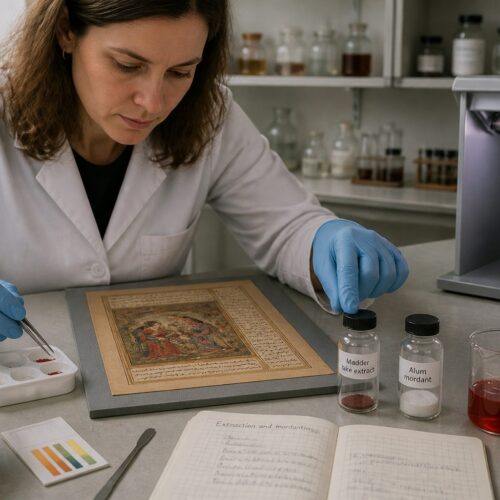


The degradation of pigments in historical paintings poses a significant challenge for art conservators. Understanding the chemical processes behind pigment alteration is essential for developing effective conservation strategies. This article will focus on the conservation of Van Gogh’s yellow pigments, particularly chrome yellow, and the analytical techniques used to study their degradation.
Van Gogh’s vibrant use of yellow hues is well-known, but these yellows are now proving to be some of his most unstable pigments. Preserving these iconic artworks requires a deep understanding of the materials and their behavior over time.
This article will explore the challenges of conserving Van Gogh’s paintings, focusing on the chemical analysis and conservation strategies employed to protect these masterpieces for future generations. We will examine the degradation mechanisms of chrome yellow and the ongoing research aimed at stabilizing these pigments.
Van Gogh’s Use of Yellow Pigments and Their Significance
Vincent van Gogh’s paintings are celebrated for their bold colors and expressive brushstrokes. Yellow held a special significance for Van Gogh, representing sunlight, happiness, and divinity.
He employed a variety of yellow pigments in his works, including chrome yellow (lead chromate), cadmium yellow (cadmium sulfide), and yellow ochre (hydrated iron oxide). Chrome yellow was particularly favored for its intense, bright color, allowing Van Gogh to achieve the luminous effects he desired.
The use of yellow was not merely aesthetic; Van Gogh associated the color with profound emotional and spiritual meanings. His famous “Sunflowers” series, for example, is a powerful expression of joy and vitality, conveyed through the dominant use of yellow hues.
Van Gogh’s artistic vision relied heavily on the unique properties of these yellow pigments. The degradation of these pigments poses a serious threat to the integrity and visual impact of his works.
The artist’s choice of yellow pigments was deliberate and integral to his artistic expression. He carefully selected specific yellows to achieve the desired luminosity and emotional impact in his paintings. The vibrancy and intensity of these yellows were essential to conveying his artistic message.
Van Gogh’s letters reveal his fascination with color theory and his meticulous approach to pigment selection. He often experimented with different combinations of yellows to achieve the perfect hue and tone. This dedication to color underscores the importance of preserving these pigments in their original state.
The significance of yellow in Van Gogh’s work extends beyond its visual appeal. It represents a deep connection to nature, light, and the human spirit. The degradation of these yellows not only affects the appearance of the paintings but also diminishes their emotional and symbolic power.
The challenge for conservators is to find ways to preserve these iconic works while respecting the artist’s original intent and materials. This requires a delicate balance between scientific analysis, artistic understanding, and ethical considerations.
The Problem of Chrome Yellow Degradation
Chrome yellow, chemically known as lead chromate (PbCrO4), is susceptible to degradation when exposed to light and environmental pollutants. This degradation process can lead to a visible darkening or color change in the paint layer, diminishing the original brilliance of the artwork.
The primary cause of chrome yellow degradation is the reduction of chromium(VI) to chromium(III). This process is often accelerated by the presence of chloride ions and exposure to ultraviolet (UV) radiation.
The reduced chromium(III) forms brownish compounds, which contribute to the darkening of the pigment. This alteration can significantly alter the aesthetic appearance of the painting, affecting the artist’s intended color balance and composition.
The degradation of chrome yellow is not uniform across a painting; it can vary depending on the pigment’s concentration, the presence of other pigments, and the specific environmental conditions to which the artwork has been exposed. This variability makes the conservation of Van Gogh pigments particularly challenging.
The darkening of chrome yellow is a complex process influenced by multiple environmental factors. Temperature, humidity, and air pollution can all contribute to the rate of degradation. Understanding these factors is crucial for developing effective preventive conservation measures.
The presence of other pigments in the paint mixture can also affect the stability of chrome yellow. Some pigments may act as catalysts, accelerating the degradation process, while others may provide a protective effect. Analyzing the composition of the paint layer is essential for understanding these interactions.
The degradation of chrome yellow can manifest in different ways, depending on the specific conditions to which the painting has been exposed. In some cases, the pigment may darken uniformly, while in others, it may develop localized discoloration or cracking. These variations can make it difficult to assess the extent of degradation and to develop appropriate treatment strategies.
The long-term consequences of chrome yellow degradation are significant for the preservation of Van Gogh’s legacy. If left unchecked, the darkening of the pigment can eventually obscure the artist’s original colors and compositions, diminishing the artistic and historical value of his works.
Analytical Techniques Used to Study Van Gogh’s Yellows
A variety of analytical techniques are employed to study the chemical composition and degradation processes of Van Gogh pigments. These methods provide valuable insights into the nature and extent of pigment alteration.
These techniques allow conservators to understand the specific chemical changes occurring within the paint layer, guiding the development of appropriate conservation strategies.
Non-destructive techniques are often preferred to minimize any potential damage to the artwork. These methods allow conservators to gather information about the pigments without taking physical samples from the painting.
Destructive techniques, which involve taking small samples for analysis, are used when more detailed information is required. These samples are carefully selected and analyzed to provide a comprehensive understanding of the pigment composition and degradation processes.
| Analytical Technique | Principle | Application in Pigment Analysis |
|---|---|---|
| X-ray Diffraction (XRD) | Diffraction of X-rays by crystalline materials | Identification of crystalline pigment phases and degradation products |
| Raman Spectroscopy | Inelastic scattering of light by molecules | Identification of molecular vibrations and chemical bonds in pigments |
| X-ray Fluorescence (XRF) | Emission of characteristic X-rays after excitation | Elemental analysis of pigments and detection of degradation products |
| Gas Chromatography-Mass Spectrometry (GC-MS) | Separation and identification of volatile organic compounds | Analysis of binding media and organic components in paint |
| Scanning Electron Microscopy-Energy Dispersive X-ray Spectroscopy (SEM-EDS) | Imaging of sample surface and elemental analysis | Microscopic examination of pigment particles and distribution of elements |
Each analytical technique provides unique information about the pigments and their degradation products. By combining the results from different techniques, conservators can develop a comprehensive understanding of the chemical processes occurring within the paint layer.
X-ray diffraction (XRD) is particularly useful for identifying the crystalline structure of pigments and degradation products. This technique can help to distinguish between different forms of lead chromate and to identify the presence of lead chloride, a common degradation product.
Raman spectroscopy provides information about the molecular vibrations and chemical bonds in pigments. This technique can be used to identify the presence of chromium(III) compounds, which are responsible for the darkening of chrome yellow.
X-ray fluorescence (XRF) is a non-destructive technique that can be used to determine the elemental composition of pigments. This technique can help to identify the presence of lead, chromium, and other elements in the paint layer.
Mechanisms of Chrome Yellow Degradation and Stabilization
The degradation of chrome yellow involves complex chemical reactions that are influenced by several factors. Understanding these mechanisms is crucial for developing effective stabilization strategies.
One primary mechanism involves the photoreduction of chromium(VI) to chromium(III) in the presence of UV light. This process is often accelerated by the presence of chloride ions, which can act as catalysts.
The presence of moisture and oxygen also plays a role in the degradation process, facilitating the formation of hydroxyl radicals that can further promote the reduction of chromium(VI). The resulting chromium(III) compounds are typically brownish in color, leading to the observed darkening of the pigment.
Stabilization strategies often focus on preventing or slowing down these degradation mechanisms. This can be achieved by controlling environmental conditions, such as light exposure and humidity, and by applying protective coatings that block UV radiation and reduce the ingress of pollutants.
The photoreduction of chromium(VI) is a complex process that involves the absorption of UV light by the pigment. This absorption leads to the formation of excited-state species that can react with other molecules in the paint layer.
Chloride ions can act as catalysts by facilitating the transfer of electrons from other molecules to chromium(VI). This process accelerates the reduction of chromium(VI) to chromium(III) and the formation of brownish compounds.
Moisture and oxygen can also contribute to the degradation process by promoting the formation of hydroxyl radicals. These radicals are highly reactive and can attack the pigment molecules, leading to their decomposition.
Stabilization strategies aim to prevent or slow down these degradation mechanisms by controlling environmental conditions and applying protective coatings. These coatings can block UV radiation, reduce the ingress of pollutants, and provide a barrier against moisture and oxygen.
Conservation Strategies for Preserving Van Gogh’s Paintings
Conserving Van Gogh’s paintings requires a multi-faceted approach that addresses both the immediate condition of the artwork and the long-term preservation of its materials. Conservation strategies are tailored to the specific needs of each painting, taking into account the types of pigments used, the extent of degradation, and the environmental history of the artwork.
These strategies encompass a range of techniques, from controlling environmental conditions to applying protective coatings and undertaking targeted treatments to reverse or mitigate pigment degradation.
Environmental control is a critical aspect of preventive conservation. Maintaining stable temperature and humidity levels can help to slow down the rate of chemical reactions that lead to pigment degradation.
Reducing exposure to UV radiation is also essential, as UV light can accelerate the photoreduction of chrome yellow. This can be achieved by using UV-filtering glazing on display cases and by controlling the intensity and duration of lighting in exhibition spaces.
The selection of appropriate conservation treatments requires a thorough understanding of the materials and techniques used by Van Gogh. This knowledge is essential for avoiding treatments that could cause further damage to the artwork.
Preventive conservation measures are often the most effective way to protect Van Gogh’s paintings. By controlling environmental conditions and reducing exposure to harmful pollutants, conservators can slow down the rate of degradation and extend the lifespan of the artwork.
Regular monitoring of the condition of Van Gogh’s paintings is also essential. This allows conservators to detect any signs of degradation early on and to take appropriate action to prevent further damage.
Collaboration between conservators, scientists, and art historians is crucial for the successful preservation of Van Gogh’s legacy. By sharing their knowledge and expertise, these professionals can develop the most effective strategies for protecting these iconic artworks for future generations.
Specific Conservation Treatments for Chrome Yellow Degradation
In cases where chrome yellow degradation has already occurred, conservators may employ specific treatments to address the visual changes. These treatments are carefully considered and implemented to minimize any further damage to the artwork.
One approach involves the application of consolidants to stabilize the paint layer and prevent further flaking or loss of pigment. Consolidants are typically synthetic resins that penetrate the paint layer and bind the pigment particles together.
Another technique involves the use of light bleaching to reverse the darkening of chrome yellow. Light bleaching involves exposing the painting to controlled levels of visible light, which can convert some of the chromium(III) back to chromium(VI), restoring some of the original yellow color.
However, light bleaching is a controversial technique, as it can also accelerate the degradation of other pigments and materials in the painting. It is typically only used in cases where the darkening of chrome yellow is severely affecting the aesthetic appearance of the artwork.
The selection of a consolidant requires careful consideration of its chemical properties and its compatibility with the other materials in the painting. The consolidant should be stable, transparent, and reversible, and it should not cause any adverse effects over time.
Light bleaching is a complex process that requires careful control of the light intensity and duration. The painting must be closely monitored during the treatment to ensure that no further damage is occurring.
Other potential treatments for chrome yellow degradation include the use of chelating agents to remove chloride ions from the paint layer. Chelating agents are molecules that can bind to metal ions, such as chloride, and remove them from the system.
The choice of treatment will depend on the specific condition of the painting and the extent of degradation. Conservators must carefully weigh the risks and benefits of each treatment option before making a decision.
The Role of Surface Coatings in Conservation
Surface coatings play a crucial role in the conservation of paintings by providing a protective barrier against environmental pollutants and UV radiation. These coatings can help to slow down the rate of pigment degradation and prevent the accumulation of dirt and grime on the surface of the artwork.
The selection of an appropriate surface coating is a critical decision, as the coating must be compatible with the materials of the painting and must not cause any adverse effects over time. Conservators typically use synthetic resins that are stable, transparent, and reversible.
These resins are applied in thin layers to the surface of the painting, forming a protective film that can be easily removed if necessary. The coating should also have good optical properties, ensuring that it does not alter the color or appearance of the artwork.
Regular monitoring of the surface coating is essential to ensure that it is performing as intended and that it is not showing any signs of degradation. The coating may need to be replaced periodically to maintain its protective properties.
The primary function of a surface coating is to protect the paint layer from environmental pollutants, such as dust, dirt, and grime. These pollutants can accumulate on the surface of the painting and cause discoloration or damage to the pigments.
Surface coatings can also provide a barrier against UV radiation, which can accelerate the degradation of chrome yellow and other pigments. UV-absorbing additives can be incorporated into the coating to enhance its protective properties.
The reversibility of a surface coating is essential for allowing future conservators to remove the coating if necessary. This is important for addressing any future conservation issues or for applying new treatments to the painting.
The application of a surface coating requires careful technique and attention to detail. The coating must be applied evenly and thinly to avoid altering the appearance of the painting.
Ongoing Research and Monitoring Efforts
Research into the degradation mechanisms of chrome yellow and other historical pigments is ongoing. Scientists and conservators are continually seeking new and improved methods for preserving these valuable artworks.
Monitoring efforts are also essential for tracking the condition of paintings over time and for assessing the effectiveness of conservation treatments.
Advanced analytical techniques are being developed to provide more detailed information about the chemical processes occurring within the paint layer. These techniques can help to identify the specific factors that are contributing to pigment degradation.
New conservation materials are being tested to determine their effectiveness in stabilizing chrome yellow and other unstable pigments. These materials must be carefully evaluated to ensure that they are compatible with the other materials in the painting and that they do not cause any adverse effects over time.
- Developing new analytical techniques
- Investigating the effects of environmental factors
- Testing new conservation materials
- Evaluating the long-term performance of treatments
- Creating predictive models of pigment degradation
Predictive models of pigment degradation can help conservators to anticipate future conservation needs and to develop proactive strategies for preserving artworks. These models take into account the environmental history of the painting, the types of pigments used, and the known degradation mechanisms.
Long-term monitoring of the condition of paintings is essential for assessing the effectiveness of conservation treatments. This monitoring involves regular visual examination of the painting, as well as the use of analytical techniques to track changes in the pigment composition.
Collaboration between researchers, conservators, and museum professionals is crucial for advancing the field of art conservation. By sharing their knowledge and expertise, these professionals can develop the most effective strategies for preserving our cultural heritage.
The ongoing research and monitoring efforts are essential for ensuring the long-term survival of Van Gogh’s paintings and other cultural heritage objects containing unstable pigments. These efforts will help to protect these valuable artworks for future generations.
Art Conservation Case Study: Van Gogh’s “Sunflowers”
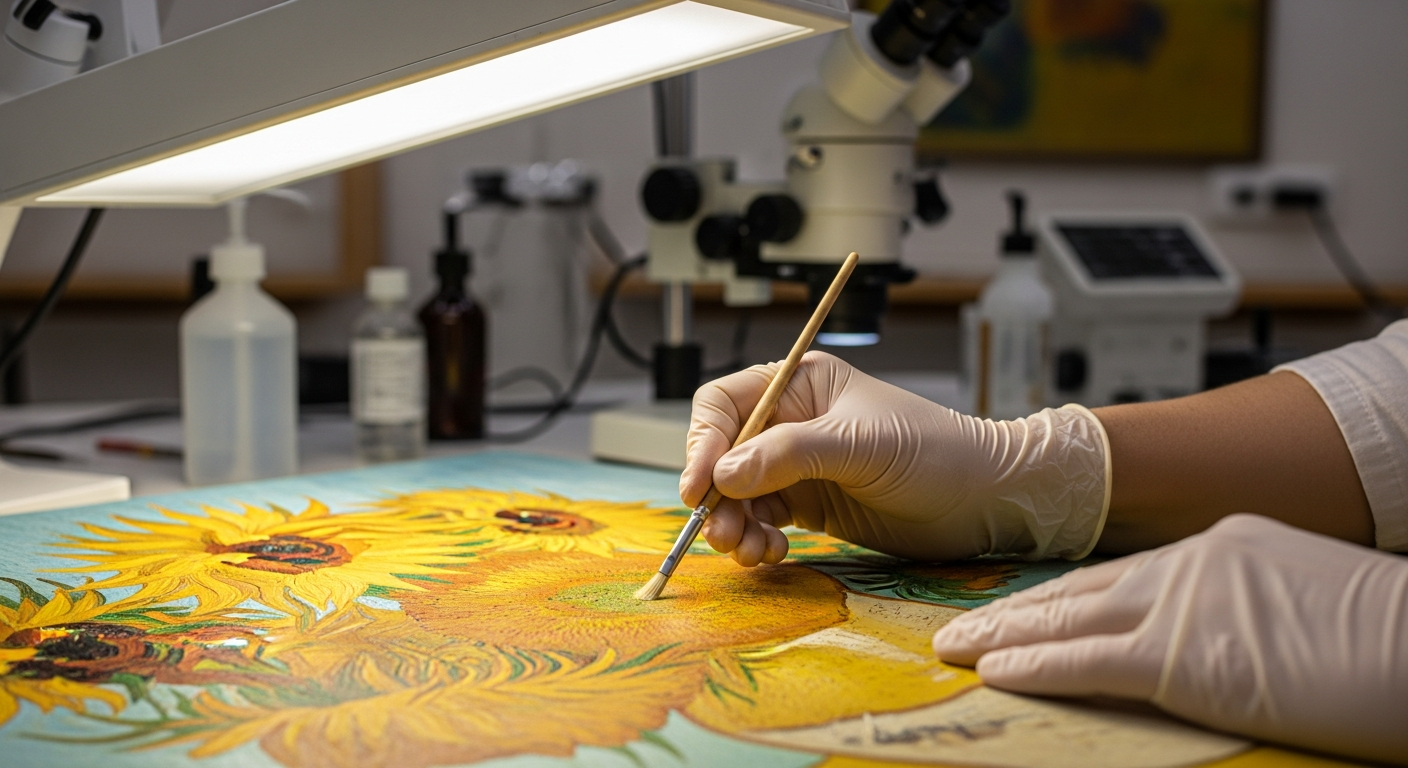
Van Gogh’s “Sunflowers” series provides a compelling case study for the conservation of chrome yellow pigments. These iconic paintings are particularly vulnerable to degradation due to their heavy use of chrome yellow in the depiction of the sunflowers themselves.
Conservators have observed darkening and color changes in the chrome yellow areas of the “Sunflowers” paintings over time. This degradation has prompted extensive research and conservation efforts to understand and mitigate the problem.
Analytical techniques, such as XRF and Raman spectroscopy, have been used to identify the specific degradation products present in the chrome yellow paint layer. These analyses have helped to elucidate the mechanisms of degradation and to inform the development of appropriate conservation treatments.
Conservation strategies for the “Sunflowers” paintings have included controlling environmental conditions, applying protective coatings, and undertaking targeted treatments to reverse or stabilize pigment degradation. These efforts are aimed at preserving the original brilliance and visual impact of these iconic artworks for future generations.
The “Sunflowers” paintings have been the subject of numerous scientific investigations aimed at understanding the degradation of chrome yellow. These studies have provided valuable insights into the factors that contribute to pigment darkening and the effectiveness of different conservation treatments.
Environmental control is a key aspect of the conservation strategy for the “Sunflowers” paintings. The paintings are typically displayed in climate-controlled environments with stable temperature and humidity levels to minimize the rate of degradation.
Protective coatings have been applied to the surface of the “Sunflowers” paintings to provide a barrier against environmental pollutants and UV radiation. These coatings are carefully selected to ensure that they are compatible with the other materials in the painting and that they do not alter its appearance.
Targeted treatments, such as light bleaching, have been used to reverse the darkening of chrome yellow in some areas of the “Sunflowers” paintings. These treatments are carefully controlled and monitored to minimize any potential damage to the artwork.
Conclusion
The conservation of Van Gogh’s yellow pigments, particularly chrome yellow, presents a complex and ongoing challenge for art conservators. The degradation of these pigments can significantly alter the aesthetic appearance of his paintings, diminishing their original brilliance and visual impact.
Through the application of advanced analytical techniques, a deeper understanding of degradation mechanisms, and the implementation of targeted conservation strategies, progress is being made in preserving these masterpieces for future generations. Continued research and monitoring efforts are essential to ensure the long-term survival of Van Gogh’s iconic artworks and other cultural heritage objects containing unstable pigments.
The preservation of Van Gogh’s paintings is a responsibility shared by conservators, scientists, museum professionals, and the public. By working together, we can ensure that these valuable artworks are protected for future generations to enjoy.
The ongoing research and monitoring efforts are essential for advancing our understanding of pigment degradation and for developing more effective conservation strategies. These efforts will help to protect not only Van Gogh’s paintings but also other cultural heritage objects containing unstable pigments.
The challenges of conserving Van Gogh’s yellow pigments highlight the importance of preventive conservation measures. By controlling environmental conditions and reducing exposure to harmful pollutants, we can slow down the rate of degradation and extend the lifespan of these valuable artworks.