
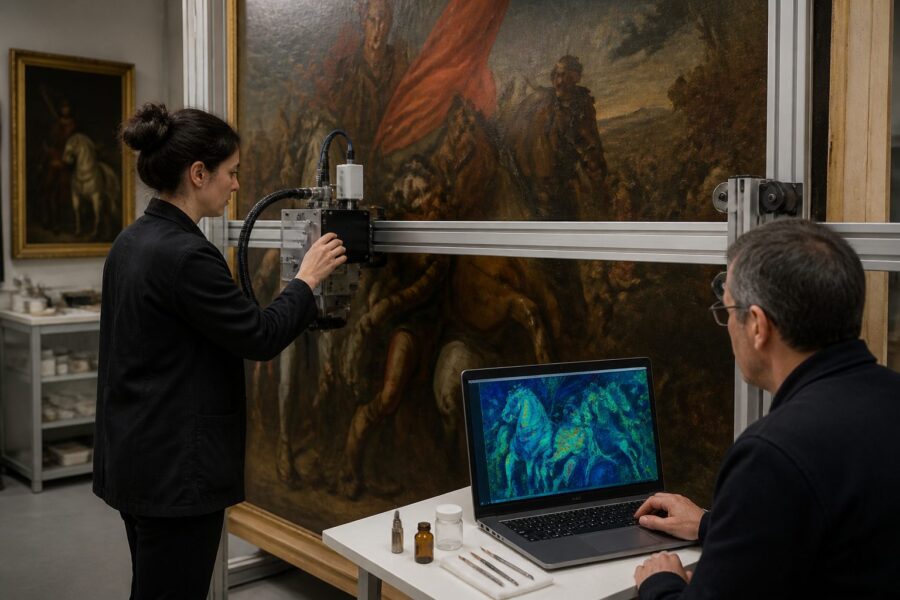
By analyzing the elemental distribution, conservators can detect layers beneath the visible surface, revealing preliminary sketches or adjustments made during the painting process. This insight not only enriches the narrative of the artwork but also informs restoration strategies, allowing conservators to make decisions that respect the artist’s original vision.
- Uncovering preliminary sketches that reveal the artist’s thought process
- Understanding compositional adjustments that reflect the evolution of the artwork
- Identifying artist’s techniques used in different layers of paint
- Revealing historical context that adds depth to the artwork’s significance
- Informing future conservation decisions based on a comprehensive understanding
Furthermore, this capability enhances the overall scholarly understanding of the artwork, contributing to art historical research and fostering new interpretations. The ability to visualize these hidden layers can lead to new interpretations and appreciation of the artist’s intent, which is invaluable for both scholars and the general public.
Distinguishing Pigment Layers From Ground and Varnish Contributions
Macro XRF scanning excels at distinguishing between pigment layers, ground, and varnish contributions in a painting, which is a critical aspect of effective art conservation. This differentiation is crucial for accurate conservation practices, as it helps conservators understand the original materials used by the artist and how they interact with one another over time.
By analyzing the elemental maps, conservators can identify specific pigments and their respective layers, allowing for targeted interventions that respect the integrity of the artwork. This level of detail ensures that any conservation efforts align with the artist’s original materials and intent, preserving the artwork’s authenticity.
Understanding the relationship between pigment layers, ground, and varnish is essential for preserving the integrity of the artwork and ensuring that restoration efforts do not compromise its historical value. This knowledge helps in developing appropriate conservation treatments that take into account the unique characteristics of each artwork, ultimately leading to more effective preservation outcomes.
Moreover, distinguishing these elements can reveal information about the artist’s technique, including layering methods and material choices that inform our understanding of historical artistic practices. This insight is invaluable for art historians and conservators alike, providing a comprehensive view of the artwork’s construction and the broader context of its creation.
Ultimately, the ability to differentiate between these components enhances the broader understanding of artistic practices within historical contexts, contributing to the ongoing dialogue around art conservation. This knowledge not only aids in the preservation of individual artworks but also enriches our collective understanding of art history and its significance.
Data Processing Workflows From Raw Counts to Interpretable Maps
The journey from raw data to interpretable maps in macro XRF scanning involves several critical steps in data processing that are essential for accurate analysis. Initially, the raw counts of detected X-ray fluorescence are collected and subjected to calibration to ensure accuracy and reliability of the data produced.
Following calibration, data is processed to generate elemental maps that visually represent the distribution of various elements across the painting’s surface, making complex information accessible to conservators. This workflow is essential for translating complex data into formats that conservators can easily interpret and utilize in their work.
Advanced software algorithms are employed to enhance the clarity and usability of the elemental maps, allowing for more detailed analyses of the artwork’s composition. These tools enable the identification of specific materials and facilitate comparisons across different areas of the artwork, further enriching the understanding of its condition and history.
Moreover, data visualization techniques play a crucial role in representing the information effectively, ensuring that it is both clear and actionable. By employing color coding and layering, conservators can better understand the relationships between different elements, which aids in making informed conservation decisions.
Ultimately, an efficient data processing workflow ensures that the information derived from macro XRF scanning is both accurate and actionable, laying the groundwork for effective conservation strategies. This is vital for making informed decisions in the conservation of historical paintings, ensuring that artworks are preserved in accordance with best practices.
Case Applications in Major Museum Conservation Projects
Macro XRF scanning has been successfully applied in various major museum conservation projects, showcasing its versatility and effectiveness in real-world settings. Notable cases include the analysis of large paintings in prestigious institutions, where the technique has revealed significant insights into artistic techniques and material use that were previously unknown.
For example, during the restoration of a renowned historical painting, macro XRF scanning uncovered hidden underlayers that altered the understanding of the artist’s process and intentions. This information was crucial in informing the conservation strategy and ensuring the painting’s longevity, highlighting the importance of employing advanced techniques in the conservation field.
Additionally, major museums have utilized macro XRF scanning to assess the condition of their collections, allowing for a more systematic approach to conservation. By creating detailed elemental maps, conservators have been able to prioritize restoration efforts based on the specific needs of each artwork, ensuring that the most critical pieces receive the attention they require.
These case applications highlight the importance of integrating advanced technologies like MA-XRF in museum conservation practices, which can greatly enhance the understanding and care of artworks. The insights gained from these projects have not only benefited specific artworks but have also contributed to a broader understanding of art history and the evolution of artistic practices over time.
As more institutions adopt macro XRF scanning, the potential for new discoveries in art conservation continues to grow, creating exciting opportunities for research and scholarship. This technique will undoubtedly play a pivotal role in preserving cultural heritage for future generations, ensuring that the legacy of these artworks endures.
Limitations: What Macro XRF Cannot Tell You About Pigment Identity
Despite its many advantages, macro XRF scanning has limitations, particularly regarding pigment identity, which is an important aspect of art conservation. While it can provide valuable information about elemental composition, it does not definitively identify pigments at a molecular level, leaving some questions unanswered.
This limitation means that while conservators can ascertain the presence of specific elements, they cannot always determine the exact pigments used, which can be crucial for accurate restoration efforts. Therefore, macro XRF scanning should be viewed as a complementary tool rather than a standalone solution for pigment analysis, emphasizing the need for a multi-faceted approach to conservation.
To effectively address these limitations, conservators often combine macro XRF with other analytical techniques that provide additional layers of information about the artwork. This multi-faceted approach enhances the accuracy of pigment identification and provides a more comprehensive understanding of the artwork’s materials and their interactions.
By integrating various methods, conservators can gather a more holistic view of the artwork’s composition, ensuring that conservation efforts are informed by a complete understanding of the materials involved. This comprehensive strategy helps to mitigate the limitations inherent in any single analytical method, leading to more effective conservation outcomes.
Ultimately, recognizing the limitations of macro XRF scanning is crucial for its effective application in art conservation. This awareness allows conservators to employ the technique within the context of a broader analytical framework that includes other methods and approaches.
Combining MA-XRF With Reflectance Hyperspectral Imaging
The integration of macro XRF scanning with reflectance hyperspectral imaging presents exciting possibilities for art conservation that can significantly enhance the analysis of artworks. By combining these two techniques, conservators can achieve a more comprehensive understanding of an artwork’s materials and condition, allowing for more informed conservation decisions.
Reflectance hyperspectral imaging complements macro XRF by providing detailed information about color and surface features that are not readily accessible through XRF alone. This synergy allows for enhanced pigment mapping and a more thorough analysis of large paintings, ultimately enriching the data available to conservators.
Furthermore, combining both techniques enables conservators to cross-verify findings, leading to more robust conclusions regarding the artwork’s composition and condition. This multi-analytical approach is essential for making informed conservation decisions that are based on a comprehensive understanding of the artwork.
As the field of conservation science continues to evolve and embrace new technologies, the integration of advanced techniques will play a significant role in preserving cultural heritage for future generations. The combination of MA-XRF and reflectance hyperspectral imaging exemplifies the future of art conservation, showcasing how technology can enhance our understanding and appreciation of historical artworks.
Ultimately, this collaborative approach enhances the ability to protect and understand historical artworks, ensuring their legacy endures throughout the ages. As conservators embrace these innovations, the potential for discovery and insight in art history remains boundless, opening new avenues for research and scholarship.
However, achieving high resolution often requires longer scan times, which can be a challenge for large paintings that may require extensive analysis. Balancing these two aspects is essential for maximizing the quality of the data collected during MA-XRF conservation while ensuring that the scanning process remains efficient and manageable.
| Scan Size (cm) | Spatial Resolution (mm) | Estimated Scan Time (hours) |
|---|---|---|
| 100 x 100 | 1 | 2 |
| 200 x 150 | 2 | 4 |
| 300 x 200 | 3 | 6 |
| 400 x 300 | 5 | 10 |
Choosing the right combination of scan size and resolution is crucial for obtaining the most informative results while minimizing time and resource expenditure, which is vital for conservation labs with limited resources. This careful consideration ensures that conservators can conduct thorough analyses without compromising the integrity of the artwork or the quality of the data collected.
Elemental Maps Generated and Their Interpretation
The primary output of macro XRF scanning is the generation of elemental maps that visually represent the distribution of different elements across the painting’s surface, providing a wealth of information for conservators and art historians alike. These maps are invaluable for conservators, offering insights into the materials used and the techniques employed by the artist, which can inform restoration and conservation strategies.
Elemental mapping allows for a deeper understanding of the artwork’s composition, highlighting areas of restoration or alteration that may not be visible to the naked eye. By interpreting these maps, conservators can make informed decisions regarding conservation strategies and future interventions, ensuring that the artwork is preserved for generations to come.
Different colors in the maps correspond to varying concentrations of specific elements, revealing the complexity of the pigment layers and providing a visual representation of the artist’s techniques. This visualization aids in recognizing patterns and anomalies that may indicate artistic intent or degradation, allowing conservators to respond appropriately.
Moreover, elemental maps can serve as a reference for future conservation efforts, documenting the current state of the artwork for posterity. This archival information is essential for tracking changes over time and assessing the effectiveness of conservation treatments, contributing to a more sustainable approach to art preservation.
Ultimately, the interpretation of elemental maps generated by macro XRF scanning plays a pivotal role in the conservation and appreciation of historical paintings, enhancing our understanding of art’s cultural significance. This data empowers conservators to preserve not only the physical artwork but also its historical significance, ensuring that future generations can appreciate these masterpieces.
Identifying Hidden Underpaintings and Compositional Changes
One of the remarkable capabilities of macro XRF scanning is its ability to identify hidden underpaintings and compositional changes that may not be immediately apparent. This is particularly useful for understanding the artist’s creative process and the evolution of the work over time, providing valuable insights into how the artwork was conceived and developed.
By analyzing the elemental distribution, conservators can detect layers beneath the visible surface, revealing preliminary sketches or adjustments made during the painting process. This insight not only enriches the narrative of the artwork but also informs restoration strategies, allowing conservators to make decisions that respect the artist’s original vision.
- Uncovering preliminary sketches that reveal the artist’s thought process
- Understanding compositional adjustments that reflect the evolution of the artwork
- Identifying artist’s techniques used in different layers of paint
- Revealing historical context that adds depth to the artwork’s significance
- Informing future conservation decisions based on a comprehensive understanding
Furthermore, this capability enhances the overall scholarly understanding of the artwork, contributing to art historical research and fostering new interpretations. The ability to visualize these hidden layers can lead to new interpretations and appreciation of the artist’s intent, which is invaluable for both scholars and the general public.
Distinguishing Pigment Layers From Ground and Varnish Contributions
Macro XRF scanning excels at distinguishing between pigment layers, ground, and varnish contributions in a painting, which is a critical aspect of effective art conservation. This differentiation is crucial for accurate conservation practices, as it helps conservators understand the original materials used by the artist and how they interact with one another over time.
By analyzing the elemental maps, conservators can identify specific pigments and their respective layers, allowing for targeted interventions that respect the integrity of the artwork. This level of detail ensures that any conservation efforts align with the artist’s original materials and intent, preserving the artwork’s authenticity.
Understanding the relationship between pigment layers, ground, and varnish is essential for preserving the integrity of the artwork and ensuring that restoration efforts do not compromise its historical value. This knowledge helps in developing appropriate conservation treatments that take into account the unique characteristics of each artwork, ultimately leading to more effective preservation outcomes.
Moreover, distinguishing these elements can reveal information about the artist’s technique, including layering methods and material choices that inform our understanding of historical artistic practices. This insight is invaluable for art historians and conservators alike, providing a comprehensive view of the artwork’s construction and the broader context of its creation.
Ultimately, the ability to differentiate between these components enhances the broader understanding of artistic practices within historical contexts, contributing to the ongoing dialogue around art conservation. This knowledge not only aids in the preservation of individual artworks but also enriches our collective understanding of art history and its significance.
Data Processing Workflows From Raw Counts to Interpretable Maps
The journey from raw data to interpretable maps in macro XRF scanning involves several critical steps in data processing that are essential for accurate analysis. Initially, the raw counts of detected X-ray fluorescence are collected and subjected to calibration to ensure accuracy and reliability of the data produced.
Following calibration, data is processed to generate elemental maps that visually represent the distribution of various elements across the painting’s surface, making complex information accessible to conservators. This workflow is essential for translating complex data into formats that conservators can easily interpret and utilize in their work.
Advanced software algorithms are employed to enhance the clarity and usability of the elemental maps, allowing for more detailed analyses of the artwork’s composition. These tools enable the identification of specific materials and facilitate comparisons across different areas of the artwork, further enriching the understanding of its condition and history.
Moreover, data visualization techniques play a crucial role in representing the information effectively, ensuring that it is both clear and actionable. By employing color coding and layering, conservators can better understand the relationships between different elements, which aids in making informed conservation decisions.
Ultimately, an efficient data processing workflow ensures that the information derived from macro XRF scanning is both accurate and actionable, laying the groundwork for effective conservation strategies. This is vital for making informed decisions in the conservation of historical paintings, ensuring that artworks are preserved in accordance with best practices.
Case Applications in Major Museum Conservation Projects
Macro XRF scanning has been successfully applied in various major museum conservation projects, showcasing its versatility and effectiveness in real-world settings. Notable cases include the analysis of large paintings in prestigious institutions, where the technique has revealed significant insights into artistic techniques and material use that were previously unknown.
For example, during the restoration of a renowned historical painting, macro XRF scanning uncovered hidden underlayers that altered the understanding of the artist’s process and intentions. This information was crucial in informing the conservation strategy and ensuring the painting’s longevity, highlighting the importance of employing advanced techniques in the conservation field.
Additionally, major museums have utilized macro XRF scanning to assess the condition of their collections, allowing for a more systematic approach to conservation. By creating detailed elemental maps, conservators have been able to prioritize restoration efforts based on the specific needs of each artwork, ensuring that the most critical pieces receive the attention they require.
These case applications highlight the importance of integrating advanced technologies like MA-XRF in museum conservation practices, which can greatly enhance the understanding and care of artworks. The insights gained from these projects have not only benefited specific artworks but have also contributed to a broader understanding of art history and the evolution of artistic practices over time.
As more institutions adopt macro XRF scanning, the potential for new discoveries in art conservation continues to grow, creating exciting opportunities for research and scholarship. This technique will undoubtedly play a pivotal role in preserving cultural heritage for future generations, ensuring that the legacy of these artworks endures.
Limitations: What Macro XRF Cannot Tell You About Pigment Identity
Despite its many advantages, macro XRF scanning has limitations, particularly regarding pigment identity, which is an important aspect of art conservation. While it can provide valuable information about elemental composition, it does not definitively identify pigments at a molecular level, leaving some questions unanswered.
This limitation means that while conservators can ascertain the presence of specific elements, they cannot always determine the exact pigments used, which can be crucial for accurate restoration efforts. Therefore, macro XRF scanning should be viewed as a complementary tool rather than a standalone solution for pigment analysis, emphasizing the need for a multi-faceted approach to conservation.
To effectively address these limitations, conservators often combine macro XRF with other analytical techniques that provide additional layers of information about the artwork. This multi-faceted approach enhances the accuracy of pigment identification and provides a more comprehensive understanding of the artwork’s materials and their interactions.
By integrating various methods, conservators can gather a more holistic view of the artwork’s composition, ensuring that conservation efforts are informed by a complete understanding of the materials involved. This comprehensive strategy helps to mitigate the limitations inherent in any single analytical method, leading to more effective conservation outcomes.
Ultimately, recognizing the limitations of macro XRF scanning is crucial for its effective application in art conservation. This awareness allows conservators to employ the technique within the context of a broader analytical framework that includes other methods and approaches.
Combining MA-XRF With Reflectance Hyperspectral Imaging
The integration of macro XRF scanning with reflectance hyperspectral imaging presents exciting possibilities for art conservation that can significantly enhance the analysis of artworks. By combining these two techniques, conservators can achieve a more comprehensive understanding of an artwork’s materials and condition, allowing for more informed conservation decisions.
Reflectance hyperspectral imaging complements macro XRF by providing detailed information about color and surface features that are not readily accessible through XRF alone. This synergy allows for enhanced pigment mapping and a more thorough analysis of large paintings, ultimately enriching the data available to conservators.
Furthermore, combining both techniques enables conservators to cross-verify findings, leading to more robust conclusions regarding the artwork’s composition and condition. This multi-analytical approach is essential for making informed conservation decisions that are based on a comprehensive understanding of the artwork.
As the field of conservation science continues to evolve and embrace new technologies, the integration of advanced techniques will play a significant role in preserving cultural heritage for future generations. The combination of MA-XRF and reflectance hyperspectral imaging exemplifies the future of art conservation, showcasing how technology can enhance our understanding and appreciation of historical artworks.
Ultimately, this collaborative approach enhances the ability to protect and understand historical artworks, ensuring their legacy endures throughout the ages. As conservators embrace these innovations, the potential for discovery and insight in art history remains boundless, opening new avenues for research and scholarship.
In the realm of art conservation, macro XRF scanning has emerged as a groundbreaking technique, reshaping how conservators analyze and preserve historical artworks in ways that were previously unimaginable. This innovative technology allows for non-destructive pigment mapping, making it possible to explore the depths of paintings without causing any damage, which is particularly crucial when dealing with fragile or irreplaceable pieces of art.
By utilizing macro XRF scanning, conservators can gain insights into the elemental composition of large paintings, revealing hidden layers and details previously obscured from view. This method enhances our understanding of artists’ techniques and the materials they employed, thereby transforming the conservation landscape and providing a more nuanced appreciation of art history.
The impact of macro XRF scanning in conservation science is profound, opening new avenues for research and preservation that were not possible with traditional methods. With its ability to produce accurate elemental maps, this technology is invaluable for art historians and conservators alike, allowing them to make more informed decisions regarding conservation practices.
What Macro XRF Scanning Is and Why It Transformed Conservation Science
Macro X-ray fluorescence (MA-XRF) scanning is a non-invasive analytical technique that uses X-rays to analyze the elemental composition of painted surfaces, which significantly alters how conservators assess artworks. This method has revolutionized conservation science by enabling precise pigment analysis without requiring physical samples from the artwork, thereby preserving the integrity of the original piece.
The ability to create detailed elemental maps makes MA-XRF scanning particularly useful in assessing the condition and authenticity of artworks, as it provides a comprehensive overview of the materials used in their creation. By revealing the distribution of various elements, conservators can better understand the materials used by artists, the changes that may have occurred over time, and how these factors contribute to an artwork’s overall condition.
As a result, MA-XRF conservation has become a standard practice in museums and research institutions worldwide, reflecting its efficacy and reliability in the field. This technology not only aids in preservation efforts but also enhances the scholarship surrounding historical artworks, allowing for deeper and more informed discussions about art’s cultural significance.
Hardware Components: X-Ray Source, Detector Arrays, and Motion Systems
The effectiveness of macro XRF scanning hinges on its sophisticated hardware components, which include an X-ray source, detector arrays, and motion systems that work together to gather precise data. The X-ray source generates high-energy photons that interact with the elements present in the artwork, ultimately allowing for the identification of the various materials that constitute the piece.
Detector arrays play a crucial role in this process as they capture the emitted X-ray fluorescence, allowing for the identification of specific elements that may be present in the artwork’s layers. This combination of technology forms the backbone of MA-XRF scanning, enabling detailed analysis of large paintings that would otherwise be challenging to examine thoroughly.
Motion systems are critical as they facilitate the scanning process, allowing the X-ray source and detectors to move across the painting’s surface systematically and efficiently. This ensures comprehensive coverage and accurate data collection across the entire artwork, which is essential for creating reliable elemental maps that conservators can interpret.
Modern systems utilize advanced robotics to achieve precise and repeatable movements, which is vital for obtaining reliable results that can be replicated in future studies. The integration of these components enhances the efficiency and effectiveness of the scanning process, ultimately making it a preferred choice for analyzing historical pigments.
Overall, the sophisticated hardware setup not only improves the quality of data collected but also streamlines the workflow in conservation labs, allowing for faster and more accurate analyses. This technological advancement has made macro XRF scanning a preferred choice for analyzing historical pigments, ensuring that conservators can work with the best tools available.
Spatial Resolution and Scan Time Considerations for Large-Format Works
When dealing with large-format works, spatial resolution and scan time become critical factors in the effectiveness of macro XRF scanning that need careful consideration. Higher spatial resolution allows for better detail in elemental mapping, which is essential for accurately interpreting the artwork and understanding its condition, but can also lead to longer scan times.
However, achieving high resolution often requires longer scan times, which can be a challenge for large paintings that may require extensive analysis. Balancing these two aspects is essential for maximizing the quality of the data collected during MA-XRF conservation while ensuring that the scanning process remains efficient and manageable.
| Scan Size (cm) | Spatial Resolution (mm) | Estimated Scan Time (hours) |
|---|---|---|
| 100 x 100 | 1 | 2 |
| 200 x 150 | 2 | 4 |
| 300 x 200 | 3 | 6 |
| 400 x 300 | 5 | 10 |
Choosing the right combination of scan size and resolution is crucial for obtaining the most informative results while minimizing time and resource expenditure, which is vital for conservation labs with limited resources. This careful consideration ensures that conservators can conduct thorough analyses without compromising the integrity of the artwork or the quality of the data collected.
Elemental Maps Generated and Their Interpretation
The primary output of macro XRF scanning is the generation of elemental maps that visually represent the distribution of different elements across the painting’s surface, providing a wealth of information for conservators and art historians alike. These maps are invaluable for conservators, offering insights into the materials used and the techniques employed by the artist, which can inform restoration and conservation strategies.
Elemental mapping allows for a deeper understanding of the artwork’s composition, highlighting areas of restoration or alteration that may not be visible to the naked eye. By interpreting these maps, conservators can make informed decisions regarding conservation strategies and future interventions, ensuring that the artwork is preserved for generations to come.
Different colors in the maps correspond to varying concentrations of specific elements, revealing the complexity of the pigment layers and providing a visual representation of the artist’s techniques. This visualization aids in recognizing patterns and anomalies that may indicate artistic intent or degradation, allowing conservators to respond appropriately.
Moreover, elemental maps can serve as a reference for future conservation efforts, documenting the current state of the artwork for posterity. This archival information is essential for tracking changes over time and assessing the effectiveness of conservation treatments, contributing to a more sustainable approach to art preservation.
Ultimately, the interpretation of elemental maps generated by macro XRF scanning plays a pivotal role in the conservation and appreciation of historical paintings, enhancing our understanding of art’s cultural significance. This data empowers conservators to preserve not only the physical artwork but also its historical significance, ensuring that future generations can appreciate these masterpieces.
Identifying Hidden Underpaintings and Compositional Changes
One of the remarkable capabilities of macro XRF scanning is its ability to identify hidden underpaintings and compositional changes that may not be immediately apparent. This is particularly useful for understanding the artist’s creative process and the evolution of the work over time, providing valuable insights into how the artwork was conceived and developed.
By analyzing the elemental distribution, conservators can detect layers beneath the visible surface, revealing preliminary sketches or adjustments made during the painting process. This insight not only enriches the narrative of the artwork but also informs restoration strategies, allowing conservators to make decisions that respect the artist’s original vision.
- Uncovering preliminary sketches that reveal the artist’s thought process
- Understanding compositional adjustments that reflect the evolution of the artwork
- Identifying artist’s techniques used in different layers of paint
- Revealing historical context that adds depth to the artwork’s significance
- Informing future conservation decisions based on a comprehensive understanding
Furthermore, this capability enhances the overall scholarly understanding of the artwork, contributing to art historical research and fostering new interpretations. The ability to visualize these hidden layers can lead to new interpretations and appreciation of the artist’s intent, which is invaluable for both scholars and the general public.
Distinguishing Pigment Layers From Ground and Varnish Contributions
Macro XRF scanning excels at distinguishing between pigment layers, ground, and varnish contributions in a painting, which is a critical aspect of effective art conservation. This differentiation is crucial for accurate conservation practices, as it helps conservators understand the original materials used by the artist and how they interact with one another over time.
By analyzing the elemental maps, conservators can identify specific pigments and their respective layers, allowing for targeted interventions that respect the integrity of the artwork. This level of detail ensures that any conservation efforts align with the artist’s original materials and intent, preserving the artwork’s authenticity.
Understanding the relationship between pigment layers, ground, and varnish is essential for preserving the integrity of the artwork and ensuring that restoration efforts do not compromise its historical value. This knowledge helps in developing appropriate conservation treatments that take into account the unique characteristics of each artwork, ultimately leading to more effective preservation outcomes.
Moreover, distinguishing these elements can reveal information about the artist’s technique, including layering methods and material choices that inform our understanding of historical artistic practices. This insight is invaluable for art historians and conservators alike, providing a comprehensive view of the artwork’s construction and the broader context of its creation.
Ultimately, the ability to differentiate between these components enhances the broader understanding of artistic practices within historical contexts, contributing to the ongoing dialogue around art conservation. This knowledge not only aids in the preservation of individual artworks but also enriches our collective understanding of art history and its significance.
Data Processing Workflows From Raw Counts to Interpretable Maps
The journey from raw data to interpretable maps in macro XRF scanning involves several critical steps in data processing that are essential for accurate analysis. Initially, the raw counts of detected X-ray fluorescence are collected and subjected to calibration to ensure accuracy and reliability of the data produced.
Following calibration, data is processed to generate elemental maps that visually represent the distribution of various elements across the painting’s surface, making complex information accessible to conservators. This workflow is essential for translating complex data into formats that conservators can easily interpret and utilize in their work.
Advanced software algorithms are employed to enhance the clarity and usability of the elemental maps, allowing for more detailed analyses of the artwork’s composition. These tools enable the identification of specific materials and facilitate comparisons across different areas of the artwork, further enriching the understanding of its condition and history.
Moreover, data visualization techniques play a crucial role in representing the information effectively, ensuring that it is both clear and actionable. By employing color coding and layering, conservators can better understand the relationships between different elements, which aids in making informed conservation decisions.
Ultimately, an efficient data processing workflow ensures that the information derived from macro XRF scanning is both accurate and actionable, laying the groundwork for effective conservation strategies. This is vital for making informed decisions in the conservation of historical paintings, ensuring that artworks are preserved in accordance with best practices.
Case Applications in Major Museum Conservation Projects
Macro XRF scanning has been successfully applied in various major museum conservation projects, showcasing its versatility and effectiveness in real-world settings. Notable cases include the analysis of large paintings in prestigious institutions, where the technique has revealed significant insights into artistic techniques and material use that were previously unknown.
For example, during the restoration of a renowned historical painting, macro XRF scanning uncovered hidden underlayers that altered the understanding of the artist’s process and intentions. This information was crucial in informing the conservation strategy and ensuring the painting’s longevity, highlighting the importance of employing advanced techniques in the conservation field.
Additionally, major museums have utilized macro XRF scanning to assess the condition of their collections, allowing for a more systematic approach to conservation. By creating detailed elemental maps, conservators have been able to prioritize restoration efforts based on the specific needs of each artwork, ensuring that the most critical pieces receive the attention they require.
These case applications highlight the importance of integrating advanced technologies like MA-XRF in museum conservation practices, which can greatly enhance the understanding and care of artworks. The insights gained from these projects have not only benefited specific artworks but have also contributed to a broader understanding of art history and the evolution of artistic practices over time.
As more institutions adopt macro XRF scanning, the potential for new discoveries in art conservation continues to grow, creating exciting opportunities for research and scholarship. This technique will undoubtedly play a pivotal role in preserving cultural heritage for future generations, ensuring that the legacy of these artworks endures.
Limitations: What Macro XRF Cannot Tell You About Pigment Identity
Despite its many advantages, macro XRF scanning has limitations, particularly regarding pigment identity, which is an important aspect of art conservation. While it can provide valuable information about elemental composition, it does not definitively identify pigments at a molecular level, leaving some questions unanswered.
This limitation means that while conservators can ascertain the presence of specific elements, they cannot always determine the exact pigments used, which can be crucial for accurate restoration efforts. Therefore, macro XRF scanning should be viewed as a complementary tool rather than a standalone solution for pigment analysis, emphasizing the need for a multi-faceted approach to conservation.
To effectively address these limitations, conservators often combine macro XRF with other analytical techniques that provide additional layers of information about the artwork. This multi-faceted approach enhances the accuracy of pigment identification and provides a more comprehensive understanding of the artwork’s materials and their interactions.
By integrating various methods, conservators can gather a more holistic view of the artwork’s composition, ensuring that conservation efforts are informed by a complete understanding of the materials involved. This comprehensive strategy helps to mitigate the limitations inherent in any single analytical method, leading to more effective conservation outcomes.
Ultimately, recognizing the limitations of macro XRF scanning is crucial for its effective application in art conservation. This awareness allows conservators to employ the technique within the context of a broader analytical framework that includes other methods and approaches.
Combining MA-XRF With Reflectance Hyperspectral Imaging
The integration of macro XRF scanning with reflectance hyperspectral imaging presents exciting possibilities for art conservation that can significantly enhance the analysis of artworks. By combining these two techniques, conservators can achieve a more comprehensive understanding of an artwork’s materials and condition, allowing for more informed conservation decisions.
Reflectance hyperspectral imaging complements macro XRF by providing detailed information about color and surface features that are not readily accessible through XRF alone. This synergy allows for enhanced pigment mapping and a more thorough analysis of large paintings, ultimately enriching the data available to conservators.
Furthermore, combining both techniques enables conservators to cross-verify findings, leading to more robust conclusions regarding the artwork’s composition and condition. This multi-analytical approach is essential for making informed conservation decisions that are based on a comprehensive understanding of the artwork.
As the field of conservation science continues to evolve and embrace new technologies, the integration of advanced techniques will play a significant role in preserving cultural heritage for future generations. The combination of MA-XRF and reflectance hyperspectral imaging exemplifies the future of art conservation, showcasing how technology can enhance our understanding and appreciation of historical artworks.
Ultimately, this collaborative approach enhances the ability to protect and understand historical artworks, ensuring their legacy endures throughout the ages. As conservators embrace these innovations, the potential for discovery and insight in art history remains boundless, opening new avenues for research and scholarship.