
Tyrian purple, a color synonymous with royalty and prestige, has captivated historians and chemists alike for centuries, serving as a vivid reminder of the intricate relationships between humans and their environment. Its rich hue and complex origins, which stem from the ancient practices of dyeing textiles, make it an essential subject in the study of cultural heritage and the evolution of human artistry.
This blog post delves into the historical significance of Tyrian purple, its biological sources, and the chemistry involved in its creation, offering a comprehensive overview of this remarkable dye. We will also explore analytical methods for detecting this ancient dye in textiles, as well as the challenges faced in conserving these fragile artifacts that tell the story of our past.
Through a series of case studies and experimental archaeology, we will uncover the secrets of Tyrian purple and its implications for trade and status in ancient societies, revealing how this dye shaped cultural identity. Join us as we unravel the mysteries of this remarkable ancient textile pigment, exploring its impact on history and the enduring legacy it has left behind.
The Historical Significance of Tyrian Purple in Antiquity
Tyrian purple has been revered since antiquity, often associated with wealth and nobility due to its rarity and the labor-intensive process required for its production. This dye was highly sought after in ancient Rome, Phoenicia, and Greece, becoming a prestigious symbol of power and status that transcended borders and social classes.
The production of Tyrian purple was labor-intensive and required thousands of murex snails to yield just a small quantity of dye, making it an extremely valuable commodity. As a result, it was incredibly expensive and primarily used by emperors, high-ranking officials, and the elite, signaling their wealth and authority in a visually striking manner.
Its significance is also reflected in literature and art, where it is frequently mentioned as a mark of high social standing and luxury. The legacy of Tyrian purple can still be seen today in modern expressions of wealth and luxury, illustrating how this ancient dye continues to influence contemporary culture.
This historical context highlights the importance of understanding Tyrian purple in the realm of ancient textile pigment analysis and the cultural narratives it represents. It serves as a reminder of the intricate relationships between color, culture, and commerce, which shaped the societies of the past and continue to resonate today.
As we explore the biological sources of Tyrian purple, we will gain insights into the chemistry that makes it unique and remarkable. This knowledge is crucial for historical purple textile conservation and restoration efforts, ensuring that future generations can appreciate these artifacts of cultural significance.
Biological Source: The Murex Sea Snail and Its Secretion Chemistry
The murex sea snail, particularly species like Murex brandaris, is the primary biological source of Tyrian purple, showcasing a fascinating intersection of biology and chemistry. These snails produce a secretion that, when exposed to air and sunlight, undergoes a chemical transformation to create the iconic purple dye, a process that has intrigued scientists for centuries.
The secretion contains a precursor compound called brominated indigo, which is transformed during the dyeing process through a complex series of reactions involving oxidation and polymerization. This intricate transformation highlights the sophistication of ancient dyeing techniques and the knowledge possessed by artisans of that era.
Understanding the murex pigment chemistry is vital for replicating the dye and for analyzing historical textiles, providing a foundation for modern conservation efforts. The unique properties of Tyrian purple arise from its molecular structure and the specific conditions under which it is produced, making it a subject of continuous study and fascination.
Researchers have identified several compounds associated with the dyeing process, including dibromoindigo and its derivatives, which contribute to the distinct color and stability of Tyrian purple on textiles. This ongoing research not only enhances our understanding of ancient practices but also informs contemporary applications in textile conservation and restoration.
The murex’s role in ancient dyeing practices underscores the significance of marine resources in cultural heritage, illustrating how natural resources shaped economies and societies in antiquity. This highlights the intricate connections between natural resources, technology, and societal values, emphasizing the importance of sustainable practices in both ancient and modern contexts.
Molecular Structure of 6,6′-Dibromoindigo and Related Compounds
The molecular structure of 6,6′-dibromoindigo is central to understanding Tyrian purple’s unique characteristics and its historical applications. This compound is a derivative of indigo that is specifically responsible for the dye’s distinctive hue and enduring properties, making it a focal point of scientific research.
Its chemical formula is C₁₆H₁₄Br₂N₂O₂, showcasing the presence of bromine atoms that contribute to its rich color and stability. The arrangement of these atoms within the molecular structure determines how the dye interacts with textile fibers, influencing its adhesion and longevity.
| Compound Name | Molecular Formula | Color Properties |
|---|---|---|
| 6,6′-Dibromoindigo | C₁₆H₁₄Br₂N₂O₂ | Royal Purple |
| Indigo | C₁₆H₁₀N₂O₂ | Deep Blue |
| Brominated Indigo | C₁₆H₁₂Br₂N₂O₂ | Bright Violet |
| Dehydroindigo | C₁₆H₁₀N₂O | Dark Blue |
Related compounds, such as indigo and brominated indigo, exhibit different color properties that can be used to differentiate Tyrian purple from other dyes in both historical and modern contexts. Analyzing these molecular structures allows researchers to understand the dye’s historical significance and applications, shedding light on ancient trade routes and cultural exchanges.
The study of these compounds is essential for accurate identification of royal purple dye in archaeological findings, ensuring that the rich history associated with Tyrian purple is preserved. Such knowledge also facilitates the conservation and restoration of historical textiles dyed with Tyrian purple, allowing us to appreciate their beauty and craftsmanship.
Analytical Methods for Detecting Tyrian Purple in Degraded Textiles
Detecting Tyrian purple in degraded textiles poses significant challenges due to the deterioration of the dye over time, often leading to ambiguous results in analysis. However, advanced analytical methods have been developed to identify this ancient pigment effectively, enabling researchers to gain insights into the composition of historical artifacts.
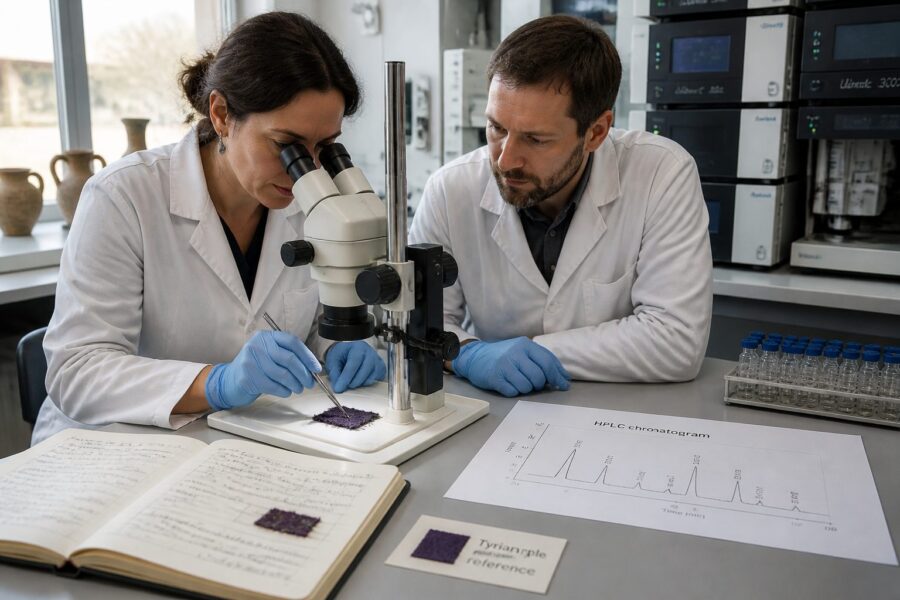
Chromatography techniques, such as High-Performance Liquid Chromatography (HPLC), have proven particularly effective for isolating and identifying Tyrian purple compounds from complex mixtures. These methods allow researchers to analyze intricate samples and determine the presence of royal purple dye with a high degree of accuracy and confidence.
Mass spectrometry is often used in conjunction with chromatography to provide detailed molecular information about the dye’s composition and degradation products. This combined approach enhances the precision of pigment analysis and ensures accurate identification of Tyrian purple in historical textiles, which is essential for scholarly research and conservation efforts.
Infrared spectroscopy can also be employed to study the chemical bonds present in degraded textiles, offering insights into the dye’s chemical structure and its degradation pathways over time. This technique not only aids in identification but also helps conservators understand how to best preserve these fragile artifacts.
By utilizing these advanced analytical methods, conservators can better understand the composition of historical textiles and the factors that have contributed to their deterioration. This knowledge is crucial for implementing effective conservation strategies and preserving these valuable artifacts for future generations to study and appreciate.
Case Studies: Byzantine Imperial Textiles Under Chromatographic Analysis
Case studies of Byzantine imperial textiles provide valuable insights into the application and significance of Tyrian purple, shedding light on the cultural practices of the time. These textiles were often adorned with intricate patterns and vibrant colors, reflecting the wealth, power, and artistic sensibilities of their owners.
Chromatographic analysis of these textiles has revealed the presence of Tyrian purple, confirming its use in high-status garments that were emblematic of imperial authority. Such findings contribute to our understanding of textile production, trade dynamics, and the socio-economic landscape of the Byzantine Empire.
These studies highlight the importance of royal purple dye identification in reconstructing historical narratives and understanding the cultural significance of color in antiquity. They illustrate how modern scientific techniques can breathe new life into the study of ancient artifacts, providing invaluable information about past societies.
By examining the dye composition and textile structure, researchers can gain insights into the trade routes and cultural exchanges of the time, revealing the interconnectedness of ancient civilizations through their material culture. This information enriches our understanding of the socio-economic landscape of the Byzantine Empire and its far-reaching influences.
The analysis of these precious textiles not only reveals the craftsmanship involved but also underscores the cultural significance of Tyrian purple in the context of imperial power. It serves as a testament to the enduring legacy of this remarkable pigment, which has shaped history in profound ways.
Distinguishing Tyrian Purple From Plant-Based Indigo and Woad
Distinguishing Tyrian purple from plant-based indigo and woad is essential for accurate historical pigment analysis, as each dye offers unique characteristics and cultural connotations. While all three dyes produce shades of blue and purple, their origins and chemical compositions differ significantly, leading to distinct applications in ancient textile production.
Tyrian purple is derived from sea snails, whereas indigo comes from the leaves of the indigo plant, and woad is derived from Isatis tinctoria, a plant that has been used in Europe for centuries. This fundamental difference in biological source is key to identifying the dye’s origin in historical textiles, providing insights into trade practices and cultural exchanges of the time.
- Tyrian purple: Marine origin, associated with wealth and status
- Indigo: Plant-based source, commonly used in various cultures
- Woad: Traditional European dye, often linked to local practices
- Color depth: Tyrian purple is richer and more vibrant
- Cost: Tyrian purple was more expensive and reserved for elite use
In addition to their biological origins, the chemical structures of these dyes exhibit differences that can be analyzed to determine their authenticity. Analyzing these structures allows for precise identification, which is crucial for the conservation of historical textiles and for understanding their significance in the context of ancient trade and commerce.
The ability to differentiate between these dye sources provides valuable information for understanding the trade dynamics of ancient cultures and the social hierarchies that arose from them. It also informs conservation strategies by ensuring the preservation of textiles in their authentic colors, maintaining their historical integrity for future study.
Degradation Products Found in Museum-Held Purple Textiles
Degradation products in museum-held purple textiles can pose significant challenges for conservation efforts, as they can alter the appearance and structural integrity of these historical artifacts. Over time, Tyrian purple can break down into various compounds due to environmental factors, leading to changes in color and texture that obscure the original characteristics of the fabric.
Common degradation products include lighter shades of purple and brown hues, resulting from chemical reactions with light and moisture that compromise the dye’s vibrancy. Identifying these degradation products is crucial for developing appropriate conservation techniques that can mitigate these effects and preserve the textiles’ historical value.
Understanding the degradation pathways allows conservators to take proactive measures in preserving the integrity of historical textiles, ensuring their longevity and continued study. This knowledge is essential for maintaining the cultural heritage represented by these artifacts, which serve as tangible connections to our past.
Furthermore, the study of degradation products can provide insights into the conditions under which textiles were stored and displayed, revealing the environmental challenges faced by these artifacts. This information helps in creating optimal environments for the preservation of these delicate items, ensuring that they remain accessible for future research and appreciation.
As museums continue to showcase these historical textiles, ongoing research is vital for ensuring their longevity and safeguarding their stories. The collaboration between chemists, conservators, and historians is key to the successful preservation of Tyrian purple artifacts, ensuring that they remain part of our shared cultural heritage.
Conservation Challenges for Fragile Purple-Dyed Archaeological Fibers
Conserving fragile purple-dyed archaeological fibers presents unique challenges due to their delicate nature and the specific properties of Tyrian purple. The chemical instability of this dye makes these fibers particularly susceptible to degradation over time, necessitating specialized approaches to ensure their preservation.
Factors such as light exposure, humidity, and temperature fluctuations can exacerbate the degradation process, leading to irreversible damage if not properly managed. Therefore, developing suitable conservation methods is essential for safeguarding these invaluable cultural artifacts, ensuring they survive for future generations to study and admire.
Effective conservation strategies may involve controlled environments, such as humidity and temperature regulation, as well as specific treatments to mitigate degradation. Researchers are continually exploring innovative approaches to enhance the preservation of these historic textiles, integrating traditional conservation methods with modern scientific advancements.
Collaboration between scientists and conservators is essential to address the complexities of Tyrian purple conservation, as each discipline brings valuable expertise to the table. By combining their knowledge, they can develop methods that respect the integrity of the original materials while ensuring their longevity and accessibility.
Ongoing research into the properties of Tyrian purple and its degradation is vital for future conservation efforts, as it allows us to refine our techniques and adapt to new challenges. This ensures that the stories of these ancient textiles can be preserved for generations to come, reminding us of the rich tapestry of human history.
Recreating Tyrian Purple: Experimental Archaeology and Chemical Validation
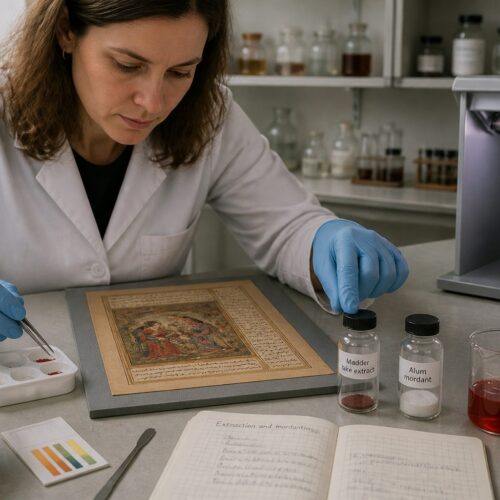
Recreating Tyrian purple through experimental archaeology allows researchers to gain insights into ancient dyeing techniques and the cultural practices surrounding them. By replicating the processes used by artisans in antiquity, we can better understand the complexities and craftsmanship involved in producing this remarkable pigment.
Chemical validation of recreated Tyrian purple involves rigorous analysis to confirm its authenticity, ensuring that the recreated dye matches the historical properties of original Tyrian purple as closely as possible. This process not only verifies the accuracy of the recreation but also contributes to our understanding of the dyeing techniques employed in ancient times.
Experimental archaeology not only sheds light on the production methods but also enhances our understanding of the cultural significance of Tyrian purple in ancient societies. It connects modern practices with ancient traditions, offering a holistic view of historical textile dyeing that enriches our appreciation of this art form.
Through these experimental efforts, we can explore the technological advancements that made Tyrian purple a coveted commodity, shedding light on the socio-economic factors that influenced its production and distribution. This research also informs conservation practices, guiding efforts to preserve original artifacts and ensure their continued study.
Ultimately, the recreation of Tyrian purple serves as a bridge between the past and present, highlighting the enduring legacy of this ancient dye and its significance in the tapestry of human history. It emphasizes the importance of preserving and understanding our cultural heritage, as it allows us to connect with the artisans and societies that came before us.
What Pigment Analysis Reveals About Trade and Status in Ancient Societies
Pigment analysis provides significant insights into trade and status in ancient societies, revealing the economic dynamics and cultural values of the time. The presence of Tyrian purple in textiles often indicates a high social status and wealth, underscoring its importance in cultural identity and expression.
By studying the distribution of Tyrian purple across different regions, researchers can trace trade routes and cultural exchanges, reconstructing the complex network of interactions that defined ancient civilizations. This analysis helps to illuminate how color and material culture were used to convey meaning and establish social hierarchies in various societies.
The value placed on Tyrian purple reflects broader societal values regarding color and status, revealing much about the perceptions of beauty and prestige in antiquity. Its association with royalty and power illustrates the ways in which color was utilized as a tool for political and social expression, shaping the identities of individuals and communities alike.
Through pigment analysis, we can better understand how color was used as a tool for political and social expression, contributing to the construction of cultural narratives that persist to this day. This knowledge enriches our understanding of ancient cultures and their values, offering a glimpse into the complexities of human behavior and societal organization.
In conclusion, the study of Tyrian purple not only highlights the science behind ancient dyes but also offers a window into the past, revealing the intricate connections between culture, commerce, and materiality. It illustrates the interconnections between color, culture, and commerce in ancient societies, reminding us of the enduring legacy of this remarkable pigment and its profound impact on human history.