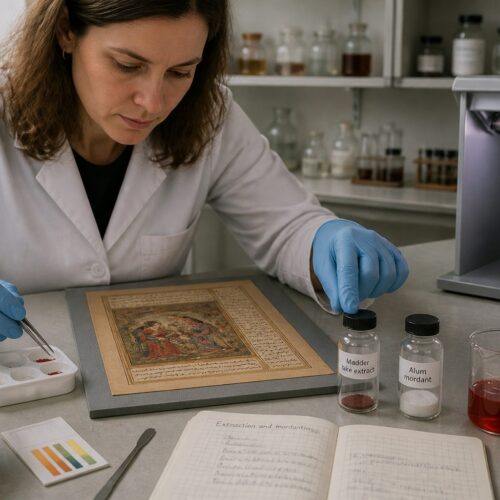

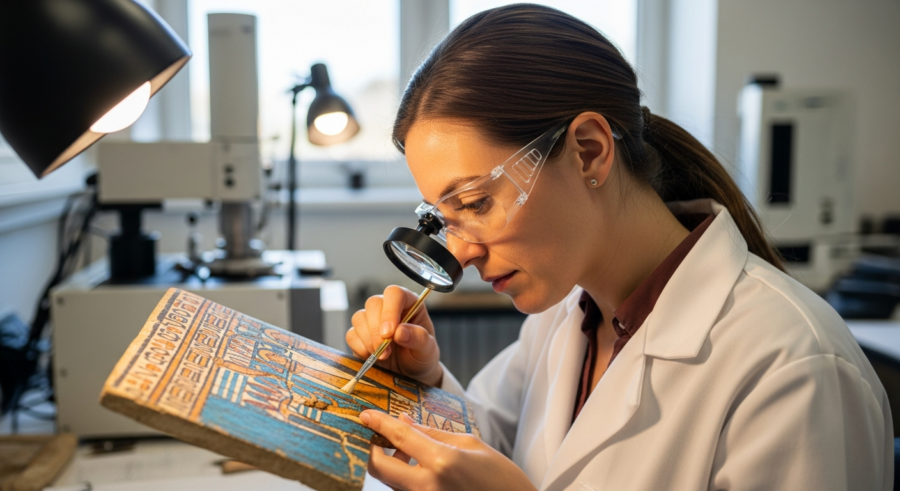
The allure of ancient Egypt continues to captivate us, especially its magnificent tombs adorned with vibrant wall paintings. These works of art, preserved for millennia, offer insights into the beliefs, rituals, and daily life of this fascinating civilization. Understanding the composition of the pigments used in these paintings, through the Chemical Analysis of Egyptian Tomb Wall Paintings, is essential for their preservation and for unlocking the secrets they hold.
This investigation is not just about identifying colors; it’s about piecing together the story of a culture that mastered the art of color creation. The study of these pigments provides valuable information about the resources available to the ancient Egyptians, their trade networks, and their technological advancements.
By employing modern scientific techniques, we can uncover the mysteries behind these ancient artworks. This article will explore the methods used in the Chemical Analysis of Egyptian Tomb Wall Paintings, the key pigments identified, and the broader implications for understanding ancient Egyptian culture and technology.
Historical Context of Egyptian Tomb Paintings and Pigment Significance
Egyptian tomb paintings served as more than just decoration; they were integral to the funerary beliefs and practices of the time. These paintings were intended to accompany the deceased into the afterlife, providing them with sustenance, protection, and guidance on their eternal journey.
The colors used in these paintings were not chosen arbitrarily; each pigment held symbolic meaning and was carefully selected to convey specific messages. For example, blue and green were associated with regeneration and rebirth, while red symbolized life and vitality.
The quality and durability of the pigments were also of utmost importance, as the Egyptians believed that the paintings would last for eternity. This belief led them to develop sophisticated techniques for sourcing, processing, and applying pigments, ensuring their longevity and brilliance.
Understanding the historical context of Egyptian tomb paintings is crucial for appreciating the significance of pigment analysis. By examining the materials and techniques used, we can gain a deeper understanding of the cultural, religious, and technological aspects of ancient Egyptian society.
The themes depicted in these paintings also offer a glimpse into the daily lives of the ancient Egyptians. Scenes of agriculture, hunting, feasting, and religious ceremonies provide valuable insights into their social structures and economic activities.
Furthermore, the style and artistic conventions used in the paintings evolved over time, reflecting changes in Egyptian culture and beliefs. Analyzing these stylistic variations can help us to date the paintings and trace the development of Egyptian art.
The use of specific colors was often dictated by religious or magical considerations. Certain deities were associated with particular colors, and these colors were believed to possess protective or empowering properties.
The careful placement of colors within the paintings was also significant, creating visual narratives that reinforced the desired messages. The overall composition of the paintings was designed to ensure the deceased’s successful transition to the afterlife.
Methods of Pigment Extraction and Preparation in Ancient Egypt
The ancient Egyptians were skilled artisans who developed ingenious methods for extracting and preparing pigments. Their techniques involved sourcing raw materials from various locations and processing them to create a range of colors.
Mineral pigments, such as ochre, malachite, and azurite, were obtained from mines and quarries. These minerals were then ground into fine powders and mixed with binding agents, such as gum arabic or animal glue, to create paints.
Some pigments were derived from organic sources, such as plants and insects. For instance, madder root was used to produce a red dye, while indigo plants provided a blue color.
The preparation of pigments was a labor-intensive process that required specialized knowledge and skills. The Egyptians carefully controlled the particle size, purity, and mixing ratios of the pigments to achieve the desired colors and effects.
The extraction of mineral pigments often involved extensive mining operations. These mines were typically located in remote areas and required a significant workforce to extract the raw materials.
The grinding of the minerals was a crucial step in the preparation process. The Egyptians used stone mortars and pestles to grind the minerals into fine powders, ensuring that the pigments would be smooth and evenly distributed.
The selection of binding agents was also important, as it affected the adhesion, durability, and appearance of the paints. Gum arabic, derived from acacia trees, was a common binding agent due to its solubility in water and its ability to create a flexible and transparent film.
The Egyptians also experimented with different additives to modify the properties of the pigments. For example, they might add beeswax to make the paints more water-resistant or use egg yolk to improve their gloss.
Analysis Techniques Used: XRF, Raman Spectroscopy, and Microscopy
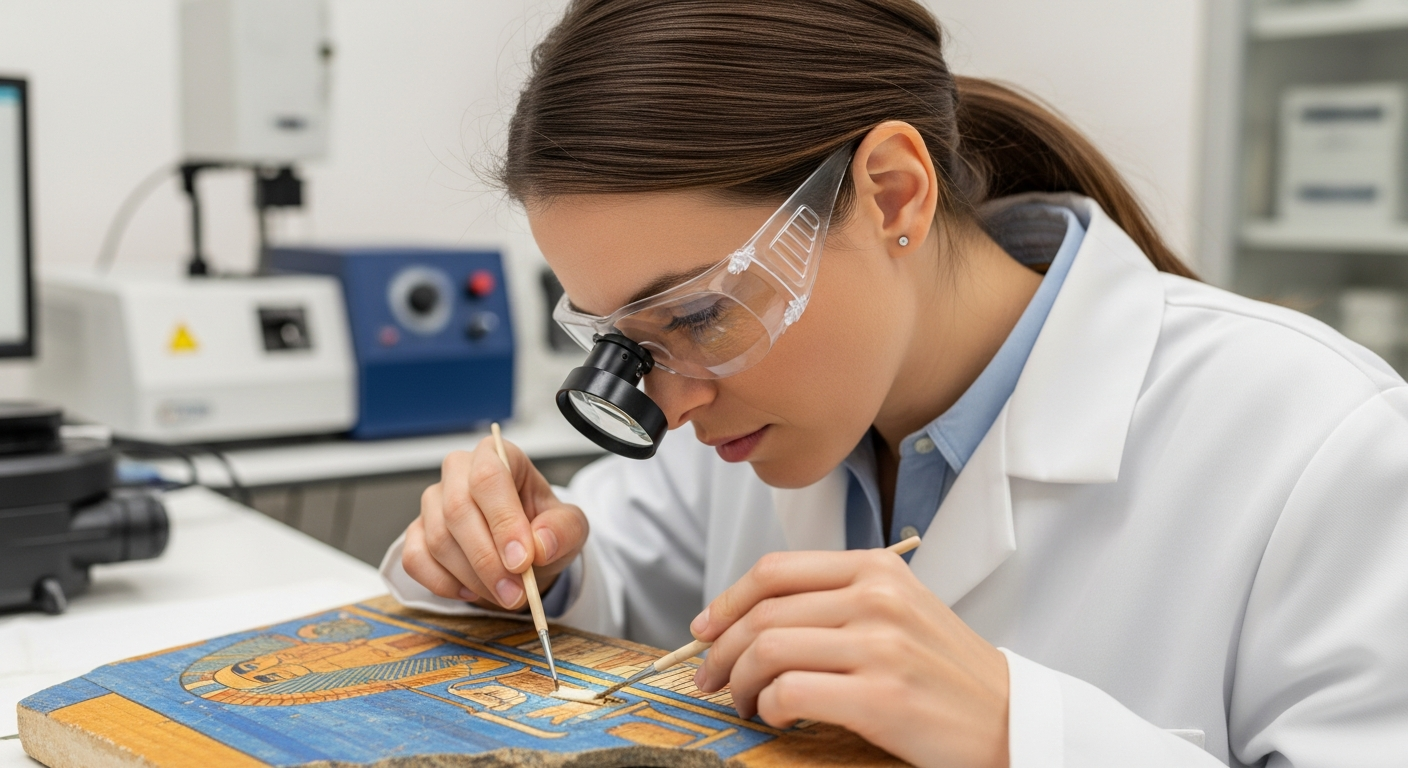
Modern scientific techniques play a vital role in the Chemical Analysis of Egyptian Tomb Wall Paintings. These methods allow us to identify the chemical composition of the pigments without causing damage to the artwork.
X-ray fluorescence (XRF) is a non-destructive technique that determines the elemental composition of a sample. Raman spectroscopy provides information about the molecular structure of the pigments, while microscopy allows for the examination of the pigments’ physical characteristics.
| Technique | Principle | Information Obtained |
|---|---|---|
| X-ray Fluorescence (XRF) | Excitation of atoms with X-rays | Elemental composition |
| Raman Spectroscopy | Inelastic scattering of light | Molecular structure and bonding |
| Optical Microscopy | Magnification of visible light | Morphology and particle size |
| Scanning Electron Microscopy (SEM) | Scanning with electron beam | High-resolution imaging and elemental mapping |
XRF analysis is particularly useful for identifying the presence of heavy metals, such as copper, iron, and lead, which are common components of mineral pigments. The technique can also be used to detect trace elements, which can provide clues about the origin of the pigments.
Raman spectroscopy is sensitive to the vibrational modes of molecules, allowing for the identification of different chemical compounds. This technique can differentiate between different forms of the same element, such as different types of iron oxides.
Microscopy provides visual information about the pigments, such as their particle size, shape, and distribution. Optical microscopy can be used to examine the pigments at low magnifications, while scanning electron microscopy (SEM) provides much higher resolution images.
SEM can also be coupled with energy-dispersive X-ray spectroscopy (EDS) to obtain elemental maps of the pigments. These maps show the distribution of different elements within the sample, providing valuable information about the pigment’s composition and structure.
Identifying Key Pigments Used in the Tomb Paintings
The Chemical Analysis of Egyptian Tomb Wall Paintings has revealed the use of a variety of pigments. These pigments were derived from both mineral and organic sources, reflecting the Egyptians’ extensive knowledge of natural resources.
Egyptian blue, one of the earliest synthetic pigments, was widely used in tomb paintings. This pigment is a calcium copper silicate, known for its vibrant blue color and remarkable stability.
Ochre, a naturally occurring iron oxide, was used to produce a range of yellow, red, and brown hues. Other common pigments included malachite (green), azurite (blue), and carbon black (black).
The identification of these pigments provides valuable insights into the materials and techniques used by ancient Egyptian artists. It also allows us to understand the symbolic meanings associated with different colors in their culture.
The use of specific pigments varied depending on the period and the region. Some pigments were more readily available in certain areas, while others were imported from distant lands.
The analysis of pigments can also reveal information about the artists’ preferences and techniques. Some artists may have favored certain pigments over others, or they may have used different methods for mixing and applying the pigments.
The presence of certain pigments can also help to date the paintings. For example, the introduction of new pigments, such as lead white, can provide a terminus post quem for the creation of the artwork.
By combining pigment analysis with other forms of archaeological and historical evidence, we can gain a more complete understanding of ancient Egyptian art and culture.
The Significance of Egyptian Blue in Ancient Art
Egyptian blue stands out as a remarkable achievement in ancient pigment technology. It’s not merely a color; it’s a testament to the ingenuity of the Egyptians, who mastered its synthesis centuries before other civilizations.
Its chemical composition, calcium copper silicate (CaCuSi4O10), gives it unique properties, including resistance to fading and degradation. This explains why Egyptian blue retains its brilliance even after thousands of years.
The production of Egyptian blue involved heating a mixture of quartz sand, copper compounds, calcium carbonate, and an alkali flux. This process required precise temperature control and a deep understanding of chemical reactions.
The widespread use of Egyptian blue in tomb paintings, sculptures, and other artifacts demonstrates its importance in ancient Egyptian culture. It symbolized the sky, water, and the Nile River, all essential elements of life and rebirth.
Archaeological evidence suggests that the production of Egyptian blue dates back to the 4th Dynasty (c. 2613 to 2494 BC). The pigment was used extensively throughout Egyptian history, from the Old Kingdom to the Roman period.
The synthesis of Egyptian blue was a closely guarded secret, and the knowledge of its production was likely passed down through generations of artisans. The process required specialized equipment and expertise, making it a valuable commodity.
The use of Egyptian blue was not limited to Egypt. The pigment was also exported to other parts of the ancient world, including Greece, Rome, and the Near East. Its vibrant color and durability made it a popular choice for artists and craftsmen.
The rediscovery of the manufacturing process of Egyptian blue in modern times has allowed scientists to study its properties in detail. Research has shown that Egyptian blue exhibits interesting luminescent properties, which could have implications for modern technology.
Understanding the Manufacturing Processes and Their Regional Variations
The manufacturing processes of pigments varied depending on the available resources and local traditions. Different regions of Egypt had access to different minerals and raw materials, leading to variations in pigment composition and quality.
For example, the Sinai Peninsula was a major source of copper, which was essential for the production of Egyptian blue and other copper-based pigments. Regions near the Nile River had access to alluvial clays rich in iron oxides, which were used to create ochre pigments.
The analysis of pigments from different tombs and regions reveals these regional variations in manufacturing processes. By comparing the chemical composition and physical properties of the pigments, we can trace their origins and understand the trade networks that facilitated their distribution.
These variations also reflect the different artistic styles and preferences of the various periods of Egyptian history. The Old Kingdom, Middle Kingdom, and New Kingdom each had its own distinct aesthetic, which influenced the choice and application of pigments.
The manufacturing of Egyptian blue, for example, likely involved different techniques and recipes in different workshops. The precise proportions of the ingredients and the firing temperatures could have varied, resulting in subtle differences in color and texture.
The use of different binding media also contributed to the regional variations in pigment appearance. Some regions may have favored gum arabic, while others used animal glue or other organic binders.
The availability of fuel for firing the pigments also played a role in the manufacturing process. Regions with abundant wood resources may have been able to achieve higher firing temperatures, resulting in more vibrant and durable pigments.
The study of these regional variations provides valuable insights into the economic and social organization of ancient Egypt. It reveals the complex networks of trade and exchange that existed between different regions and the specialized skills and knowledge of the artisans who produced the pigments.
The Role of Organic Pigments and Dyes in Ancient Egyptian Art
While mineral pigments dominated the palette of ancient Egyptian artists, organic pigments and dyes also played a significant role. These organic materials offered a wider range of colors and were often used for details and highlights.
Madder root, derived from the Rubia tinctorum plant, was a common source of red dye. Indigo, extracted from the Indigofera plant, provided a deep blue color, while saffron, obtained from the Crocus sativus flower, yielded a yellow dye.
The use of organic pigments and dyes presented challenges due to their susceptibility to fading and degradation. Unlike mineral pigments, organic materials are more vulnerable to light, heat, and moisture.
Despite these challenges, ancient Egyptian artists employed techniques to enhance the stability of organic pigments. These included mordanting, which involved using metallic salts to fix the dye to the fibers or surfaces, and varnishing, which provided a protective layer against environmental factors.
The identification of organic pigments and dyes in ancient Egyptian art is often more challenging than the identification of mineral pigments. Organic materials are more prone to decomposition, and their presence may be masked by the presence of other substances.
Specialized analytical techniques, such as high-performance liquid chromatography (HPLC) and gas chromatography-mass spectrometry (GC-MS), are often required to identify organic pigments and dyes. These techniques can separate and identify the different organic compounds present in the sample.
The use of organic pigments and dyes in ancient Egyptian art reflects the Egyptians’ knowledge of botany and their ability to extract and process natural materials. It also demonstrates their willingness to experiment with different techniques and materials to achieve the desired artistic effects.
The combination of mineral and organic pigments allowed ancient Egyptian artists to create a rich and varied palette of colors. This palette was used to depict a wide range of subjects, from religious scenes to scenes of daily life, providing valuable insights into ancient Egyptian culture and beliefs.
Implications for Understanding Ancient Egyptian Culture and Technology
The Chemical Analysis of Egyptian Tomb Wall Paintings has profound implications for understanding ancient Egyptian culture and technology. By studying the pigments used, we can gain insights into their knowledge of chemistry, mineralogy, and botany.
The sophistication of their pigment manufacturing processes demonstrates their mastery of chemical reactions and their ability to control environmental conditions. The use of synthetic pigments, such as Egyptian blue, highlights their innovative spirit and their willingness to experiment with new materials.
The regional variations in pigment composition and manufacturing processes reflect the diverse resources and artistic traditions of different regions of Egypt. The analysis of pigments also provides valuable information about their trade networks and their interactions with other cultures.
Furthermore, the symbolic meanings associated with different colors in ancient Egyptian culture shed light on their religious beliefs and worldview. The careful selection and application of pigments in tomb paintings underscore the importance of color in conveying specific messages and ensuring the deceased’s well-being in the afterlife.
The study of pigments can also reveal information about the social status and economic power of the individuals who commissioned the tomb paintings. The use of expensive and rare pigments may indicate that the deceased was a member of the elite class.
The analysis of pigments can also provide insights into the artistic training and techniques of the painters who created the tomb paintings. The consistency and skill with which the pigments were applied can reflect the level of expertise of the artists.
The study of pigments can also contribute to our understanding of the environmental conditions that existed in ancient Egypt. The presence of certain minerals in the pigments can provide clues about the climate and geology of the region.
By combining pigment analysis with other forms of archaeological and historical evidence, we can gain a more holistic and nuanced understanding of ancient Egyptian culture and technology.
Conservation Efforts and the Role of Pigment Analysis
The preservation of ancient Egyptian tomb paintings is a critical task for archaeologists and conservators. These artworks are vulnerable to environmental factors, such as humidity, temperature fluctuations, and light exposure, which can cause pigments to fade, crack, or detach from the wall.
Pigment analysis plays a crucial role in conservation efforts by providing information about the composition and condition of the pigments. This information helps conservators develop appropriate treatment strategies to stabilize the pigments and prevent further degradation.
Based on pigment analysis, conservators can select compatible materials for cleaning, consolidation, and retouching the paintings. They can also implement preventive measures, such as controlling the environment and reducing light exposure, to ensure the long-term preservation of these cultural treasures.
Moreover, pigment analysis helps in the authentication of ancient Egyptian artworks. By comparing the pigments used in different objects, experts can determine whether they are genuine or forgeries, contributing to the protection of cultural heritage from illicit trade and destruction.
Understanding the chemical composition of the pigments is essential for choosing appropriate cleaning methods. Some cleaning agents may react with certain pigments, causing them to fade or change color.
Consolidation involves strengthening the pigments and the underlying plaster to prevent them from detaching from the wall. Pigment analysis can help conservators select compatible consolidants that will not damage the pigments or alter their appearance.
Retouching is the process of filling in losses in the painted surface to restore the original appearance of the artwork. Pigment analysis can help conservators select pigments that match the original colors and will not fade or discolor over time.
Preventive conservation measures are aimed at minimizing the environmental factors that can damage the paintings. These measures include controlling humidity and temperature, reducing light exposure, and preventing dust and pollutants from accumulating on the surface of the paintings.
Future Directions in Pigment Research and Conservation
The field of pigment research and conservation is constantly evolving, with new techniques and approaches emerging to enhance our understanding and preservation of ancient artworks. Future research directions include the development of more sensitive and non-destructive analytical methods.
These methods will allow for the analysis of even trace amounts of pigments without causing any visible damage to the paintings. Another area of focus is the study of the binding media used by ancient Egyptian artists.
- Improved non-destructive analysis techniques
- Study of binding media and varnishes
- Development of sustainable conservation materials
- Digital documentation and 3D modeling
- Collaboration between scientists and conservators
The development of new and sustainable conservation materials is also a priority. These materials should be effective in stabilizing the pigments and protecting them from environmental damage, while also being environmentally friendly and reversible.
Digital documentation and 3D modeling are increasingly being used to create detailed records of ancient Egyptian tomb paintings. These records can be used for research, education, and conservation purposes.
Collaboration between scientists and conservators is essential for advancing the field of pigment research and conservation. By working together, scientists and conservators can share their expertise and develop more effective strategies for preserving ancient artworks.
The use of artificial intelligence and machine learning is also emerging as a promising area of research. These technologies can be used to analyze large datasets of pigment data and identify patterns and trends that would be difficult to detect manually.
The study of the degradation mechanisms of pigments is also crucial for developing effective conservation strategies. Understanding how pigments degrade over time can help conservators to identify the factors that contribute to their deterioration and develop methods to mitigate these effects.
Conclusion
The Chemical Analysis of Egyptian Tomb Wall Paintings is a multidisciplinary endeavor that combines scientific techniques with historical and cultural knowledge. By identifying and characterizing the pigments used in these paintings, we can unlock the secrets of ancient Egyptian art and technology.
This knowledge not only enhances our understanding of ancient Egyptian culture but also informs conservation efforts to protect these invaluable artworks for future generations. The study of Egyptian Pigments serves as a bridge between the past and the present, revealing the ingenuity and artistic skill of a civilization that continues to inspire us.
The ongoing research and conservation efforts will ensure that these magnificent tomb paintings continue to captivate and inform us for centuries to come. By preserving these artworks, we are preserving a vital part of human history and cultural heritage.
The future of pigment research and conservation is bright, with new technologies and approaches constantly emerging. As we continue to learn more about the pigments used in ancient Egyptian art, we will gain an even deeper appreciation for the skill and artistry of the ancient Egyptians.