
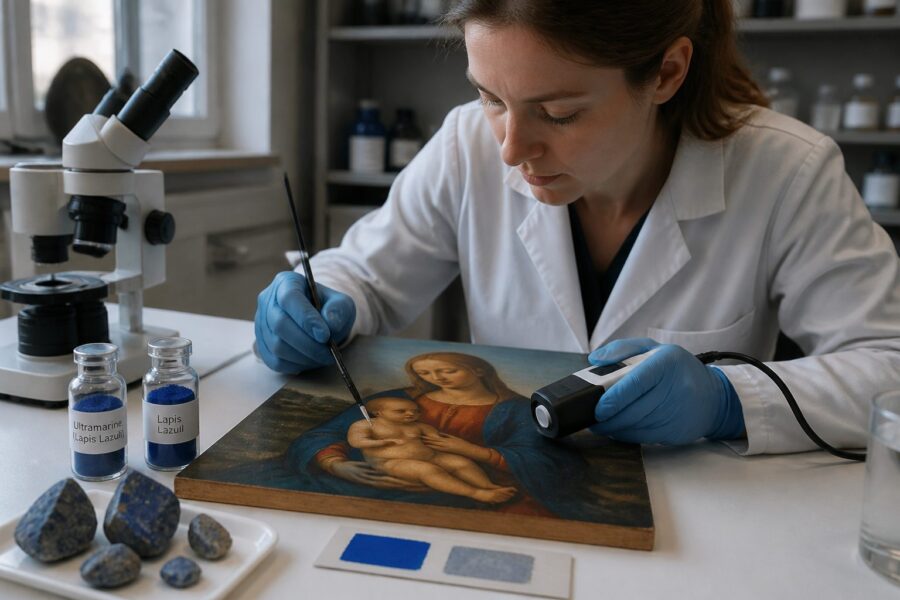
Ultramarine blue, derived from the stunning lapis lazuli, has long been a symbol of prestige and spirituality in Renaissance devotional art. This vibrant blue pigment enriched the palettes of master painters, elevating religious themes and capturing the divine essence of their subjects.
The allure of ultramarine blue lies not only in its color but also in its historical significance and the complex processes involved in its creation and application. Understanding this pigment’s journey from the earth to the canvas reveals much about the cultural and economic exchanges of the Renaissance period.
In this article, we will delve into the geological origins of lapis lazuli, the techniques used for its analysis, and the challenges that arise in the conservation of artworks featuring this exquisite blue pigment. We will explore the degradation mechanisms that affect ultramarine over centuries and highlight the ongoing research in the field.
The Prestige of Ultramarine Blue in Renaissance Devotional Art
Ultramarine blue was prized during the Renaissance for its vivid hue, often reserved for the most important figures in religious paintings. Artists like Raphael and Titian used this pigment to convey depth and spirituality, making it a hallmark of their masterpieces.
The rarity of lapis lazuli, from which ultramarine is derived, added to its value, as sourcing it required extensive trade routes. This exclusivity not only affected the artists’ choices but also influenced the patrons who commissioned such works.
The significance of ultramarine blue is evident in works depicting the Virgin Mary, where its rich color symbolizes purity and divinity. This strategic use of color helped to elevate the emotional impact of the art and connect viewers to the divine narrative.
Renaissance artists often mixed ultramarine with other pigments to create luminous effects, enhancing the overall composition. The interplay of light and color in these paintings showcases the innovative techniques employed by artists of the time.
As we analyze the use of ultramarine blue in devotional art, it becomes clear that this pigment was more than just a tool for artistic expression; it was a symbol of status and devotion. The reverberations of its use can still be felt in contemporary discussions around art conservation and historical significance.
Geological Origins of Lapis Lazuli and Its Trade Routes
Lapis lazuli is primarily sourced from Afghanistan, where it has been mined for over six thousand years. The geological formations that produce this stunning blue stone are rare, contributing to its historical value and the intricate trade routes established to transport it.
Trade routes extended from Afghanistan through Persia and into Europe, influencing the availability of ultramarine blue in Renaissance art. This journey not only involved physical transportation but also cultural exchanges that shaped artistic practices.
In addition to Afghanistan, lapis lazuli deposits have been discovered in Chile, presenting a new chapter in the history of this pigment. The trade dynamics shifted as European artists began to access this alternative source, which had implications for the authenticity and characteristics of the ultramarine used.
The differences in geological origins can lead to variations in color and quality, further complicating the art historical narrative. Understanding these trade routes and their impact on the availability of lapis lazuli is crucial for accurate lapis lazuli analysis.
Today, researchers continue to investigate the sources of lapis lazuli used in Renaissance paintings to better understand the artistic choices made by painters like Raphael. This analysis also aids in the authentication and conservation of artworks, ensuring that their historical significance is preserved.
Analytical Techniques Used to Characterize Ultramarine in Panel Paintings
To accurately characterize ultramarine in panel paintings, various analytical techniques are employed. These methods help researchers distinguish between different sources of lapis lazuli and assess the pigment’s condition over time.
| Technique | Description | Applications |
|---|---|---|
| X-Ray Fluorescence (XRF) | Non-destructive method to analyze elemental composition. | Identifying pigment sources and degradation. |
| Raman Spectroscopy | Provides molecular fingerprinting of pigments. | Characterizing ultramarine and differentiating sources. |
| Fourier Transform Infrared Spectroscopy (FTIR) | Analyzes molecular vibrations to identify compounds. | Assessing binding media and degradation products. |
| Scanning Electron Microscopy (SEM) | Examines surface morphology at a microscopic level. | Understanding pigment application techniques. |
These advanced techniques are crucial in providing insights into the pigment’s characteristics and its historical application. By utilizing non-invasive methods, conservators can gather vital information without compromising the integrity of the artwork.
Identifying Provenance: Afghan vs. Chilean Lapis Lazuli
Identifying the provenance of lapis lazuli used in ultramarine blue pigment is essential for understanding its historical context. Distinguishing between Afghan and Chilean sources involves examining both the physical and chemical characteristics of the pigment.
Afghan lapis lazuli is known for its deep, intense blue with flecks of golden pyrite, while Chilean lapis tends to have a lighter hue and fewer inclusions. These differences can be detected through various analytical techniques, aiding in the authentication of artworks.
Moreover, the trade history and cultural significance surrounding each source add layers to the analysis. Understanding where the lapis lazuli originated can reveal insights into the artistic choices and economic circumstances of the time.
As researchers continue to explore lapis lazuli analysis, the findings contribute to the broader understanding of Renaissance painting practices. This information is invaluable for art historians and conservators alike.
Ultimately, the ability to identify the source of ultramarine blue enhances our appreciation of the artistry and craftsmanship involved in these masterpieces. It also highlights the importance of preserving these artworks for future generations.
Degradation Mechanisms: Why Ultramarine Loses Saturation Over Centuries
Over centuries, ultramarine blue pigment can undergo significant degradation, resulting in a loss of saturation and vibrancy. Factors such as environmental conditions, exposure to light, and chemical interactions contribute to this decline.
One primary cause of blue pigment degradation is the fading of the pigment due to prolonged exposure to light, which can alter its chemical structure. Additionally, interactions with acidic or alkaline materials can further compromise the integrity of ultramarine.
- Light exposure
- Humidity and temperature fluctuations
- Acidic cleaning agents
- Pigment mixing instability
- Oxidation processes
Understanding these degradation mechanisms is essential for effective conservation strategies. By identifying the factors that lead to loss of saturation, conservators can better protect and restore artworks that feature ultramarine blue.
Future research will likely focus on developing advanced materials and techniques to mitigate degradation. This ongoing investigation aims to enhance the longevity of ultramarine blue in historical paintings.
Ultramarine Sickness: Causes, Detection, and Current Understanding
Ultramarine sickness refers to the phenomenon where ultramarine blue pigment deteriorates over time, leading to discoloration and loss of vibrancy. This condition is primarily caused by the interaction of the pigment with environmental factors and the materials used in the artworks.
Detection of ultramarine sickness can be achieved through visual inspections and advanced analytical techniques. By monitoring changes in color and texture, conservators can identify artworks that may be affected by this issue.
Current understanding of ultramarine sickness emphasizes the importance of proper environmental conditions for the preservation of artworks. Maintaining stable humidity and temperature levels can significantly reduce the risk of deterioration.
In addition, conservators are exploring innovative methods to protect ultramarine blue from degradation. This includes the development of protective coatings and controlled display environments to enhance the longevity of these paintings.
As research progresses, the goal is to create a comprehensive approach to prevent ultramarine sickness. This will ensure that future generations can appreciate the beauty and significance of Renaissance paintings.
Conservation Interventions for Ultramarine-Affected Passages
Conservation interventions for artworks affected by ultramarine sickness require careful planning and execution. The first step is to conduct a thorough assessment of the artwork to determine the extent of degradation.
Once the condition is assessed, conservators can employ various techniques to restore the vibrancy of the ultramarine blue. These may include targeted cleaning, stabilization, and even inpainting where necessary.
It is essential for conservators to use materials that mimic the original pigment properties to avoid further damage. This ensures that any interventions blend seamlessly with the original artwork.
Additionally, documenting the conservation process is vital for future reference and research. This documentation can provide insights into effective practices and contribute to the broader understanding of ultramarine blue pigment conservation.
Through these interventions, conservators can help preserve the artistic intent and historical significance of Renaissance paintings featuring ultramarine blue. This commitment to conservation ensures that these masterpieces continue to inspire future generations.
Comparing Ultramarine in Raphael’s Works Across Different Collections
Comparative studies of ultramarine blue in Raphael’s works reveal fascinating insights into his artistic practices and choices. By examining paintings from various collections, researchers can track the evolution of his use of this prestigious pigment.
Differences in the vibrancy and application of ultramarine across collections can be attributed to factors such as the source of lapis lazuli and the techniques employed by Raphael’s workshop. These variations also reflect the broader context of pigment availability during his lifetime.
One significant aspect of this study is the impact of restoration efforts on the perception of Raphael’s use of ultramarine. Over time, different conservation practices have altered the appearance of the pigment, complicating the analysis.
Through careful lapis lazuli analysis, researchers can discern the original characteristics of the pigment and its application methods. This understanding enhances our appreciation of Raphael’s artistic legacy.
Ultimately, comparing ultramarine across Raphael’s works deepens our understanding of both the artist and the historical context in which he operated. This ongoing research will continue to shed light on the complexities of Renaissance painting practices.
What the Pigment Record Reveals About Workshop Practices
The pigment record in Renaissance paintings provides valuable insights into the workshop practices of artists like Raphael. By analyzing the materials and techniques used, researchers can infer the collaborative nature of art production during this period.
Variations in the application and composition of ultramarine blue pigment point to the involvement of multiple hands in the creation of a single artwork. This collaborative approach was common in Renaissance workshops, where apprentices and assistants played crucial roles.
Furthermore, the pigment record can highlight the availability of materials and how it influenced artistic choices. For instance, the sourcing of lapis lazuli from various regions could affect the color and quality of ultramarine used.
Understanding these workshop practices enhances our appreciation of the complexity of Renaissance art production. It also emphasizes the importance of collaboration and the shared knowledge that defined this vibrant artistic community.
As research continues, the pigment record will remain a vital resource for unraveling the intricacies of artistic practices in the Renaissance. This knowledge will help preserve and honor the contributions of artists and their workshops for generations to come.
Future Research Directions for Non-Invasive Lapis Analysis
Future research in lapis lazuli analysis will likely focus on developing non-invasive techniques to further enhance our understanding of ultramarine blue pigment. As technology advances, the ability to analyze artworks without compromising their integrity becomes increasingly feasible.
Innovative imaging techniques, such as hyperspectral imaging, could provide detailed information about the distribution and condition of ultramarine pigments within artworks. This could open new avenues for conservation and deepen our understanding of historical practices.
Moreover, interdisciplinary collaborations between art historians, chemists, and conservators will be crucial in progressing this field. By combining expertise, researchers can address complex questions surrounding the authenticity and preservation of ultramarine blue.
Continued exploration of the historical trade routes and sourcing of lapis lazuli will also enhance our understanding of its significance in art. This comprehensive approach will ensure that the legacy of ultramarine blue is preserved for future generations.
Ultimately, the future of lapis lazuli analysis holds great promise for enriching our knowledge of Renaissance painting and the enduring beauty of ultramarine blue. This ongoing research will contribute to the broader field of art conservation and scholarship.