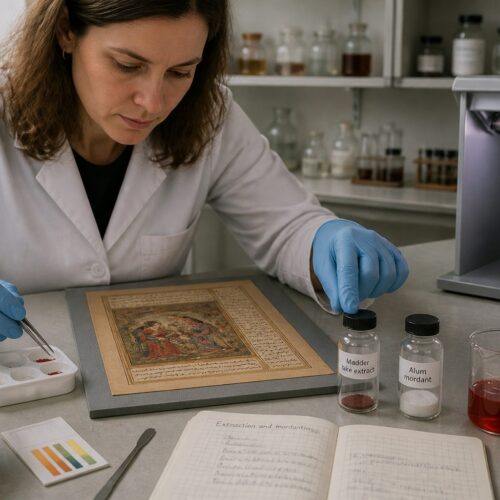

The allure of medieval illuminated manuscripts lies not only in their exquisite artistry but also in the stories they tell about the materials and techniques of the past. Analyzing the pigments used in these manuscripts opens a window into the artistic practices, trade routes, and technological innovations of the Middle Ages. Understanding the pigment composition of medieval illuminated manuscripts is essential for art historians, conservators, and scientists alike.
This article explores the fascinating world of pigment analysis in medieval manuscripts, focusing on methods of identification, historical context, and the insights gained from studying these colorful relics. From non-invasive techniques to detailed chemical analysis, we will examine how modern science helps us understand the secrets held within these ancient pages.
By unraveling the mysteries of the Pigment Composition of Medieval Illuminated Manuscripts, we can better appreciate the artistic achievements of the past and ensure their preservation for future generations. We’ll look at the materials, the methods, and what these manuscripts can tell us about the medieval world.
Background of Medieval Illuminated Manuscripts and Their Artistic Significance
Medieval illuminated manuscripts are handwritten books adorned with elaborate decorations, including vibrant illustrations, ornate borders, and gilded lettering. These manuscripts were not merely functional texts; they were also works of art, often commissioned by wealthy patrons, religious institutions, or royal courts.
The artistic significance of illuminated manuscripts lies in their role as both cultural artifacts and historical documents. They offer insights into the religious beliefs, social structures, and artistic styles of the medieval period, reflecting the values and aesthetics of the societies that produced them.
The production of these manuscripts was a labor-intensive process, involving skilled scribes, illuminators, and binders. Each stage required precision and expertise, from preparing the parchment to applying the final touches of gold leaf.
Illuminated manuscripts served various purposes, including liturgical texts, devotional books, chronicles, and secular literature. Regardless of their content, these manuscripts were prized possessions, often kept in libraries or private collections.
The creation of illuminated manuscripts was a testament to the dedication and skill of medieval artisans. Scribes meticulously copied texts, often in Latin, using quill pens and ink made from natural ingredients. Illuminators then added intricate decorations, using a variety of pigments to create vibrant and symbolic imagery.
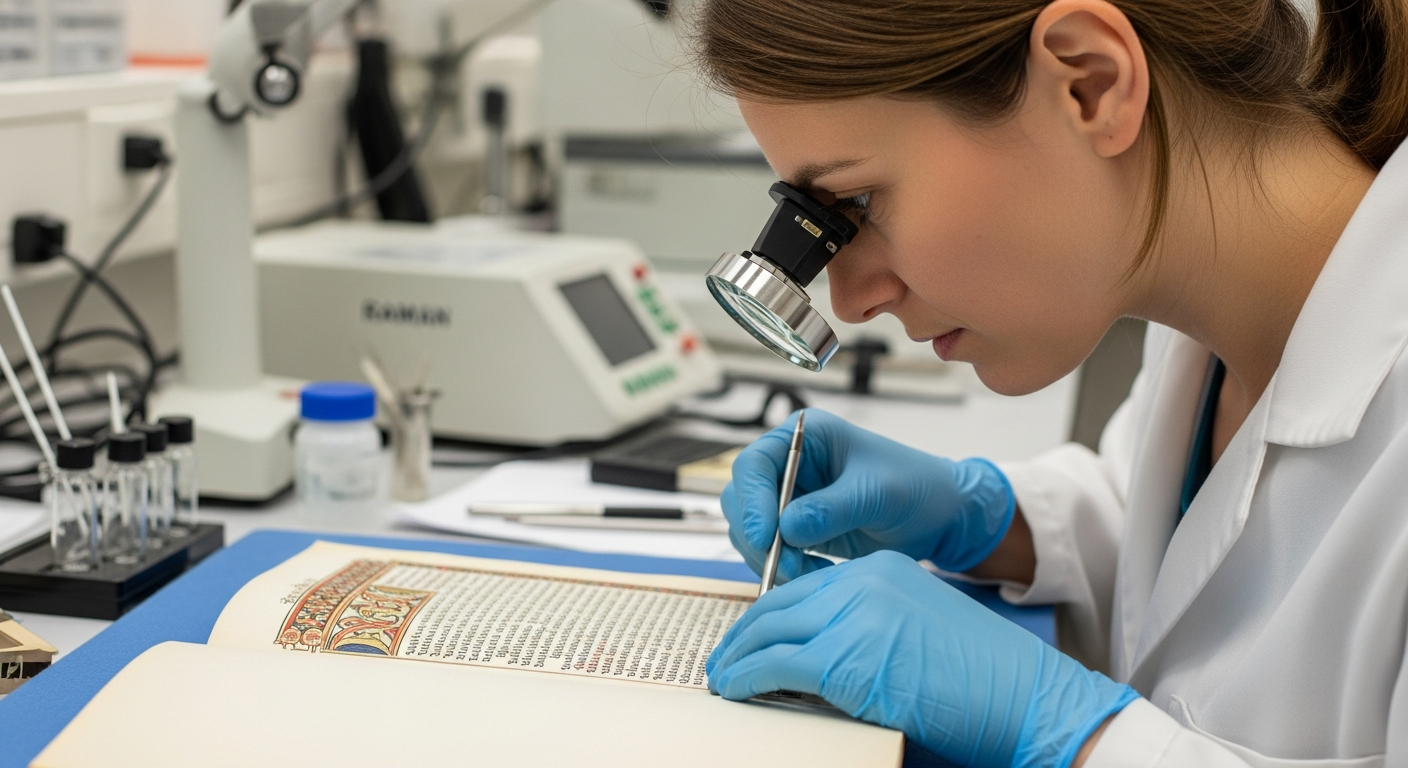
The artistic styles of illuminated manuscripts varied depending on the region and period in which they were produced. Romanesque manuscripts, for example, often featured bold, geometric designs and stylized figures, while Gothic manuscripts were characterized by more naturalistic representations and elaborate architectural motifs.
The use of gold leaf was a common feature of illuminated manuscripts, adding a sense of luxury and divine radiance to the artwork. Gold was applied in thin sheets, often burnished to a high sheen, creating a shimmering effect that caught the light.
Illuminated manuscripts played a crucial role in preserving and transmitting knowledge during the Middle Ages. In a time before printing, these handwritten books were the primary means of disseminating texts and ideas, serving as repositories of learning and culture.
The patronage of illuminated manuscripts was often a display of wealth and power. Kings, nobles, and wealthy merchants commissioned lavishly decorated manuscripts to enhance their status and demonstrate their piety.
Many illuminated manuscripts were created in monastic scriptoria, where monks dedicated their lives to copying and decorating texts. These scriptoria were centers of learning and artistic production, playing a vital role in the intellectual and cultural life of the Middle Ages.
Case Study: A Specific Medieval Manuscript and Its Historical Context
Let’s consider the Book of Kells, an early medieval illuminated manuscript renowned for its intricate designs and vibrant colors. Created around 800 AD in Ireland or Scotland, this Gospel book is a masterpiece of Insular art.
The Book of Kells provides a rich case study for understanding the historical context of medieval manuscript production. Its creation coincided with a period of significant cultural and religious development in the British Isles, reflecting the influence of Celtic, Anglo-Saxon, and Christian traditions.
The manuscript’s elaborate illuminations, including detailed depictions of biblical scenes, animal motifs, and geometric patterns, showcase the artistic skill and creativity of its creators. The Book of Kells is not just a religious text; it’s also a visual encyclopedia of early medieval art and culture.
Pigment analysis of the Book of Kells has revealed the use of a range of materials, including locally sourced pigments and imported dyes. These findings offer insights into the trade networks and artistic exchanges that shaped the manuscript’s production.
The Book of Kells is housed in the Library of Trinity College in Dublin, Ireland, where it attracts visitors from around the world. Its enduring popularity is a testament to its artistic beauty and historical significance.
The intricate knotwork and interlace patterns found throughout the Book of Kells are characteristic of Insular art. These designs are believed to have symbolic meanings, representing the interconnectedness of life and the eternal nature of God.
The manuscript’s vibrant colors were achieved using a variety of pigments, including red lead, orpiment, indigo, and woad. These pigments were carefully prepared and applied to the parchment using brushes made from animal hair.
The Book of Kells is not complete; some pages are missing, and others are damaged. Despite its incomplete state, the manuscript remains one of the most important and celebrated examples of medieval art.
Scholars continue to study the Book of Kells, seeking to unravel its mysteries and understand its cultural significance. New discoveries are constantly being made, shedding light on the manuscript’s creation, its symbolism, and its place in history.
The Book of Kells serves as a powerful reminder of the artistic and intellectual achievements of the early Middle Ages. It is a testament to the skill and dedication of the monks who created it, and a symbol of the enduring power of art to inspire and enlighten.
Non-Invasive Techniques for Pigment Identification
When studying historical artifacts, preserving the integrity of the object is paramount. Non-invasive techniques for pigment identification offer a way to analyze the materials without causing damage.
These methods rely on spectroscopic and imaging techniques that can reveal the chemical composition of pigments without the need for physical sampling. This approach is particularly valuable for delicate and irreplaceable items like illuminated manuscripts.
| Technique | Principle | Applications |
|---|---|---|
| Reflectance Spectroscopy | Measures the reflection of light at different wavelengths | Identifying pigments based on their spectral signatures |
| X-Ray Fluorescence (XRF) | Detects elements based on the emission of X-rays | Determining the elemental composition of pigments |
| Raman Spectroscopy | Analyzes the scattering of light to identify molecular vibrations | Identifying pigments based on their molecular structure |
| Multispectral Imaging | Captures images at different wavelengths to reveal hidden details | Mapping the distribution of pigments and identifying alterations |
Reflectance spectroscopy is a commonly used technique that measures the way a surface reflects light at different wavelengths. Each pigment has a unique spectral signature, which can be used to identify it.
X-Ray Fluorescence (XRF) is another valuable tool for pigment analysis. It works by bombarding the sample with X-rays and then detecting the secondary X-rays emitted by the elements present in the pigment.
Raman spectroscopy provides information about the molecular structure of pigments. By analyzing the way light is scattered by the sample, Raman spectroscopy can identify the specific molecules that make up the pigment.
Multispectral imaging involves capturing images of the manuscript at different wavelengths of light. This technique can reveal details that are not visible to the naked eye, such as the distribution of pigments and the presence of underdrawings.
These non-invasive techniques are often used in combination to provide a comprehensive analysis of the pigments in a manuscript. By combining the information obtained from different methods, researchers can gain a more accurate and complete understanding of the materials used by medieval artists.
The development of non-invasive techniques has revolutionized the field of manuscript studies. These methods allow researchers to study these valuable artifacts without causing damage, ensuring their preservation for future generations.
Furthermore, non-invasive techniques can be used to study manuscripts in situ, without the need to transport them to a laboratory. This is particularly important for fragile or oversized manuscripts that are difficult to move.
The data obtained from non-invasive pigment analysis can be used to create detailed maps of the pigments used in a manuscript. These maps can provide valuable insights into the artist’s working methods and the evolution of the artwork over time.
Micro-Sampling for Detailed Chemical Analysis
While non-invasive techniques are valuable for initial pigment identification, micro-sampling allows for more detailed chemical analysis. This involves taking tiny samples of pigment from the manuscript for laboratory testing.
Micro-sampling is typically performed by trained conservators using specialized tools to minimize damage to the artwork. The samples are then subjected to a range of analytical techniques to determine their precise chemical composition.
One of the most common techniques used in micro-sampling is X-ray diffraction (XRD), which provides information about the crystalline structure of the pigments. This can help differentiate between different forms of the same pigment or identify the presence of impurities.
Another important technique is mass spectrometry, which measures the mass-to-charge ratio of ions to identify the elements and molecules present in the sample. Mass spectrometry is particularly useful for identifying organic pigments and dyes, which can be difficult to detect using other methods.
Gas chromatography-mass spectrometry (GC-MS) is often employed to analyze organic binders and varnishes used in the manuscript. This technique separates the different components of the sample and then identifies them based on their mass spectra.
Scanning electron microscopy (SEM) can be used to examine the surface morphology of the pigments. This technique provides high-resolution images of the pigment particles, revealing their size, shape, and texture.
Inductively coupled plasma mass spectrometry (ICP-MS) is a highly sensitive technique that can be used to determine the elemental composition of pigments with great accuracy. ICP-MS is particularly useful for detecting trace elements, which can provide valuable information about the origin and processing of the pigments.
The data obtained from micro-sampling can be used to create a detailed chemical profile of the pigments used in a manuscript. This profile can be compared with historical recipes and other sources of information to gain a better understanding of the artist’s materials and techniques.
Micro-sampling is a destructive technique, but the amount of material removed is typically very small, minimizing the impact on the artwork. The benefits of micro-sampling, in terms of the detailed information it provides, often outweigh the risks.
The results of micro-sampling analysis can be used to inform conservation decisions, helping conservators to select the most appropriate treatments for preserving the manuscript.
Pigment Identification and Comparison with Historical Recipes
Once the pigments in a medieval manuscript have been identified, the next step is to compare them with historical recipes and treatises. These texts provide valuable information about the materials and techniques used by medieval artists.
Many medieval recipe books, such as the “Mappae Clavicula” and the “Liber de Coloribus Illuminatorum,” contain detailed instructions for preparing pigments and applying them to parchment. By comparing the pigments found in a manuscript with these recipes, researchers can gain insights into the artist’s working methods and the sources of their materials.
For example, if a manuscript contains the pigment ultramarine, which was made from the semi-precious stone lapis lazuli, historical recipes can reveal the specific methods used to extract and purify the pigment. This can involve grinding the lapis lazuli, mixing it with wax and oils, and then carefully separating the blue pigment from the impurities.
The comparison of pigment identification with historical recipes can also shed light on the authenticity and provenance of a manuscript. If the pigments used in a manuscript are inconsistent with the materials available during the purported period of its creation, it may raise questions about its origins.
The “De Arte Illuminandi,” another important medieval treatise, provides detailed instructions on the preparation and use of various pigments. This text offers valuable insights into the artistic practices of the period.
Comparing the pigments found in a manuscript with historical recipes can also help to identify forgeries or later additions. If a manuscript contains pigments that were not available during the period in which it was supposedly created, it may be a sign that it is not authentic.
The analysis of pigments can also provide information about the artist’s skill and knowledge. Some pigments were more difficult to prepare and use than others, and the presence of these pigments in a manuscript may indicate that the artist was highly skilled.
Historical recipes often provide information about the symbolic meanings of different pigments. For example, blue was often associated with the Virgin Mary, while red was associated with Christ’s passion.
The comparison of pigment identification with historical recipes is a complex and time-consuming process, but it can provide valuable insights into the history and art of medieval manuscripts.
By combining scientific analysis with historical research, we can gain a deeper understanding of the materials and techniques used by medieval artists.
Common Pigments Found in Medieval Illuminated Manuscripts
Medieval illuminators employed a diverse range of pigments to create the vibrant colors seen in their manuscripts. Some of the most common pigments included azurite, malachite, vermilion, and ochre.
Azurite, a blue copper carbonate mineral, was used to create brilliant blue hues. Malachite, a green copper carbonate mineral, provided vibrant green tones.
Vermilion, a red mercury sulfide mineral, was prized for its intense red color. Ochre, a naturally occurring earth pigment, came in various shades of yellow, brown, and red.
In addition to these mineral pigments, medieval illuminators also used organic dyes derived from plants and animals. These included indigo (blue), madder (red), and kermes (red), which were extracted from plants and insects.
Lead white, a lead carbonate pigment, was commonly used as a white pigment and as a base for other colors. It provided opacity and brightness to the illuminations.
Orpiment, a yellow arsenic sulfide mineral, was used to create bright yellow hues. However, it was also known to be toxic, and its use declined over time.
Verdigris, a green copper acetate pigment, was produced by exposing copper to acetic acid. It was often used to create translucent green glazes.
Ultramarine, made from the semi-precious stone lapis lazuli, was the most expensive and highly prized blue pigment. Its vibrant color and rarity made it a symbol of wealth and prestige.
The specific pigments used in a manuscript varied depending on the region, period, and availability of materials. Local resources and trade networks played a significant role in determining the pigments that were used.
The skillful combination of these pigments allowed medieval illuminators to create a wide range of colors and effects, bringing their manuscripts to life with vibrant and symbolic imagery.
Understanding the Trade and Availability of Pigments in the Middle Ages
The availability of pigments in the Middle Ages was influenced by a complex network of trade routes and regional resources. Some pigments, such as ochre, were readily available locally, while others, like ultramarine, had to be imported from distant lands.
The trade in pigments played a significant role in the medieval economy, with merchants transporting valuable materials across Europe and beyond. Cities like Venice, Florence, and Bruges served as major centers for the pigment trade, connecting producers with consumers.
- Local availability of raw materials
- International trade routes
- The role of merchant guilds
- The patronage of wealthy individuals
- The influence of religious institutions
The cost of pigments varied widely depending on their rarity and origin. Ultramarine, for example, was one of the most expensive pigments due to its source in Afghanistan and the labor-intensive process required to produce it.
The Silk Road played a crucial role in the trade of pigments from the East to the West. Materials like ultramarine, vermilion, and indigo were transported along this ancient trade route.
Merchant guilds controlled the production and trade of pigments in many medieval cities. These guilds set standards for quality and regulated prices, ensuring that their members profited from the trade.
The patronage of wealthy individuals and religious institutions also influenced the availability of pigments. These patrons often commissioned lavishly decorated manuscripts, creating a demand for high-quality and expensive pigments.
The availability of pigments also depended on the political and social conditions of the time. Wars, famines, and other disruptions could impact trade routes and make it difficult to obtain certain materials.
The study of pigment trade in the Middle Ages provides valuable insights into the economic and cultural connections of the period. It reveals the complex networks that linked producers, merchants, and consumers, and the ways in which art was shaped by economic forces.
Understanding the trade and availability of pigments is essential for interpreting the artistic and historical significance of medieval illuminated manuscripts.
Conservation Implications of Pigment Analysis
Pigment analysis is not only valuable for understanding the history of medieval manuscripts but also for informing conservation efforts. By identifying the pigments used in a manuscript, conservators can make informed decisions about the best methods for preserving and restoring it.
Different pigments react differently to environmental conditions, such as light, humidity, and temperature. Some pigments are more prone to fading or degradation than others, and conservators need to take these factors into account when designing preservation strategies.
For example, some pigments are sensitive to certain chemicals used in cleaning or restoration treatments. Pigment analysis can help conservators avoid using materials that could damage the artwork.
Furthermore, pigment analysis can help conservators distinguish between original materials and later additions or alterations. This is important for understanding the history of the manuscript and for making decisions about whether to remove or preserve these later interventions.
Knowing the chemical composition of pigments allows conservators to select appropriate storage conditions for manuscripts. Controlling temperature, humidity, and light exposure can significantly slow down the degradation of pigments.
Pigment analysis can also help conservators to identify areas of a manuscript that are particularly vulnerable to damage. This allows them to focus their efforts on protecting these areas.
When retouching damaged areas of a manuscript, conservators can use pigment analysis to select materials that are compatible with the original pigments. This helps to ensure that the retouched areas blend seamlessly with the surrounding artwork.
Pigment analysis can also be used to monitor the effectiveness of conservation treatments over time. By periodically analyzing the pigments, conservators can assess whether the treatments are working as intended and make adjustments as needed.
The information obtained from pigment analysis can be used to create detailed conservation reports, documenting the condition of the manuscript and the treatments that have been performed. These reports are valuable resources for future conservators.
Ultimately, pigment analysis plays a crucial role in ensuring the long-term preservation of medieval illuminated manuscripts, allowing future generations to appreciate these treasures of art and culture.
Future Directions in Pigment Research
The field of pigment analysis is constantly evolving, with new technologies and techniques emerging all the time. Future research will likely focus on developing more sensitive and non-invasive methods for pigment identification, as well as on expanding our understanding of the chemical processes that affect pigment degradation.
One promising area of research is the use of hyperspectral imaging, which captures images at hundreds of different wavelengths to create a detailed spectral profile of the manuscript. This technique can reveal subtle variations in pigment composition that are not visible to the naked eye.
Another area of interest is the application of computational methods to analyze large datasets of pigment data. By combining pigment analysis with historical records and other sources of information, researchers can gain a more comprehensive understanding of the artistic practices and trade networks of the medieval period.
Ultimately, the goal of pigment research is to unlock the secrets of medieval manuscripts and to ensure their preservation for future generations. By continuing to explore the materials and techniques used by medieval artists, we can deepen our appreciation of their artistic achievements and the cultural context in which they were created.
The development of portable analytical instruments will allow researchers to study manuscripts in situ, without the need to transport them to a laboratory. This will be particularly beneficial for fragile or oversized manuscripts.
Future research will also focus on developing more accurate and reliable methods for dating manuscripts based on pigment analysis. This could help to resolve questions about the authenticity and provenance of certain manuscripts.
The study of pigment degradation mechanisms will continue to be an important area of research. Understanding how pigments degrade over time is essential for developing effective conservation strategies.
The use of artificial intelligence and machine learning could revolutionize the field of pigment analysis. These technologies could be used to automate the identification of pigments and to analyze large datasets of pigment data more efficiently.
Collaboration between scientists, art historians, and conservators will be essential for advancing the field of pigment research. By combining their expertise, these researchers can gain a more comprehensive understanding of medieval manuscripts and their artistic significance.
The future of pigment research is bright, with new technologies and techniques promising to unlock even more secrets of medieval illuminated manuscripts.
Conclusion
The analysis of pigments in medieval illuminated manuscripts is a multidisciplinary endeavor that combines art history, chemistry, and conservation science. By employing a range of analytical techniques and historical research methods, we can gain valuable insights into the artistic practices, trade routes, and technological innovations of the Middle Ages.
From non-invasive spectroscopic methods to detailed micro-sampling techniques, pigment analysis allows us to unravel the mysteries of these colorful relics and to better understand the materials and methods used by medieval artists. The Pigment Composition of Medieval Illuminated Manuscripts tells us a great deal about the medieval world.
Understanding the pigment composition of medieval manuscripts is not only essential for art historians and conservators but also for anyone interested in the cultural heritage of the Middle Ages. By studying these ancient pages, we can learn about the artistic achievements of the past and ensure their preservation for future generations.
As technology advances and new research methods emerge, the field of pigment analysis will continue to evolve, providing even greater insights into the world of medieval art and culture. The study of Medieval Pigments in Illuminated Manuscripts will continue to shed light on the past.
The interdisciplinary nature of pigment analysis highlights the importance of collaboration between different fields of study. By working together, scientists, art historians, and conservators can achieve a more complete understanding of medieval manuscripts.
The study of medieval pigments is not only a fascinating intellectual pursuit but also a vital tool for preserving our cultural heritage. By understanding the materials and techniques used by medieval artists, we can develop more effective strategies for conserving these precious artifacts.
The legacy of medieval illuminated manuscripts continues to inspire and captivate us today. Their beauty, artistry, and historical significance make them an invaluable part of our cultural heritage.
By continuing to study and preserve these manuscripts, we can ensure that they will continue to inspire and educate future generations. The stories they tell, both through their texts and their vibrant colors, are an essential part of our shared human history.
The journey into the world of medieval pigments is a journey into the heart of the Middle Ages. It is a journey that reveals the ingenuity, skill, and artistry of the people who created these magnificent works of art.
Let us continue to explore the mysteries of medieval pigments and to celebrate the enduring legacy of medieval illuminated manuscripts.