

Conclusion
The quest for safer heavy metal pigment alternatives is a crucial aspect of modern conservation practice. By embracing non-toxic pigments and employing rigorous testing and evaluation methods, conservators can protect their health, preserve cultural heritage, and minimize environmental impact.
While challenges remain in achieving perfect color matches and ensuring long-term stability, ongoing research and collaboration are paving the way for innovative solutions. The commitment to responsible conservation practices will ensure that future generations can enjoy our shared artistic and cultural legacy.
The transition to safer pigment alternatives is not merely a technical issue but also a cultural and ethical one. It reflects a growing awareness of the interconnectedness of human health, environmental sustainability, and cultural preservation.
By embracing innovation and collaboration, the conservation community can continue to advance the field and ensure that our cultural heritage is preserved for generations to come, in a manner that is both responsible and sustainable.
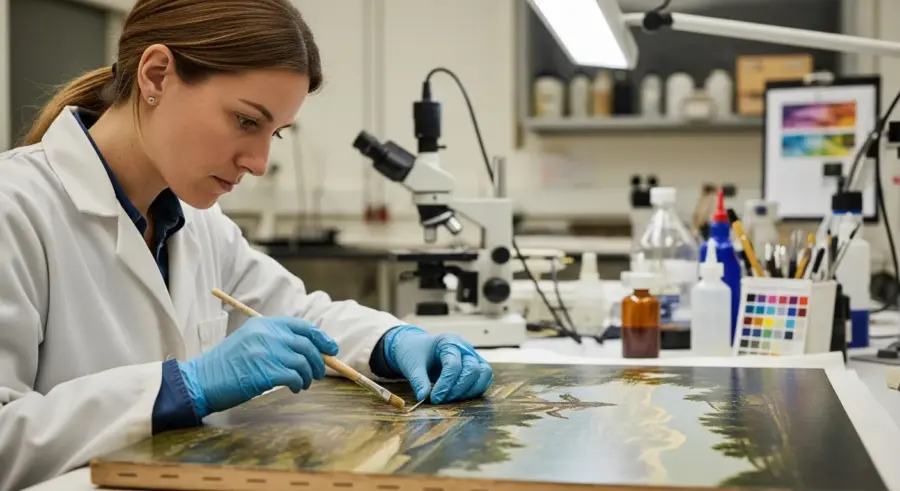
The conservation of historical artifacts and artworks presents a unique set of challenges, particularly when dealing with pigments containing heavy metals. Many traditional pigments, prized for their brilliance and opacity, pose significant health risks to conservators and can also be environmentally hazardous.
Finding suitable heavy metal pigment alternatives that mimic the aesthetic and chemical properties of the originals is essential for responsible conservation practices. This article examines the need for these alternatives and explores various options, focusing on non-toxic pigments and their application in preserving cultural heritage.
By understanding the characteristics of both historical pigments and their potential replacements, conservators can make informed decisions that prioritize safety and longevity. The goal is to ensure that future generations can appreciate these artistic and historical treasures without compromising the health of those who work to preserve them.
The Need for Safer Pigment Alternatives
Many historical pigments, such as lead white, vermilion (mercury sulfide), and chrome yellow (lead chromate), contain heavy metals that are toxic. Exposure to these pigments can lead to serious health problems, including neurological damage, kidney issues, and even cancer.
Conservators, who often work directly with these materials, are at the highest risk. The need for safer heavy metal pigment alternatives is driven by the desire to protect the health and well-being of these professionals.
Beyond the health concerns, heavy metal pigments pose environmental risks. Improper disposal of these materials can contaminate soil and water sources, leading to long-term ecological damage.
As environmental regulations become stricter, the use of heavy metal pigments is increasingly restricted. This further emphasizes the importance of identifying and adopting non-toxic pigment options for conservation.
The dangers associated with handling these toxic substances are not always immediately apparent. Chronic exposure, even at low levels, can lead to the accumulation of heavy metals in the body over time. This bioaccumulation can result in a variety of health problems that may not manifest until years or even decades after the initial exposure.

Therefore, proactive measures to minimize or eliminate the use of hazardous pigments are crucial. Substituting these pigments with safer alternatives is a fundamental step in protecting conservators and the environment.
Furthermore, the ethical implications of using toxic materials in conservation should be considered. Conservators have a responsibility to protect not only the artwork but also themselves and future generations from harm.
This ethical responsibility extends to the proper disposal of waste materials generated during conservation treatments. Implementing environmentally sound waste management practices is essential to prevent the release of heavy metals into the environment.
Exploring Non-Toxic Inorganic Pigment Options
Inorganic pigments offer excellent lightfastness and durability, making them suitable for conservation. Several non-toxic inorganic options can serve as viable replacements for hazardous heavy metal pigments.
Titanium dioxide, for example, is a brilliant white pigment that is non-toxic and widely available. It can effectively replace lead white, though its higher tinting strength requires careful adjustment to match the original pigment’s properties.
Iron oxides, such as yellow ochre, red ochre, and burnt sienna, provide a range of earth tones. These pigments are stable, non-toxic, and have been used for centuries, making them a reliable choice for conservation.
Ultramarine blue, a synthetic pigment chemically identical to the natural lapis lazuli, offers a vibrant blue hue. It is non-toxic and lightfast, providing a safe alternative to some historical blue pigments.
Barium sulfate, also known as blanc fixe, is another non-toxic white pigment that can be used as a filler or extender. It has a lower refractive index than titanium dioxide, making it useful for creating more transparent or muted effects.
Chromium oxide green offers a stable and lightfast green hue. While chromium can be toxic in certain forms, chromium oxide is considered relatively non-toxic and is widely used in various applications.
Cobalt blue is a vibrant and lightfast blue pigment. Although it contains cobalt, it is generally considered less toxic than many other historical blue pigments, such as Prussian blue (which can release cyanide under certain conditions).
However, it is important to note that even non-toxic pigments should be handled with care. Proper ventilation and personal protective equipment, such as gloves and respirators, are recommended when working with any pigment in powdered form.
Organic Pigments as Alternatives
Organic pigments, derived from plant or animal sources or synthesized from organic compounds, offer a wide array of colors. While some historical organic pigments are fugitive (prone to fading), modern synthetic organic pigments often exhibit excellent lightfastness.
Phthalo blue and phthalo green are examples of synthetic organic pigments known for their intense colors and high lightfastness. These can be used to replace certain heavy metal-based blue and green pigments, though their strong tinting power requires careful handling.
| Historical Pigment | Hazard | Alternative Pigment |
|---|---|---|
| Lead White | Toxic, cumulative poison | Titanium Dioxide |
| Vermilion | Mercury poisoning | Cadmium Red (use with caution), Naphthol Red |
| Chrome Yellow | Lead and Chromium toxicity | Hansa Yellow, Diarylide Yellow |
| Emerald Green | Arsenic toxicity | Phthalo Green |
Quinacridone pigments offer a range of reds, violets, and oranges with good lightfastness and transparency. These pigments can be used to replicate the hues of certain historical red and purple pigments, though their transparency may require adjustments to achieve the desired opacity.
Azo pigments are another class of synthetic organic pigments that offer a wide range of colors, including yellows, oranges, and reds. Some azo pigments have excellent lightfastness, while others are more prone to fading, so careful selection is important.
Dioxazine violet is a strong and lightfast violet pigment. It can be used as a replacement for some historical violet pigments, although its intense color requires careful blending.
It is crucial to carefully research the properties of any organic pigment before using it in conservation. Factors such as lightfastness, chemical stability, and compatibility with other materials should be considered.
Furthermore, the manufacturing processes of organic pigments can vary, and some may contain impurities or additives that can affect their performance. Choosing pigments from reputable manufacturers is essential to ensure quality and consistency.
Matching Color and Properties of Historical Pigments
One of the most significant challenges in pigment replacement is achieving an accurate color match. Historical pigments often have unique spectral characteristics and particle sizes that contribute to their distinct appearance.
Conservators use various techniques to ensure a close match, including spectrophotometry, which measures the light reflected by a pigment across the visible spectrum. This data can be used to identify alternative pigments or pigment mixtures that closely replicate the original color.
Particle size also plays a crucial role in the appearance of a pigment. Historical pigments often have larger or more irregular particle sizes compared to modern pigments, affecting their opacity and texture.
Adjusting the particle size of alternative pigments through grinding or milling can help to better match the optical properties of the original materials. Careful consideration of the refractive index of the pigment and the binding medium is also important for achieving an accurate color match.
Beyond spectrophotometry, colorimeters can also be used to quantify color differences. These devices provide numerical values for color attributes such as hue, saturation, and lightness, allowing for a more objective assessment of color matching.
Microscopy can be used to examine the particle size and morphology of both historical and alternative pigments. This information can be used to guide the selection and processing of alternative pigments to achieve a closer match in texture and opacity.
The binding medium also plays a significant role in the final appearance of a pigment. Different binding media can affect the color, gloss, and transparency of a pigment, so it is important to choose a binding medium that is compatible with both the original artwork and the alternative pigment.
In some cases, it may be necessary to create custom pigment mixtures to achieve an accurate color match. This requires careful experimentation and a thorough understanding of color theory.
Testing and Evaluating Pigment Alternatives
Before using a pigment replacement in a conservation treatment, thorough testing and evaluation are essential. This process helps to ensure that the alternative pigment meets the required standards for color, stability, and compatibility with the original artwork.
Lightfastness testing involves exposing the pigment to intense light for an extended period and assessing any changes in color or intensity. This helps to identify pigments that are prone to fading or discoloration.
- Color matching under different lighting conditions
- Compatibility with the original binding medium
- Resistance to solvents and cleaning agents
- Long-term stability in the artwork’s environment
- Potential for interaction with other pigments
Compatibility testing involves mixing the alternative pigment with the original binding medium and other pigments present in the artwork. This helps to identify any adverse reactions, such as discoloration, cracking, or embrittlement.
Accelerated aging tests can be used to simulate the effects of long-term exposure to environmental factors. These tests involve exposing the pigment to elevated temperatures, humidity levels, and light intensities.
Solvent resistance testing is important to ensure that the alternative pigment is not soluble in common solvents used in conservation treatments. Solubility can lead to bleeding or discoloration of the pigment.
Microchemical testing can be used to identify the chemical composition of both the original and alternative pigments. This can help to ensure that the alternative pigment is chemically similar to the original.
Documentation of all testing and evaluation procedures is essential. This documentation should include details about the materials used, the methods employed, and the results obtained.
Considerations for Long-Term Stability
The long-term stability of pigment alternatives is a critical factor in conservation. Pigments must be able to withstand environmental factors such as light, humidity, and temperature fluctuations without undergoing significant changes.
Inorganic pigments generally offer excellent long-term stability due to their chemical inertness. However, some organic pigments may be more susceptible to fading or degradation over time.
The choice of binding medium also plays a crucial role in the long-term stability of a pigment. A compatible and stable binding medium can protect the pigment from environmental factors and prevent it from undergoing unwanted chemical reactions.
Conservators often conduct accelerated aging tests to simulate the effects of long-term exposure to environmental factors. These tests can help to predict the long-term performance of pigment alternatives and inform conservation decisions.
The pH of the pigment and the binding medium can also affect long-term stability. Extreme pH levels can accelerate degradation processes, so it is important to choose materials with neutral or near-neutral pH.
The presence of pollutants in the environment can also affect the long-term stability of pigments. Air pollutants such as sulfur dioxide and ozone can react with pigments, causing them to fade or discolor.
Proper storage and display conditions are essential for ensuring the long-term stability of artworks. Controlling temperature, humidity, and light exposure can help to minimize degradation processes.
Regular monitoring of artworks is important to detect any signs of degradation early on. This allows conservators to take proactive measures to prevent further damage.
Case Studies: Successful Pigment Replacements
Several case studies demonstrate the successful application of heavy metal pigment alternatives in conservation. One example involves the replacement of lead white in a 17th-century painting.
Conservators carefully matched the color and texture of the original lead white with a mixture of titanium dioxide and zinc oxide. The titanium dioxide provided the necessary opacity, while the zinc oxide helped to reduce the tinting strength and create a more natural appearance.
Another case study involves the replacement of vermilion in a Chinese lacquerware object. The original vermilion had degraded over time, causing the surface to appear dull and uneven.
Conservators replaced the vermilion with a mixture of naphthol red and quinacridone red pigments. This combination provided a similar hue and saturation to the original vermilion, while also offering improved lightfastness and stability.
In another instance, chrome yellow in a 19th-century landscape painting was replaced with a combination of Hansa yellow and diarylide yellow pigments. This mixture provided a similar color to the original chrome yellow without the associated toxicity.
Emerald green, a highly toxic arsenic-based pigment, has been successfully replaced with phthalo green in numerous conservation projects. Phthalo green offers a similar hue and excellent lightfastness.
These case studies highlight the importance of careful planning, thorough testing, and skilled execution in pigment replacement. Success depends on a deep understanding of both the original materials and the alternative pigments.
Furthermore, these examples demonstrate that pigment replacement can be a viable and ethical approach to conservation when it is done responsibly and with careful consideration of all relevant factors.
Ethical Considerations in Pigment Replacement
Pigment replacement raises important ethical considerations in conservation. Some argue that any alteration to the original materials of an artwork is inherently problematic.
Others argue that the use of heavy metal pigment alternatives is justified when it protects the health of conservators and prevents further degradation of the artwork. The decision to replace a pigment should be made on a case-by-case basis, considering the specific circumstances of the artwork and the potential risks and benefits of the treatment.
Transparency and documentation are essential in pigment replacement. Conservators should clearly document the rationale for the treatment, the materials used, and the methods employed.
This information should be readily available to future conservators and researchers, ensuring that the treatment can be understood and evaluated in the context of the artwork’s history. Collaboration with art historians and other experts can help to ensure that conservation decisions are informed by a comprehensive understanding of the artwork’s significance.
The principle of minimal intervention should always be a guiding factor. Conservators should strive to use the least invasive methods possible to achieve the desired outcome.
Reversibility is another important ethical consideration. Ideally, any treatment should be reversible, meaning that it can be undone if necessary in the future. However, in practice, complete reversibility is often difficult to achieve.
Respect for the original artist’s intent is also crucial. Conservators should strive to preserve the aesthetic and historical integrity of the artwork while also addressing issues of safety and stability.
Open communication with stakeholders, such as museum curators, art collectors, and the public, is essential. This helps to ensure that conservation decisions are made in a transparent and accountable manner.
Future Directions in Pigment Research
Research into new and improved heavy metal pigment alternatives is ongoing. Scientists are exploring novel materials and techniques to create pigments that are both safe and aesthetically pleasing.
Nanotechnology offers promising avenues for pigment development. Nanoparticles can be engineered to exhibit unique optical properties, allowing for the creation of pigments with enhanced color saturation, opacity, and lightfastness.
Biomimicry, the design and production of materials inspired by nature, is another area of interest. Researchers are studying the pigments found in natural organisms, such as butterfly wings and bird feathers, to develop new synthetic pigments with similar properties.
Advancements in computational color science are also contributing to pigment research. Sophisticated computer models can be used to predict the optical properties of different pigment mixtures, allowing conservators to fine-tune their formulations and achieve more accurate color matches.
The development of new analytical techniques is also crucial for pigment research. Techniques such as Raman spectroscopy and X-ray diffraction can provide detailed information about the chemical composition and crystal structure of pigments.
Research into sustainable pigment production methods is also gaining momentum. This includes the development of pigments from renewable resources and the reduction of waste and pollution in pigment manufacturing processes.
Collaboration between scientists, conservators, and art historians is essential for advancing pigment research. This interdisciplinary approach can help to ensure that research efforts are focused on the most pressing needs of the conservation community.
The development of comprehensive databases of pigment properties is also important. These databases can provide conservators with easy access to information about the characteristics, stability, and toxicity of different pigments.
Conclusion
The quest for safer heavy metal pigment alternatives is a crucial aspect of modern conservation practice. By embracing non-toxic pigments and employing rigorous testing and evaluation methods, conservators can protect their health, preserve cultural heritage, and minimize environmental impact.
While challenges remain in achieving perfect color matches and ensuring long-term stability, ongoing research and collaboration are paving the way for innovative solutions. The commitment to responsible conservation practices will ensure that future generations can enjoy our shared artistic and cultural legacy.
The transition to safer pigment alternatives is not merely a technical issue but also a cultural and ethical one. It reflects a growing awareness of the interconnectedness of human health, environmental sustainability, and cultural preservation.
By embracing innovation and collaboration, the conservation community can continue to advance the field and ensure that our cultural heritage is preserved for generations to come, in a manner that is both responsible and sustainable.


