
In the world of art conservation, understanding the chemical composition of historical pigments is paramount. Knowing what makes up these age-old colors allows conservators to make informed decisions about cleaning, restoration, and long-term preservation. High-Performance Liquid Chromatography, or HPLC, has become an indispensable technique for achieving this detailed analysis.
HPLC offers a powerful way to separate, identify, and quantify the various pigments present in a paint sample. This information can then be used to understand the artist’s palette, the painting’s history, and the potential risks of certain conservation treatments. This is a critical tool for any conservator dealing with historical paintings.
This article will explore the principles behind High-Performance Liquid Chromatography and how it’s applied in the fascinating realm of art conservation. We’ll discuss sample preparation, column selection, pigment identification, and the advantages and limitations of this technique, especially as it relates to HPLC pigment separation.
Principles of High-Performance Liquid Chromatography
High-Performance Liquid Chromatography is a separation technique used to identify and quantify the components of a mixture. It relies on the principle of separating different molecules based on their physical and chemical properties.
In HPLC, a liquid mobile phase carries the sample through a column packed with a stationary phase. As the sample components travel through the column, they interact differently with the stationary phase, causing them to separate.
The interaction between the sample and stationary phase is governed by factors like polarity, size, and charge. Components that interact more strongly with the stationary phase will move slower through the column, while those with weaker interactions will elute faster.
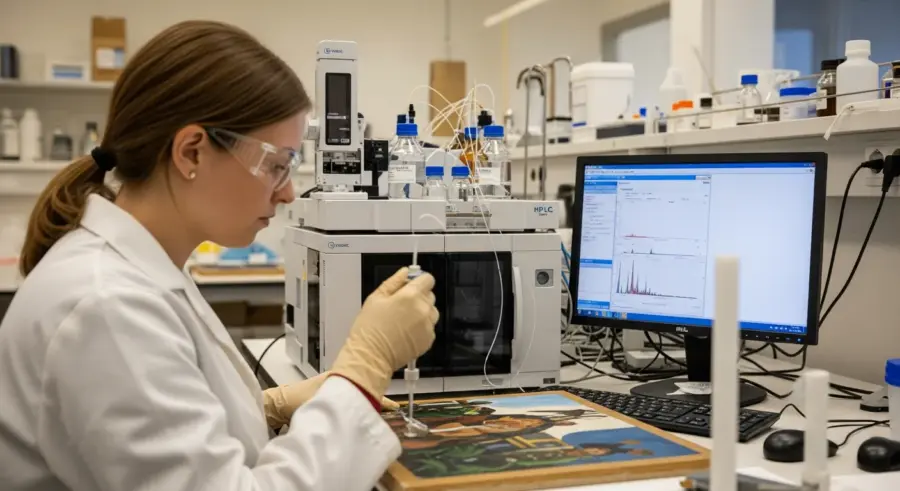
Detectors at the end of the column measure the concentration of each separated component as it elutes. The resulting data is displayed as a chromatogram, a plot of detector response versus time, with peaks representing individual compounds.
The mobile phase is a solvent or a mixture of solvents that carries the sample through the column. Its composition is carefully chosen to optimize the separation of the target compounds.
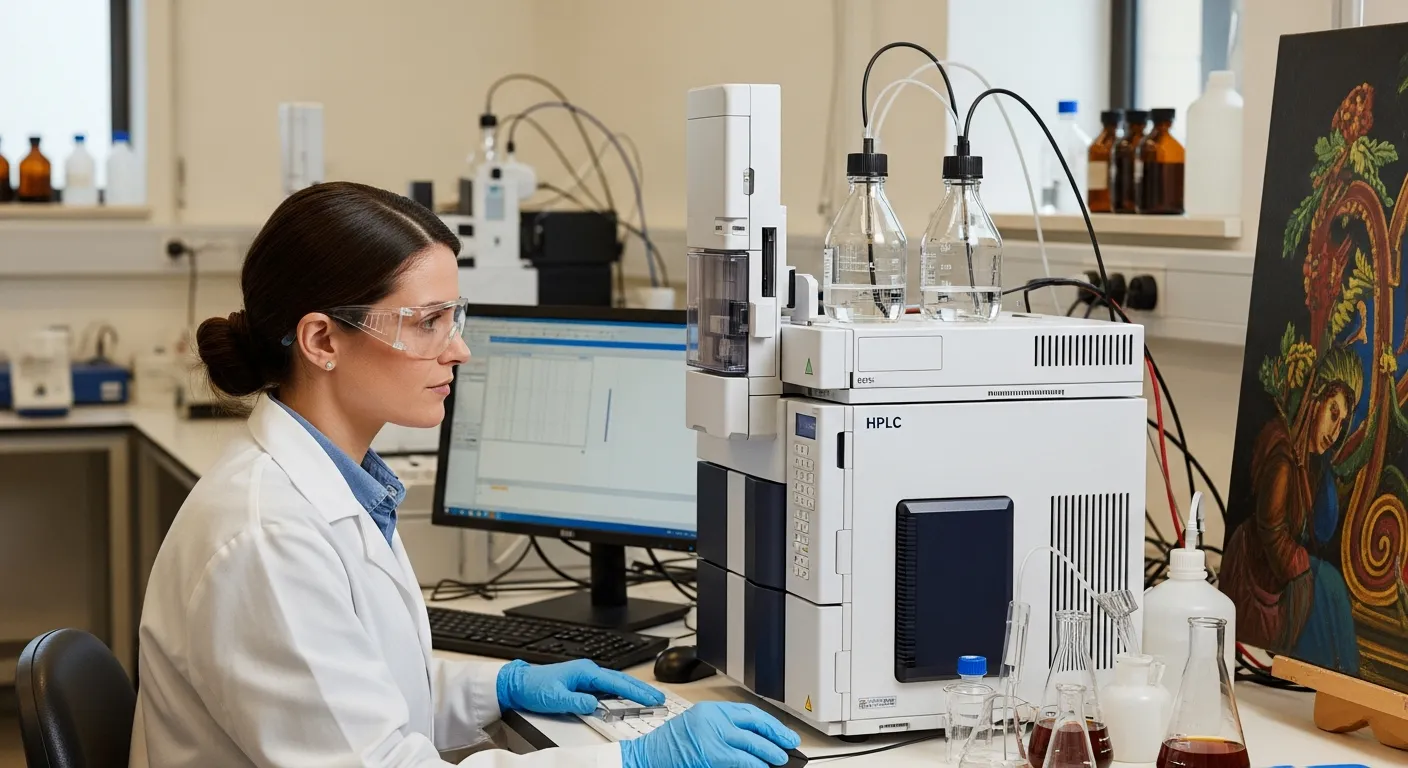
The stationary phase is a solid material packed inside the column. It interacts with the sample components, causing them to separate based on their affinity for the stationary phase.
Different types of stationary phases exist, each with different properties. Common stationary phases include silica-based materials with bonded alkyl chains (e.g., C18, C8) or polar functional groups.
The detector measures the concentration of the separated components as they elute from the column. Common detectors include UV-Vis detectors, fluorescence detectors, and mass spectrometers.
UV-Vis detectors measure the absorbance of the eluting compounds at a specific wavelength. Fluorescence detectors measure the fluorescence emitted by the eluting compounds after excitation with light.
Mass spectrometers measure the mass-to-charge ratio of the eluting compounds. This provides information about their molecular weight and structure.
The chromatogram is a plot of detector response versus time. Each peak in the chromatogram represents a different compound in the sample.
The area under each peak is proportional to the concentration of the corresponding compound. By comparing the peak areas of unknown samples to those of known standards, the concentration of each compound can be determined.
HPLC is a versatile technique that can be used to analyze a wide variety of compounds. It is particularly well-suited for analyzing complex mixtures of organic molecules.
The separation efficiency of HPLC is influenced by several factors. These factors include the column length, particle size of the stationary phase, flow rate of the mobile phase, and temperature.
Optimizing these parameters is crucial for achieving the best possible separation. Method development is therefore a critical step in HPLC analysis.
Sample Preparation for HPLC Analysis of Pigments
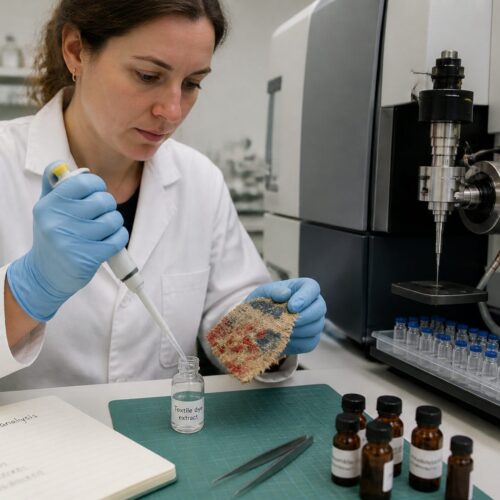
Proper sample preparation is crucial for accurate and reliable HPLC analysis of pigments. The goal is to extract the pigments from the paint matrix and dissolve them in a suitable solvent for injection into the HPLC system.
The first step typically involves carefully removing a small sample of paint from the artwork, usually a tiny flake or cross-section. The size of the sample must be minimized to preserve the integrity of the artwork, while still being large enough to provide detectable amounts of pigment.
Next, the sample is often treated with a solvent or a mixture of solvents to dissolve the pigments. The choice of solvent depends on the chemical properties of the pigments being targeted, as some pigments are soluble in polar solvents, while others require non-polar solvents.
The extraction process may involve sonication, heating, or mechanical agitation to aid in the dissolution of the pigments. After extraction, the sample is filtered to remove any particulate matter that could damage the HPLC column or interfere with the analysis.
The selection of the appropriate solvent or solvent mixture is a critical step in sample preparation. The solvent must be able to dissolve the pigments of interest without degrading them or interfering with the HPLC analysis.
Common solvents used for pigment extraction include methanol, ethanol, acetone, and dimethylformamide (DMF). Mixtures of these solvents may also be used to optimize the extraction of different pigments.
Sonication is a technique that uses high-frequency sound waves to agitate the sample and promote the dissolution of pigments. It is often used in conjunction with solvent extraction to improve the efficiency of the process.
Heating can also be used to enhance pigment extraction. However, it is important to control the temperature carefully to avoid degrading the pigments.
Mechanical agitation, such as vortexing or shaking, can also be used to aid in pigment dissolution. This is a simple and effective method for improving the extraction of pigments from the paint matrix.
Filtration is an essential step in sample preparation to remove any particulate matter that could damage the HPLC column. Filters with pore sizes of 0.2 μm or 0.45 μm are commonly used for this purpose.
The extracted pigment solution may need to be concentrated before injection into the HPLC system. This can be achieved by evaporation or using a solid-phase extraction (SPE) technique.
SPE involves passing the extracted pigment solution through a cartridge containing a solid sorbent material. The pigments are retained on the sorbent, while the unwanted matrix components are washed away.
The pigments are then eluted from the sorbent with a small volume of a suitable solvent. This results in a concentrated pigment solution that is ready for HPLC analysis.
Careful consideration should be given to the stability of the extracted pigments. Some pigments are sensitive to light, air, or temperature, and may degrade over time.
The extracted pigment solution should be stored in a dark, cool place to minimize degradation. It is also important to analyze the samples as soon as possible after extraction.
Selecting the Right HPLC Column and Mobile Phase
Selecting the appropriate HPLC column and mobile phase is critical for achieving optimal pigment separation. The column’s stationary phase and the mobile phase’s composition determine how effectively different pigments will be separated.
Reversed-phase chromatography is commonly used for pigment analysis, employing a non-polar stationary phase and a polar mobile phase. This technique is well-suited for separating pigments based on their hydrophobicity, with more hydrophobic pigments retaining longer on the column.
| Column Type | Stationary Phase | Mobile Phase |
|---|---|---|
| C18 | Octadecylsilane (non-polar) | Acetonitrile/Water (gradient) |
| C8 | Octylsilane (moderately non-polar) | Methanol/Water (isocratic or gradient) |
| Phenyl | Phenyl groups (aromatic interactions) | Acetonitrile/Buffer (pH controlled) |
| Silica | Silanol groups (polar) | Hexane/Ethyl Acetate (non-polar) |
The choice of column depends on the chemical properties of the pigments being analyzed. C18 columns are generally suitable for separating a wide range of pigments, while C8 columns may be preferred for more polar pigments.
Phenyl columns offer different selectivity compared to alkyl columns, and can be useful for separating pigments with aromatic rings. Silica columns are typically used for normal-phase chromatography, which is suitable for separating polar pigments.
The mobile phase is typically a mixture of water and an organic solvent, such as acetonitrile or methanol. The ratio of water to organic solvent can be adjusted to optimize the separation.
A gradient elution, where the mobile phase composition changes over time, is often used to improve the separation of complex pigment mixtures. This involves gradually increasing the concentration of the organic solvent, which elutes the more hydrophobic pigments.
The pH of the mobile phase can also affect the separation of pigments. Buffers are often added to the mobile phase to control the pH and maintain consistent separation conditions.
The flow rate of the mobile phase is another important parameter that affects the separation. A higher flow rate will result in faster separation times, but may also reduce the resolution of the separation.
The column temperature can also influence the separation of pigments. Increasing the temperature can improve the separation of some pigments, but may also degrade others.
Careful optimization of the mobile phase composition, pH, flow rate, and temperature is essential for achieving optimal pigment separation. This often involves a trial-and-error approach, where different conditions are tested and the separation is evaluated.
The selection of the appropriate column and mobile phase is crucial for obtaining accurate and reliable results. It is important to consider the chemical properties of the pigments being analyzed and to optimize the separation conditions accordingly.
Modern HPLC systems often incorporate column heating and cooling capabilities. This allows for precise temperature control during the separation process.
Guard columns are often used to protect the analytical column from contamination. These columns are placed before the analytical column and trap any particulate matter or strongly retained compounds that could damage the analytical column.
Proper column maintenance is essential for ensuring the longevity and performance of the HPLC column. This includes regularly flushing the column with a suitable solvent and storing it properly when not in use.
Identifying Pigments Based on Retention Time
Retention time is a key parameter used for identifying pigments in HPLC analysis. It refers to the time it takes for a specific compound to travel through the column and reach the detector.
Under consistent chromatographic conditions, each pigment will exhibit a characteristic retention time. By comparing the retention times of unknown peaks in a sample chromatogram to those of known pigment standards, individual pigments can be identified.
Creating a library of retention times for various pigments under specific HPLC conditions is essential for accurate identification. This library serves as a reference for comparing unknown samples and confirming the presence of specific pigments.
However, it’s important to note that retention time alone is not always sufficient for definitive identification. Co-elution of different pigments can occur, leading to overlapping peaks and ambiguous results, and this is a limitation of using retention time alone.
To improve the accuracy of pigment identification, it is often necessary to use other analytical techniques in conjunction with HPLC. Mass spectrometry (MS) is a powerful technique that can provide additional information about the molecular weight and structure of the pigments.
By coupling HPLC with MS, pigments can be identified based on their retention time and their mass-to-charge ratio. This provides a much higher level of confidence in the identification.
UV-Vis spectroscopy can also be used to aid in pigment identification. Each pigment has a characteristic UV-Vis spectrum, which can be used to confirm its identity.
By comparing the UV-Vis spectrum of an unknown peak to those of known pigment standards, the pigment can be identified. This technique is particularly useful for identifying pigments that have similar retention times.
Raman spectroscopy is another technique that can be used to identify pigments. Raman spectroscopy provides information about the vibrational modes of the molecules in a sample.
Each pigment has a characteristic Raman spectrum, which can be used to confirm its identity. Raman spectroscopy is a non-destructive technique that can be used to analyze pigments directly on the artwork.
The accuracy of retention time-based identification depends on the consistency of the chromatographic conditions. It is important to carefully control the mobile phase composition, flow rate, and temperature to ensure that the retention times are reproducible.
Regular calibration of the HPLC system is also essential for maintaining accurate retention times. This involves injecting known standards and verifying that their retention times are within the expected range.
When using retention time for pigment identification, it is important to consider the possibility of isomers. Isomers are compounds that have the same molecular formula but different structures. Isomers may have different retention times, which can complicate the identification process.
The use of multiple analytical techniques can help to overcome this challenge. By combining retention time data with mass spectrometry and UV-Vis spectroscopy, isomers can often be distinguished from one another.
The identification of pigments based on retention time is a powerful tool for art conservators. However, it is important to use this technique with caution and to confirm the identification with other analytical techniques whenever possible.
Quantifying Pigments using HPLC
HPLC is not only useful for identifying pigments but also for determining their concentrations in a sample. This pigment quantification is essential for understanding the composition of paint layers and assessing the extent of pigment degradation.
Pigment quantification in HPLC relies on the relationship between the peak area in the chromatogram and the concentration of the corresponding pigment. By calibrating the HPLC system with known concentrations of pigment standards, a calibration curve can be generated.
The calibration curve plots the peak area against the concentration of the standard, allowing for the determination of pigment concentration in unknown samples. The peak area of a pigment in the sample chromatogram is compared to the calibration curve to determine its concentration.
Accurate quantification requires careful control of experimental parameters, such as injection volume, flow rate, and detector settings. It’s also important to account for any matrix effects that could influence the detector response.
The preparation of accurate standards is crucial for reliable quantification. Standards should be prepared using high-purity pigments and accurately weighed using a calibrated balance.
The standards should be dissolved in the same solvent as the sample and stored properly to prevent degradation. Multiple standards with different concentrations should be prepared to generate a calibration curve.
The calibration curve should be linear over the concentration range of interest. If the calibration curve is non-linear, it may be necessary to use a different detector or to dilute the samples.
The injection volume should be carefully controlled to ensure that the same amount of sample is injected each time. An autosampler is often used to automate the injection process and improve reproducibility.
The flow rate of the mobile phase should be kept constant throughout the analysis. Fluctuations in the flow rate can affect the retention times and peak areas, leading to inaccurate quantification.
The detector settings, such as the wavelength and gain, should be optimized for the pigments being analyzed. The signal-to-noise ratio should be maximized to improve the sensitivity of the quantification.
Matrix effects can occur when the sample matrix interferes with the detector response. This can lead to inaccurate quantification, especially when analyzing complex samples.
To minimize matrix effects, it is important to use a suitable sample preparation technique and to match the matrix of the standards to that of the samples. Standard addition is another technique that can be used to correct for matrix effects.
The limit of detection (LOD) and limit of quantification (LOQ) should be determined for each pigment. The LOD is the lowest concentration of a pigment that can be detected with a reasonable degree of certainty.
The LOQ is the lowest concentration of a pigment that can be quantified with acceptable accuracy and precision. Concentrations below the LOQ should be reported as “not detected.”
Quality control measures should be implemented to ensure the accuracy and reliability of the quantification. This includes analyzing blank samples, spiked samples, and control samples.
Advantages and Limitations of HPLC in Pigment Analysis
HPLC offers several advantages for pigment analysis in art conservation. Its high sensitivity, ability to separate complex mixtures, and quantitative capabilities make it a valuable tool for conservators.
However, HPLC also has limitations that must be considered. Sample preparation can be time-consuming and require specialized skills, and the technique may not be suitable for all types of pigments or paint matrices.
- High sensitivity allows for the detection of trace amounts of pigments
- Ability to separate complex mixtures of pigments and degradation products
- Quantitative analysis provides information on pigment concentrations
- Requires relatively small sample sizes, minimizing damage to the artwork
- Can be coupled with other analytical techniques, such as mass spectrometry, for enhanced identification
One of the main advantages of HPLC is its ability to separate complex mixtures of pigments. This is particularly important in art conservation, as paint samples often contain a variety of pigments, as well as degradation products and other organic compounds.
The high sensitivity of HPLC allows for the detection of trace amounts of pigments. This is essential for analyzing small samples and for identifying pigments that are present in low concentrations.
The quantitative capabilities of HPLC provide valuable information on pigment concentrations. This information can be used to understand the composition of paint layers and to assess the extent of pigment degradation.
HPLC requires relatively small sample sizes, minimizing damage to the artwork. This is a significant advantage over other analytical techniques that require larger samples.
HPLC can be coupled with other analytical techniques, such as mass spectrometry, for enhanced identification. This provides a more comprehensive understanding of the chemical composition of the pigments.
One of the limitations of HPLC is that sample preparation can be time-consuming and require specialized skills. The pigments must be extracted from the paint matrix and dissolved in a suitable solvent before they can be analyzed by HPLC.
HPLC may not be suitable for all types of pigments or paint matrices. Some pigments are difficult to extract from the paint matrix, while others may degrade during the extraction process.
The cost of HPLC equipment and consumables can be a barrier to entry for some art conservation laboratories. HPLC systems are relatively expensive, and the cost of columns, solvents, and standards can add up over time.
The interpretation of HPLC data can be complex and require specialized knowledge. It is important to have a thorough understanding of the chromatographic principles and the properties of the pigments being analyzed.
HPLC is a powerful tool for pigment analysis, but it is important to be aware of its limitations. By carefully considering the advantages and limitations of HPLC, conservators can make informed decisions about its application in art conservation.
Case Studies: HPLC in Action
Several case studies demonstrate the practical application of HPLC in art conservation. For example, HPLC has been used to analyze the pigments in Van Gogh’s paintings, revealing insights into his palette and the degradation of certain pigments.
In one study, HPLC analysis of paint samples from “Sunflowers” revealed the presence of chrome yellow pigments, which are known to degrade over time, causing discoloration. This information helped conservators understand the changes in the painting’s appearance and develop appropriate conservation strategies.
HPLC has also been used to authenticate paintings by comparing the pigment composition to known historical palettes. By identifying pigments that were not available during the artist’s lifetime, authenticity can be questioned, and further investigation can be warranted.
These case studies illustrate the power of HPLC in providing valuable information for art conservation and authentication. HPLC pigment separation provides insight into the materials and techniques used by artists throughout history.
Another compelling case involves the analysis of medieval illuminated manuscripts. HPLC has been instrumental in identifying the pigments used to create the vibrant colors in these delicate artworks.
By analyzing the pigments, researchers can gain insights into the trade routes and artistic practices of the time. They can also determine the origin of the manuscripts and the workshops where they were produced.
HPLC has also been used to study the effects of aging and environmental factors on pigments. This information is crucial for developing effective conservation strategies to protect these artworks for future generations.
In one study, HPLC was used to analyze the pigments in a 15th-century tapestry. The analysis revealed that the blue pigments had faded over time due to exposure to light.
This information helped conservators to develop a conservation plan that would minimize further fading and protect the tapestry from future damage.
HPLC has also been used to analyze the pigments in ancient Egyptian artifacts. This has provided valuable information about the materials and techniques used by ancient Egyptian artists.
In one study, HPLC was used to analyze the pigments in a sarcophagus. The analysis revealed that the sarcophagus was painted with a variety of pigments, including Egyptian blue, red ochre, and yellow ochre.
This information helped researchers to understand the symbolism and meaning of the colors used in the sarcophagus.
These case studies demonstrate the versatility of HPLC in art conservation. It can be used to analyze a wide range of artworks, from paintings and manuscripts to tapestries and artifacts.
HPLC provides valuable information about the materials and techniques used by artists throughout history. This information is essential for understanding and preserving our cultural heritage.
The non-destructive nature of the sampling techniques, when combined with the sensitivity of HPLC, makes it ideally suited for art conservation.
Future Trends in HPLC Pigment Separation
The field of HPLC pigment separation is constantly evolving, with new developments and applications emerging. One trend is the development of more sensitive and selective detectors, such as mass spectrometers, which can provide more detailed information about the chemical composition of pigments.
Another trend is the use of ultra-high-performance liquid chromatography (UHPLC), which offers faster separation times and higher resolution compared to conventional HPLC. UHPLC allows for the analysis of more complex pigment mixtures and the detection of trace amounts of pigments.
The integration of HPLC with other analytical techniques, such as Raman spectroscopy and X-ray fluorescence, is also gaining popularity. Combining these techniques provides a more comprehensive understanding of the pigments’ chemical and physical properties.
These advancements will continue to enhance the capabilities of HPLC in art conservation, providing conservators with even more powerful tools for understanding and preserving our cultural heritage. High-Performance Liquid Chromatography will continue to evolve with the needs of art conservation.
The development of new stationary phases is also a significant trend in HPLC pigment separation. Researchers are constantly developing new materials that offer improved selectivity and resolution for different types of pigments.
For example, new chiral stationary phases have been developed for separating enantiomers of pigments. This is important for understanding the stereochemistry of pigments and their interactions with other molecules.
The use of microfluidic devices is another emerging trend in HPLC pigment separation. Microfluidic devices offer several advantages over conventional HPLC systems, including smaller sample volumes, faster separation times, and lower costs.
Microfluidic devices can be used to perform high-throughput analysis of pigment samples. This is particularly useful for analyzing large numbers of samples or for screening different pigments.
The development of new software tools for data analysis is also an important trend in HPLC pigment separation. These tools can be used to automate the data analysis process and to extract more information from the chromatograms.
For example, new software tools have been developed for identifying pigments based on their retention times and mass spectra. These tools can significantly reduce the time and effort required for pigment identification.
The use of artificial intelligence (AI) and machine learning (ML) is also emerging as a powerful tool in HPLC pigment separation. AI and ML algorithms can be trained to analyze chromatograms and identify pigments with high accuracy.
AI and ML can also be used to predict the retention times of pigments based on their chemical structures. This can help to optimize the separation conditions and to identify unknown pigments.
The future of HPLC pigment separation is bright. With the continued development of new technologies and techniques, HPLC will continue to play a critical role in art conservation for many years to come.
Miniaturization and portability of HPLC systems are also on the horizon, allowing for on-site analysis in museums and archaeological sites.
Conclusion
High-Performance Liquid Chromatography has revolutionized the field of art conservation by providing a powerful means of analyzing historical pigments. Its ability to separate, identify, and quantify pigments makes it an indispensable tool for understanding the composition, history, and degradation of artworks.
While HPLC has limitations, its advantages far outweigh them, making it a valuable technique for conservators, art historians, and scientists alike. As technology advances, HPLC will continue to play a critical role in preserving our cultural heritage, especially the study of HPLC pigment separation.
The insights gained from HPLC analysis inform conservation treatments, ensuring the longevity and integrity of invaluable pieces of art.
By understanding the artist’s materials and techniques, we can better appreciate their creative vision and preserve their legacy for future generations.
The ongoing advancements in HPLC technology promise even greater precision and sensitivity in pigment analysis, further enhancing its value in art conservation.
HPLC will undoubtedly remain a cornerstone of art conservation research and practice, contributing to the preservation of our shared cultural heritage.
The collaboration between scientists, conservators, and art historians is essential for maximizing the benefits of HPLC analysis in art conservation.
By working together, these experts can unlock the secrets hidden within artworks and ensure their preservation for centuries to come.
The future of art conservation is inextricably linked to the continued development and application of advanced analytical techniques like HPLC.
These techniques provide invaluable insights into the materials, techniques, and history of artworks, enabling conservators to make informed decisions about their care and preservation.