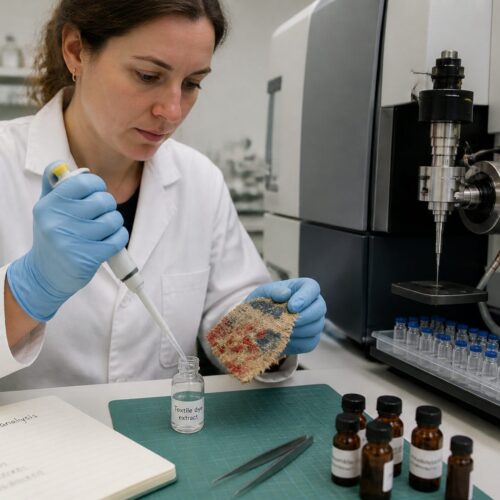

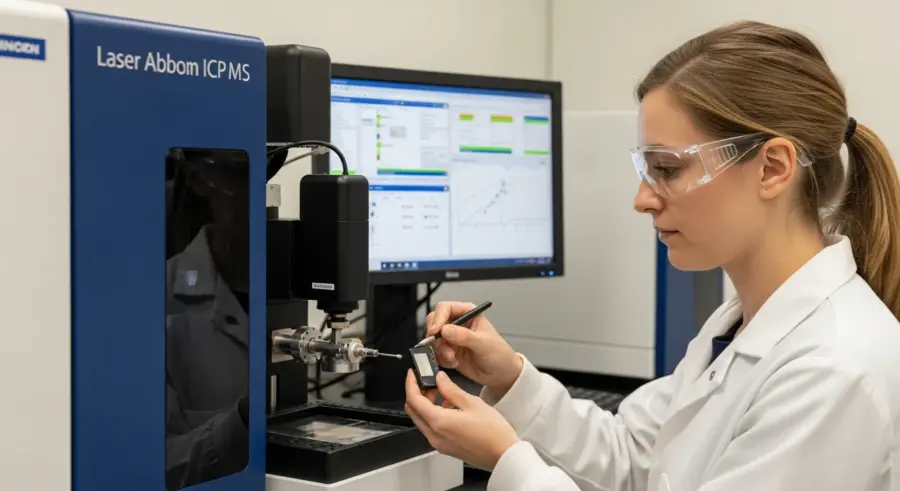
In the realm of art conservation and historical pigment analysis, pinpointing the precise composition of pigments is paramount. Traditional methods often require substantial sample sizes or can be destructive, posing a challenge when dealing with precious artifacts. Laser Ablation Inductively Coupled Plasma Mass Spectrometry, or LA-ICP-MS, offers a powerful solution by enabling minimally invasive, high-sensitivity analysis of pigment composition.
This technique allows for the determination of both major and trace elements, as well as isotope ratios, providing a comprehensive understanding of the materials used in historical artworks. Understanding the elemental makeup of pigments helps conservators authenticate artworks, trace their origins, and devise appropriate conservation strategies.
This article will explore the principles behind LA-ICP-MS, its application in pigment analysis, and its advantages and limitations. By examining case studies and practical considerations, we can appreciate the value of LA-ICP-MS pigments in preserving our cultural heritage.
Understanding Laser Ablation Inductively Coupled Plasma Mass Spectrometry
Laser Ablation Inductively Coupled Plasma Mass Spectrometry (LA-ICP-MS) is an analytical technique used to determine the elemental and isotopic composition of solid materials. The process begins with a high-powered laser focused onto the sample surface, causing a tiny amount of material to vaporize in a process called laser ablation.
This ablated material, in the form of a plasma, is then transported by a carrier gas, typically argon, into an inductively coupled plasma (ICP). The ICP is a high-temperature plasma that further ionizes the elements present in the ablated material.
These ions are then passed into a mass spectrometer, which separates them based on their mass-to-charge ratio. By measuring the abundance of each ion, the elemental composition of the original sample can be accurately determined, even at trace levels.
LA-ICP-MS is particularly well-suited for analyzing pigments because it requires minimal sample preparation and can be used to analyze a wide range of materials, including inorganic and organic compounds. The technique’s sensitivity and ability to perform in-situ analysis make it invaluable for studying historical artifacts without causing significant damage.
The laser ablation process itself is highly controlled. Parameters like laser power, pulse duration, and spot size can be adjusted to optimize the ablation process for different materials. This control is crucial for achieving consistent and reproducible results.
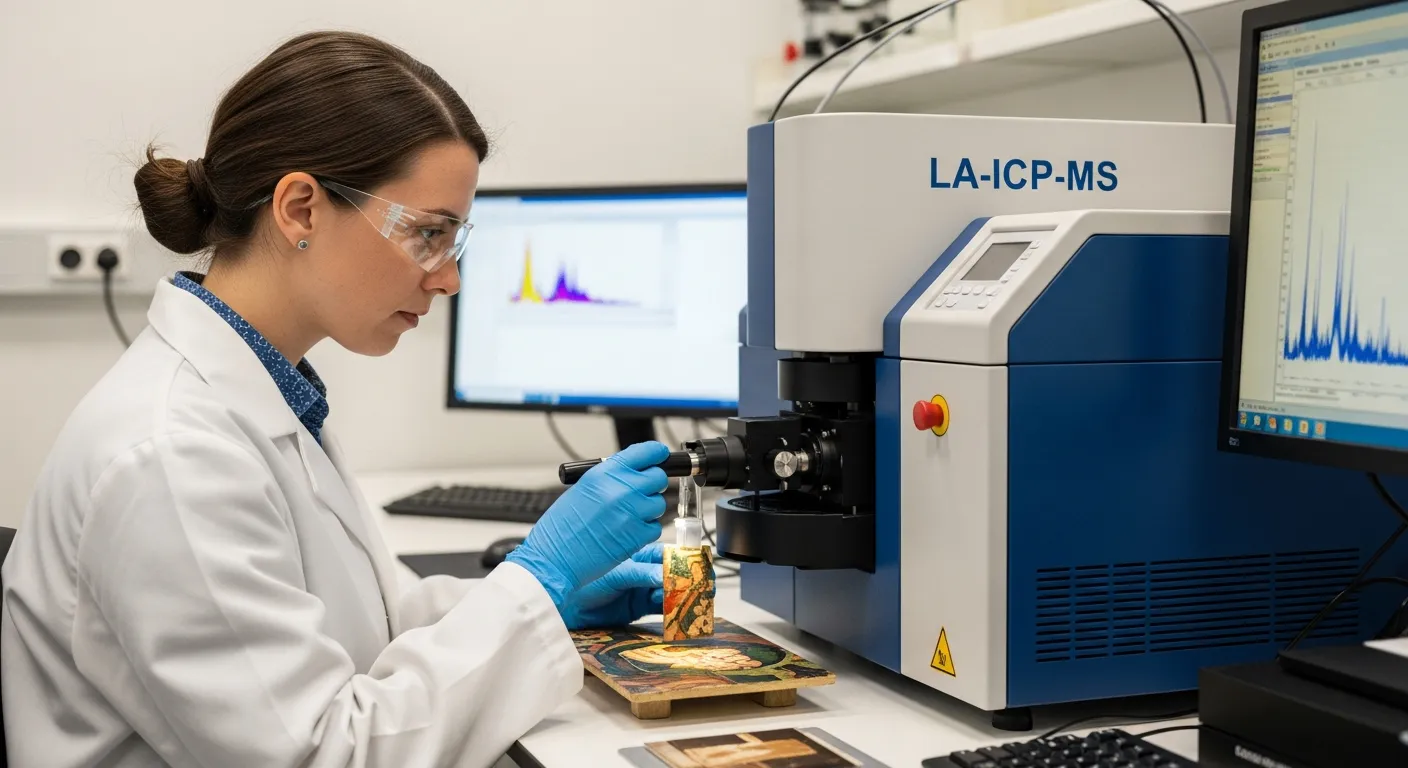
The inductively coupled plasma (ICP) is generated by passing argon gas through a radio-frequency field. The high temperature of the ICP ensures that virtually all elements in the ablated material are ionized, allowing for comprehensive elemental analysis.
The mass spectrometer then separates the ions based on their mass-to-charge ratio. Different types of mass spectrometers can be used, including quadrupole, time-of-flight, and sector field instruments, each with its own advantages and limitations.
The data obtained from the mass spectrometer is then processed to determine the elemental concentrations in the original sample. This process often involves correcting for background signals and matrix effects to ensure accurate quantification.
LA-ICP-MS has become a cornerstone in many scientific fields beyond art conservation. Environmental science, geology, and materials science all benefit from its capabilities. Its versatility makes it a sought-after tool in research laboratories worldwide.
Sample Preparation for LA-ICP-MS Analysis
One of the key advantages of LA-ICP-MS is the minimal sample preparation required compared to other analytical techniques. For pigment analysis, this is particularly beneficial as it reduces the risk of contamination or alteration of the original sample.
Typically, the sample is simply mounted onto a suitable holder, such as a glass slide or a resin block, depending on the nature of the artwork. In some cases, a small cross-section of the paint layer may be prepared to allow for analysis of individual layers within the artwork.
To ensure accurate results, it is crucial to clean the surface of the sample to remove any surface contamination. This can be achieved using a gentle solvent or a soft brush, taking care not to damage the pigment layer.
For samples that are particularly fragile or prone to damage, non-contact cleaning methods, such as laser cleaning, can be employed. Once the sample is prepared, it is ready for analysis in the LA-ICP-MS instrument.
The choice of mounting material is critical to avoid introducing contaminants. Inert materials like Teflon or specially purified resins are preferred. These materials will not interfere with the analysis.
When preparing cross-sections, careful embedding techniques are necessary. The embedding medium must be chosen to be compatible with the pigments and not dissolve or alter them. Epoxies are often used.
Surface cleaning should be performed with extreme caution. The goal is to remove superficial dirt without affecting the underlying pigment layer. Microscopic examination before and after cleaning is recommended.
Laser cleaning offers a highly controlled method for removing surface layers. The laser parameters can be adjusted to selectively remove contaminants while leaving the pigment intact. This is a delicate process.
Proper documentation of the sample preparation steps is essential for data interpretation. This includes photographs, descriptions of the cleaning methods, and any other relevant information. Thorough documentation is critical for reproducibility.
Quantitative Analysis of Pigments using LA-ICP-MS
Quantitative analysis of pigments using LA-ICP-MS involves determining the precise concentrations of various elements within the pigment sample. This information is crucial for identifying the pigment’s origin, manufacturing process, and any subsequent alterations it may have undergone.
To achieve accurate quantitative analysis, it is necessary to calibrate the LA-ICP-MS instrument using certified reference materials with known elemental compositions. These reference materials are analyzed under the same conditions as the pigment samples, and the resulting data is used to create calibration curves.
| Pigment | Primary Element | Secondary Element | Trace Element |
|---|---|---|---|
| Ultramarine | Aluminum | Silicon | Sulfur |
| Vermilion | Mercury | Sulfur | Iron |
| Egyptian Blue | Calcium | Copper | Silicon |
| Lead White | Lead | Oxygen | Silver |
The selection of appropriate reference materials is paramount. These materials should have a matrix composition similar to that of the pigments being analyzed. This minimizes matrix effects.
Calibration curves are generated by plotting the measured signal intensity against the known concentration of each element in the reference materials. These curves are used to determine the concentrations in the unknown pigment samples.
Internal standards are often used to correct for variations in laser ablation efficiency and plasma conditions. An internal standard is an element that is added to the sample at a known concentration.
Data processing involves correcting for background signals and isobaric interferences. Isobaric interferences occur when different elements have the same mass-to-charge ratio, leading to inaccurate results.
Uncertainty analysis is an important part of quantitative analysis. This involves estimating the errors associated with each step of the analysis, including sample preparation, calibration, and data processing. Understanding the uncertainty is key.
Identifying Trace Elements in Pigments
Trace elements, present in pigments at very low concentrations, can provide valuable information about the pigment’s source and manufacturing process. These elements, often incorporated into the pigment structure during its formation, act as fingerprints that can distinguish between different sources or production methods.
LA-ICP-MS is particularly well-suited for identifying trace elements due to its high sensitivity and low detection limits. For example, the presence of specific trace elements in natural ultramarine, such as iron, can help differentiate it from synthetic ultramarine, which is typically purer.
Similarly, the presence of arsenic in vermilion can indicate the use of a specific mercury ore source, providing insights into the pigment’s origin. By carefully analyzing the trace element composition of pigments, researchers can gain a deeper understanding of the historical trade routes and artistic practices of the time.
The identification of trace elements is not limited to inorganic pigments; it can also be applied to organic pigments. For instance, trace metals in organic dyes can reveal the mordants used in the dyeing process, offering clues about the techniques employed by textile artists.
The detection limits of LA-ICP-MS are crucial for trace element analysis. Lower detection limits allow for the identification of elements present at extremely low concentrations. This is essential for distinguishing subtle differences.
Careful data processing is required to accurately quantify trace elements. This includes correcting for background signals and potential interferences from other elements. Accurate quantification is vital for interpretation.
Statistical analysis can be used to compare the trace element compositions of different pigment samples. This can help to identify patterns and relationships that would not be apparent from individual analyses. Statistical rigor strengthens conclusions.
Contamination is a major concern in trace element analysis. Strict protocols must be followed to minimize the risk of contamination during sample preparation and analysis. Cleanliness is paramount.
The interpretation of trace element data requires a thorough understanding of the historical context. Factors such as trade routes, mining practices, and manufacturing techniques can all influence the trace element composition of pigments. Context is key to interpretation.
Isotope Ratio Analysis for Pigment Provenance
Isotope ratio analysis is a powerful technique that can be used to determine the geographic origin of pigments. Isotopes are atoms of the same element that have different numbers of neutrons, resulting in slightly different masses.
The ratios of these isotopes can vary depending on the geological source of the raw materials used to create the pigment. LA-ICP-MS is capable of measuring these isotope ratios with high precision, allowing researchers to trace the provenance of pigments to specific geographic locations.
- Lead isotope analysis for lead white
- Strontium isotope analysis for earth pigments
- Copper isotope analysis for blue and green pigments
- Mercury isotope analysis for vermilion
- Carbon isotope analysis for organic pigments
Lead isotope analysis is particularly useful for tracing the origin of lead white pigments. The isotopic composition of lead ores varies geographically, providing a fingerprint for different mining regions. This is a well-established technique.
Strontium isotope analysis can be used to determine the provenance of earth pigments, such as ochre and umber. The strontium isotope ratios in these pigments reflect the geological composition of the soil in which they were formed. This is valuable for earth pigments.
Copper isotope analysis is applicable to blue and green pigments containing copper, such as azurite and malachite. The isotopic composition of copper ores varies geographically, allowing for the identification of the source of the copper. This is useful for blue and green hues.
Mercury isotope analysis can be used to trace the origin of vermilion, a red pigment made from mercury sulfide. The isotopic composition of mercury ores varies geographically, providing a fingerprint for different mining regions. This is a key technique for vermilion.
Carbon isotope analysis is applicable to organic pigments, such as charcoal and plant-based dyes. The isotopic composition of carbon varies depending on the plant source and environmental conditions. This can help identify the origin of organic pigments.
Advantages and Limitations of LA-ICP-MS
LA-ICP-MS offers several advantages for the analysis of historical pigments, making it a valuable tool for art conservators and researchers. Its minimal sample preparation requirements and high sensitivity are particularly beneficial when dealing with precious artifacts.
The ability to perform in-situ analysis allows for the examination of pigments directly on the artwork, reducing the need for destructive sampling. Furthermore, LA-ICP-MS can provide comprehensive information on elemental composition, trace elements, and isotope ratios, offering a holistic understanding of the pigment’s characteristics.
However, LA-ICP-MS also has some limitations that need to be considered. The technique is primarily surface-sensitive, meaning that the analysis is limited to the outermost layers of the sample.
This can be problematic if the surface is contaminated or altered. Additionally, the accuracy of quantitative analysis depends on the availability of suitable reference materials and careful calibration of the instrument.
Matrix effects, which refer to the influence of the sample matrix on the ablation and ionization processes, can also affect the accuracy of the results. Despite these limitations, LA-ICP-MS remains a powerful tool for pigment analysis when used judiciously and with appropriate quality control measures.
The surface sensitivity can be mitigated by careful laser rastering to analyze a larger area. This provides a more representative average composition. Rastering helps overcome surface variations.
The availability of suitable reference materials is an ongoing challenge. Research is constantly being conducted to develop new and improved reference materials for pigment analysis. This is an area of active research.
Matrix effects can be minimized by using matrix-matched reference materials. This involves selecting reference materials that have a similar composition to the pigment samples being analyzed. Matrix matching is crucial.
Data processing can be complex and requires specialized software and expertise. Careful attention must be paid to correcting for background signals and isobaric interferences. Expertise is essential for data analysis.
Despite its limitations, LA-ICP-MS offers unparalleled capabilities for pigment analysis. Its advantages far outweigh its limitations when used appropriately and with careful attention to quality control. It is a powerful tool.
Case Studies: LA-ICP-MS in Action
Several case studies demonstrate the effectiveness of LA-ICP-MS in addressing real-world challenges in art conservation. For instance, LA-ICP-MS was used to analyze the pigments in a 15th-century Italian painting, revealing the use of a previously undocumented pigment mixture.
The analysis of trace elements and isotope ratios helped determine the origin of the pigments, providing insights into the artist’s sourcing practices. In another study, LA-ICP-MS was employed to investigate the degradation of pigments in a series of ancient Egyptian artifacts.
The technique identified the presence of chloride ions, which were contributing to the corrosion of the pigments, allowing conservators to develop targeted preservation strategies. LA-ICP-MS has also been used to authenticate artworks by comparing the pigment composition of a suspected forgery to that of known genuine works.
By identifying discrepancies in the elemental composition and isotope ratios, researchers were able to determine that the artwork was indeed a fake. These case studies highlight the versatility and power of LA-ICP-MS in addressing a wide range of questions related to art history and conservation.
In the analysis of the 15th-century Italian painting, LA-ICP-MS revealed the presence of a mixture of ultramarine and azurite. This combination was not previously known to be used by artists of that period. This discovery shed light on artistic practices.
The study of ancient Egyptian artifacts revealed that the presence of chloride ions was accelerating the degradation of the blue pigments. This information allowed conservators to develop targeted treatments to stabilize the pigments. Targeted treatments were then possible.
In the authentication of a suspected forgery, LA-ICP-MS identified the presence of synthetic pigments that were not available during the time period the artwork was claimed to be created. This provided conclusive evidence that the artwork was a fake. The artwork was proven to be a forgery.
LA-ICP-MS has also been used to study the effects of environmental pollution on pigments. By analyzing the elemental composition of pigments exposed to different environmental conditions, researchers can assess the impact of pollution on artwork. Environmental impacts can be assessed.
These case studies demonstrate the diverse applications of LA-ICP-MS in art conservation and authentication. The technique provides valuable information that can inform conservation strategies and enhance our understanding of art history. It is a versatile tool.
Future Trends in LA-ICP-MS Pigment Analysis
The field of LA-ICP-MS pigment analysis is continuously evolving, with new developments promising to enhance its capabilities and broaden its applications. One trend is the development of higher-resolution mass spectrometers, which will enable more precise measurement of isotope ratios and trace element concentrations.
This will allow for more accurate provenance studies and a better understanding of pigment degradation processes. Another trend is the integration of LA-ICP-MS with other analytical techniques, such as Raman spectroscopy and X-ray fluorescence, to provide a more comprehensive characterization of pigments.
This multi-modal approach will allow researchers to obtain complementary information about the pigment’s chemical structure, elemental composition, and crystalline phase. Furthermore, advancements in laser technology are leading to the development of more compact and portable LA-ICP-MS instruments, making it possible to perform on-site analysis of artworks in museums and historical sites.
These developments will undoubtedly contribute to a deeper understanding of historical pigments and their role in preserving our cultural heritage. As technology advances, the use of Laser Ablation ICP-MS pigments will only increase in importance.
The development of higher-resolution mass spectrometers will significantly improve the accuracy of isotope ratio measurements. This will enable more precise determination of pigment provenance and a better understanding of trade routes. Accuracy improvements are expected.
The integration of LA-ICP-MS with other analytical techniques will provide a more comprehensive understanding of pigment composition and degradation processes. This multi-modal approach will offer a more holistic view of pigments. A holistic view is the goal.
The development of compact and portable LA-ICP-MS instruments will enable on-site analysis of artworks in museums and historical sites. This will reduce the need for destructive sampling and allow for more rapid analysis. On-site analysis will be possible.
Advancements in data processing and analysis techniques will improve the accuracy and efficiency of LA-ICP-MS pigment analysis. This will allow for more reliable interpretation of data and a better understanding of pigment characteristics. Data analysis will improve.
The future of LA-ICP-MS pigment analysis is bright, with ongoing developments promising to enhance its capabilities and broaden its applications. This will contribute to a deeper understanding of historical pigments and their role in preserving our cultural heritage. The future is bright.
Conclusion
Laser Ablation ICP-MS has emerged as an indispensable technique in the chemical analysis and conservation of historical pigments. Its ability to provide precise elemental and isotopic information with minimal sample preparation makes it ideal for studying valuable artworks.
From identifying trace elements to determining pigment provenance, LA-ICP-MS offers a wealth of insights that can inform conservation strategies and enhance our understanding of art history. While the technique has its limitations, ongoing advancements in instrumentation and data analysis are continuously expanding its capabilities.
As the field continues to evolve, we can expect LA-ICP-MS to play an increasingly important role in preserving and interpreting our cultural heritage for generations to come. The future of Laser Ablation ICP-MS pigments is bright.
The minimal sample preparation requirements make LA-ICP-MS particularly well-suited for analyzing fragile and valuable artworks. This minimizes the risk of damage to the artwork. Minimal preparation is a key advantage.
The ability to perform in-situ analysis allows for the examination of pigments directly on the artwork without the need for sampling. This preserves the integrity of the artwork. Integrity is preserved through in-situ analysis.
The comprehensive information provided by LA-ICP-MS can inform conservation strategies and enhance our understanding of art history. This allows for more effective conservation efforts. Effective conservation is the goal.
Ongoing advancements in instrumentation and data analysis are continuously expanding the capabilities of LA-ICP-MS. This ensures that the technique will remain a valuable tool for art conservation in the future. The future looks promising.
LA-ICP-MS is a powerful tool for preserving and interpreting our cultural heritage. It helps to ensure that future generations can appreciate the beauty and significance of historical artworks. Our cultural heritage is preserved.