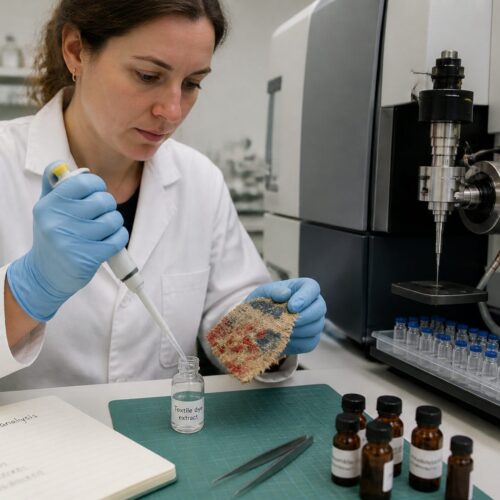

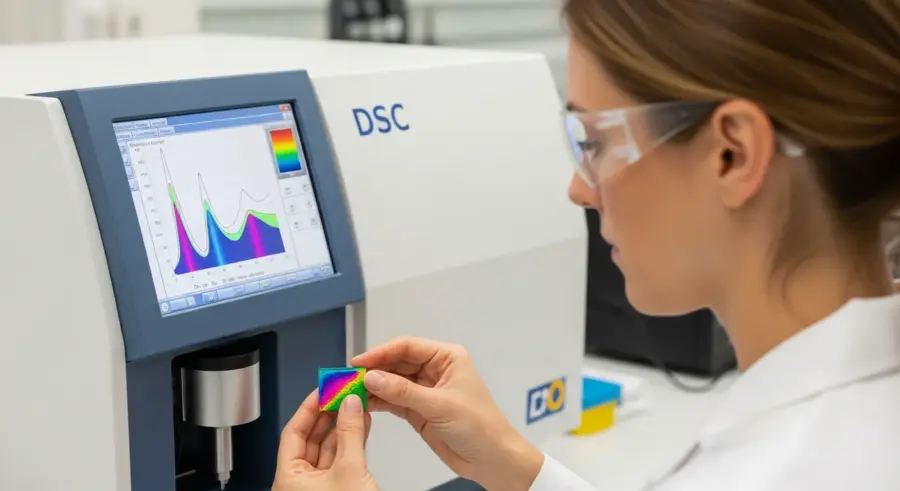
In the realm of art conservation, understanding the composition and condition of historical pigments is essential. One technique that provides valuable insights into the thermal behavior of these materials is differential scanning calorimetry, or DSC. This analytical method allows conservators and scientists to study how pigments respond to changes in temperature, offering data on their stability, degradation processes, and phase transitions.
By examining the thermal properties of pigments, we can gain a deeper understanding of their long-term behavior and develop more effective conservation strategies. This article will explore the principles of differential scanning calorimetry, its applications in pigment analysis, and its role in preserving our artistic heritage.
Differential scanning calorimetry pigments analysis is a critical tool. It is used to determine phase transitions, such as the glass transition or melting point, and assess the thermal stability of a material.
Understanding Differential Scanning Calorimetry (DSC)
Differential scanning calorimetry is a thermoanalytical technique that measures the heat flow required to maintain a sample and a reference at the same temperature as they are subjected to a controlled temperature program. The basic principle involves comparing the heat flow into a sample and a reference material, typically an inert substance, as both are heated or cooled at a constant rate.
Any difference in heat flow indicates a thermal event occurring in the sample, such as a phase transition, chemical reaction, or decomposition. The resulting DSC curve, a plot of heat flow versus temperature, provides a fingerprint of the thermal behavior of the material.
The equipment consists of a furnace, sample and reference holders, temperature sensors, and a control system. The sample and reference are placed in separate pans, and the temperature of each is carefully monitored.
As the temperature changes, the instrument adjusts the heat input to the sample or reference to maintain them at the same temperature. The difference in heat flow is recorded, providing information about the thermal events occurring in the sample.
DSC is a powerful technique because it directly measures the energy changes associated with physical and chemical transformations. This makes it invaluable for studying materials ranging from polymers and pharmaceuticals to food and, of course, art pigments.

The sensitivity of DSC allows for the detection of even subtle thermal events, providing detailed insights into the material’s behavior. Furthermore, the controlled environment of the DSC instrument ensures that the measurements are accurate and reproducible, making it a reliable tool for scientific investigation.
There are two main types of DSC: heat flux DSC and power compensation DSC. Heat flux DSC measures the temperature difference between the sample and reference, while power compensation DSC measures the electrical power required to keep the sample and reference at the same temperature. Both types of DSC provide valuable information about the thermal properties of materials.
The choice of DSC type depends on the specific application and the desired level of sensitivity. Power compensation DSC is generally more sensitive than heat flux DSC, but it can also be more complex to operate. Understanding the nuances of each type is crucial for selecting the appropriate method for a given analysis.
Sample Preparation for DSC Analysis
Proper sample preparation is crucial for obtaining accurate and reliable DSC results. The pigment sample should be representative of the material being studied, and any contaminants or impurities should be removed if possible.
Typically, a small amount of pigment, on the order of milligrams, is required for DSC analysis. The pigment is carefully weighed and placed into a DSC pan, which is usually made of aluminum, platinum, or ceramic.
The choice of pan material depends on the temperature range and the nature of the sample. Aluminum pans are commonly used for organic materials and temperatures up to 600°C, while platinum or ceramic pans are preferred for higher temperatures or corrosive samples.
To ensure good thermal contact between the pigment and the pan, the sample is often lightly pressed or crimped into the pan. The reference material, typically an empty pan or an inert substance like alumina, is prepared in a similar manner.
The particle size of the pigment can also affect the DSC results. Finer particles generally provide better thermal contact and more accurate measurements. Therefore, it is often necessary to grind or pulverize the pigment sample before analysis.
The atmosphere surrounding the sample during the DSC experiment can also influence the results. Experiments are often conducted under an inert atmosphere, such as nitrogen or argon, to prevent oxidation or other unwanted reactions. The flow rate of the gas should also be carefully controlled to ensure consistent results.
When dealing with historical pigments, the amount of available material is often limited. In such cases, micro-DSC techniques can be employed, which require even smaller sample sizes. These techniques allow for the analysis of precious or rare pigments without compromising the integrity of the artwork.
It’s also important to document the source and history of the pigment sample. This information can be valuable for interpreting the DSC results and understanding the pigment’s behavior. Detailed records of the sample preparation process should also be maintained to ensure reproducibility and traceability.
Determining Thermal Transitions in Pigments
One of the primary applications of DSC is to identify and characterize thermal transitions in pigments. These transitions include glass transitions, melting points, crystallization temperatures, and solid-solid phase transitions.
The glass transition is a characteristic of amorphous materials and is observed as a change in heat capacity over a temperature range. The melting point is the temperature at which a crystalline material transitions from a solid to a liquid state, and it is observed as a sharp endothermic peak on the DSC curve.
| Pigment | Transition | Temperature (°C) |
|---|---|---|
| Indigo | Sublimation | >300 |
| Red Lead | Decomposition | 550 |
| Ultramarine | No significant transition | – |
| Malachite | Decomposition | 200-300 |
Crystallization temperatures are observed when a material transitions from an amorphous to a crystalline state. Solid-solid phase transitions involve changes in the crystal structure of a material without a change in its physical state. Each of these transitions provides valuable information about the pigment’s composition and stability.
The shape and position of the DSC peaks can also provide information about the purity and crystallinity of the pigment. Sharp, well-defined peaks typically indicate a high degree of purity and crystallinity. Broad or multiple peaks may suggest the presence of impurities or a mixture of different crystalline forms.
By comparing the DSC curves of different pigment samples, conservators can identify variations in their thermal behavior. These variations may be due to differences in the manufacturing process, the presence of additives, or the effects of aging. Understanding these variations is crucial for developing appropriate conservation strategies.
The heating rate used during the DSC experiment can also affect the observed transition temperatures. Higher heating rates may lead to higher transition temperatures due to thermal lag. Therefore, it is important to use a consistent heating rate when comparing the DSC curves of different samples.
Furthermore, the presence of moisture can significantly affect the thermal behavior of pigments. Water can act as a plasticizer, lowering the glass transition temperature and affecting other thermal transitions. Therefore, it is important to dry the pigment samples thoroughly before DSC analysis.
Analyzing Pigment Degradation and Stability
DSC is a valuable tool for assessing the thermal stability of pigments and studying their degradation processes. By heating a pigment sample to elevated temperatures, we can observe the onset of decomposition, oxidation, or other chemical reactions.
The temperature at which these events occur provides information about the pigment’s resistance to thermal degradation. For example, a pigment with a high decomposition temperature is generally considered more stable than one with a lower decomposition temperature.
DSC can also be used to study the effects of environmental factors, such as humidity or exposure to light, on pigment stability. By comparing the DSC curves of aged and unaged pigment samples, we can identify changes in their thermal behavior that indicate degradation.
This information is crucial for understanding how pigments will behave over time and for developing appropriate conservation strategies to protect them from degradation. Thermal analysis can also help determine the compatibility of different pigments in a mixture.
Changes in the shape and position of DSC peaks can indicate the formation of degradation products. For example, the appearance of new peaks or the broadening of existing peaks may suggest the presence of decomposition products. The area under these peaks can be used to quantify the extent of degradation.
DSC can also be used to study the kinetics of pigment degradation. By performing DSC experiments at different heating rates, we can determine the activation energy for the degradation process. This information can be used to predict the long-term stability of the pigment under different environmental conditions.
The presence of additives or binders can also affect the thermal stability of pigments. DSC can be used to study the interactions between pigments and additives and to optimize the formulation of conservation treatments. Understanding these interactions is crucial for ensuring the long-term effectiveness of conservation efforts.
Furthermore, DSC can be used to assess the effectiveness of different conservation treatments. By comparing the DSC curves of treated and untreated pigment samples, we can determine whether the treatment has improved the thermal stability of the pigment. This information can be used to select the most appropriate conservation treatment for a given artwork.
Applications of DSC in Art Conservation
The applications of DSC in art conservation are diverse and contribute significantly to the preservation of cultural heritage. DSC can be used to identify the pigments present in a work of art, providing valuable information about the artist’s materials and techniques.
By comparing the DSC curves of unknown pigments to those of known standards, conservators can determine the composition of the pigments used in a painting, sculpture, or other artifact. This information can help to authenticate artworks and to understand their historical context.
- Identifying pigments in artworks
- Assessing pigment stability
- Evaluating conservation treatments
- Determining optimal storage conditions
- Understanding artist techniques
DSC can also be used to assess the condition of pigments in artworks. By analyzing the thermal behavior of pigments from different areas of a painting, conservators can identify areas that have undergone degradation or alteration. This information can be used to guide conservation treatments and prevent further damage.
The technique is valuable for evaluating the effectiveness of conservation treatments. For example, DSC can be used to assess the compatibility of different consolidants with the pigments in a painting. By analyzing the thermal behavior of the treated pigments, conservators can determine whether the consolidant has improved their stability and prevented further degradation.
DSC can also be used to determine the optimal storage conditions for artworks. By studying the effects of temperature and humidity on pigment stability, conservators can identify the environmental conditions that will minimize degradation. This information can be used to design storage environments that will protect artworks for future generations.
Furthermore, DSC can provide insights into the artist’s techniques. By analyzing the pigments used in different layers of a painting, conservators can understand how the artist built up the image and how the materials have interacted over time. This information can be used to reconstruct the artist’s creative process and to gain a deeper appreciation of the artwork.
Advantages and Limitations of DSC
Differential scanning calorimetry offers several advantages for the analysis of pigments. It is a relatively simple and rapid technique that requires only small amounts of sample.
DSC provides quantitative information about the thermal behavior of materials, including transition temperatures and heat flow values. The technique can be applied to a wide range of pigments, both organic and inorganic, and it can be used to study the effects of various environmental factors on pigment stability.
However, DSC also has some limitations. The interpretation of DSC curves can be complex, especially for mixtures of pigments or materials with overlapping thermal transitions.
DSC is primarily a bulk analysis technique, meaning that it provides information about the average thermal behavior of the sample. It may not be sensitive to localized changes or surface phenomena.
The accuracy of DSC measurements can be affected by factors such as sample preparation, instrument calibration, and the presence of impurities. It is important to carefully control these factors to ensure reliable results. Therefore, standardized procedures and meticulous attention to detail are essential for obtaining accurate and reproducible data.
DSC is not always able to identify the specific chemical compounds present in a pigment sample. In some cases, additional analytical techniques, such as X-ray diffraction or Raman spectroscopy, may be needed to fully characterize the material. Combining DSC with other analytical methods provides a more comprehensive understanding of the pigment’s composition and properties.
The interpretation of DSC results can be subjective, especially when dealing with complex mixtures or degraded materials. It is important to have a thorough understanding of the thermal behavior of different pigments and to consult with experts in the field when necessary. Collaboration and knowledge sharing are crucial for accurate interpretation and informed decision-making.
Despite its limitations, DSC remains a valuable tool for the analysis of pigments in art conservation. Its ability to provide quantitative information about thermal behavior makes it an essential technique for understanding the composition, stability, and degradation of these important materials. Continued research and development will further enhance the capabilities of DSC and expand its applications in the field of art conservation.
Case Studies: DSC in Action
Several case studies demonstrate the practical applications of DSC in art conservation. In one study, DSC was used to investigate the degradation of lead white pigment in a 17th-century painting.
The DSC results revealed the presence of lead carbonates and lead sulfates, indicating that the pigment had undergone oxidation and sulfation. This information helped conservators to develop a targeted conservation treatment to stabilize the pigment and prevent further degradation.
In another case, DSC was used to evaluate the effectiveness of a new consolidant for fragile pastel drawings. The DSC curves showed that the consolidant improved the thermal stability of the pastel pigments, suggesting that it would provide long-term protection against degradation.
These case studies illustrate the power of DSC as a diagnostic and evaluative tool in art conservation. By providing insights into the thermal behavior of pigments, DSC helps conservators to make informed decisions about the preservation of our artistic heritage.
A study on the thermal behavior of vermilion pigment revealed that its decomposition temperature is significantly affected by the presence of impurities. DSC analysis showed that samples with higher levels of mercury chloride decomposed at lower temperatures, highlighting the importance of pigment purity for long-term stability.
In the conservation of ancient textiles, DSC has been used to assess the degradation of natural dyes. The thermal transitions of dyed fibers were compared to those of undyed fibers, revealing the extent to which the dyes had altered the fiber structure and contributed to their deterioration.
DSC was instrumental in understanding the darkening of smalt pigment in historical paintings. The analysis showed that the darkening was associated with a phase transition in the cobalt-containing glass matrix, providing insights into the mechanism of degradation and informing conservation strategies.
Furthermore, DSC has been used to evaluate the effectiveness of cleaning treatments on painted surfaces. By analyzing the thermal behavior of pigments before and after cleaning, conservators can assess whether the treatment has removed surface contaminants without causing damage to the underlying paint layers. This helps ensure that cleaning methods are safe and effective.
Future Trends in DSC Analysis of Pigments
The field of DSC analysis is constantly evolving, with new developments and applications emerging regularly. One trend is the use of modulated DSC (MDSC), a technique that separates the heat flow signal into reversing and non-reversing components.
MDSC can provide more detailed information about complex thermal transitions and can be used to study the kinetics of degradation reactions. Another trend is the coupling of DSC with other analytical techniques, such as mass spectrometry or infrared spectroscopy.
This allows for the simultaneous measurement of thermal and chemical properties, providing a more comprehensive understanding of pigment behavior. The development of micro-DSC instruments, which require even smaller sample sizes, is also expanding the possibilities for pigment analysis.
These instruments are particularly useful for analyzing rare or precious pigments, where sample availability is limited. As technology advances, DSC will continue to play an important role in the conservation and preservation of our cultural heritage.
The integration of artificial intelligence and machine learning algorithms into DSC data analysis is a promising area of development. These algorithms can be trained to identify subtle patterns and anomalies in DSC curves, improving the accuracy and efficiency of pigment identification and degradation assessment.
High-pressure DSC is another emerging technique that allows for the study of pigment behavior under extreme conditions. This can be particularly useful for understanding the effects of pressure on pigment stability and for simulating the conditions found in deep underground storage facilities.
The development of portable DSC instruments is also expanding the possibilities for on-site analysis of artworks. These instruments allow conservators to perform DSC measurements directly on paintings, sculptures, and other artifacts, without the need to remove samples for laboratory analysis.
Furthermore, the use of DSC in combination with computational modeling is becoming increasingly common. Computational models can be used to simulate the thermal behavior of pigments and to predict their long-term stability under different environmental conditions. This allows conservators to make more informed decisions about conservation treatments and storage strategies.
Interpreting DSC Results: A Practical Guide
Interpreting DSC results requires a systematic approach and a good understanding of the materials being analyzed. The first step is to examine the DSC curve for any significant peaks or transitions.
Endothermic peaks, which point downwards, indicate processes that absorb heat, such as melting or evaporation. Exothermic peaks, which point upwards, indicate processes that release heat, such as crystallization or oxidation.
The temperature at which a peak occurs is characteristic of the material and the transition. The area under the peak is proportional to the amount of heat absorbed or released during the transition.
By comparing the peak temperatures and areas to those of known standards, we can identify the materials present in the sample and quantify their amounts. It is also important to consider the shape of the DSC curve.
Baseline corrections are crucial for accurate interpretation of DSC data. The baseline represents the heat flow that is not associated with any thermal transitions in the sample. Subtracting the baseline from the DSC curve allows for more accurate determination of peak areas and transition temperatures.
It is important to consider the heating rate used during the DSC experiment. Higher heating rates can lead to broader peaks and shifts in transition temperatures. Therefore, it is essential to use a consistent heating rate when comparing the DSC curves of different samples. Calibration of the DSC instrument is also essential for accurate temperature measurements.
The presence of multiple peaks or overlapping transitions can complicate the interpretation of DSC results. Deconvolution techniques can be used to separate overlapping peaks and to identify the individual transitions. This requires careful analysis and a good understanding of the materials being studied.
Finally, it is important to validate the DSC results with other analytical techniques. Combining DSC with techniques such as X-ray diffraction, Raman spectroscopy, or mass spectrometry can provide a more comprehensive understanding of the materials being analyzed. This helps to ensure the accuracy and reliability of the interpretation.
Conclusion
Differential scanning calorimetry is a powerful tool for analyzing the thermal properties of pigments. Its applications in art conservation are wide-ranging, from pigment identification to degradation studies and the evaluation of conservation treatments.
By providing insights into the thermal behavior of these materials, DSC helps conservators to make informed decisions about the preservation of our artistic heritage. As analytical techniques continue to evolve, expect DSC to remain a cornerstone in the scientific investigation of historical pigments.
The ongoing advancements in DSC technology, coupled with the increasing availability of sophisticated data analysis tools, promise to further enhance its capabilities and expand its applications in art conservation. The future of pigment analysis is bright, with DSC playing a central role in unlocking the secrets of our artistic past and safeguarding our cultural heritage for generations to come.