
The world of art conservation is constantly evolving, with new technologies offering increasingly sophisticated methods for analyzing and preserving our cultural heritage. Among these advancements, portable X-ray fluorescence, or pXRF, has emerged as a powerful tool for on-site pigment analysis.
This technique provides a non-destructive way to determine the elemental composition of pigments, offering invaluable insights into the materials and techniques used by artists throughout history. Understanding these materials is critical for responsible conservation practices.
For conservators, understanding the chemical makeup of pigments is essential for making informed decisions about treatment, restoration, and long-term preservation. Portable XRF pigment analysis offers a practical solution for obtaining this information directly at the site of the artwork, be it a museum, a historical building, or an archaeological site.
This on-site analysis minimizes the risk of damage associated with transporting delicate artifacts. It also allows for immediate assessment and decision-making during conservation projects.
This article will explore the principles behind pXRF, its applications in art conservation, and the advantages and limitations of using this technology in the field. From identifying the presence of specific elements to understanding the provenance of materials, portable XRF pigment analysis is transforming how we approach the study and preservation of historical pigments.
By delving into the methodology and practical applications of pXRF, this article aims to provide a comprehensive overview for both seasoned professionals and those new to the field. This will equip readers with a better understanding of how this technology contributes to the preservation of our artistic legacy.
Understanding Portable X-Ray Fluorescence (pXRF)
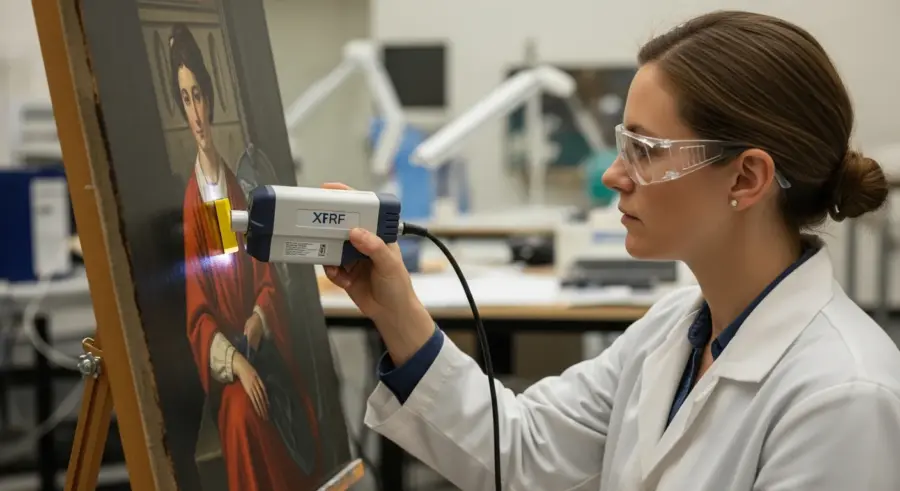
Portable X-ray fluorescence is a non-destructive analytical technique used to determine the elemental composition of a material. It works by exposing a sample to X-rays, which causes the atoms in the sample to become excited and emit secondary X-rays, also known as fluorescent X-rays.
These fluorescent X-rays are unique to each element, acting like a fingerprint that allows for identification. The process is similar to how a black light reveals hidden markings by causing certain substances to fluoresce.
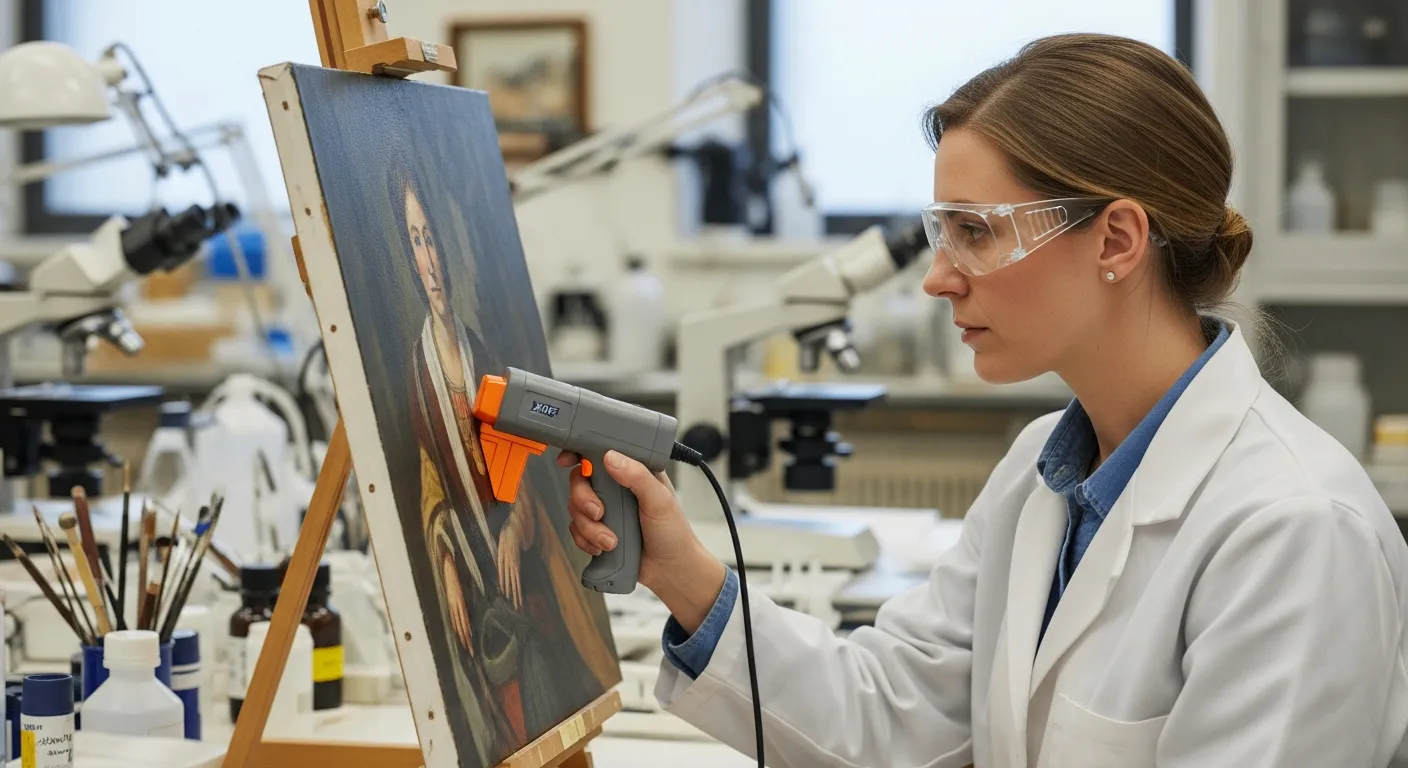
Each element emits X-rays at characteristic energy levels, allowing the instrument to identify and quantify the elements present in the sample. The intensity of the emitted X-rays is proportional to the concentration of the element, providing quantitative data about the sample’s composition.
This quantitative data is crucial for understanding the precise makeup of the pigments used in an artwork. It allows conservators to differentiate between similar pigments that might appear the same to the naked eye.
The portability of pXRF instruments makes them particularly valuable for on-site analysis, eliminating the need to transport fragile or valuable objects to a laboratory. This capability is especially beneficial in art conservation, where moving artworks can pose significant risks.
The reduced risk of damage during transport is a major advantage, especially for artworks with a history of instability. On-site analysis also allows for real-time adjustments to the research plan based on initial findings.
Unlike traditional laboratory-based XRF instruments, pXRF devices are designed to be compact and easy to use in a variety of environments. This makes them ideal for analyzing large immovable objects like murals and architectural surfaces.
Their compact design also allows for analysis in confined spaces, such as inside tombs or behind altarpieces. This adaptability makes pXRF a versatile tool for a wide range of conservation challenges.
Preparing for On-Site pXRF Analysis
Before conducting pXRF analysis on an artwork, it is important to carefully plan and prepare the site to ensure accurate and reliable results. This preparation involves several key steps, including assessing the artwork’s condition, selecting appropriate measurement locations, and calibrating the instrument.
Proper preparation is paramount to minimizing errors and maximizing the value of the data collected. A well-thought-out plan will save time and resources in the long run.
First, a thorough visual examination of the artwork is necessary to identify areas of interest, such as different colored regions or areas of damage. This assessment will help determine the most relevant locations for pXRF measurements.
This visual examination should be documented with photographs and detailed notes. These records will serve as a reference point for interpreting the pXRF data and understanding the context of the measurements.
Next, the pXRF instrument should be calibrated using certified reference materials to ensure the accuracy of the measurements. Calibration involves measuring known standards and adjusting the instrument’s settings to match the expected results.
Regular calibration is essential for maintaining the reliability of the instrument over time. It accounts for any drift or changes in the instrument’s performance due to environmental factors or wear and tear.
It is also essential to consider the instrument’s settings, such as the analysis time and the voltage and current of the X-ray tube. These parameters can affect the sensitivity and resolution of the analysis, so they should be optimized for the specific materials being studied.
Choosing the correct settings requires a good understanding of the instrument’s capabilities and the expected composition of the sample. Consulting with an experienced pXRF operator can be beneficial in this process.
Finally, safety precautions must be taken to protect both the operator and the artwork from the potential hazards of X-ray radiation. This includes wearing appropriate personal protective equipment, such as lead aprons and gloves, and ensuring that the instrument is used in a well-ventilated area.
Safety is paramount, and all operators should be properly trained in radiation safety protocols. Adhering to these protocols minimizes the risk of exposure and ensures the well-being of everyone involved.
Identifying Elements in Pigments Using pXRF
Portable XRF pigment analysis excels at identifying the elements present in a sample, which can then be used to infer the pigments used in an artwork. Each pigment is composed of specific elements that serve as a fingerprint for its identification.
This elemental fingerprint is unique to each pigment and allows for differentiation even between pigments with similar colors. This is especially useful for identifying pigments that have been altered by aging or environmental factors.
For example, the presence of mercury strongly suggests the use of vermilion, a red pigment, while the presence of copper may indicate the use of azurite (blue) or malachite (green). The identification process involves comparing the detected elements and their relative concentrations to known pigment compositions.
The relative concentrations of the elements are just as important as their presence. This information helps to distinguish between different grades or variations of the same pigment.
| Pigment | Primary Elements | Color |
|---|---|---|
| Vermilion | Mercury (Hg), Sulfur (S) | Red |
| Azurite | Copper (Cu), Carbon (C), Oxygen (O) | Blue |
| Malachite | Copper (Cu), Carbon (C), Oxygen (O), Hydrogen (H) | Green |
| Lead White | Lead (Pb), Carbon (C), Oxygen (O) | White |
| Ultramarine | Sodium (Na), Aluminum (Al), Silicon (Si), Sulfur (S) | Blue |
| Ochre | Iron (Fe), Oxygen (O) | Yellow, Red, Brown |
This table provides a quick reference for identifying common pigments based on their elemental composition. However, it is important to remember that this is a simplified representation and that the actual composition of a pigment can vary depending on its source and preparation.
Advantages of Portable XRF in Conservation
Portable XRF pigment analysis offers several distinct advantages in the field of art conservation. Its non-destructive nature ensures that artworks are not damaged during analysis, preserving their integrity for future generations.
This non-destructive aspect is crucial, as it allows for the analysis of valuable and irreplaceable artworks without causing any harm. It respects the artistic and historical significance of the object being studied.
The ability to perform on-site analysis eliminates the risks associated with transporting fragile or valuable objects to a laboratory. This is particularly important for large immovable objects, such as murals or architectural surfaces, where traditional sampling methods are impractical.
On-site analysis also allows for a more holistic understanding of the artwork within its original context. This can provide valuable insights that might be missed if the artwork is studied in isolation.
Portable XRF provides rapid results, allowing conservators to make informed decisions about treatment and preservation strategies in a timely manner. The quick turnaround time enables iterative analysis, where initial results can guide further investigation and analysis.
This rapid feedback loop allows for a more dynamic and responsive approach to conservation. It enables conservators to adapt their strategies based on the latest findings.
The technique requires minimal sample preparation, reducing the risk of contamination or alteration of the artwork. This simplifies the analytical process and ensures that the results are representative of the original materials.
The minimal sample preparation also reduces the time and cost associated with the analysis. This makes pXRF a more efficient and accessible tool for conservation professionals.
Furthermore, pXRF instruments are relatively easy to operate, making them accessible to a wide range of users with varying levels of technical expertise. This ease of use promotes collaboration between conservators, scientists, and art historians.
The user-friendly nature of pXRF instruments empowers a wider range of professionals to contribute to the analysis and interpretation of the data. This fosters a more collaborative and interdisciplinary approach to art conservation.
Limitations and Considerations for pXRF Use
While portable XRF pigment analysis is a powerful tool, it is important to be aware of its limitations and to consider these factors when interpreting the results. One key limitation is that pXRF is primarily a surface analysis technique, meaning that it only provides information about the outermost layers of the artwork.
This surface sensitivity means that pXRF may not be able to detect pigments that are buried beneath layers of varnish or overpaint. In such cases, other analytical techniques may be necessary to obtain a more complete understanding of the artwork’s composition.
If the surface is covered by varnish, dirt, or other coatings, these materials can interfere with the analysis and obscure the underlying pigments. In such cases, careful surface cleaning may be necessary before analysis, but this must be done with caution to avoid damaging the artwork.
The cleaning process itself can potentially alter the composition of the surface, so it is important to use gentle and non-invasive cleaning methods. The decision to clean the surface should be made in consultation with a qualified conservator.
- Matrix effects can influence results
- Light elements are difficult to detect
- Overlapping peaks can complicate analysis
- Quantitative analysis requires careful calibration
- Data interpretation needs expertise
These limitations highlight the importance of careful data interpretation and the need to consider other factors, such as the historical context and the artist’s known palette, when drawing conclusions about the pigments used in an artwork. A thorough understanding of these limitations is crucial for avoiding misinterpretations and ensuring the accuracy of the analysis.
Case Studies: Applying pXRF in the Field
Portable XRF pigment analysis has been successfully applied in numerous conservation projects around the world, providing valuable insights into the materials and techniques used by artists throughout history. One notable example is the analysis of medieval illuminated manuscripts.
The use of pXRF in the study of illuminated manuscripts has helped to unravel the secrets of these intricate artworks. It has provided valuable information about the pigments used, their sources, and the techniques employed by the illuminators.
Researchers used pXRF to identify the pigments used in the illuminations, revealing the presence of expensive materials like ultramarine (derived from lapis lazuli) and vermilion (mercury sulfide). This information helped to understand the economic and cultural context in which the manuscripts were produced.
The identification of these expensive pigments provides evidence of the patronage and resources available to the artists who created these manuscripts. It also sheds light on the trade routes and cultural exchanges that were prevalent during the medieval period.
Another case study involves the analysis of wall paintings in ancient Egyptian tombs. Portable XRF was used to identify the pigments used in the paintings, providing clues about the sources of the materials and the trade networks that existed at the time.
The analysis of Egyptian tomb paintings has revealed a wealth of information about the artistic practices and beliefs of the ancient Egyptians. It has also provided insights into the materials and technologies that were available to them.
The analysis revealed the use of pigments such as Egyptian blue (a synthetic calcium copper silicate) and yellow ochre (iron oxide), which were commonly available in the region. By comparing the pigment compositions across different tombs, researchers were able to gain insights into the chronology and artistic practices of the period.
The consistency of pigment use across different tombs suggests a standardized artistic tradition and a well-established system for sourcing and distributing materials. Variations in pigment composition may indicate changes in artistic styles or the availability of certain materials over time.
In the conservation of outdoor sculptures, pXRF has been used to assess the extent of corrosion and identify the materials used in previous restoration campaigns. This information is crucial for developing effective conservation strategies that address the specific deterioration mechanisms affecting the sculpture.
Understanding the corrosion processes and the materials used in previous restorations is essential for developing a long-term conservation plan. It allows conservators to make informed decisions about the best way to protect and preserve the sculpture for future generations.
Future Trends in Portable XRF Pigment Analysis
The field of portable XRF pigment analysis is continuously evolving, with ongoing advancements in instrumentation, data processing, and analytical techniques. One promising trend is the development of more compact and user-friendly pXRF instruments, making the technology even more accessible to conservators and researchers.
These smaller, more portable instruments will allow for analysis in even more challenging environments. This will expand the range of artworks that can be studied using pXRF.
These new instruments often incorporate improved X-ray detectors and signal processing algorithms, enhancing their sensitivity and resolution. Another trend is the integration of pXRF with other analytical techniques, such as Raman spectroscopy and multispectral imaging, to provide a more comprehensive understanding of the artwork.
The combination of pXRF with other techniques will provide a more holistic and nuanced understanding of the artwork. This will lead to more informed conservation decisions and a deeper appreciation of the artistic process.
By combining the elemental information provided by pXRF with the molecular and structural information obtained from other techniques, researchers can gain a more complete picture of the materials and techniques used in the creation of the artwork. This multi-analytical approach is particularly valuable for complex or degraded artworks, where a single technique may not provide sufficient information.
This integrated approach allows for a more comprehensive and accurate assessment of the artwork’s condition. It also helps to identify potential conservation challenges and develop effective treatment strategies.
Furthermore, the development of advanced data processing and chemometric methods is improving the accuracy and reliability of pXRF analysis. These methods can help to correct for matrix effects, spectral interferences, and other factors that can affect the results.
These advanced data processing methods will help to minimize errors and improve the overall quality of the analysis. This will lead to more reliable and trustworthy results.
The use of machine learning algorithms is also becoming more prevalent in pXRF analysis, allowing for the automated identification of pigments and the prediction of their properties based on their elemental composition.
Machine learning algorithms can help to automate the analysis process and identify patterns that might be missed by human analysts. This will speed up the analysis and improve the accuracy of the results.
Ethical Considerations in pXRF Analysis
As with any analytical technique used in art conservation, it is important to consider the ethical implications of pXRF analysis. While pXRF is considered a non-destructive technique, repeated or prolonged exposure to X-ray radiation can potentially cause subtle changes to the artwork.
Even though pXRF is considered non-destructive, it is crucial to minimize any potential risks to the artwork. This requires careful planning and execution of the analysis.
Therefore, it is essential to minimize the exposure time and intensity of the X-ray beam and to carefully select the measurement locations to avoid areas of particular sensitivity. It is also important to document the analytical procedures and results thoroughly, providing a record of the interventions performed on the artwork.
Detailed documentation is essential for transparency and accountability. It allows future researchers to understand the analytical procedures that were used and to interpret the results in context.
Transparency and collaboration are also key ethical considerations in pXRF analysis. Conservators should work closely with curators, art historians, and other stakeholders to ensure that the analysis is conducted in a manner that respects the cultural and historical significance of the artwork.
Collaboration ensures that the analysis is conducted in a way that is sensitive to the needs and concerns of all stakeholders. It also promotes a more holistic and informed approach to conservation.
The results of the analysis should be shared openly and interpreted in a way that is accessible to a wide audience. Furthermore, it is important to acknowledge the limitations of the technique and to avoid overstating the certainty of the conclusions.
Open communication and honest interpretation of the results are essential for building trust and fostering a shared understanding of the artwork. It is important to avoid sensationalizing the findings or making claims that are not supported by the data.
By adhering to these ethical principles, conservators can ensure that pXRF analysis is used responsibly and effectively to advance the understanding and preservation of our cultural heritage.
Ethical considerations should always be at the forefront of any conservation project. By prioritizing the well-being of the artwork and adhering to ethical principles, we can ensure that our efforts contribute to its long-term preservation and appreciation.
Conclusion
Portable XRF pigment analysis has revolutionized the field of art conservation, providing a non-destructive and efficient means of identifying the elemental composition of pigments. Its ability to be used on-site, without the need to transport artworks, makes it an invaluable tool for conservators, art historians, and scientists alike.
pXRF has significantly enhanced our ability to understand and preserve our cultural heritage. It offers a powerful and versatile tool for studying the materials and techniques used by artists throughout history.
By understanding the advantages and limitations of pXRF, and by adhering to ethical principles, we can continue to harness the power of this technology to unlock the secrets of our cultural heritage and ensure its preservation for future generations.
Continued research and development in pXRF technology will further enhance its capabilities and expand its applications in art conservation. By embracing innovation and collaboration, we can ensure that this valuable tool continues to contribute to the preservation of our artistic legacy for generations to come.