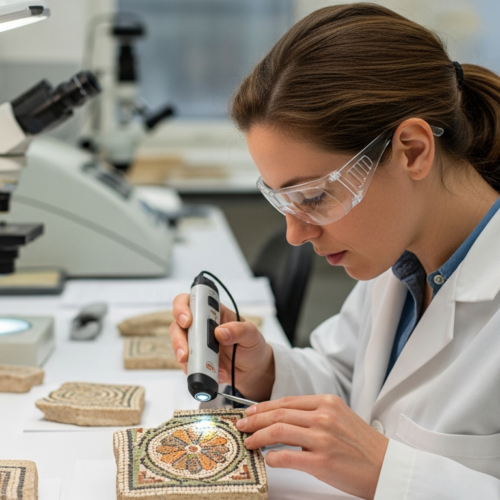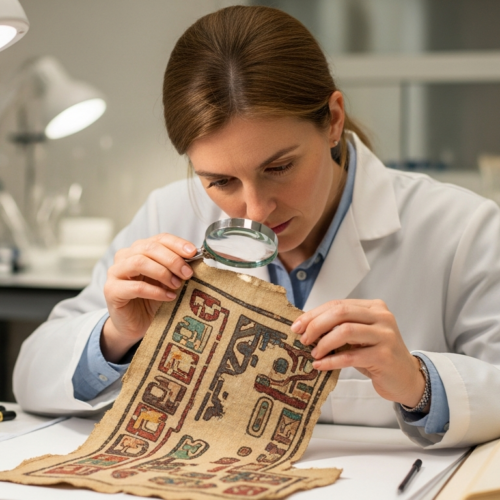


The allure of Renaissance frescoes lies not only in their aesthetic grandeur but also in the stories they whisper from centuries past. These murals, adorning the walls and ceilings of churches, palaces, and villas, offer a glimpse into the artistic techniques and cultural values of the era. Analyzing Pigments in Renaissance Frescoes is essential to understand the creative process.
However, time and environmental factors have taken their toll, leading to degradation and loss of original colors. Unlocking the secrets held within these pigments through chemical analysis is key to preserving these invaluable works of art for future generations.
This article explores the fascinating intersection of art history, chemistry, and conservation science, focusing on the analysis of pigments found in Renaissance frescoes. It details a specific project aimed at identifying and understanding the materials used by Renaissance artists, and the implications of this knowledge for conservation and restoration strategies.
Background of Renaissance Frescoes and Pigment Use
The Renaissance, a period of remarkable artistic and intellectual flourishing in Europe, witnessed the creation of some of the most iconic frescoes in history. Fresco painting, a technique involving the application of pigments to wet lime plaster, was a favored medium for decorating large surfaces.
This method allowed artists to create durable and visually striking murals that became integral parts of the architectural spaces they adorned. The choice of pigments was a critical aspect of the fresco technique, influencing not only the aesthetic appearance of the artwork but also its long-term stability.
Renaissance artists had access to a range of pigments, both natural and synthetic, each with its own unique properties. Natural pigments were derived from minerals, plants, and animal sources, while synthetic pigments were created through chemical processes.
Commonly used pigments included ochre (yellow and red), umber (brown), and sienna (earthy tones), all derived from iron oxides. Other popular choices were ultramarine (blue, from lapis lazuli), azurite (another blue pigment), malachite (green), and vermilion (red, from mercury sulfide).
The fresco technique, known as “buon fresco,” demanded speed and precision from the artist. Pigments had to be applied while the plaster was still wet, allowing the colors to bind chemically with the lime as it dried.
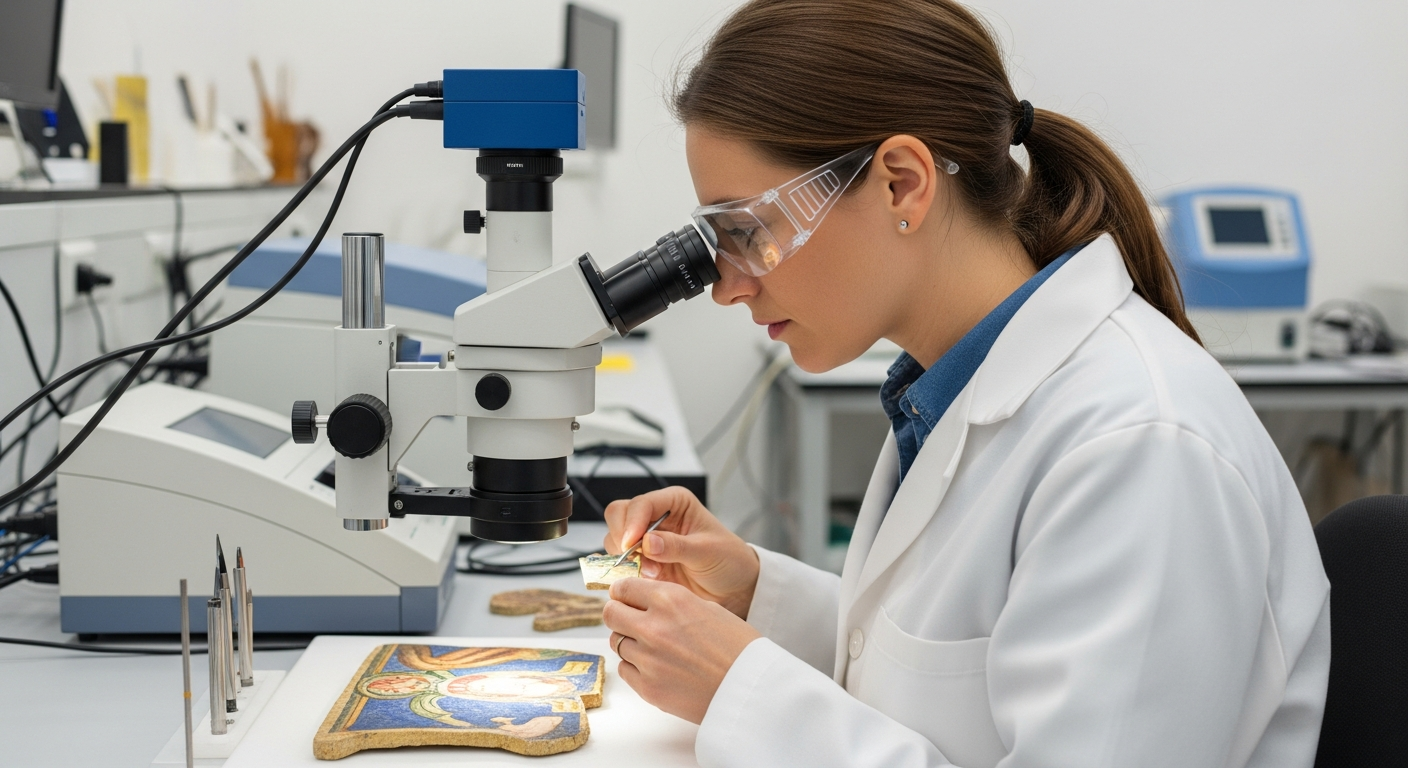
This process created a highly durable and long-lasting image, but it also limited the artist’s ability to make changes once the plaster had set. The selection of pigments was therefore a crucial decision, requiring a thorough understanding of their properties and behavior within the fresco environment.
The availability of pigments varied depending on geographical location and trade routes. Artists often relied on local sources for common pigments like ochre and umber, but more exotic colors like ultramarine had to be imported from distant lands.
The cost of these pigments could significantly impact the overall budget of a fresco project, influencing the artist’s choices and the final appearance of the artwork. The patronage system played a large role in pigment selection.
The Specific Fresco Project: Location and History
The fresco project at the heart of this article focuses on a series of murals located in a small, relatively unknown chapel in the Tuscan countryside. This chapel, dating back to the 15th century, houses a collection of frescoes depicting scenes from the life of Christ and various saints.
While not as famous as the frescoes in the Sistine Chapel or the Scrovegni Chapel, these murals offer a valuable insight into the artistic practices of the time. The chapel’s remote location has helped to preserve the frescoes to some extent, but they have still suffered from the effects of humidity, temperature fluctuations, and past restoration attempts.
The project was initiated by a team of art historians and conservation scientists who recognized the importance of studying these frescoes before further deterioration occurred. Fresco Pigment Analysis was deemed essential to understand the original materials and techniques used by the artist.
The primary goals of the project were to identify the pigments used in the frescoes, to assess their condition, and to develop appropriate conservation strategies. This involved a combination of non-destructive techniques for initial pigment identification and micro-sampling for more advanced analytical methods.
The chapel itself has a rich and complex history, having served as a place of worship for local farmers and villagers for centuries. Its construction was likely funded by a wealthy family in the area, who commissioned the frescoes to adorn its walls.
Over the years, the chapel has undergone several renovations and alterations, including the addition of new windows and the repainting of certain areas. These interventions have had a significant impact on the condition of the frescoes, making it difficult to determine their original appearance.
The team’s research also involved archival investigations to uncover historical documents related to the chapel and its frescoes. These documents provided valuable information about the artist who created the murals, the patrons who commissioned them, and the materials that were used in their creation.
This historical context is crucial for understanding the significance of the frescoes and for developing conservation strategies that are sensitive to their cultural and historical value. The project aims to bring awareness to this hidden gem of Renaissance art.
Ethical Considerations in Fresco Pigment Analysis
Before any analysis could begin, the team addressed several ethical considerations related to the study of cultural heritage. Minimizing damage to the artwork was the top priority, guiding the selection of analytical techniques and sampling strategies.
All work was conducted in accordance with international conservation standards and with the approval of local heritage authorities. The team also considered the cultural significance of the frescoes to the local community, ensuring that their work respected the historical and spiritual value of the site.
Transparency and collaboration were key principles. The team worked closely with art historians and local stakeholders to ensure that the project’s goals aligned with the broader aims of preserving the chapel’s cultural heritage.
Detailed documentation of all analytical procedures and findings was crucial, providing a record for future research and conservation efforts. This commitment to ethical practices ensured that the project contributed to the long-term preservation of the frescoes while respecting their cultural significance.
The ethical framework also included considerations for intellectual property rights and data sharing. The team committed to making their research findings publicly available, while respecting the rights of the artist and the cultural heritage of the community.
This involved publishing their results in peer-reviewed journals and presenting their work at international conferences. They also created a website to disseminate information about the project to a wider audience.
Furthermore, the team recognized the importance of engaging with the local community throughout the project. They organized public lectures and workshops to share their findings and to solicit feedback from local residents.
This collaborative approach helped to ensure that the project was conducted in a way that was both scientifically rigorous and culturally sensitive. The team strived to foster a sense of shared stewardship of the frescoes.
Non-Destructive Techniques Used for Initial Pigment Identification
The initial phase of the project focused on non-destructive techniques to gather as much information as possible without causing any damage to the frescoes. These methods included visual examination, photography, and spectroscopic techniques such as X-ray fluorescence (XRF) and reflectance spectroscopy.
Visual examination and photography allowed the team to document the overall condition of the frescoes and to identify areas of interest for further analysis. XRF spectroscopy is a surface-sensitive technique that can identify the elemental composition of the pigments without requiring any sampling.
| Technique | Principle | Information Obtained |
|---|---|---|
| Visual Examination | Observation with the naked eye and optical aids | Overall condition, surface features, color variations |
| Photography (Visible, UV, IR) | Recording images under different light conditions | Subsurface features, retouching, previous restorations |
| X-ray Fluorescence (XRF) | Excitation of atoms with X-rays and detection of emitted radiation | Elemental composition of pigments |
| Reflectance Spectroscopy | Measurement of light reflected by the surface | Color characteristics, pigment identification |
Reflectance spectroscopy measures the light reflected by the surface of the frescoes, providing information about their color characteristics and pigment identification. By comparing the spectra obtained from the frescoes with those of known pigments, the team could make preliminary identifications of the materials used by the artist.
Infrared reflectography was also employed to reveal underdrawings and preparatory sketches beneath the painted surface. This technique uses infrared light to penetrate the paint layers and reveal details that are not visible to the naked eye.
Ultraviolet fluorescence photography was used to detect the presence of retouching or overpainting that may have been applied in previous restorations. This technique relies on the fact that different materials fluoresce differently under ultraviolet light.
These non-destructive techniques provided a wealth of information about the frescoes without requiring any physical intervention. They allowed the team to create a detailed map of the pigments used and to identify areas that required further investigation.
The data collected from these techniques was carefully analyzed and compared with historical sources to gain a better understanding of the artist’s working methods and the materials available to them. This comprehensive approach ensured the most accurate assessment possible.
Micro-Sampling and Advanced Analytical Methods (SEM-EDX, XRD)
While non-destructive techniques provided valuable information, they were not always sufficient to definitively identify the pigments used in the frescoes. In some cases, micro-sampling was necessary to obtain small samples for more advanced analytical methods.
Micro-sampling involves the removal of tiny fragments of pigment, typically less than a millimeter in size, from discreet areas of the frescoes. These samples were then analyzed using techniques such as scanning electron microscopy with energy-dispersive X-ray spectroscopy (SEM-EDX) and X-ray diffraction (XRD).
SEM-EDX provides high-resolution images of the pigment particles and identifies their elemental composition, allowing for a more precise determination of the materials used. XRD is a technique that identifies the crystalline structure of the pigments, providing further confirmation of their identity.
The combination of SEM-EDX and XRD allowed the team to create a comprehensive profile of the pigments used in the frescoes, including their chemical composition, morphology, and crystalline structure. This information was crucial for understanding the artist’s palette and the materials available to them during the Renaissance.
The micro-sampling process was carried out with extreme care to minimize any potential damage to the frescoes. Samples were taken from areas that were already damaged or where previous restorations had been carried out.
The location of each sample was carefully documented, and the samples were stored in airtight containers to prevent contamination. The team used specialized tools and techniques to ensure that the samples were representative of the original pigments.
SEM-EDX analysis involved bombarding the sample with an electron beam and analyzing the emitted X-rays to determine the elemental composition. This technique can identify a wide range of elements, including those that are characteristic of specific pigments.
XRD analysis involved bombarding the sample with X-rays and measuring the diffraction pattern to determine the crystalline structure. This technique is particularly useful for identifying pigments that have a well-defined crystalline structure, such as ultramarine and vermilion.
Pigment Identification Results and Interpretation
The analysis of pigments in Renaissance frescoes revealed a palette of both traditional and less common materials. The most frequently identified pigments included ochre, umber, and sienna, which were used to create a range of earthy tones.
Ultramarine, derived from lapis lazuli, was found in areas depicting the sky and the Virgin Mary’s robes, indicating its value and importance. Azurite, a less expensive blue pigment, was also identified in some areas, suggesting that the artist may have used it as a substitute for ultramarine in less prominent areas.
- Ultramarine: Symbol of wealth and status
- Vermilion: Used sparingly due to cost
- Lead white: Common base for mixing colors
- Malachite: Provided vibrant green hues
- Charcoal black: Used for outlining and shading
Vermilion, a bright red pigment derived from mercury sulfide, was used sparingly, likely due to its cost. Lead white, a common pigment in Renaissance art, was found to be used as a base for mixing other colors and creating lighter shades.
The identification of these pigments provided valuable insights into the artist’s techniques and the materials available to them. It also shed light on the trade routes and economic factors that influenced the availability and cost of pigments during the Renaissance.
The presence of certain pigments also provided clues about the artist’s training and artistic influences. For example, the use of ultramarine, a pigment that was highly prized and expensive, suggested that the artist was either wealthy or had access to a wealthy patron.
The identification of less common pigments, such as orpiment (a yellow pigment derived from arsenic sulfide), suggested that the artist was experimenting with new and innovative materials. The specific blend of pigments often revealed the artist’s unique style.
The analysis also revealed information about the degradation processes that had affected the frescoes over time. For example, the presence of lead white in some areas was associated with the formation of lead carbonates, which can cause the paint to flake and crack.
This information was crucial for developing conservation strategies that would address these specific degradation processes and prevent further damage to the frescoes. Understanding the pigments is key to proper preservation.
The Use of Organic Pigments and Dyes
In addition to mineral-based pigments, Renaissance artists also employed organic dyes and pigments derived from plants and animals. These organic materials often provided brighter and more vibrant colors than their mineral counterparts.
However, organic pigments are also more susceptible to fading and degradation over time, making their identification a challenging task. Chemical analysis revealed traces of madder lake, a red dye derived from the roots of the madder plant, in some of the frescoes.
Indigo, a blue dye extracted from the indigo plant, was also detected, although its presence was less common. The use of these organic dyes highlights the artist’s desire to achieve a wide range of colors and effects, even if it meant using materials that were less durable.
Further research is needed to fully understand the extent to which organic pigments were used in the frescoes and the impact of their degradation on the overall appearance of the artwork. Identifying these fugitive colors is essential for accurate reconstruction.
The identification of organic pigments required specialized analytical techniques, such as high-performance liquid chromatography (HPLC) and gas chromatography-mass spectrometry (GC-MS). These techniques can separate and identify the complex organic molecules that make up these pigments.
The analysis revealed that the artist had used a variety of organic dyes, including weld (a yellow dye derived from the weld plant) and kermes (a red dye derived from insects). These dyes were often used in combination with mineral pigments to create a wider range of colors and effects.
The presence of organic pigments also raised questions about the artist’s knowledge of the properties of these materials. Some organic pigments are known to be light-sensitive and can fade quickly when exposed to sunlight.
The artist may have been aware of these limitations and taken steps to protect the pigments from light, such as applying a protective varnish or using them in areas that were not directly exposed to sunlight. Understanding the use of organic materials is vital for conservation.
Implications for Conservation and Restoration Strategies
The identification of the pigments used in the frescoes has significant implications for the development of appropriate conservation and restoration strategies. Understanding the chemical composition and properties of the pigments is crucial for selecting cleaning methods and consolidation treatments that will not cause further damage.
For example, some pigments are sensitive to acidic or alkaline cleaning solutions, while others may be susceptible to light-induced degradation. Knowing which pigments are present allows conservators to tailor their treatments to the specific needs of the artwork.
In addition, the information gained from pigment analysis can be used to inform decisions about the use of retouching materials. When retouching losses or damaged areas, it is important to use pigments that are compatible with the original materials and that will not undergo significant color changes over time.
By carefully selecting retouching pigments based on the results of chemical analysis, conservators can ensure that their interventions are both aesthetically pleasing and chemically stable. This approach helps to preserve the authenticity and integrity of the artwork for future generations.
The conservation strategies also need to take into account the environmental conditions in the chapel. High humidity levels can promote the growth of mold and fungi, which can damage the frescoes.
Fluctuations in temperature can cause the plaster to expand and contract, leading to cracking and delamination. Conservators may recommend implementing environmental controls to stabilize the temperature and humidity levels in the chapel.
The restoration process may also involve the removal of previous restorations that were carried out using inappropriate materials or techniques. These interventions can often cause more harm than good and may need to be reversed.
The goal of the restoration is to bring the frescoes back to their original appearance, while preserving their historical and artistic integrity. This requires a careful and considered approach, based on a thorough understanding of the materials and techniques used by the artist. Conservation efforts must be carefully planned and executed.
Challenges in Conserving Frescoes with Specific Pigments
Certain pigments present unique challenges in the conservation process due to their inherent instability or sensitivity to environmental factors. For instance, azurite, a copper-based blue pigment, is known to be susceptible to alteration under acidic conditions, potentially leading to discoloration.
Similarly, vermilion, the mercury-based red pigment, can darken over time due to exposure to light and air. The presence of these problematic pigments requires conservators to implement specialized conservation strategies.
These strategies may include the use of protective coatings to shield the pigments from harmful environmental influences or the implementation of strict environmental controls to minimize fluctuations in temperature and humidity. Regular monitoring of the frescoes is also essential.
Monitoring helps to detect any signs of pigment degradation early on, allowing for timely intervention. Addressing these challenges ensures the long-term preservation of these delicate artworks.
Another challenge lies in the identification and treatment of biological growth, such as mold and lichen, which can thrive in humid environments and damage the painted surface. Biocides must be carefully selected.
The application of biocides requires careful consideration to avoid any adverse reactions with the pigments or the plaster substrate. The long-term effects of these treatments must also be monitored.
The presence of previous restoration campaigns can also complicate the conservation process. Incompatible materials or techniques used in the past may have caused further damage or altered the original appearance of the frescoes.
Removing these interventions without causing further harm requires skill and expertise. Conservators must carefully assess the risks and benefits of each treatment option. The preservation of frescoes is a delicate balancing act.
Conclusion
The analysis of pigments in Renaissance frescoes is a complex and multidisciplinary endeavor that combines art history, chemistry, and conservation science. By identifying the materials used by Renaissance artists, we can gain a deeper understanding of their techniques, their artistic choices, and the cultural context in which they worked.
This knowledge is essential for developing effective conservation strategies that will ensure the long-term preservation of these invaluable works of art. Analyzing Pigments in Renaissance Frescoes ensures accurate restoration.
The project described in this article demonstrates the power of scientific analysis to unlock the secrets held within historical pigments. It highlights the importance of collaboration between art historians, conservation scientists, and other experts in the field.
By working together, we can continue to unravel the mysteries of the past and to safeguard our cultural heritage for future generations. Further research into Renaissance Art Materials will help.
The ongoing research and conservation efforts focused on Renaissance frescoes serve as a testament to the enduring power of art to inspire and connect us across time. The insights gained from pigment analysis not only aid in preservation but also enrich our appreciation of the artistic genius of the Renaissance.
As technology advances, new analytical techniques will undoubtedly emerge, providing even more detailed information about the materials and methods used by Renaissance artists. This continuous pursuit of knowledge will ensure that these masterpieces continue to captivate and educate future generations.
The preservation of cultural heritage is a shared responsibility, requiring the dedication and collaboration of individuals, institutions, and communities around the world. By investing in research, conservation, and education, we can safeguard these treasures for posterity.
The legacy of the Renaissance, embodied in its magnificent frescoes, serves as a reminder of the power of human creativity and the importance of preserving our shared cultural heritage. Continued efforts are needed to protect these fragile artworks.