

The allure of 18th-century oil paintings lies not only in their artistic merit but also in the rich tapestry of materials and techniques employed by the masters. However, the passage of time can take its toll, leading to pigment degradation in 18th century oil paintings and posing significant art conservation challenges.
Understanding the causes and mechanisms behind this deterioration is essential for preserving these invaluable cultural artifacts for future generations. This article will explore the complexities of pigment degradation in 18th century oil paintings, examining the materials, techniques, environmental factors, and conservation strategies involved.
By combining visual examination with advanced chemical analysis, we can gain insights into the specific degradation products formed and develop effective methods for their treatment and prevention. The goal is to ensure that these masterpieces retain their original beauty and historical significance, despite the inevitable effects of aging.
Overview of 18th Century Oil Painting Techniques and Materials
The 18th century was a period of artistic innovation and refinement, with oil painting emerging as the dominant medium. Artists experimented with a wide range of pigments, binders, and supports to achieve their desired effects, but this diversity also contributed to the complexity of oil painting degradation.
Common pigments included lead white, vermilion, ochres, umbers, and azurite, each with its own chemical composition and susceptibility to degradation. Binders, such as linseed oil and walnut oil, played a crucial role in binding the pigments together, but they too could undergo changes over time, leading to cracking and yellowing.
The preparation of the support, typically canvas or wood panel, also influenced the longevity of the painting. Proper sizing and priming were essential to prevent the absorption of oil into the support, which could cause embrittlement and cracking of the paint layers.
The techniques employed by 18th-century artists, such as glazing, impasto, and scumbling, further contributed to the unique characteristics of their works. Understanding these techniques is crucial for identifying areas of vulnerability and tailoring appropriate conservation strategies.
During the 18th century, the rise of the Rococo and Neoclassical styles influenced the choice of colors and the way they were applied. Rococo paintings often featured pastel hues and delicate brushwork, while Neoclassical works favored bolder colors and more precise rendering.
The use of specific pigments was also dictated by their availability and cost. Artists often relied on locally sourced materials or imported pigments from distant lands. This availability affected the palette of colors used in different regions.
The layering of paint, known as stratigraphy, was a common technique to achieve depth and luminosity. Artists would apply thin layers of translucent paint, called glazes, over opaque underlayers to create subtle color variations and optical effects.
The choice of support also played a crucial role in the overall appearance and longevity of the painting. Canvas was a popular choice for its flexibility and portability, while wood panels provided a more rigid and stable surface.
Case Study: A Specific 18th Century Oil Painting
To illustrate the principles of pigment degradation in 18th century oil paintings, let’s consider a hypothetical case study: “Portrait of a Gentleman” by an unknown artist, circa 1760. This painting, executed on a linen canvas, depicts a distinguished gentleman in a dark coat against a neutral background.
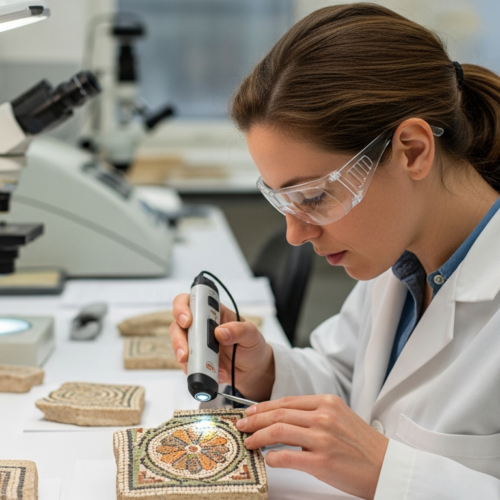
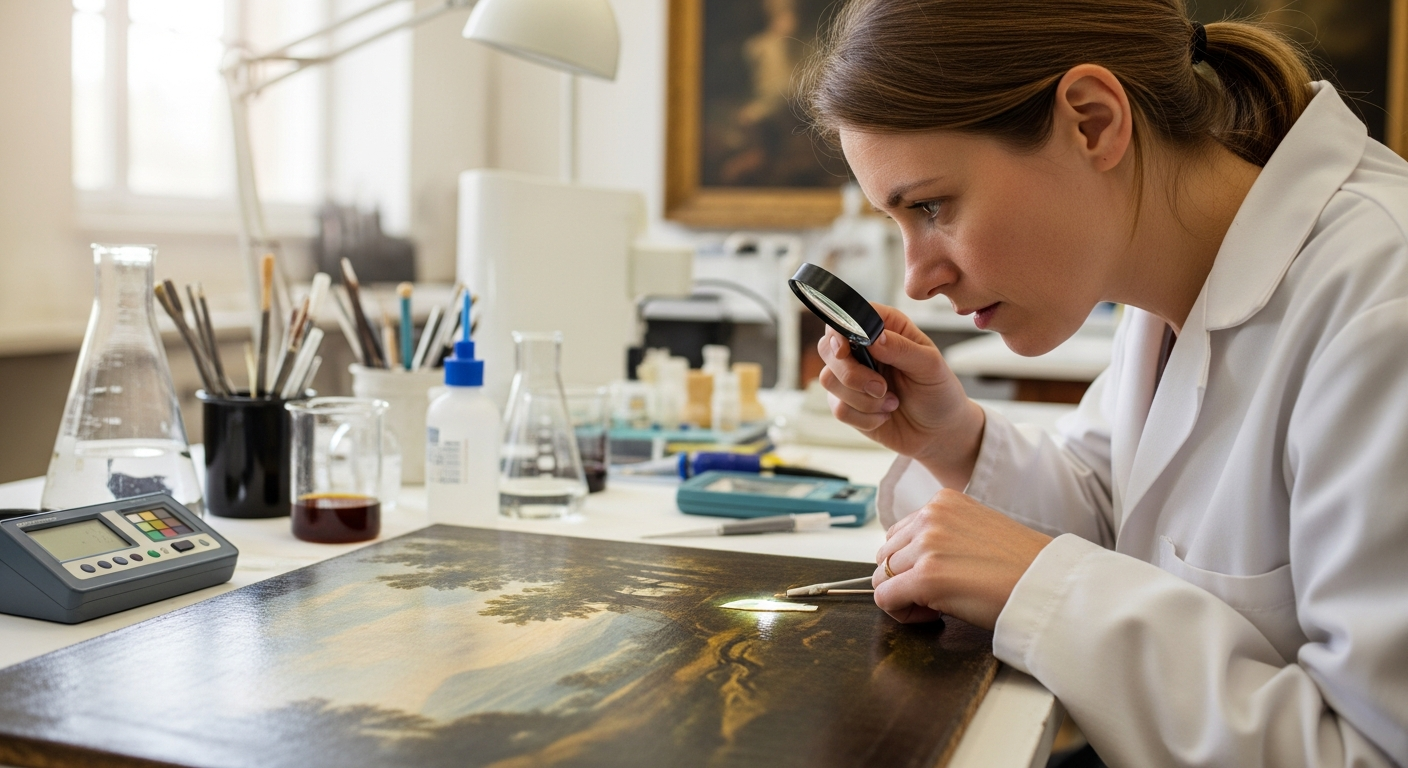
Visual examination reveals several signs of degradation, including yellowing of the varnish, cracking of the paint surface, and fading of certain pigments. Close inspection under magnification reveals the presence of microscopic lead soaps on the surface, indicating a chemical reaction between the lead white pigment and the fatty acids in the oil binder.
Further analysis using X-ray fluorescence (XRF) spectroscopy confirms the presence of lead, mercury (in vermilion), iron (in ochres), and copper (in azurite) in the paint layers. Examination of cross-sections taken from the painting reveals the stratigraphy of the paint layers, showing the sequence in which the pigments were applied.
The presence of a discolored varnish layer suggests that it has undergone oxidation and cross-linking, leading to its yellowed appearance. The fading of the blue pigment in the gentleman’s coat may be attributed to the degradation of azurite, which is known to be susceptible to light-induced decomposition.
The canvas support shows signs of age, with some areas of slackness and minor tears along the edges. The ground layer, which prepares the canvas for painting, appears to be intact but slightly discolored.
The gentleman’s dark coat, originally painted with a mixture of black and brown pigments, now exhibits a slightly brownish hue, possibly due to the fading of the black pigment. The flesh tones in the portrait also show some signs of discoloration, with a slight yellowing and loss of luminosity.
Microscopic examination reveals the presence of tiny cracks in the paint surface, known as craquelure, which is a common sign of aging in oil paintings. These cracks can be caused by changes in temperature and humidity, as well as by the natural aging of the paint film.
The neutral background, originally a light gray color, has darkened over time, possibly due to the accumulation of dirt and grime on the surface. The overall condition of the painting suggests that it has been exposed to fluctuating environmental conditions and may have undergone previous conservation treatments.
Identifying Degradation Products: Visual Examination and Chemical Analysis
The identification of degradation products is a critical step in understanding the mechanisms of pigment degradation in 18th century oil paintings. Visual examination provides valuable clues, such as changes in color, cracking patterns, and surface deposits.
However, chemical analysis is essential for confirming the presence of specific degradation products and determining their distribution within the paint layers. Several analytical techniques are commonly employed, each with its own strengths and limitations.
| Analytical Technique | Principle | Information Obtained |
|---|---|---|
| X-ray Fluorescence (XRF) | Excitation of atoms with X-rays | Elemental composition of paint layers |
| Fourier Transform Infrared (FTIR) Spectroscopy | Absorption of infrared radiation by molecules | Identification of organic and inorganic compounds |
| Gas Chromatography-Mass Spectrometry (GC-MS) | Separation and identification of volatile organic compounds | Analysis of binding media and degradation products |
| Raman Spectroscopy | Scattering of laser light by molecules | Identification of pigments and crystalline materials |
| Scanning Electron Microscopy-Energy Dispersive X-ray Spectroscopy (SEM-EDS) | Imaging of surface morphology and elemental analysis | Microscopic examination of degradation features |
Visual examination can reveal the presence of blanching, a milky or hazy appearance on the surface of the painting. This is often caused by moisture trapped within the varnish layer or by the formation of micro-cracks in the paint film.
The presence of foxing, small brown spots, can indicate the growth of mold or other microorganisms within the canvas or paper support. These spots can be difficult to remove and can cause further damage to the artwork.
Chemical analysis can identify the specific types of fatty acids present in the oil binder, which can provide clues about the artist’s technique and the origin of the materials. The presence of degradation products, such as lead soaps or metal carboxylates, can indicate the extent of chemical reactions within the paint layers.
The combination of visual examination and chemical analysis provides a comprehensive understanding of the condition of the painting and the factors that are contributing to its degradation. This information is essential for developing effective conservation strategies and ensuring the long-term preservation of the artwork.
Understanding Lead Soap Formation
Lead soap formation is a common form of pigment degradation in 18th century oil paintings, particularly those containing lead white. This process involves the reaction of lead ions from the pigment with fatty acids in the oil binder, resulting in the formation of lead carboxylates, or lead soaps.
These lead soaps can migrate through the paint layers and accumulate on the surface, forming visible protrusions or efflorescence. They can also disrupt the paint film, leading to cracking and delamination.
The formation of lead soaps is influenced by several factors, including the composition of the oil binder, the presence of moisture, and the presence of other metal ions. Saturated fatty acids, such as palmitic and stearic acids, are more likely to form lead soaps than unsaturated fatty acids, such as oleic and linoleic acids.
Understanding the factors that promote lead soap formation is crucial for developing strategies to mitigate this type of oil painting degradation. This may involve controlling the environmental conditions, modifying the oil binder, or using barrier layers to prevent the migration of lead ions.
The migration of lead soaps can also cause changes in the refractive index of the paint film, leading to a loss of transparency and a dulling of the colors. This phenomenon, known as saponification, can significantly alter the appearance of the painting.
The presence of moisture can accelerate the rate of lead soap formation by providing a medium for the reaction to occur. High humidity levels can also promote the growth of mold and other microorganisms, which can further contribute to the degradation of the paint film.
The use of certain varnishes can also influence the formation of lead soaps. Some varnishes contain acidic components that can react with the lead white pigment, accelerating the formation of lead carboxylates.
Conservation treatments for lead soap formation may involve the removal of surface deposits, the consolidation of flaking paint layers, or the application of barrier layers to prevent further migration. These treatments must be carefully chosen and executed to minimize any further damage to the delicate materials.
Factors Contributing to Pigment Degradation (Light, Humidity, Pollutants)
Several environmental factors can contribute to pigment degradation in 18th century oil paintings. Light, humidity, and pollutants are among the most significant, each triggering specific chemical reactions and physical changes within the paint layers.
Exposure to ultraviolet (UV) radiation from sunlight or artificial light sources can cause the breakdown of organic pigments and binders, leading to fading, yellowing, and embrittlement. High humidity levels can accelerate the rate of chemical reactions, promoting the formation of lead soaps and other degradation products.
Pollutants, such as sulfur dioxide and nitrogen oxides, can react with pigments and binders, forming corrosive compounds that damage the paint surface. Particulate matter, such as dust and soot, can also accumulate on the surface, obscuring the original colors and contributing to soiling.
Controlling these environmental factors is essential for slowing down the rate of pigment degradation and preserving the appearance of 18th-century oil paintings. This may involve using UV-filtering glazing, maintaining stable humidity levels, and implementing air filtration systems.
The intensity and duration of light exposure are critical factors in determining the extent of damage to pigments and binders. Organic pigments are particularly susceptible to fading under prolonged exposure to UV radiation.
Fluctuations in humidity levels can cause the paint film to expand and contract, leading to cracking and delamination. High humidity can also promote the growth of mold and other microorganisms, which can further damage the artwork.
Airborne pollutants, such as ozone and volatile organic compounds (VOCs), can react with the paint surface, causing discoloration and embrittlement. These pollutants can originate from both indoor and outdoor sources, such as cleaning products, building materials, and vehicle emissions.
Proper ventilation and air filtration can help to reduce the concentration of pollutants in the environment, minimizing the risk of damage to the artwork. Regular cleaning with gentle, non-abrasive materials can also help to remove surface dirt and grime, preventing them from reacting with the paint surface.
Conservation Treatments and Preventative Measures
Conservation treatments for pigment degradation in 18th century oil paintings aim to stabilize the paint layers, remove surface dirt and grime, and restore the original appearance of the artwork. These treatments must be carefully chosen and executed to minimize any further damage to the delicate materials.
Preventative measures are equally important, focusing on creating a stable and protective environment that minimizes the risk of future degradation. These measures include controlling light levels, maintaining stable humidity and temperature, and implementing regular cleaning protocols.
- Surface cleaning with gentle solvents
- Consolidation of flaking paint layers
- Varnish removal and reapplication
- Inpainting of losses and damages
- Structural repair of the support
- Environmental monitoring and control
Surface cleaning involves the careful removal of dirt, grime, and other surface deposits using gentle solvents and soft brushes or swabs. The choice of solvent must be carefully considered to avoid damaging the paint film or varnish layer.
Consolidation of flaking paint layers involves the application of a consolidant, a liquid adhesive that penetrates the paint film and binds the loose flakes together. The consolidant must be compatible with the original materials and must not alter the appearance of the painting.
Varnish removal and reapplication may be necessary if the varnish layer has become discolored, cracked, or otherwise deteriorated. The removal of aged varnish requires careful consideration and expertise to avoid damaging the underlying paint layers.
Inpainting of losses and damages involves the filling and retouching of areas where the paint film has been lost or damaged. The inpainting materials must be carefully chosen to match the original colors and textures and must be reversible in the future.
The Role of Varnish in Oil Painting Degradation
Varnish plays a complex role in the degradation of oil paintings. Originally intended to protect the paint surface and enhance the colors, varnish itself is susceptible to deterioration over time.
Natural resin varnishes, such as dammar and mastic, are prone to yellowing, cracking, and cross-linking, which can alter the appearance of the painting and make it difficult to clean. Synthetic varnishes, such as acrylic and ketone resins, offer improved stability and reversibility, but they too can undergo changes over time.
The choice of varnish and the method of application can significantly impact the long-term preservation of an oil painting. A well-chosen varnish can provide a protective barrier against light, humidity, and pollutants, while a poorly chosen varnish can accelerate the rate of degradation.
Regular monitoring of the varnish layer is essential to detect any signs of deterioration and determine the need for removal or replacement. The removal of aged or discolored varnish requires careful consideration and expertise to avoid damaging the underlying paint layers.
The yellowing of natural resin varnishes is caused by oxidation and cross-linking of the resin molecules. This process can be accelerated by exposure to light and air.
Cracking of the varnish layer can occur due to changes in temperature and humidity, as well as by the natural aging of the varnish film. These cracks can provide pathways for moisture and pollutants to penetrate the paint layers.
The application of varnish can also affect the refractive index of the paint surface, altering the way light is reflected and transmitted. This can affect the perceived colors and luminosity of the painting.
The selection of a suitable varnish requires careful consideration of its chemical properties, its compatibility with the original materials, and its long-term stability. Conservators often conduct tests to evaluate the performance of different varnishes before applying them to an artwork.
Long-Term Monitoring and Preservation Strategies
Long-term monitoring is essential for tracking the condition of 18th century oil paintings and detecting any changes that may indicate ongoing degradation. This involves regular visual examination, as well as periodic chemical analysis to assess the stability of the pigments and binders.
Preservation strategies should be tailored to the specific needs of each artwork, taking into account its materials, techniques, and environmental history. These strategies may include adjusting the environmental controls, implementing new cleaning protocols, or undertaking conservation treatments to stabilize the paint layers.
Collaboration between conservators, curators, and scientists is crucial for developing and implementing effective preservation strategies. This interdisciplinary approach ensures that the artwork is treated with the utmost care and that the best available knowledge is applied to its long-term preservation.
By combining careful monitoring with proactive preservation measures, we can ensure that these invaluable cultural treasures remain accessible to future generations. Continuing research into the mechanisms of pigment degradation and the development of new conservation techniques will further enhance our ability to protect these works of art from the ravages of time.
Regular visual examination should include documenting any changes in color, cracking patterns, surface deposits, or structural integrity. This documentation can be used to track the progress of degradation over time and to assess the effectiveness of preservation strategies.
Periodic chemical analysis can provide valuable information about the stability of the pigments and binders, as well as the presence of degradation products. This analysis can help to identify potential problems before they become severe and to guide the selection of appropriate conservation treatments.
Environmental monitoring should include tracking temperature, humidity, light levels, and pollutant concentrations. This data can be used to identify potential environmental risks and to adjust the environmental controls as needed.
Preservation strategies should be regularly reviewed and updated to reflect the latest research and best practices. This ensures that the artwork is protected using the most effective and appropriate methods available.
The Ethical Considerations of Art Conservation
Art conservation is not simply a technical exercise; it also involves ethical considerations that guide the conservator’s decision-making process. The primary ethical principle is to respect the integrity of the artwork and to minimize any intervention that may alter its original appearance or historical significance.
Conservators must carefully balance the desire to restore the artwork to its original condition with the need to preserve its historical patina and evidence of age. Any interventions should be reversible, using materials and techniques that can be easily removed or modified in the future.
Transparency and documentation are also essential ethical principles. Conservators should fully document their treatments, providing detailed information about the materials and techniques used, as well as the rationale behind their decisions.
This documentation allows future conservators to understand the history of the artwork and to make informed decisions about any subsequent treatments. Ethical art conservation ensures that the artwork is preserved for future generations in a manner that respects its artistic and historical value.
The concept of “minimal intervention” is a guiding principle in art conservation. Conservators should only undertake treatments that are necessary to stabilize the artwork and prevent further degradation.
The principle of “reversibility” ensures that any materials or techniques used in the conservation treatment can be safely removed in the future without damaging the original artwork. This allows for future conservators to re-evaluate the treatment and make adjustments as needed.
The ethical obligation to preserve the historical patina of the artwork recognizes that the signs of age and use are an integral part of its history and should not be erased. This patina can provide valuable information about the artwork’s past and its relationship to its cultural context.
Collaboration with other experts, such as art historians, curators, and scientists, is essential for making informed decisions about conservation treatments. This interdisciplinary approach ensures that all relevant perspectives are considered and that the treatment is aligned with the overall goals of preserving the artwork’s artistic and historical significance.
Conclusion
The study and conservation of 18th century oil paintings present a complex and fascinating challenge, requiring a deep understanding of materials, techniques, and environmental factors. Pigment degradation in 18th century oil paintings is a complex process.
By combining visual examination with advanced chemical analysis, we can gain valuable insights into the mechanisms of oil painting degradation and develop effective strategies for their treatment and prevention. Addressing oil painting degradation requires a multi-faceted approach.
Preventative measures, such as controlling light levels, maintaining stable humidity, and implementing regular cleaning protocols, are essential for slowing down the rate of deterioration. Conservation treatments, such as surface cleaning, consolidation, and inpainting, can help to stabilize the paint layers and restore the original appearance of the artwork.
Long-term monitoring is crucial for tracking the condition of the artwork and detecting any changes that may indicate ongoing degradation. Through continued research, collaboration, and ethical conservation practices, we can ensure that these invaluable cultural treasures remain accessible to future generations, preserving the legacy of 18th-century art for all to appreciate.
The preservation of 18th-century oil paintings is not only a matter of preserving individual artworks but also a matter of preserving our cultural heritage. These paintings provide valuable insights into the artistic, social, and historical context of the 18th century.
By understanding the challenges of pigment degradation and developing effective conservation strategies, we can ensure that these artworks continue to inspire and educate future generations. The ongoing research into new conservation techniques and the development of more sustainable materials will further enhance our ability to protect these cultural treasures.
The collaboration between conservators, curators, scientists, and the public is essential for the long-term preservation of 18th-century oil paintings. By working together, we can ensure that these artworks are protected and appreciated for centuries to come.
The legacy of 18th-century art is a testament to the creativity and skill of the artists who created these masterpieces. By preserving these artworks, we honor their legacy and ensure that their contributions to our cultural heritage are not forgotten.